600+ Types of Flowers A To Z (With Names and Pictures)
Types Of Flowers By Names (A-Z) Types Of Flowers By Color Types Of Flowers By Season Types Of Flowers By Blooming Time 600+ Types of Flowers No. Flower Name No.…

The Dandelion is a perennial herbaceous plant from the Asteraceae family and the Taraxacum genus. Its leaves are obovate lanceolate, lanceolate, or oblong lanceolate, and the petiole and main veins often bear a red-purple hue. The flowers are yellow with a pale green base and a purplish-red top.
The inner layer is linear lanceolate. The achene is a dark brown obovate lanceolate, with white pappus, about 6 millimeters long. The flowering period is from April to September, and the fruiting period is from May to October.
Dandelions can be found in most parts of China, thriving extensively on the grassy slopes, roadsides, fields, and river beaches of middle and low-altitude areas.
The seeds of the dandelion are dispersed by the wind, giving it a strong ability to reproduce. As a result, the flower language of dandelion signifies an unstoppable love.
The Dandelion is a common wild vegetable and herbal medicine in China. The entire plant is used for medicinal purposes and possesses the effects of clearing heat, detoxifying, reducing swelling, and dispersing lumps.
It can be eaten raw, stir-fried, or used in soups, making it a versatile plant for both medicinal and dietary use. The dandelion has a long flowering period and is appreciated for its ornamental value. It also has the effect of removing freckles, whitening, and clarifying the skin, and can be used as a facial mask.
It is a perennial herb. The root is slightly conical, curved, 4-10 centimeters long, with a brown surface, wrinkled, and the root top is covered with brown or yellow-white fuzz.
The leaves are obovate lanceolate, lanceolate, or oblong lanceolate, 4-20 cm long, 1-5 cm wide, with blunt or sharp ends, sometimes with wavy teeth or feather-like deep cuts on the edges. The cut edges can sometimes be reverse feathered deep or large-headed feathered deep, the tip cut pieces are larger, triangular or tridentate, entire or toothed, with 3-5 pieces on each side.
The cut pieces are triangular or triangular lanceolate, usually toothed, flat or reversed, often interspersed with small teeth, the base narrowing to form the petiole, the petiole and main veins often carry a red-purple color, sparsely covered with cobweb-like white soft hair or almost no hair.
There are one to several flower stems that are equal to or slightly longer than the leaves, 10-25 centimeters high, purplish-red at the top, densely covered with cobweb-like white long soft hair. The head flower diameter is about 30-40 millimeters. The involucre is bell-shaped, 12-14 millimeters long, light green. The involucre bracts are in 2-3 layers.
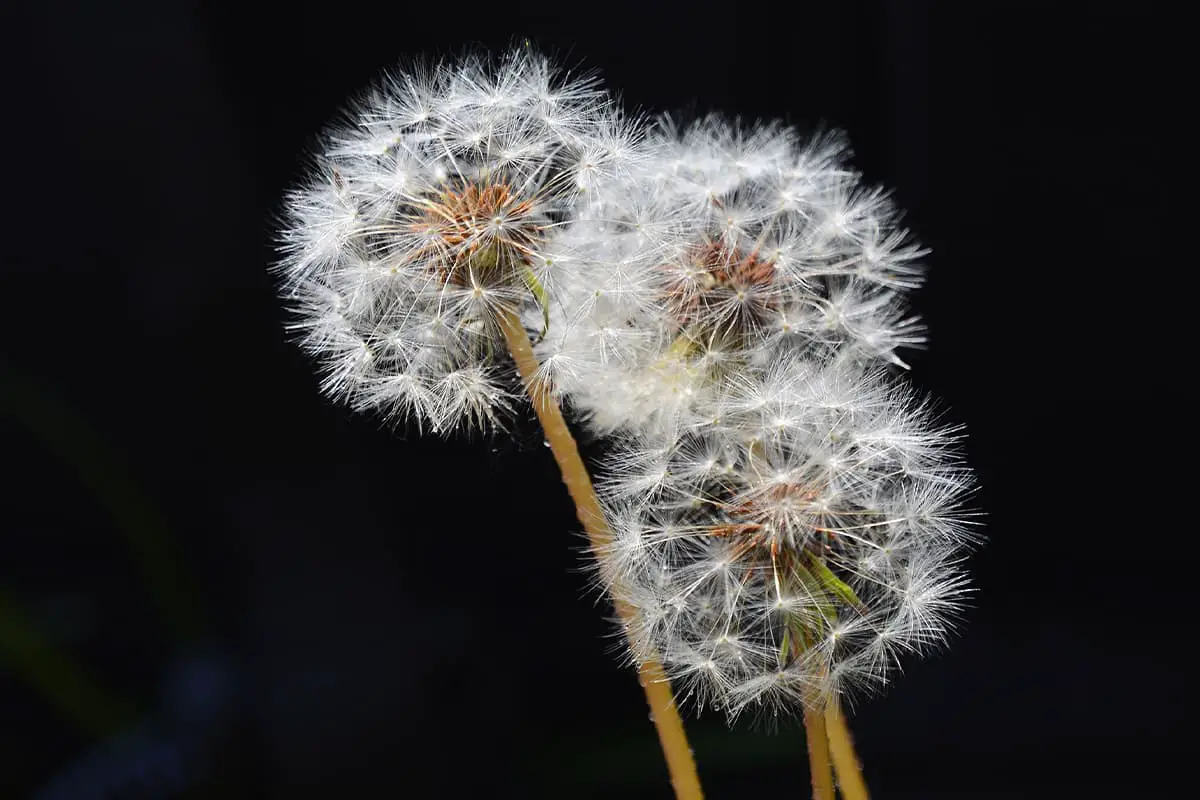
The outer layer of the involucre bracts are ovate lanceolate or lanceolate, 8-10 millimeters long, 1-2 millimeters wide, the edges are membranous, the base is light green, the top is purplish-red, the tip is thickened or with a small to medium angular protrusion.
The inner layer of the involucre bracts are linear lanceolate, 10-16 millimeters long, 2-3 millimeters wide, the tip is purplish-red, with a small angular protrusion. The ligulate flowers are yellow, the ligule is about 8 millimeters long, about 1.5 millimeters wide, the back of the edge ligule has purplish-red stripes, and the anthers and stigma are dark green.
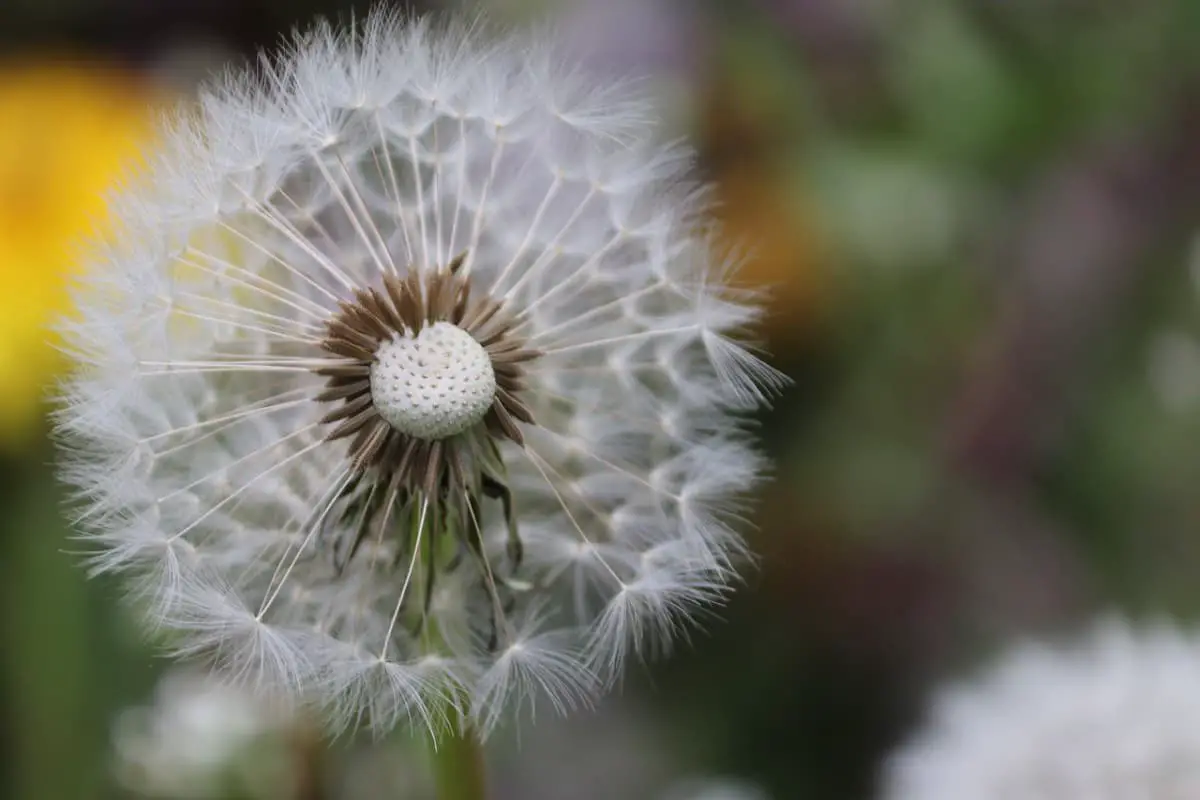
The achene is obovate lanceolate, dark brown, about 4-5 millimeters long, about 1-1.5 millimeters wide, the top has small thorns, the bottom has a row of small lumps, the top gradually contracts to form a conical to cylindrical beak base about 1 millimeter long, the beak is 6-10 millimeters long, slender.
The pappus is white, about 6 millimeters long. The flowering period is from April to September, and the fruiting period is from May to October.
Dandelions flourish across various environments including low and mid-altitude mountain slopes, roadsides, fields, and riverbanks.
The dandelion is a perennial plant and can produce flowers and seeds in its second year under wild conditions.
As the plant ages, the number of flowers it produces increases, with some individual plants producing more than 20 flowers. High-quality varieties can produce even more flowers per plant. Approximately 13-15 days after blooming, the seeds mature.
When the flower head casing changes from green to yellow-green, and the seeds turn from milky white to brown, it’s time to harvest. Avoid waiting until the flower head splits open as the seeds might scatter and cause a large loss.
Usually, there are more than 100 seeds per flower head. Large-leaf dandelions have a thousand seed weight of around 2 grams, while small-leaf dandelions’ thousand seed weight is around 0.8-1.2 grams.
Choose to plant in a sandy loam soil that is loose, fertile, and well-drained. Apply 2000-3500 kilograms of organic fertilizer per acre, mixed with 15 kilograms of calcium superphosphate, spread evenly on the surface.
Plough the soil 20-25 cm deep, level it, and form flat beds 1.2 meters wide, 10 meters long, and 20 cm high ridges. Before sowing dandelion seeds, turn the soil and create shallow furrows within the bed, spaced 12 cm apart and 10 cm wide.
Then sow the seeds in the furrows, cover with soil about 0.3-0.5 cm thick. Ensure the soil is moist at the time of sowing. If the soil is dry, water thoroughly two days before sowing. In spring, it is better to cover the soil with a film, while in summer, if there’s enough rain, covering is not necessary.
Dandelions propagate through seeds, which have no dormancy period. From spring to autumn, mature seeds can be sown at any time. Depending on the need, seeds can also be sown in greenhouses during the winter.
For open-field sowing, use row sowing, creating shallow furrows across the bed at 25-30 cm intervals, about 10 cm wide. After sowing, cover with 1 cm of soil and press lightly. The amount of seeds per acre should be 0.5-0.75 kg.
For broadcast sowing on flat beds, use 1.5-2.0 kg of seeds per acre. High-quality dandelion seeds require only 25-50 grams per acre. After sowing, cover with straw for insulation. When the seedlings emerge, remove the straw cover, which typically happens around day 6.
To speed up germination, seeds can be treated with a hot water soak. Place the seeds in water at 50-55℃, stir until the water cools, and then soak for 8 hours. Remove the seeds, wrap them in a damp cloth, and place them in a spot around 25℃, covering with another damp cloth. Water once in the morning and evening with warm water.
After about 3-4 days, the seeds will germinate and be ready for sowing. According to experimental results, seeds harvested in May and sown immediately take about 10-12 days to emerge.
However, if sown in the summer months of July and August, it takes about 15 days from sowing to emergence. The general seeding rate per square meter is around 3-4 grams, which can produce about 700-1000 seedlings.
Harvesting of the dandelion can involve picking the outer large leaves in stages for consumption, or using a sickle to cut off the heart leaves for eating, every 30 days.
Harvesting can be done using a sickle or small knife, cutting parallel to the ground at about 1-2 cm, while leaving the underground roots to sprout new shoots.
Larger plants should be picked first, leaving medium and small ones to continue growing. Alternatively, the entire plant can be harvested at once for selling, usually yielding about 2000-2500 kg per acre per harvest. After the dandelion is fully harvested, its roots will exude a milky sap. It’s advisable to avoid watering for 10 days to prevent root rot.
When used as herbal medicine, the whole dandelion plant can be harvested, including the roots, during late autumn. Once harvested, remove the soil and dry for medicinal purposes.
Leaf Spot Disease: Initially, needle tip-sized spots of faded green to light brown appear on the leaf surface, later expanding into circular to elliptical or irregular shapes, with a dark gray to brown center and a raised brown edge. These spots are 3-8 mm in diameter, with some disease spots reaching 20 mm.
Blight Disease: This starts with the appearance of small brown spots on the lower leaves, later expanding into dark brown circular or nearly circular to irregular spots, 5-10 mm in size, with an indistinct yellow halo around the outside. Later stages of the disease spot appear as a dark brown edge.
Rust Disease: This mainly affects the leaves and stem. It begins with the appearance of light yellow spots on the leaves, with corresponding faded green spots on the back of the leaves.
It later develops into slightly raised blisters, which, upon rupture, release a large amount of yellow-brown powder. When there are many disease spots on the leaves, the edges of the leaves curl up.
The prevention and control measures for these three diseases are: pay attention to field hygiene and collect diseased remnants during harvesting to be destroyed outside the field; drain ditches to avoid overuse of nitrogen fertilizer, timely application of Plant Vitality Element, etc., to promote robust growth of plants and increase resistance; start spraying 42% Fuxing emulsion at 8000 times dilution, or 20.67% Wanxing emulsion at 2000-30000 times dilution at the onset of the disease.
Alternatively, spray a 500-times diluted solution of sulfur suspension, or a 1500-times diluted solution of 50% Topcide wettable powder, once every 10-15 days, for continuous prevention and treatment 2-3 times. Stop using the drug seven days before harvesting.
Wilt Disease: Initially, the leaves turn lighter and yellowish, wilting and drooping, and the base of the stem also turns light brown.
When the base of the stem is cross-sectioned, the vascular bundle can be seen turning brown, with the vascular bundle of the extending branches gradually turning light brown, and the extending roots experiencing skin necrosis or black rot. Some stems split at the base, producing white mold when the humidity is high.
Prevention and control methods: promote the use of compost or matured organic fertilizer fermented with enzymatic bacteria; strengthen field management and rotate crops with other plants; select disease-resistant varieties suitable for local conditions; choose well-drained sandy soil for planting; irrigate reasonably, and try to avoid excessive moisture or standing water in the field after rain; at the initial stage of the disease, choose 50% methyl tobujin wettable powder 500 times liquid, or 40% sulfur suspension 600 times liquid, or 50% copper oxychloride wettable powder 400 times liquid, or 30% basic copper sulfate suspension 400 times liquid for root irrigation, using 0.4-0.5 liters of medicinal liquid per plant, depending on the condition of the disease, continue to irrigate 2-3 times.
Dandelions have a long blooming period, giving them significant ornamental value.
Raw dandelions are rich in Vitamin A, Vitamin C, and potassium. They also contain iron, calcium, Vitamin B2, Vitamin B1, magnesium, Vitamin B6, folic acid, and copper.
The primary composition of dandelions is water, with every 60 grams of raw dandelion leaves containing 86% water, 1.6 grams of protein, 5.3 grams of carbohydrates, and approximately 108.8 kilojoules of energy.
The Health Ministry classified dandelions as substances suitable for both medicinal and dietary uses in 2002. Dandelions can be eaten raw, stir-fried, or used in soups, making them a plant fit for both medicine and food.
Methods of Consumption:
Dandelions contain a variety of healthy nutritional components such as taraxacin, taraxerol, choline, organic acids, and inulin. Their taste is sweet, slightly bitter, and cold.
They belong to the liver and stomach meridians in traditional Chinese medicine. Dandelions have diuretic, mild laxative, jaundice reducing, and bile benefiting effects.
They are used to treat heat toxins, abscesses, ulcers, internal abscesses, red and swollen eyes, damp heat, jaundice, painful urination, boils and sores, mastitis, scrofula, toothache, red eyes, sore throat, lung abscess, intestinal abscess, damp-heat jaundice, and painful urination.
They are used to treat acute mastitis, lymphadenitis, scrofula, boils and sores, acute conjunctivitis, common cold and fever, acute tonsillitis, acute bronchitis, gastritis, hepatitis, cholecystitis, and urinary tract infections. Dandelions can be eaten raw, stir-fried, or used in soups, making them a plant fit for both medicine and food.
Functions and Indications: Dandelions are used for clearing heat and detoxifying, diuretic, and dispersing swellings. They are used to treat acute mastitis, lymphadenitis, scrofula, boils and sores, acute conjunctivitis, common cold and fever, acute tonsillitis, acute bronchitis, gastritis, hepatitis, cholecystitis, and urinary tract infections.
Pharmacological effects:
Dandelion flower language: With its vibrant yellow flowers, the dandelion symbolizes “an unstoppable love.

Peggie was once a high school mathematics teacher, but she set aside her chalkboard and textbooks to follow her lifelong passion for flowers. After years of dedication and learning, she not only established a thriving flower shop but also founded this blog, “Flowers Library”. If you have any questions or wish to learn more about flowers, feel free to contact Peggie.
 English
  العربية
  Bahasa Indonesia
  Deutsch
  Français
  Italiano
  Nederlands
  Português
  Русский
  日本語
日本語