As ornamental plants, we naturally desire flowers with extended blooming periods to enhance our gardens and spaces. While the ephemeral beauty of the Epiphyllum is undeniably captivating, many gardeners seek plants that offer prolonged floral displays.
In this article, we’ll explore a diverse selection of flowers renowned for their long-lasting blooms, providing both beauty and value to gardens worldwide.
Let’s examine some of the world’s longest-blooming flowers, each with its unique characteristics and cultivation requirements:
1. Jatropha Integerrima – Blooms Year-Round
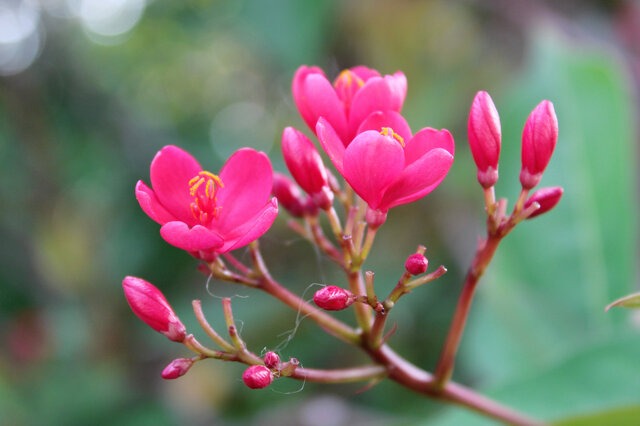
Jatropha integerrima Jacq., commonly known as Peregrina or Spicy Jatropha, is an evergreen shrub or small tree prized for its striking, year-round floral display. Its scientific name is derived from the Greek words “iatros” (physician) and “trophe” (food), alluding to its medicinal properties, while “integerrima” refers to its entire leaf margins.
This ornamental plant is known by various vernacular names, including Firecracker Jatropha, Red Jatropha, and Spicy Jatropha. Contrary to the original text, the name does not derive from a guitar-like leaf shape. Instead, one of its common names, “Guitar-leaf Cherry,” likely comes from the resemblance of its leaves to a guitar pick rather than the instrument itself.
Native to Cuba and Hispaniola in the West Indies, Jatropha integerrima has been widely cultivated in tropical and subtropical regions worldwide, including Southern China, Southeast Asia, and parts of Africa. It thrives in USDA hardiness zones 10-11.
The shrub typically grows to a height of 5-15 feet (1.5-4.5 meters) with a spread of 4-8 feet (1.2-2.4 meters). Its leaves are simple, alternate, and ovate to lanceolate, measuring 2-6 inches (5-15 cm) long. The foliage is glossy green, providing an attractive backdrop for the flowers.
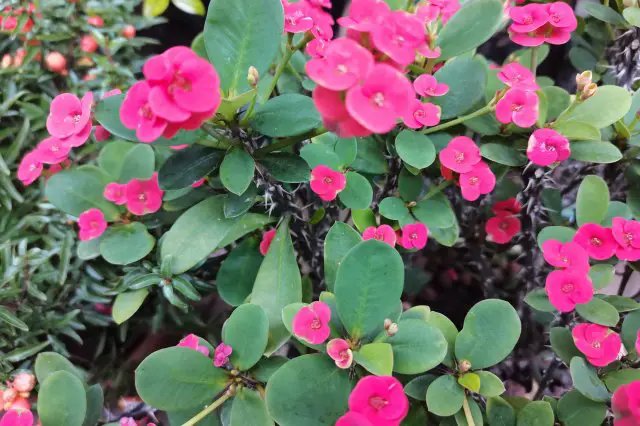
The most striking feature of Jatropha integerrima is its vibrant red, star-shaped flowers that bloom continuously throughout the year in ideal conditions. These flowers are borne in terminal clusters called cymes, each measuring about 1 inch (2.5 cm) in diameter. While the typical variety produces scarlet blooms, cultivars with pink or white flowers are also available.
As a member of the Euphorbiaceae family, Jatropha integerrima produces a milky sap that is indeed toxic. This latex contains phorbol esters and other compounds that can cause skin irritation and are harmful if ingested. Therefore, caution should be exercised when handling the plant, especially around children and pets.
In landscaping, Jatropha integerrima is often used as a specimen plant, hedge, or container plant. It prefers full sun to partial shade and well-draining soil. The plant is relatively drought-tolerant once established but benefits from regular watering during dry periods. Pruning can be done to maintain shape and encourage bushier growth.
While primarily grown for ornamental purposes, some parts of the plant have been used in traditional medicine, although this practice is not recommended due to its toxicity. The seeds contain oil that has been explored for potential use in biodiesel production, although other Jatropha species are more commonly used for this purpose.
2. Perennial Pea – Blooms Year-Round
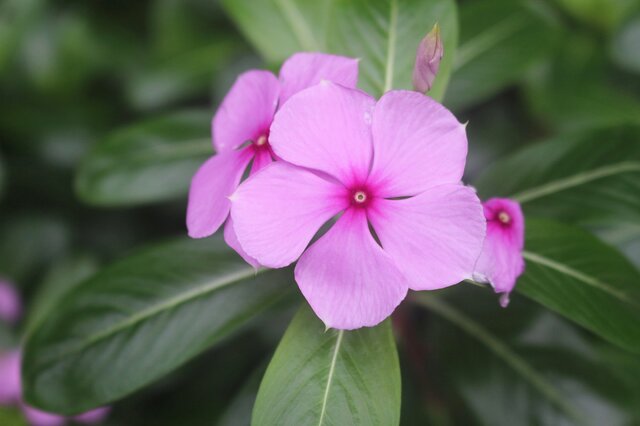
Perennial Pea, also known as Everlasting Pea or Sweet Pea, belongs to the Fabaceae (legume) family, not the Oleander family. Its scientific name is Lathyrus latifolius. It is a vigorous, climbing perennial vine with winged stems that can reach up to 6 feet (1.8 meters) in length.
The leaves are compound, consisting of one pair of leaflets and a branched tendril. They are lance-shaped to elliptical, with a bluish-green color and smooth texture on both sides. The distinctive midrib is green, not white as previously stated.
Its inflorescence is not umbrella-like, but rather a raceme, typically bearing 5-10 flowers per stem. The flowers come in shades of pink, red, and white, but not purple or yellow as mentioned earlier. The blooms resemble those of garden peas but are larger and unscented.
Perennial Pea does indeed have a long blooming period, typically flowering from late spring through early fall (May to September in most regions). However, it’s not accurate to say it blooms “without pause” or between every two new leaves. The plant produces new flowering stems throughout the growing season, which gives the appearance of continuous blooming.
While it’s a beautiful and persistent bloomer, the nickname “Daily Spring” is not a commonly used or recognized term for this plant. Its long-lasting flowers and vigorous growth have made it popular in gardens, but it’s important to note that in some regions, it can become invasive due to its robust nature and self-seeding capability.
Perennial Pea is valued for its ornamental qualities, ability to cover fences or trellises quickly, and its attraction to pollinators such as bees and butterflies. However, unlike its relative the culinary sweet pea (Lathyrus odoratus), the seeds and other parts of Lathyrus latifolius are not edible and can be toxic if ingested in large quantities.
3. Hibiscus – Blooms Year-Round
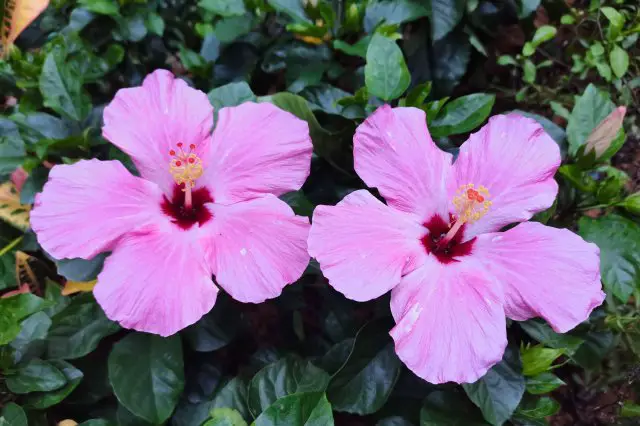
Hibiscus, also known as China Rose or Rose of Sharon, belongs to the Malvaceae family. In the Lingnan region of southern China, it is often called the “Big Red Flower” due to its predominantly vibrant red blooms.
Originating from tropical and subtropical regions of East Asia, hibiscus has a cultivation history spanning thousands of years in China and is recognized as one of the country’s most celebrated flowers. The hibiscus is a versatile shrub or small tree with an upright growth habit, featuring numerous branches that can reach heights of 2 to 5 meters, depending on the species and growing conditions.
The leaves of hibiscus are alternately arranged, simple, and ovate to lanceolate in shape, with serrated margins. While they may resemble mulberry leaves in some aspects, hibiscus leaves are generally more glossy and have a distinctive venation pattern.
Hibiscus flowers are notably large and showy, typically measuring 10 to 15 centimeters in diameter. They can be either single or double-petaled, with single-petaled varieties showcasing five overlapping petals and a prominent central stamen column. While rose-red is a common color for single-petaled flowers, the hibiscus palette is actually quite diverse. Colors range from deep reds and bright pinks to yellows, whites, oranges, and even blue or purple in some cultivars. Double-petaled varieties often display more complex color combinations and patterns.
One of the most remarkable features of hibiscus is its ability to bloom throughout the year in tropical climates. In temperate regions, the flowering period typically extends from late spring to early autumn, with peak blooming occurring during the warm summer months. This extended flowering period, coupled with the plant’s relative ease of care, makes hibiscus a popular choice for both garden landscapes and container plantings.
Hibiscus flowers are not only ornamental but also have culinary and medicinal uses. The flowers can be steeped to make a refreshing tea rich in vitamin C and antioxidants. In traditional medicine, various parts of the plant have been used to treat ailments ranging from high blood pressure to digestive issues.
To ensure optimal growth and abundant blooming, hibiscus plants require full sun exposure, well-draining soil, and regular watering. They thrive in humid conditions but can adapt to a variety of climates with proper care. Regular pruning helps maintain the plant’s shape and encourages more prolific flowering.
4. Sweet Chariot Rose – Blooms Year-Round
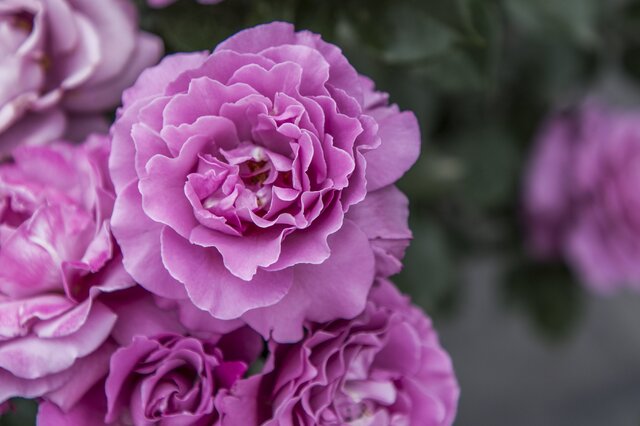
The Sweet Chariot Rose, also known as Rosa ‘WEKpurplez’ or “Burst Fragrant Purple,” is a captivating miniature rose cultivar developed by Tom Carruth for Weeks Roses in the United States in 1984. This charming rose is renowned for its compact growth habit and continuous blooming nature, making it a favorite among garden enthusiasts and rose aficionados.
The flowers of Sweet Chariot are small but profuse, typically measuring 1-2 inches (2.5-5 cm) in diameter. They present a stunning display of deep purple to lavender hues, often with subtle variations that create a mesmerizing effect. As the blooms mature, they may transition through various shades, adding to the plant’s visual interest. The petals are arranged in a classic rosette form, with 15-25 petals per bloom.
One of the most distinctive features of the Sweet Chariot Rose is its intense fragrance, which is often described as a strong, sweet, and spicy scent reminiscent of cloves or anise. This powerful perfume makes it an excellent choice for sensory gardens or areas where the fragrance can be fully appreciated.
The plant itself is compact and slow-growing, typically reaching a height and spread of 18-24 inches (45-60 cm). Its foliage consists of small, glossy, dark green leaves that provide an attractive backdrop for the vibrant blooms. The compact nature of this rose makes it particularly well-suited for container gardening, small spaces, or as a front border plant in larger garden designs.
Sweet Chariot is known for its hardiness and disease resistance, making it relatively low-maintenance compared to many other rose varieties. It shows good resistance to common rose ailments such as black spot and powdery mildew. However, like all roses, it benefits from proper care and attention to thrive.
For optimal growth and flowering:
- Plant in well-draining, fertile soil rich in organic matter.
- Provide full sun to partial shade, with at least 6 hours of direct sunlight daily.
- Water regularly, keeping the soil consistently moist but not waterlogged. As noted, overwatering can lead to leaf drop, so ensure good drainage.
- Feed with a balanced rose fertilizer during the growing season to promote healthy growth and abundant blooms.
- Prune lightly in late winter or early spring to shape the plant and remove any dead or diseased wood.
The Sweet Chariot Rose is particularly well-suited for balcony gardens, patios, or small urban spaces due to its compact size and continuous blooming habit. It can be grown in containers, used as a low hedge, or incorporated into mixed borders. Its versatility extends to cut flower arrangements, where its small blooms can add a delicate touch and heavenly fragrance.
While primarily grown for ornamental purposes, the petals of Sweet Chariot roses are edible and can be used to add color and flavor to culinary creations, such as salads, desserts, or as a garnish for beverages.
In conclusion, the Sweet Chariot Rose offers a perfect blend of beauty, fragrance, and ease of care, making it an excellent choice for both novice and experienced gardeners looking to add a touch of charm and year-round color to their outdoor spaces.
5. Barberry – Blooms Year-Round
Barberry (Berberis spp.), sometimes referred to as Berberis, is a diverse genus of deciduous and evergreen shrubs in the family Berberidaceae. While some species can be creeping, many are upright, ranging from 0.5 to 3 meters in height. The stems are typically adorned with sharp, single or triple spines, which are actually modified leaves.
The leaves are arranged alternately on the stem and can be simple or compound, often with serrated edges. Their color varies from green to purple or red, depending on the species and season. Some varieties exhibit striking autumn foliage.
Barberry flowers are usually small, yellow, and appear in spring. They grow in racemes, umbels, or sometimes solitary, rather than in clusters of 2 or 8. The plant is known for its bright red, orange, or dark blue berries that persist through winter, providing ornamental interest and food for birds.
While Barberry does have a long flowering and fruiting period, it doesn’t typically bloom year-round in most climates. The fruiting period can extend from late summer through winter, giving the impression of constant color.
Barberry is native to temperate and subtropical regions of Europe, Asia, Africa, and North and South America. The species often referred to as “Iron Hawthorn” or native to Madagascar is likely Berberis madagascariensis, which is indeed endemic to that region.
Barberry is prized in landscaping for its hardiness, adaptability, and ornamental value. It’s used in hedges, borders, and as specimen plants. Many species are drought-tolerant once established and can thrive in various soil types. However, it’s important to note that some Barberry species are considered invasive in certain regions, so check local regulations before planting.
The bright red structures often mistaken for flowers are actually the berries, not bracts. These berries, along with the plant’s compact growth habit and seasonal interest, make Barberry a popular choice for both garden and container cultivation.
6. Four Seasons Begonia – Blooms Year-Round
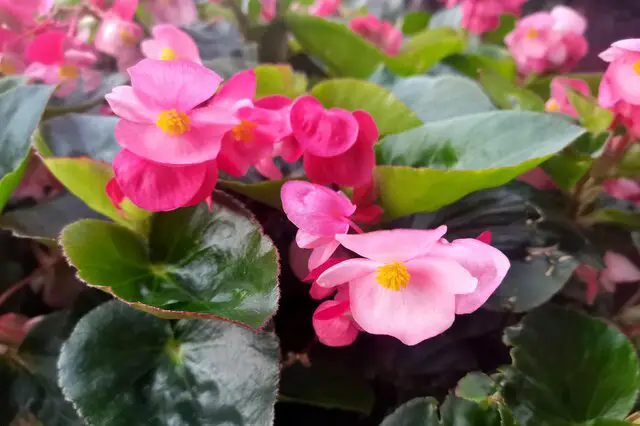
The Four Seasons Begonia (Begonia x semperflorens-cultorum), also known as wax begonia or perpetual flowering begonia, is one of the most popular and widely cultivated species within the diverse Begonia genus.
This versatile plant is highly prized for its compact, graceful form, glossy, succulent-like leaves, and clusters of small but prolific flowers that bloom continuously throughout the year. While most begonias have no scent, some cultivars of the Four Seasons Begonia offer a subtle, sweet fragrance, adding to their appeal. These characteristics make it a premier choice for both indoor and outdoor decorative plantings.
The foliage of the Four Seasons Begonia is particularly striking, with leaves that range from deep emerald green to bronze, often with a attractive waxy sheen that reflects light beautifully. The leaves are typically rounded or heart-shaped, providing an attractive backdrop for the flowers even when the plant is not in bloom.
The flowers, which can be single or double, come in a spectrum of colors including white, pink, red, and bicolor varieties. They are produced in abundance, forming neat clusters that stand out against the foliage. Each individual bloom is relatively small, typically 1-2 inches in diameter, but the profusion of flowers creates a impressive display.
This begonia’s ability to thrive in a variety of light conditions, from partial shade to full sun (in cooler climates), makes it exceptionally versatile for home gardeners. It can be used effectively in hanging baskets, window boxes, mixed containers, or as bedding plants in garden borders. When used indoors, it adds a touch of fresh, vibrant elegance to living spaces, bringing a bit of nature’s beauty inside.
The Four Seasons Begonia is also remarkably low-maintenance, tolerating a wide range of growing conditions and resisting many common plant pests and diseases. This resilience, combined with its continuous blooming habit, has contributed significantly to its popularity among both novice and experienced gardeners alike.
7. Pineapple Lily – Blooms for 8 months
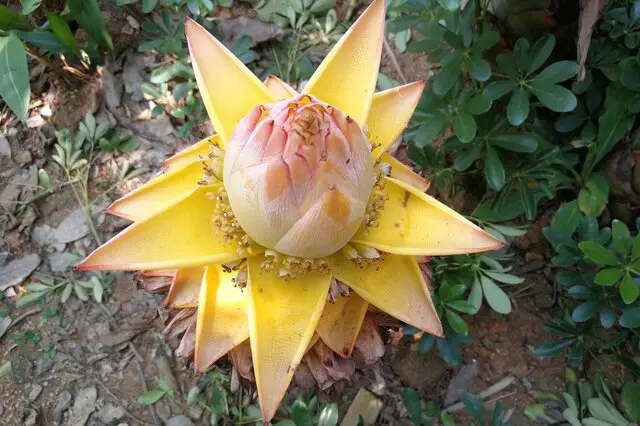
The Pineapple Lily (Eucomis), native to Yunnan, China, is a remarkable and distinctive Chinese flower. This perennial plant is known for its unique inflorescence that resembles a pineapple, hence its common name.
The true flowers of the Pineapple Lily are small and star-shaped, emerging from the leaf axils along the flower spike. These blooms are typically fragrant and delicate, adding to the plant’s allure. The inflorescence is composed of densely clustered flowers arranged on a thick, fleshy stem called a scape, which can reach 20-25 cm in length.
One of the most impressive features of the Pineapple Lily is its extended blooming period, which can last up to eight months, far longer than the six months previously mentioned. This prolonged flowering makes it an excellent choice for gardeners seeking long-lasting visual interest.
The plant derives its name from its striking appearance, with the flower spike resembling a pineapple crowned with a tuft of leaf-like bracts. The flowers themselves can range in color from white and pale green to pink and even deep purple, depending on the variety. As they open from bottom to top along the spike, they create a captivating display that seems to surge from the ground, producing a truly magnificent spectacle in any garden setting.
Pineapple Lilies prefer well-drained soil and full sun to partial shade. They are relatively low-maintenance plants, making them popular among both novice and experienced gardeners. In colder climates, the bulbs may need to be lifted and stored during winter, while in warmer regions, they can be left in the ground year-round.
8. Marguerite Daisy – Blooms for 8 months
The Marguerite Daisy, scientifically known as Argyranthemum frutescens (formerly Chrysanthemum frutescens), is native to the Canary Islands off the northwest coast of Africa. This perennial shrub thrives in cool, moderately humid climates and is particularly sensitive to excessive heat and poor drainage.
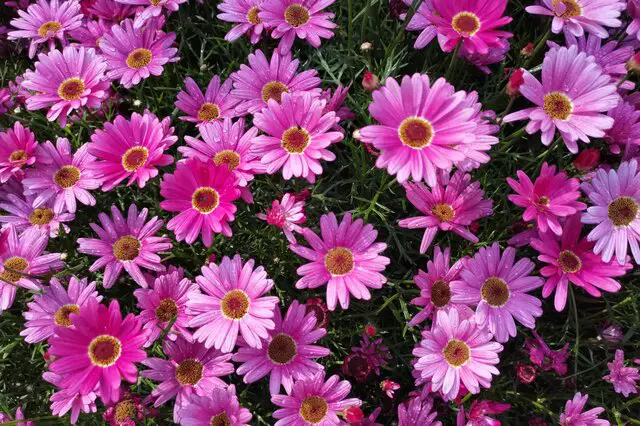
Characterized by its daisy-like flowers with white petals surrounding a yellow center, the Marguerite Daisy typically grows to a height of 60-90 cm (2-3 feet). Its gray-green, finely divided leaves create an attractive backdrop for the abundant blooms. During periods of high summer temperatures, the plant may shed some leaves as a natural defense mechanism to conserve water.
While relatively hardy, Marguerite Daisies are not frost-tolerant and require protection when temperatures drop below freezing. In regions with harsh winters, they are often grown as annuals or overwintered indoors. For optimal growth, plant them in well-draining, fertile soil enriched with organic matter. A slightly alkaline to neutral pH (6.5-7.5) is ideal for these daisies.
One of the most appealing features of the Marguerite Daisy is its extended blooming period, which can last from early spring through late autumn, providing up to 8 months of continuous flowers under favorable conditions. This long-lasting display makes them popular choices for borders, containers, and mass plantings in parks and botanical gardens throughout China and worldwide.
To maintain vigorous growth and prolific flowering, regular deadheading is recommended. This practice involves removing spent blooms, which encourages the plant to produce more flowers. Additionally, providing adequate water during dry spells and applying a balanced, slow-release fertilizer in spring can help ensure healthy growth and abundant blossoms throughout the growing season.
In garden design, Marguerite Daisies are often used to create informal, cottage-style gardens or as part of Mediterranean-inspired landscapes. Their cheerful appearance and low-maintenance nature make them excellent choices for both novice and experienced gardeners seeking long-lasting floral displays.
9. Fuchsia – Blooms for 8 months
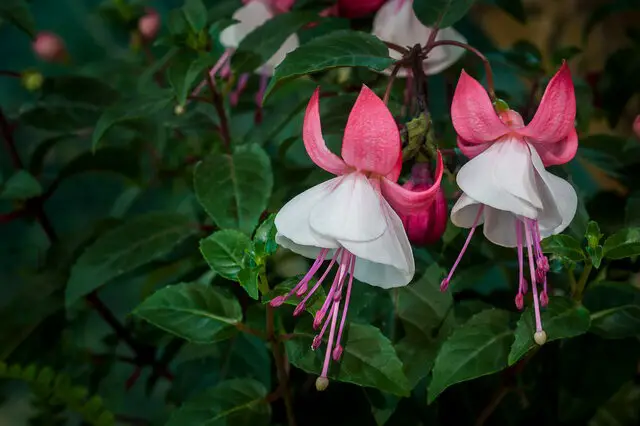
Fuchsia, commonly known as Lady’s Eardrops or Fuchsia, is a genus of flowering plants in the evening primrose family (Onagraceae). Its distinctive pendulous flowers have earned it various descriptive names, reflecting their unique hanging bell-like shape that sets them apart from upright blooms like peonies, roses, and tulips.
Native to the diverse ecosystems of Central and South America, with significant species diversity in regions like Peru, Chile, and Mexico, Fuchsias have since been cultivated globally. In China, they have gained popularity as ornamental plants, thriving in northern outdoor gardens and in controlled greenhouse environments across the northwestern and southwestern plateaus.
Fuchsias are prized for their long blooming period, often flowering continuously for up to 8 months under optimal conditions. This extended bloom time, coupled with their vibrant colors ranging from deep purples and reds to delicate pinks and whites, makes them highly desirable for both indoor and outdoor cultivation.
As versatile ornamentals, Fuchsias excel in various gardening applications:
- Hanging baskets: Their cascading growth habit makes them perfect for suspended displays.
- Container gardens: Ideal for patios, balconies, and indoor spaces.
- Borders and bedding: Compact varieties work well in garden edges and flower beds.
- Indoor decoration: Many species adapt well to indoor conditions, bringing color to interior spaces.
- Water propagation: Some varieties can be easily propagated in water, making them popular for hydroponic enthusiasts.
To ensure healthy growth and prolific blooming, Fuchsias require:
- Partial shade to filtered sunlight, avoiding harsh direct sun
- Consistently moist, well-draining soil
- Regular fertilization during the growing season
- Protection from extreme temperatures, especially frost
- Pruning to maintain shape and encourage bushiness
With proper care, Fuchsias reward gardeners with months of colorful, elegant blooms, making them a cherished addition to diverse horticultural settings.
10. Camellia – Blooms for 7-8 months
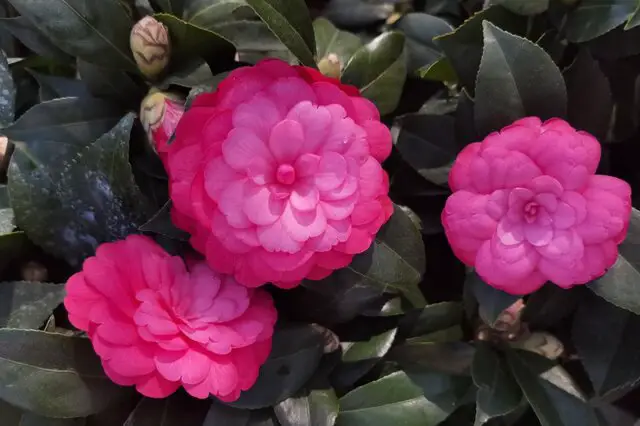
The Camellia, a genus of evergreen shrubs or small trees belonging to the Theaceae family, is a revered ornamental plant in China, ranking eighth among the “Top Ten Famous Flowers” and is globally recognized for its horticultural significance. Native to eastern and southern Asia, Camellias have been cultivated for centuries for their stunning flowers and various practical uses.
Camellia leaves are characteristically leathery and lustrous, exhibiting a diverse range of shapes from ovate to elliptical, with finely serrated margins. The adaxial (upper) surface of the leaf presents a glossy dark green appearance, while the abaxial (lower) surface is notably lighter, often with a matte finish.
The flowers of Camellia are its crowning glory, typically large and showy, measuring 5-12 cm in diameter. They emerge


 English
  العربية
  Bahasa Indonesia
  Deutsch
  Français
  Italiano
  Nederlands
  Português
  Русский
  日本語
日本語