600+ Types of Flowers A To Z (With Names and Pictures)
Types Of Flowers By Names (A-Z) Types Of Flowers By Color Types Of Flowers By Season Types Of Flowers By Blooming Time 600+ Types of Flowers No. Flower Name No.…

Callistemon viminalis, commonly known as Weeping Bottlebrush, is a distinctive evergreen tree belonging to the Myrtaceae family, native to Australia. Its lanceolate leaves range from grayish-green to dark green, and its iconic flowers resemble bottle brushes, a characteristic that has made it popular in horticultural studies and landscaping.
The flowering period of this species typically spans spring and summer, producing vibrant, nectar-rich blooms that attract pollinators. Following flowering, the tree develops small woody capsules as fruit, which contain numerous tiny seeds. The Weeping Bottlebrush exhibits a dense, lush growth habit with a gracefully arching canopy, making it an excellent choice for street plantings, garden specimens, or as an accent along water features.
This adaptable tree thrives in full sun exposure and prefers consistently moist soil conditions. It is particularly well-suited for planting along water banks, where its pendulous branches can sway elegantly over the water’s surface. Mature specimens typically reach heights of 5-7 meters (16-23 feet), though in ideal conditions, they may grow up to 10 meters (33 feet) tall.
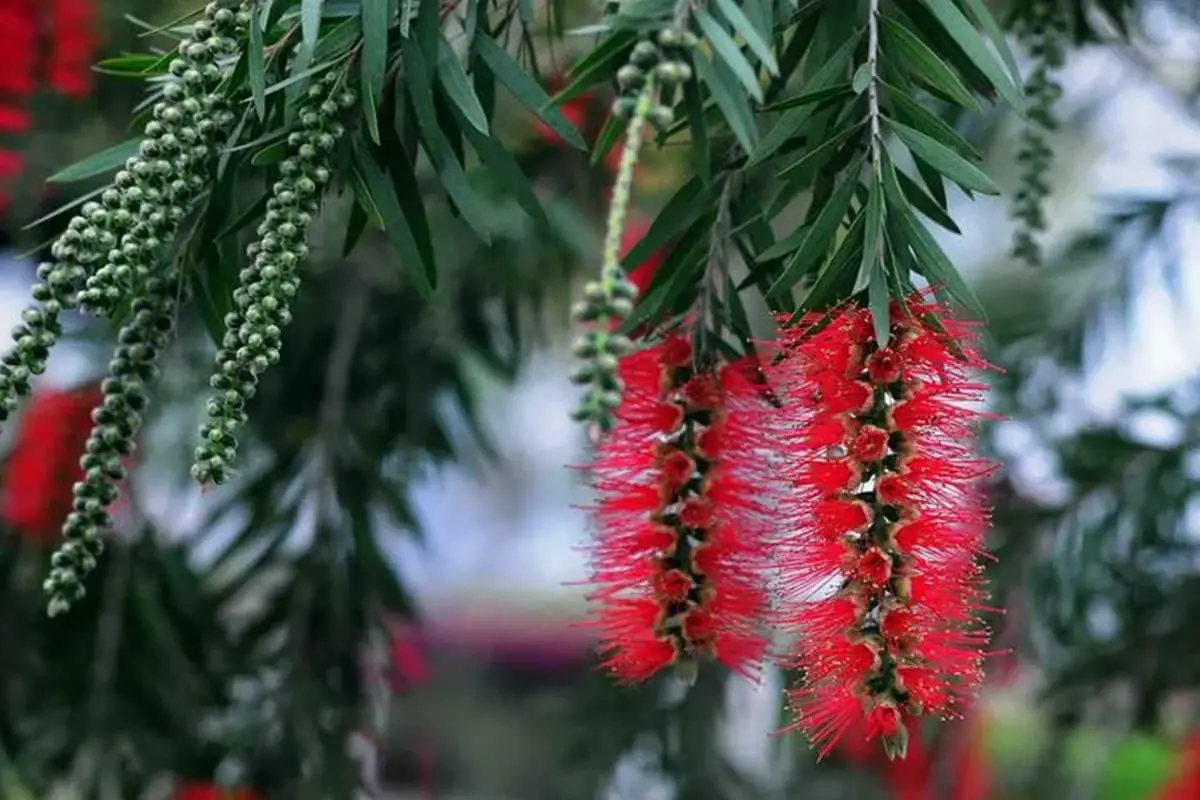
Callistemon viminalis is characterized by its weeping habit and distinctive bark. The trunk is covered with thick, fissured bark that is reddish-brown to gray in color, providing interesting textural contrast in the landscape. While the main stem remains upright, the secondary branches are notably flexible and drooping, contributing to the tree’s weeping form.
The leaves of C. viminalis are arranged oppositely along the stems. They are linear to narrow-lanceolate in shape, measuring 6-13 cm (2.4-5.1 inches) in length and 0.5-1 cm (0.2-0.4 inches) in width. The leaf apex and base are acutely tapered. The foliage is leathery in texture and aromatic when crushed, due to the presence of essential oils in glandular dots visible on both leaf surfaces.
Young shoots are slender and cylindrical, initially covered with silky hairs that contribute to the plant’s soft appearance. As the branches mature, they become glabrous (smooth and hairless).
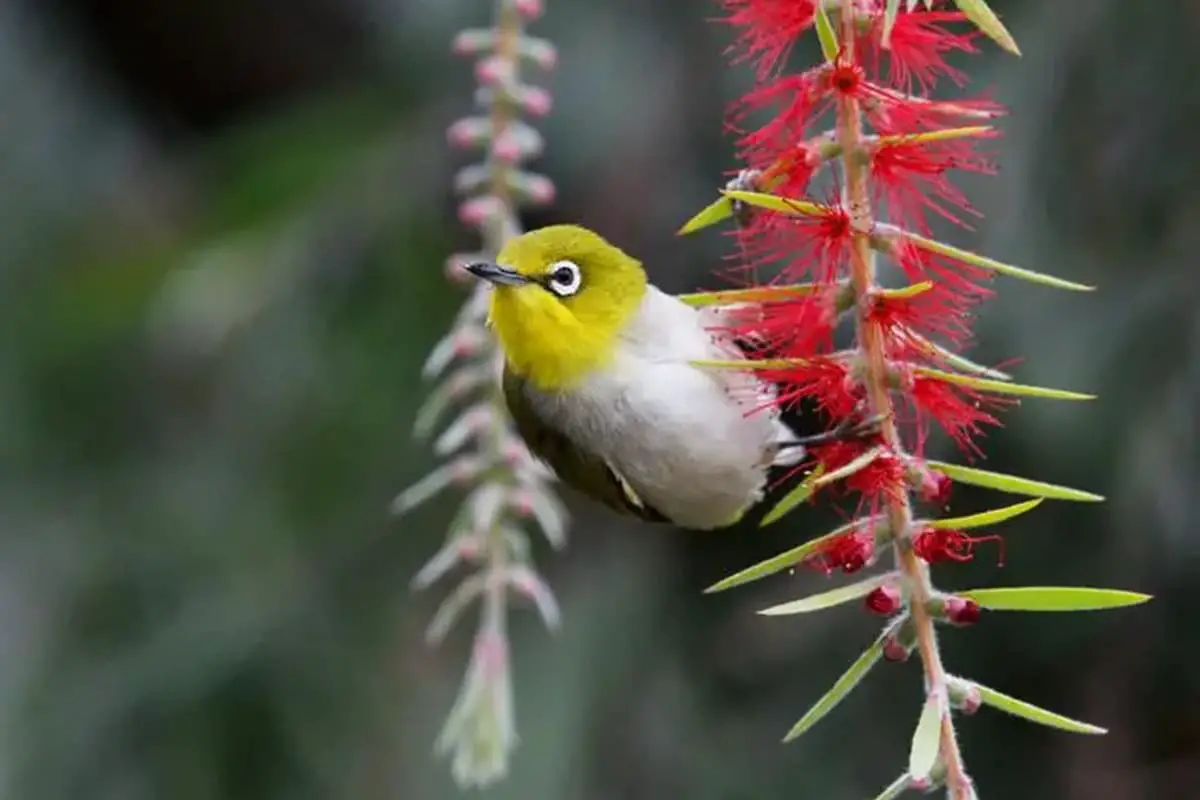
The inflorescence of Weeping Bottlebrush is a dense, cylindrical spike, typically 10-15 cm (4-6 inches) long and 5-7 cm (2-2.8 inches) wide. The flower spike’s axis is pubescent (hairy). Individual flowers lack petals; instead, it’s the numerous stamens that create the bottlebrush effect. These stamens are usually bright red, though pink and cream variants exist. Each stamen is about 2-3 cm (0.8-1.2 inches) long, with the filaments being much longer than the small anthers at their tips.
The calyx tube, which forms the base of each flower, is approximately 3 mm long with broad, obtuse lobes at the apex. These lobes are also pubescent. Small, inconspicuous petals are present but are often overlooked due to the prominent stamens.
After flowering, the fruits develop as woody capsules tightly clustered along the branches. These capsules are hemispherical or cup-shaped, about 5-7 mm in diameter, with a slightly constricted rim. The capsules remain on the tree for several years, only releasing their tiny seeds when stimulated by fire or when the branch dies.
Callistemon viminalis is well-adapted to warm, subtropical, and temperate climates. It performs best in full sun positions but can tolerate partial shade, although this may reduce flowering.
The species prefers well-drained, slightly acidic soils (pH 5.5-6.5) that are rich in organic matter. However, it demonstrates remarkable adaptability and can grow in a variety of soil types, including poor and dry soils, once established.
This species has notable heat and drought tolerance, making it suitable for xeriscaping in appropriate climates. It can withstand temperatures ranging from -7°C to 40°C (19°F to 104°F), showcasing its resilience to both cold snaps and extreme heat. However, in regions with prolonged freezing temperatures, it may require winter protection or be best grown as a container specimen that can be moved indoors during harsh weather.
Callistemon viminalis is endemic to the eastern coastal regions of Australia, primarily found in New South Wales and Queensland. In its native habitat, it often grows along creek beds and in areas subject to periodic flooding.
The species has been widely cultivated globally in suitable climates, including throughout Taiwan and southern China, where it has been given the colloquial name “Western Willow” due to its weeping habit. It has also been successfully introduced in many other warm temperate to tropical regions worldwide for ornamental and landscaping purposes.
Weeping Bottlebrush can be cultivated both in-ground and in containers, offering flexibility for various landscape designs. Propagation is primarily achieved through seeds or cuttings, with each method having specific advantages.
Seed Propagation:
Cutting Propagation:
Container Cultivation:
Pruning is essential for both in-ground and container specimens to maintain shape, promote bushiness, and encourage abundant flowering. Prune after flowering has finished, typically in late summer or early autumn. Remove up to one-third of the older growth and shape as desired.
While generally robust, Callistemon viminalis can be susceptible to certain diseases and pests, particularly in humid conditions or when stressed:
Leaf Spot Diseases:
Root-Knot Nematodes:
Scale Insects:
Webbing Caterpillars:
Maintaining plant health through proper cultural practices is the best defense against pests and diseases. This includes appropriate watering, fertilization, and pruning techniques. Regular monitoring allows for early detection and treatment of any issues that may arise.
Callistemon viminalis, commonly known as Weeping Bottlebrush, is a highly ornamental flowering tree prized for its distinctive aesthetic qualities and versatile landscaping applications. Its primary value lies in its striking visual appeal and adaptability to various garden settings.
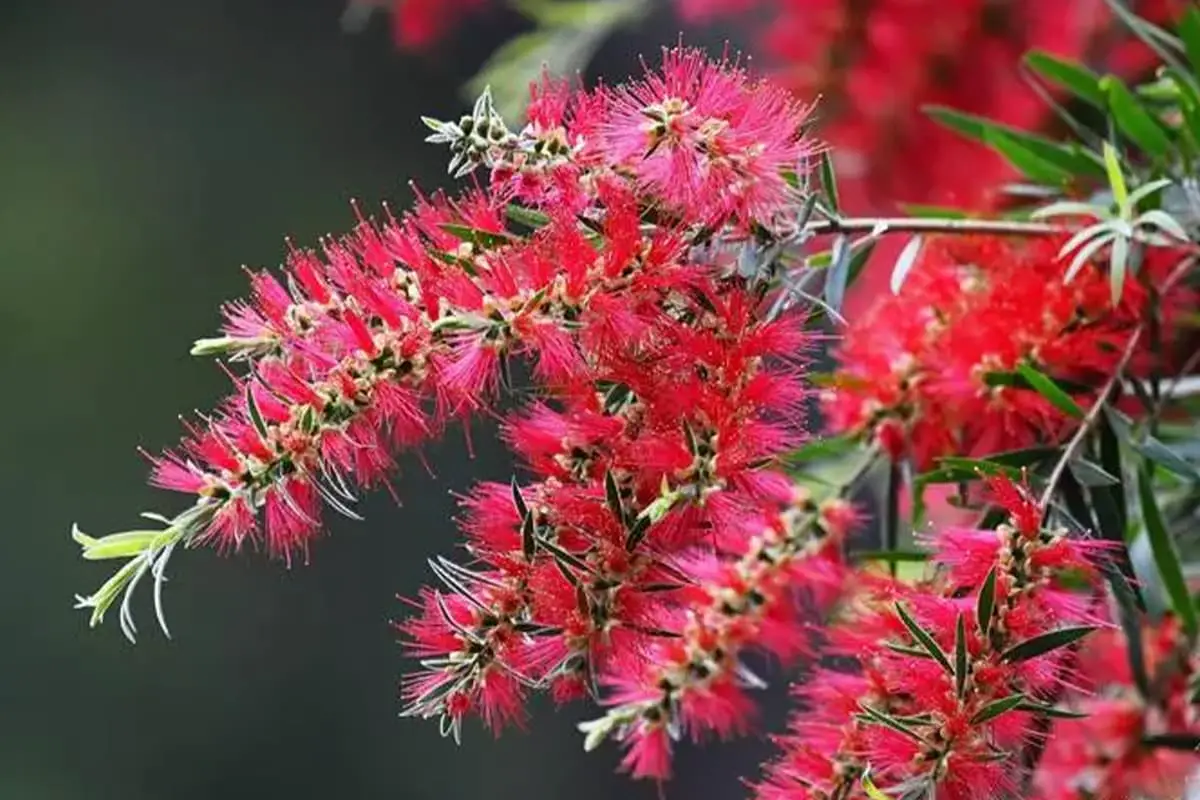
From March to May, the tree showcases its signature feature: long, vibrant red, bottle brush-like flower clusters that densely cover most branches. These cylindrical inflorescences, composed primarily of prominent stamens, create a spectacular display that resembles hanging red bottlebrushes. This unique flowering characteristic, combined with the tree’s weeping habit, results in a stunning ornamental effect.
The Weeping Bottlebrush’s growth habit contributes significantly to its ornamental value. Its branches are slender, soft, and pendulous, reminiscent of a weeping willow (Salix babylonica). This graceful form creates an elegant silhouette, making it an excellent specimen tree or focal point in landscape designs.
The foliage of Callistemon viminalis adds to its year-round appeal. The leaves are lanceolate, similar to willow leaves, and remain evergreen. They possess numerous small, translucent glandular spots, which add subtle textural interest. The young branches are covered in soft hairs, distinguishing it from the closely related Callistemon citrinus.
After flowering, the tree develops distinctive fruits that contribute to its ornamental value and inspired its common name. The woody capsules adhere tightly to the branches upon maturity, appearing slightly rounded and numerous. This arrangement resembles a string of ancient Chinese coins, adding visual interest even when the tree is not in bloom.
Weeping Bottlebrush’s versatility in landscape applications is another key aspect of its value. It excels as both a street tree and a garden specimen. Its adaptability allows for various planting arrangements:
The tree is particularly effective when planted near water features, where its weeping form can be reflected, enhancing the overall aesthetic. Its suitability extends to diverse settings, including gardens, campuses, parks, recreational areas, and even temple grounds.
The extended flowering period, lasting from spring to autumn, ensures prolonged ornamental interest throughout much of the year. The vibrant red flower clusters provide a striking contrast against the green foliage, creating a visually appealing color palette.
Native to Australia, Weeping Bottlebrush has been successfully introduced to other regions with suitable climates, including Taiwan. Its adaptability and ornamental qualities have led to its widespread use in urban landscapes and gardens worldwide.
In summary, the main value of Callistemon viminalis lies in its unique combination of graceful weeping form, spectacular red bottlebrush-like flowers, evergreen foliage, and versatility in landscape applications. These qualities make it a prized ornamental tree for creating visually striking and long-lasting landscape features in a variety of settings.

Peggie was once a high school mathematics teacher, but she set aside her chalkboard and textbooks to follow her lifelong passion for flowers. After years of dedication and learning, she not only established a thriving flower shop but also founded this blog, “Flowers Library”. If you have any questions or wish to learn more about flowers, feel free to contact Peggie.
 English
  العربية
  Bahasa Indonesia
  Deutsch
  Français
  Italiano
  Nederlands
  Português
  Русский
  日本語
日本語