600+ Types of Flowers A To Z (With Names and Pictures)
Types Of Flowers By Names (A-Z) Types Of Flowers By Color Types Of Flowers By Season Types Of Flowers By Blooming Time 600+ Types of Flowers No. Flower Name No.…

The Lilium tsingtauense, also known as the Qingdao Lily or Laoshan Lily, is a rare and beautiful species of lily. This perennial monocotyledonous herb is characterized by its striking orange-red or orange-yellow flowers adorned with light purple spots. The blossoms are distinctively star-shaped, with petals that remain flat rather than curling backwards.
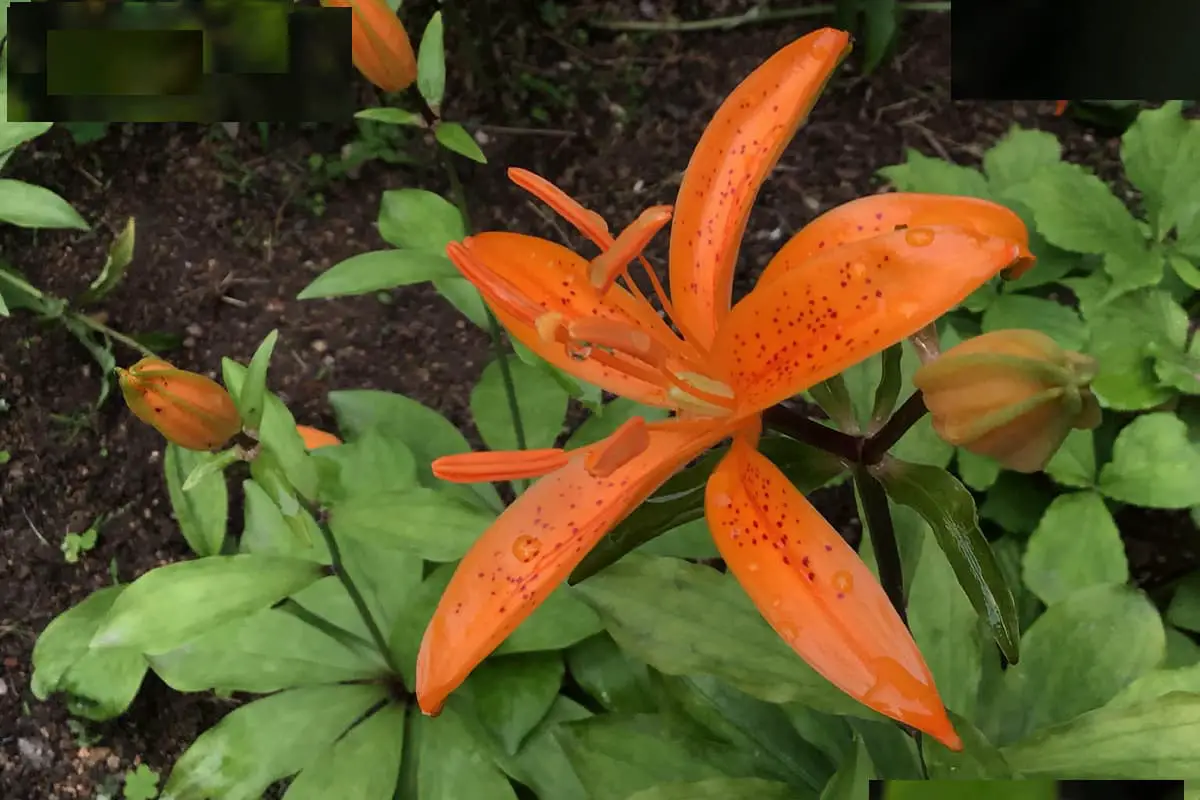
The Qingdao Lily (Lilium tsingtauense) is native to the Laoshan area in China. Its inflorescence typically consists of 5-7 individual flowers arranged in a raceme. This species thrives in shaded or semi-shaded forest slopes at elevations between 400-1000 meters, primarily in the region south of Laoshan’s North Jiushui.
Discovered by German botanists in the 18th century on Xiaoqingdao (formerly known as Qingdao), this lily gained recognition in significant botanical literature. By the 1930s, it had spread across most of Laoshan’s main peaks.
However, due to its weak reproductive capacity, slow growth, and specific environmental requirements, combined with human overharvesting, the Qingdao Lily has become critically endangered. It is now extinct in its original discovery site and survives only in remote, pristine forested areas of Laoshan above 500 meters altitude.
The Qingdao Lily has contributed to horticultural breeding programs. For instance, the L. Nepera variety was developed by crossing the Qingdao Lily with a hybrid of the white European Lily and the Hansen Lily.

Native to parts of China and Korea, the Qingdao Lily flourishes in mixed broadleaf forests or among low shrubs and grasses in slightly shaded areas. It prefers humus-rich soil and demonstrates high cold resistance. While its foliage benefits from shade, the flowers require ample sunlight for optimal blooming.
The Qingdao Lily is insect-pollinated and primarily propagates through seeds. It flowers in June and fruits in August. This species has specific soil pH and temperature/humidity requirements. Environmental stresses can significantly impact its vitality, sometimes resulting in sterility or flower deformities during reproduction.
The plant exhibits poor adaptability and a short lifespan but possesses excellent cold resistance. Root growth typically ceases when temperatures exceed 10°C (50°F). Transplantation during the flowering stage in June is challenging, with a low survival rate and a recovery period of two to three years for successful transplants.
The Qingdao Lily’s unique characteristics and rarity make it a valuable species for both conservation efforts and ornamental use in suitable environments.
The Qingdao lily enters its blooming period in mid-to-late June. Bulbs with a circumference of 15-16cm generally produce 3-4 flowers and larger fruits, each containing approximately 100 seeds. Smaller bulbs with a circumference of 9-10cm usually produce only one flower and smaller fruits, each containing around 40 seeds.
The fruit matures in early November, splitting along the back, with seeds at the top and bottom often failing to develop. The seeds in the middle are fully formed, with prominent embryos, and under natural conditions, they enter dormancy in winter and sprout in early summer.
For artificial propagation, greenhouse seeding can extend the growth period of bulbils:
After germination, the embryonic axis’s front end swells to form a small bulb, which in its first year is narrow and ellipsoidal, 8-10mm in diameter with 2-3 scales. Most seedlings grow only one leaf in their first year.
Select a well-aerated substrate such as perlite, fine river sand, peat, or vermiculite for scale rooting and propagation. A 1:1 mixture of fine peat soil and vermiculite offers optimal moisture retention and aeration, preserving scales longer and promoting root growth. This mixture is ideal for burying cuttings in low-temperature environments.
Sand has poor water retention but yields higher small bulb germination rates under intermittent misting. Large-grain vermiculite, with good water and heat retention, facilitates small bulb formation in suitable temperatures. Perlite, with excellent drainage and aeration, is highly suitable for Qingdao lily bulb scale propagation.
Sterilize the substrate through sun exposure or fumigation, moisten it two days before use, then dry in shade for later application.
Scales forced to germinate in fall can be field-transplanted in late March. Temperature significantly affects small bulb formation timing but has less impact on scale germination rate.
Maintaining 25-28°C day/5-10°C night temperatures promotes small bulb formation before rooting, while 15-20°C day/5-10°C night temperatures encourage rooting before small bulb formation after 60-70 days.
First-year seedlings sprout only 1-3 basal leaves, allowing for dense planting. Ridge cultivation is recommended for ease of management:
Disease management:
Pest control:
In Qingdao, first and second-year small bulbs are prone to freeze damage when overwintering outdoors due to shallow planting. After leaf wilt:
This method ensures safe bulb overwintering.
In their natural habitat, Qingdao lilies typically grow in groups, with populations ranging from a few individuals to several dozen. Within these groups, there is significant variation in bulb size.
Mature bulbs can reach impressive diameters of 18-20cm, while younger bulbs, originating from seeds, measure only 8-10mm in diameter. Seed propagation plays a crucial role in the natural reproduction and genetic diversity of this species.
Qingdao lilies exhibit various modes of vegetative propagation, primarily through bulbils. These bulbils can form in several locations on the plant, including the root plate, internal basic roots, underground stems, and at the base of loose or damaged scales. This adaptability in propagation methods contributes to the plant’s survival strategy.
Basic root bulbils: This form of propagation is more common in bulbs exceeding 8cm in diameter. The process involves basic roots emerging from the scale leaf axils, extending and creeping to form new bulbils. The number of bulbils produced per parent bulb varies, with loose scale fusion generally promoting increased basic root bulbil formation.
Root plate bulbils: Observations of 1-2 year cultivated bulbs reveal the development of 1-2 bulbils inside the parent bulb. These bulbils originate from the scale axils on either side of the parent plant’s stem, continuously differentiating new scales to form new individuals.
Typically, a single bulbil replaces the parent bulb in the renewal process, though larger, older bulbs may occasionally produce two new bulbils on either side of the stem.
Stem bulbils: While above-ground stems do not produce bulbils, they can occasionally form on the underground portion of the stem axis. This method of propagation is less common but demonstrates the plant’s adaptability.
Scale bulbils: Environmental stressors such as drought, pest damage, or physical injury can cause scales to loosen or break. In response, bulbils may form at the base of these affected scales.
When severe damage causes all scales to dislodge, bulbils can form at the bases of outer, middle, and inner scale layers. Research indicates a positive correlation between scale thickness and bulbil diameter.
In mature, large bulbs that have grown for many years, bulbils may even form at the nodes in the middle of the scales, showcasing the plant’s regenerative capabilities.
Aesthetic Value: Qingdao lilies are versatile ornamental plants, well-suited for various landscape applications. They thrive when planted under trees, in open spaces, near rocks, or at the edges of grasslands. Their graceful, attractive flowers add vibrant beauty to any setting. These lilies are equally stunning as potted plants or in floral arrangements, bringing elegance and soft beauty to indoor spaces.
Edible Value: The bulbs of Qingdao lilies are edible and rich in starch, making them a potential vegetable source. This dual-purpose nature adds to the plant’s overall value.
Medicinal Value: In traditional Chinese medicine, lily bulbs, known as “Bai He,” are highly regarded for their therapeutic properties. They are considered sweet and neutral in nature, with the ability to moisten the lungs, alleviate coughs, calm the heart, and soothe the mind.
Traditional uses include treating chronic tuberculosis cough, hemoptysis, residual fever, restlessness, palpitations, mental confusion, nervous exhaustion, and insomnia.
The Qingdao lily faces significant conservation challenges due to its specific ecological requirements and limited distribution. The species demands precise conditions in terms of water, soil, and overall environment.
Coupled with its narrow distribution range and weak reproductive capability, these factors make it particularly vulnerable. Human-induced environmental degradation since the 1970s and 1980s has led to a sharp decline in population numbers, pushing the species towards endangered status.
A notable conservation success story involves Ji Qun, a dedicated individual who has spent over three decades domesticating the Qingdao lily for pot cultivation. His efforts have resulted in a cultivated population of more than 600 mature plants and over 1500 young specimens. This achievement has drawn attention from both domestic and international scholars, making a significant contribution to ex situ conservation of this endangered species.
The lily, including the Qingdao lily, holds a special place in both Chinese and global horticultural traditions. Its name derives from the bulb’s structure, composed of numerous scales forming a lotus-like shape, symbolizing “hundreds of pieces combined.” Poetically referred to as the “fairy in cloud dress,” lilies are celebrated for their fragrance, beauty, elegance, and purity.
Lilies belong to the Liliaceae family, encompassing nearly 100 species worldwide and countless horticultural varieties. They are primarily distributed throughout the Northern Temperate Zone and subtropical mountain regions. China boasts an impressive diversity of lilies, with 39 species and 26 varieties, of which 25 species and 19 varieties are endemic.
The Qingdao lily (Lilium tsingtauense) stands out as one of the most exceptional representatives of the lily genus, prized for both its ornamental and edible qualities. Its unique characteristics and cultural significance make it a valuable subject for both conservation efforts and horticultural appreciation.

Peggie was once a high school mathematics teacher, but she set aside her chalkboard and textbooks to follow her lifelong passion for flowers. After years of dedication and learning, she not only established a thriving flower shop but also founded this blog, “Flowers Library”. If you have any questions or wish to learn more about flowers, feel free to contact Peggie.
 English
  العربية
  Bahasa Indonesia
  Deutsch
  Français
  Italiano
  Nederlands
  Português
  Русский
  日本語
日本語