600+ Types of Flowers A To Z (With Names and Pictures)
Types Of Flowers By Names (A-Z) Types Of Flowers By Color Types Of Flowers By Season Types Of Flowers By Blooming Time 600+ Types of Flowers No. Flower Name No.…

Platycodon grandiflorus is a perennial herbaceous plant of the family Campanulaceae. It has a robust root system with an unbranched stem, though a few may have an upper branching section. The leaves are ovate, ovate-elliptic to lanceolate with finely serrated edges.
The flower, typically a fused petal type, is blue or purple in color. The fruit varies in shape, from spherical to inverted ovate. It blooms from July to September and bears fruit from August to October.
The Balloon Flower acquired its name due to its solid, upright root as stated by Li Shizhen: “The root of this plant is solid and upright, hence the name Balloon Flower.”
Originally native to Northern China, the Korean Peninsula, and Far Eastern Russia, it’s now primarily found in Northeast, North, East, and Central China, as well as in Japan.
The Balloon Flower thrives in sunlight and cool environments, it’s frost-resistant, drought-tolerant, dislikes waterlogging, and prefers fertile, moist, well-drained loose soil. Its propagation method is by seed, either directly sown or transplanted after seedling cultivation.
The Balloon Flower is also a medicinal plant. As recorded in the “Shennong Bencaojing”, it has a pungent taste and slight warmth. It is said to treat symptoms such as sharp chest and rib pain, fullness in the abdomen, fright, and palpitations. It’s known to clear the lungs, benefit the throat, and remove phlegm.
It’s used to treat throat pain, loss of voice, cough, and excessive phlegm. Those with stomach and duodenal ulcers find it particularly beneficial, though large doses may cause nausea and vomiting. The fresh root of the Balloon Flower can also be used as a vegetable.
Balloon Flower pickle is one of the specialties of the Korean cuisine. Additionally, the Balloon Flower is an ornamental plant, its flower symbolizes “eternal love”. It can be used in flower beds, and its root can be used for medicine or as a vegetable, making it a versatile plant.
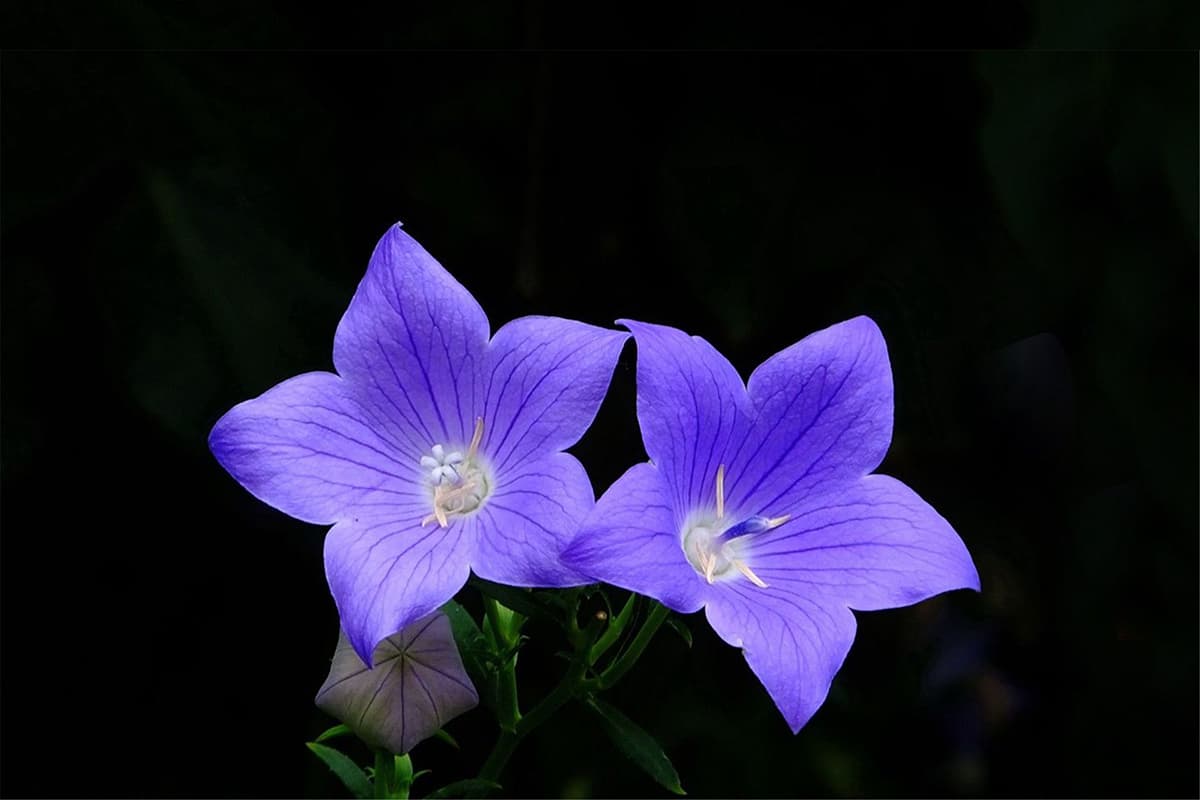
The name of the bellflower is related to its roots, as Li Shizhen once said, “The roots of this plant are solid and upright, hence the name ‘bellflower’.”
The stem is 20 to 120 cm tall, usually hairless, occasionally covered with short hair, non-branching, and rarely branched at the top. All leaves are whorled, partly whorled to entirely opposite, without a petiole or with a very short petiole.
The leaf blade is ovate, ovate to lanceolate, 2 to 7 cm long, 0.5 to 3.5 cm wide, with a broad wedge-shaped to round blunt base, sharply pointed, hairless and green on the upper surface, usually hairless and powdery white on the lower surface, sometimes with short hairs or lump-like hairs on the veins, and finely serrated at the edge.
The flowers are single and terminal, or several are gathered into a pseudospike, or the inflorescence branches and gathers into a conical inflorescence; the calyx is bell-shaped with five lobes, covered with white powder, the lobes are triangular, or narrow triangular, sometimes toothed; the corolla is large, 1.5 to 4.0 cm long, blue, purple or white.
The capsule is spherical, or spherically inverted conical, or inverted ovate, 1 to 2.5 cm long, with a diameter of about 1 cm. The flowering period is from July to September.
Native to North Korea, Japan, the Far East of Russia, and the southern regions of Siberia. The type specimen was collected from Siberia, Russia.
Bellflowers prefer cool climates, are cold-resistant, and enjoy the sun. They are suitable for cultivation in hilly areas below 1,100m above sea level, in semi-shaded, sandy soil. They grow better in neutral loamy soil rich in phosphorus and potassium.
The seed’s lifespan is one year, but it can be extended if stored in low temperatures. Dry storage of seeds at 0 to 4 degrees Celsius for 18 months increases the germination rate by 3.5 to 4 times compared to storage at room temperature.
The seed germination rate is 70%, and at temperatures of 18 to 25 degrees Celsius, if the temperature is sufficient, seedlings will appear 15 days after sowing.
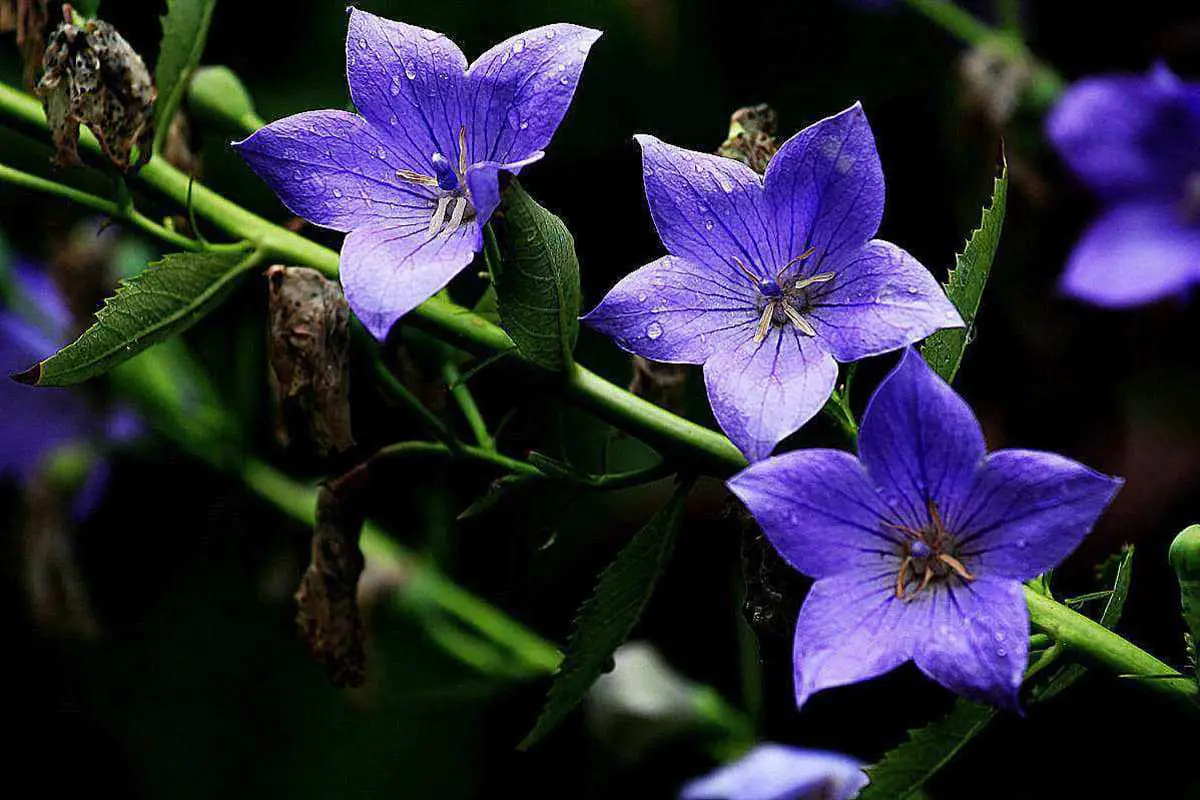
For the propagation of bellflowers, select high-yield plants for seed retention. In late August, remove the inflorescence from the side branches of the seed-retaining plant to concentrate nutrients for the development of the upper and middle fruit, promoting full seeds and improving seed quality.
When the capsule turns yellow, cut down the whole plant and let it dry in a ventilated place until ripe, then sun dry and thresh the seeds for future use. Direct sowing is usually adopted, but seedling transplantation can also be used.
However, direct sowing yields higher than transplantation, with fewer split roots and better quality. Autumn sowing, winter sowing or spring sowing can be done, with autumn sowing being the best.
Bellflower seeds should be chosen from two-year-old or older non-accumulated seeds (the germination rate of seeds accumulated for one year will decrease by more than 70%). Before planting, a germination test should be conducted to ensure the germination rate of the seeds is above 70%.
The specific method for the germination test is: take a small amount of seeds, soak them in warm water at 40-50°C for 8-12 hours, then take the seeds out, drain the water, place them on a cloth, mix with damp sand, and germinate at a temperature of about 25°C, taking care to turn and spray water timely. Germination can occur within 4-6 days.

Bellflowers can be sown in spring or summer. For spring sowing, it is advisable to use warm soaking to speed up seedling emergence. Place the seeds in warm water, stir until the water cools, then soak for another 8 hours.
Place the seed-wrapped cloth in a damp jute bag slice, cover it, and rinse with warm water once every morning and evening. After about 5 days, sow the seeds when they begin to sprout. Spread the seeds evenly in the furrow.
Because the seeds are small, you can mix them with fine sand for sowing. Cover with soil or ash after sowing, and water to keep the soil moist in arid areas. Each acre requires 500-750 grams of seeds.
During the seedling emergence period, it’s important to loosen the soil and weed. When the seedlings are about 2 cm high, thin them out, leaving strong seedlings at a plant distance of one meter. Thin or interrupted areas should be supplemented with seedlings on cloudy days.
Afterwards, apply a thin layer of human and animal manure, cover after application, apply once more and cultivate the soil to prevent lodging. Cover after application.
In addition, it is necessary to frequently loosen the soil and weed, and water timely in the early morning. Generally, harvest before the bud sprouts in late autumn or early spring after sowing.
Prevent the bifurcation of balloon flower roots. The best balloon flowers are those with straight, firm stalks and few forked roots. Cultivated balloon flowers often have many fused roots, some bifurcated, some trifurcated, and some with thick, short primary roots and lateral roots.
This significantly affects the quality. If a plant has multiple shoots, it will have forked roots, and the more vigorous the shoot, the more it will affect the growth of the primary root.
On the other hand, if a plant has only one shoot, there will be no bifurcation or branching. It seems that the solution to the problem of bifurcated roots in balloon flowers is simple. As long as each balloon flower plant has only one shoot, there will be no bifurcation or branching.
Therefore, any excess shoots should be removed at all times, especially in the second spring when the plants are most likely to produce multiple shoots. At this time, special attention should be paid to remove the excess shoots and maintain one plant per shoot.
At the same time, apply more phosphate fertilizers and less potassium fertilizers to prevent excessive growth of the above-ground parts. If necessary, pinch out the tops to reduce nutrient consumption and promote normal root growth.
The seeds of dry sowing need to emerge in about 25 days, and the seeds of germination sowing also need to emerge in about 10 days. After the seedlings emerge, weed timely.
If the seedlings are too dense, thin them out in a timely manner, keeping 10-12 plants per 100 square centimeters, leaving one seedling every 5 centimeters for thinning (about 60,000 plants per acre), and loosening the soil.
Weed should also be removed in the later stage. In addition, the flowering period of bellflowers is long, which consumes a large amount of nutrients and affects root growth. Except for seed-retaining fields, timely thinning of flowers and fruits should be done to improve root yield and quality.

The Balloon Flower thrives in loose soil, particularly on slopes and in the mountains, with semi-shaded terrain being optimal. For flatland cultivation, good drainage conditions are essential. Successive cropping of Balloon Flowers is not recommended.
Given that Balloon Flowers have long fleshy roots, ridge cultivation is ideal. In early spring (mid to late April), sprinkle some farmyard manure and till the soil thoroughly (deep ploughing to 30cm).
When making ridges, mark grid lines 2 meters apart on the ground, dig trenches, and then push the soil from the trenches to both sides to form ridge beds about 1.7 meters wide and 30cm deep. In case of drought, irrigation can be carried out along the trenches in preparation for sowing.
Before sowing in the field, apply 2000-3000 kg of farmyard manure, 40 kg of cereal compound fertilizer, and 30 kg of calcium superphosphate per acre. To prevent nematodes, mix 1 kg of methamidophos per ton with the farmyard manure before tilling.
Later fertilizing mainly uses clear manure water or urea, which can be applied in July of the current year and July to August of the following year.
Each time, apply about 2 tons of clear manure water per acre with a concentration of about 10%. If the concentration is high after fertilizing, rinse the seedlings with clean water promptly.
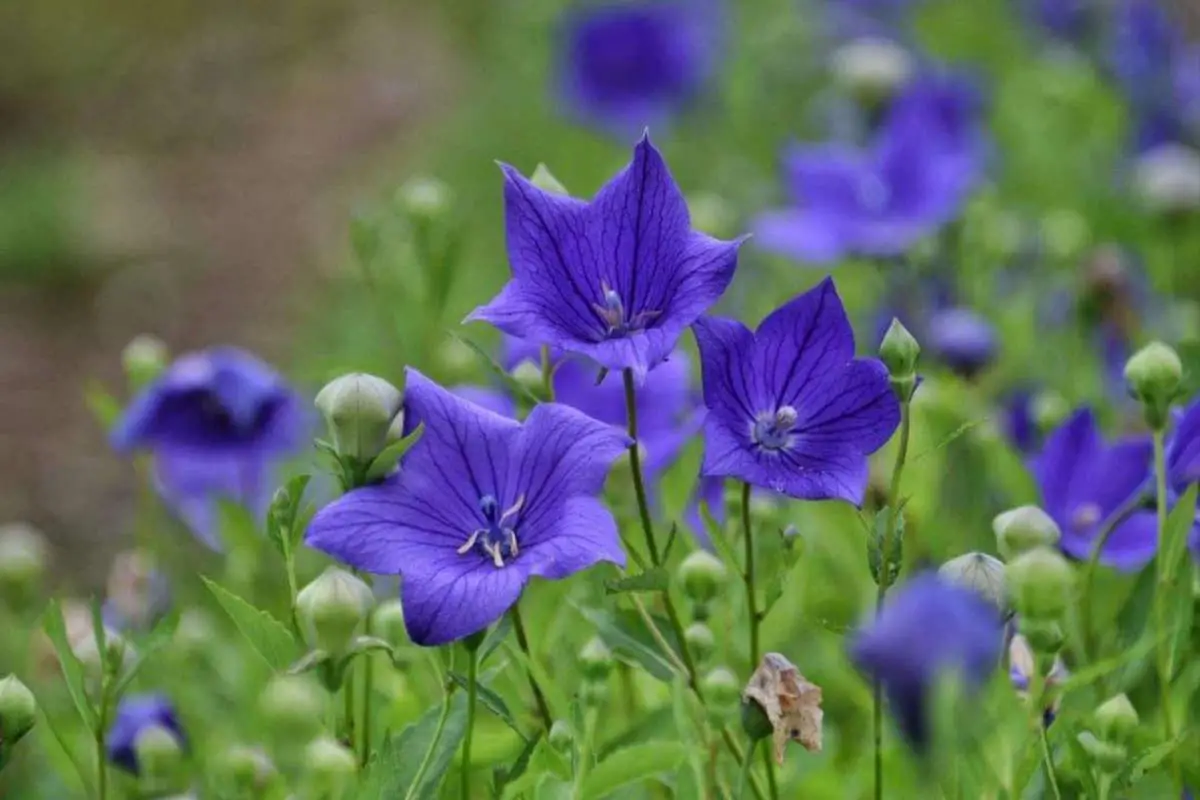
A 100-acre, three-year-old Platycodon grandiflorus crop yields 200 tons. Due to the plant’s strong cyclical nature, prices fluctuate significantly. The price of Platycodon grandiflorus is $5.5 per kilogram (fresh product).
Platycodon grandiflorus is a dual-purpose species used for both medicinal and culinary purposes. The commonly seen forms of Platycodon grandiflorus in the market are either pickled or not pickled.
The representative product, Platycodon grandiflorus pickles, is a typical pickled product, while Letian Beauty’s Platycodon grandiflorus salad is a representative of the non-pickled variety.
Platycodon grandiflorus recipe:
Legend has it that the blooming of Platycodon grandiflorus symbolizes the return of happiness. Platycodon grandiflorus has a dual meaning – eternal love and hopeless love.

Peggie was once a high school mathematics teacher, but she set aside her chalkboard and textbooks to follow her lifelong passion for flowers. After years of dedication and learning, she not only established a thriving flower shop but also founded this blog, “Flowers Library”. If you have any questions or wish to learn more about flowers, feel free to contact Peggie.
 English
  العربية
  Bahasa Indonesia
  Deutsch
  Français
  Italiano
  Nederlands
  Português
  Русский
  日本語
日本語