600+ Types of Flowers A To Z (With Names and Pictures)
Types Of Flowers By Names (A-Z) Types Of Flowers By Color Types Of Flowers By Season Types Of Flowers By Blooming Time 600+ Types of Flowers No. Flower Name No.…

The Chocolate Cosmos, also known as the Chocolate Cosmos or Chocolate Persian Chrysanthemum, is a perennial herbaceous plant from the Cosmos genus of the Asteraceae family.
This plant is native to Zimapán in the state of Hidalgo, Mexico. It loves sunlight, tolerates semi-shade, and has average cold resistance. The Chocolate Cosmos has a faint chocolate aroma, making it particularly eye-catching in mid-summer to late summer.
The stunning purple-red flowers of the Chocolate Cosmos make it a popular ornamental plant. As this plant cannot self-pollinate, the seeds produced are infertile, and propagation requires the separation of tuberous roots for vegetative reproduction.
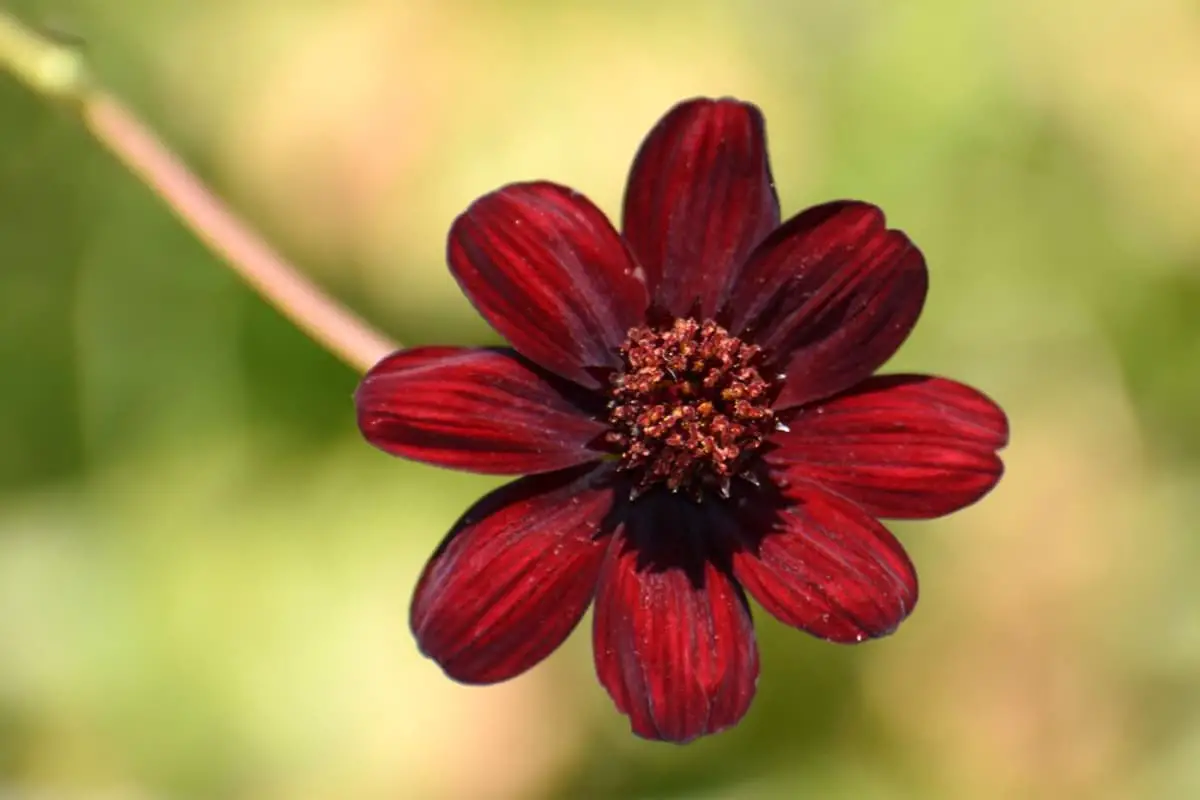
Prefers sunlight, tolerates semi-shade, and has average cold resistance.
Native to Zimapán in the state of Hidalgo, Mexico.
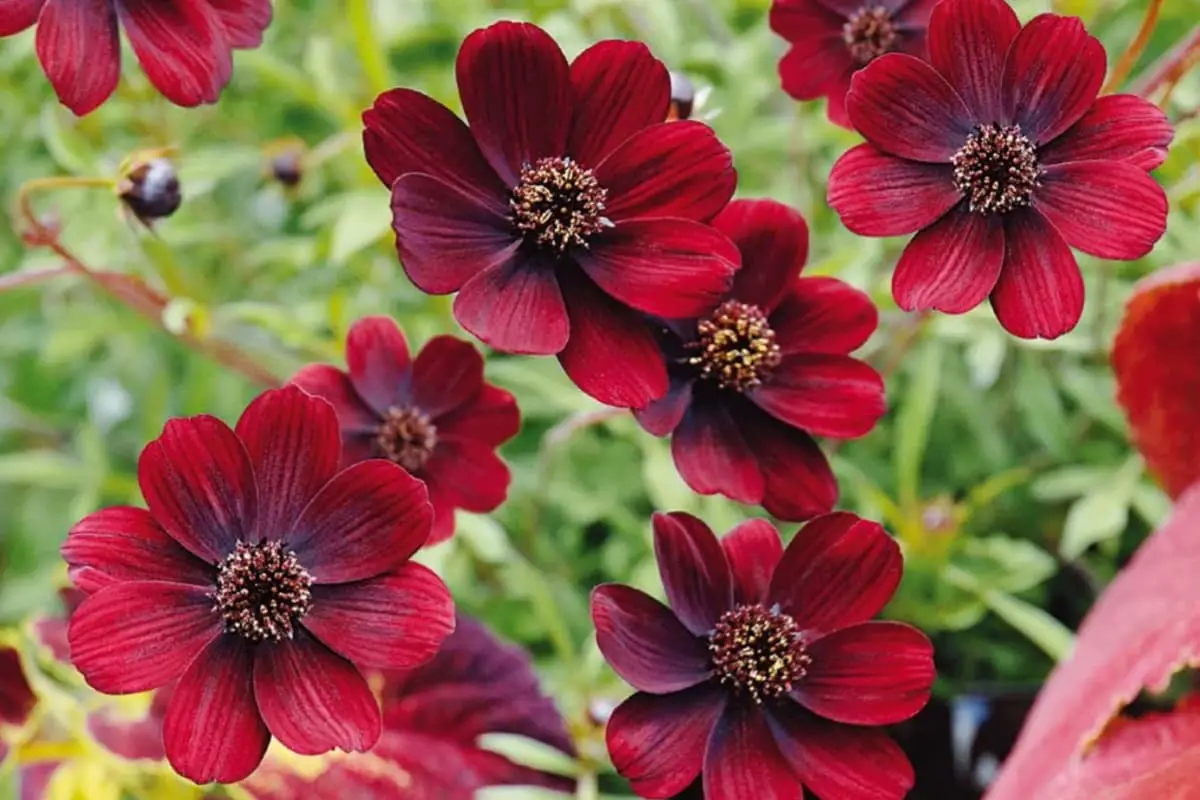
The Chocolate Cosmos grows to a height of 40-60 cm, with fleshy tuberous roots. Its pinnate leaves are 7-15 cm long, with each leaflet being 2-5 cm long.
The head-shaped inflorescence has a diameter of 3-4.5 cm, composed of 6-10 ligulate flowers (usually 8) and central disk flowers.
The flowering period is from August to October, with flower colors varying from deep red, purple-red, black-purple, chocolate, and tea. The flower type is single-petaled.
History
Cultivation of the Chocolate Cosmos began in 1902. Since then, it has been propagated vegetatively, cloning its genes to prevent its complete extinction.
The Chocolate Cosmos was introduced to Japan during the Taishō era. In recent years, local growers have hybridized sulfur chrysanthemums with this plant to cultivate the Strawberry Chocolate variety.
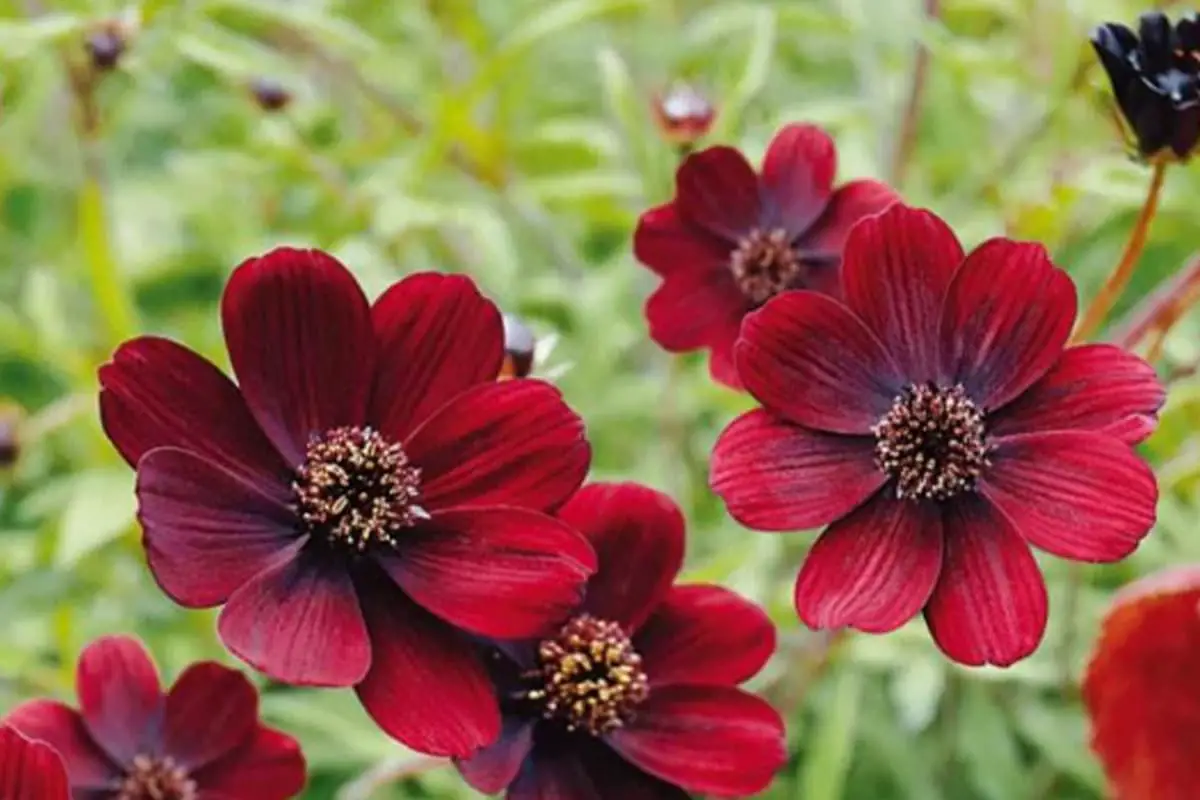
The Chocolate Cosmos produces stunning purple-red flowers, making it a popular ornamental plant. As this plant cannot self-pollinate, the seeds produced are infertile, and propagation requires the separation of tuberous roots for vegetative reproduction.
The Chocolate Cosmos is very sensitive to frost, so in temperate regions during winter, the tuberous roots need to be dug up and stored in a frost-free environment.

Peggie was once a high school mathematics teacher, but she set aside her chalkboard and textbooks to follow her lifelong passion for flowers. After years of dedication and learning, she not only established a thriving flower shop but also founded this blog, “Flowers Library”. If you have any questions or wish to learn more about flowers, feel free to contact Peggie.
 English
  العربية
  Bahasa Indonesia
  Deutsch
  Français
  Italiano
  Nederlands
  Português
  Русский
  日本語
日本語