600+ Types of Flowers A To Z (With Names and Pictures)
Types Of Flowers By Names (A-Z) Types Of Flowers By Color Types Of Flowers By Season Types Of Flowers By Blooming Time 600+ Types of Flowers No. Flower Name No.…

Borago officinalis is an annual herbaceous plant in the Boraginaceae family and Borago genus. It can reach a height of up to 60 centimeters. The leaves are elliptical with sunken veins on the front and have leaf wings.
It has umbel inflorescences with pale purple calyx and deep blue or pale purple petals. The flowers are fragrant and bloom from May to October, with fruits appearing from July to November.
It is native to the Mediterranean coast and Anatolia. It prefers warm and sunny environments, enjoys moisture, is relatively heat-resistant, but not cold-tolerant. It has strong adaptability to different types of soil and prefers loose and fertile soil.
The flowers have an elegant color and can be cultivated for ornamental purposes in gardens or flower beds.
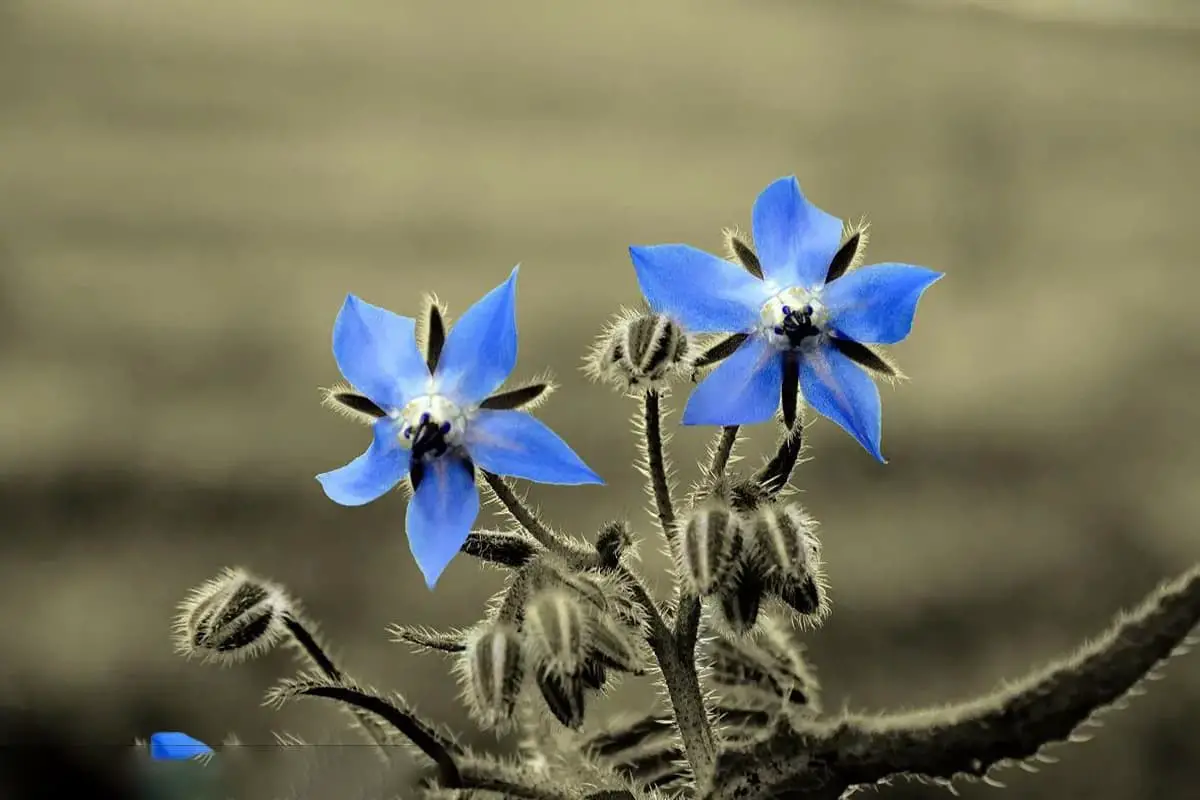
The flowers and leaves can be used as a seasoning, providing a cucumber-like fragrance. They can also be used in traditional medicine. Additionally, the seeds can be extracted for essential oil.
Borage is an annual herbaceous plant. It reaches a height of about 50-60cm, with elliptical leaves that are wrinkled and alternate along the stem.
The inflorescence forms obtuse angles, branching out into a scorpion tail-like umbel inflorescence with star-shaped, drooping flowers. The front of the leaves have sunken veins and leaf wings, with a hairy surface and entire margins.
The umbel inflorescence has 5 pale purple calyxes densely covered in hairs, and 5 deep blue or pale purple fragrant petals. It flowers from May to October and bears fruits from July to November.
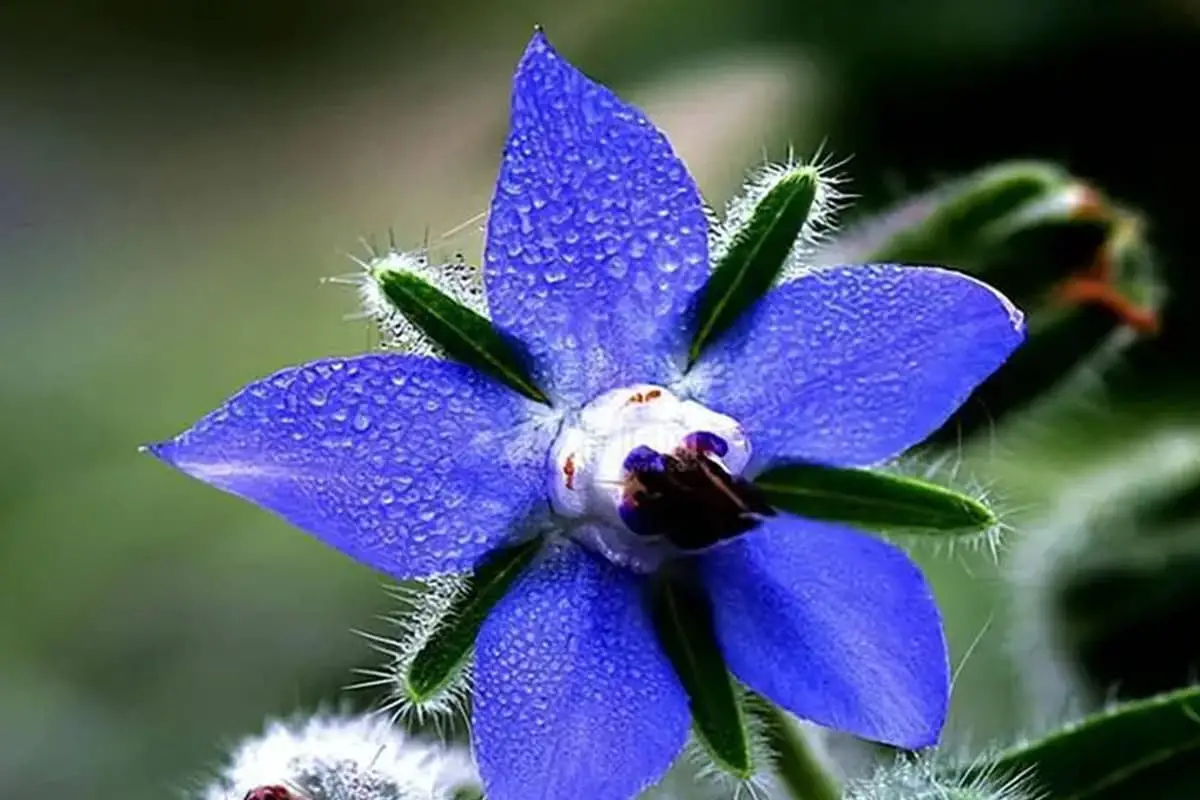
Originally from North Africa and Europe, borage was introduced to China in the late 1990s. It prefers warm and sunny environments, enjoys moisture, is relatively heat-resistant, but not cold-tolerant.
It has strong adaptability to different types of soil, but prefers loose and fertile soil. The optimal temperature range for growth is 15°C to 26°C.
Borage seeds are rich in oil and are susceptible to damage and infection by insects and microorganisms. To improve germination rate and reduce pest and disease occurrence, it is recommended to treat the selected seeds before sowing.

Place the selected seeds, free from empty husks, under sunlight for 12 hours to sterilize them. Soak the treated seeds in water for 24 hours, which will promote germination and result in a germination rate of over 90% with minimal occurrence of diseases.
Borage can be directly sown or propagated through seedlings and transplanted. It can be sown in both spring and autumn seasons.
After direct sowing, thin the seedlings when they have 2-3 true leaves and transplant them when they have 5-6 leaves, leaving one plant per hole. The thinned seedlings can be transplanted to the field or used for consumption.
Weed control and soil loosening should be done in a timely manner after thinning. To prevent lodging, hilling should also be done when necessary. Borage has vigorous growth and requires relatively large amounts of fertilizer and water.
Besides applying basal fertilizer, additional fertilizer and irrigation should be provided in a timely manner to meet its water and nutrient requirements.
Nitrogen fertilizer is the main nutrient to be applied, at a rate of about 2.5g per plant. During the rainy season, attention should be paid to drainage to prevent rotting.
Borage starts to bolt and flower around 80-90 days after sowing. After the main stem flowers, side branches continue to emerge, allowing for continuous harvesting while leaving a sufficient number of leaves.
In August, when the seeds turn black and mature, they can be harvested gradually. To prevent seeds from falling onto the ground during harvest, cover the ground with gauze or plastic film to collect the fruits.
By late August, most of the seeds are mature and can be harvested. After harvesting, dry the seeds and store them in a well-ventilated area.
The leaves and flowers of borage have medicinal properties that help relieve psychological stress, strengthen the kidneys, treat dry cough, and promote lactation. They are also used in early-stage prescriptions for pleurisy and whooping cough.
Fresh leaves and flowers can be added to salads, juices, and other beverages. The flowers can also be used to make candies and have analgesic effects.
The essential oil extracted from the seeds can be used as a substitute for evening primrose oil, treating rheumatism, menstrual disorders, and eczema when applied topically. The fresh leaves are edible and can be consumed. Borage can also be cultivated as an ornamental plant.
In Europe, borage is highly valued as an edible herb. The entire plant carries the aroma of cucumbers.
Its petals are often used to garnish salads and cakes, while the tender leaves can be used in salads, tea, stews, soups, and other dishes. Borage is also an excellent source of nectar for insects, providing them with a continuous supply of pollen.

Peggie was once a high school mathematics teacher, but she set aside her chalkboard and textbooks to follow her lifelong passion for flowers. After years of dedication and learning, she not only established a thriving flower shop but also founded this blog, “Flowers Library”. If you have any questions or wish to learn more about flowers, feel free to contact Peggie.
 English
  العربية
  Bahasa Indonesia
  Deutsch
  Français
  Italiano
  Nederlands
  Português
  Русский
  日本語
日本語