600+ Types of Flowers A To Z (With Names and Pictures)
Types Of Flowers By Names (A-Z) Types Of Flowers By Color Types Of Flowers By Season Types Of Flowers By Blooming Time 600+ Types of Flowers No. Flower Name No.…

Which flowers should you avoid keeping at home? While some flowers may be highly valued for their aesthetic appeal, their symbolism is not always positive.
Today, I have compiled a list of the top ten inauspicious flowers worldwide: Red Spider Lily, Mandrake, Black Rose, Black Lily, Begonia, Plum Blossom, Poppy, Azalea, Hibiscus, Rosebay, Poppy, and Black Wizard.
Now, you might wonder why these flowers are considered unlucky. Let’s delve into the reasons together.
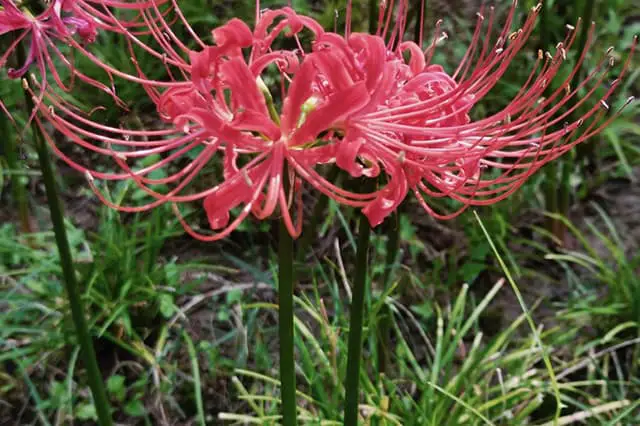
The Red Spider Lily, also known as “Lycoris Radiata,” is referred to as Manjushage or Mandala flower. It belongs to the Amaryllidaceae family. This flower comes in red and white. Legend has it that the red Red Spider Lily blooms in hell, while the white one blossoms in heaven.
The flower resembles a dragon’s claw, with bulbous roots similar to an onion; its leaves are clustered, elongated with pointed ends, reminiscent of garlic leaves.
The leaves are meaty, ribbon-like, and a bright green color covered in white powder. Its calyx is solitary, with the umbellate inflorescence born at the top, blooming before leafing out, mainly from August to September.
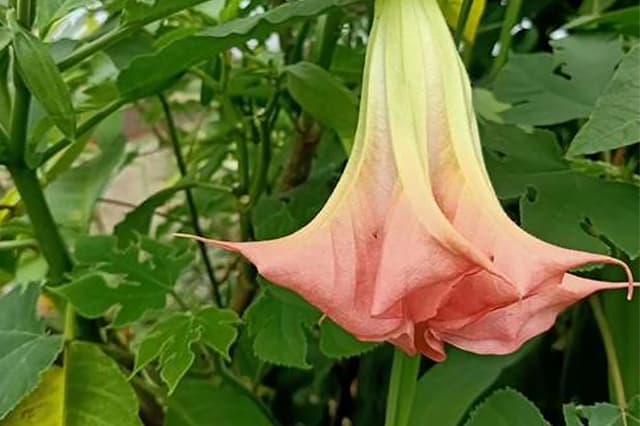
The Mandrake, also known as Mandala, Love Apple, or Belladonna, belongs to the Solanaceae family. With a thick, upright stem, the plant grows between 50-150 cm tall. Single flowers are found in the forks of branches or in the leaf axils, and vary in color from white to red and purple depending on the variety.
Blooming from June to October and fruiting from July to November, it can be found worldwide and across China, typically alongside residences, roadsides, or grasslands.
Highly toxic, the entire plant is poisonous. Accidental consumption of its seeds, fruits, leaves, or flowers can cause poisoning, so careful handling is essential.
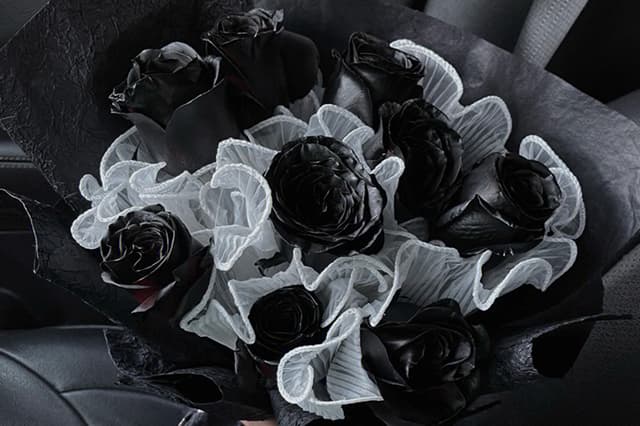
The Black Rose, a bisexual flower, has green shoots and thin, light purple young leaves. The upper surface of the leaf blade has sparse downy hairs. Mature leaves are larger, nearly round, medium-thick, and deep green, with purple-red petioles.
The Black Rose is a member of the Rosaceae family and is a kind of rose. There are two common types of black rose cut flowers. One is the “Black Magic,” which is neatly shaped and has thick petals that are black yet shine red, giving a luxurious and mysterious sensation.
The other one is called “Black Beauty.” Smaller and more delicate, its dark, black-red color sparkles with a velvety sheen.
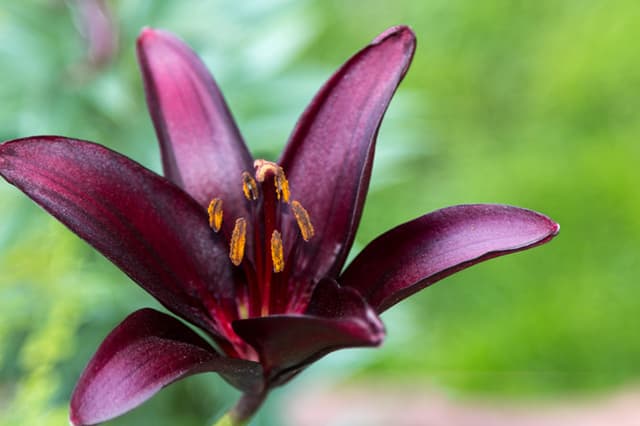
The Black Lily is a plant in the Liliaceae family, distributed in northern Japan, the Kuril Islands, Russia’s Sakhalin and Kamchatka Peninsulas, the Ussuri region, and the northwestern part of North America.
It is an alpine plant, growing in mountainous grasslands. Blooming in the summer, its flowers are purple-brown, about 3cm in diameter, bell-shaped, and facing downward.
It’s a perennial herbaceous plant with bulbs underground, growing 10-30cm long. Although the leaves are alternate, they form a whorled arrangement due to their density.
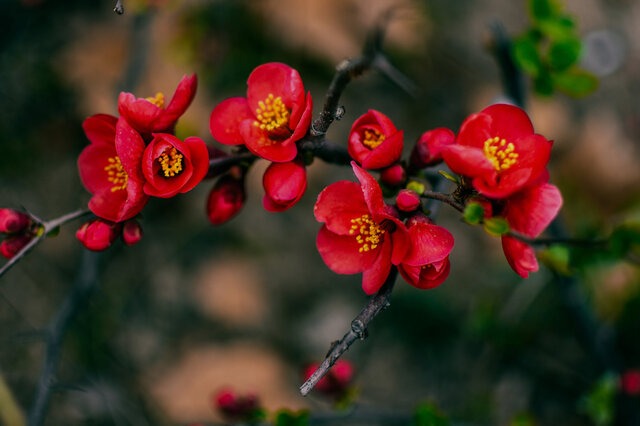
Begonia, a member of the Rosaceae family and the apple genus, is one of China’s traditional famous flowers and is unique to China. The Begonia is a deciduous shrub, reaching up to 8 meters in height with a broad ovate crown.
Its bark is smooth and grey-brown. The flower has five inverted ovate petals with yellow anthers. The fruit is globular and yellow-green, with a thick apex. The Begonia’s flowers are elegant, resembling a rich brocade.
They have been admired by all classes since ancient times, earning titles such as “the fairy of flowers,” “the noble lady of flowers,” and “the noble flower.” The Begonia has been planted in royal gardens alongside magnolias, peonies, and osmanthus, creating an atmosphere of “jade and begonia symbolizing wealth.
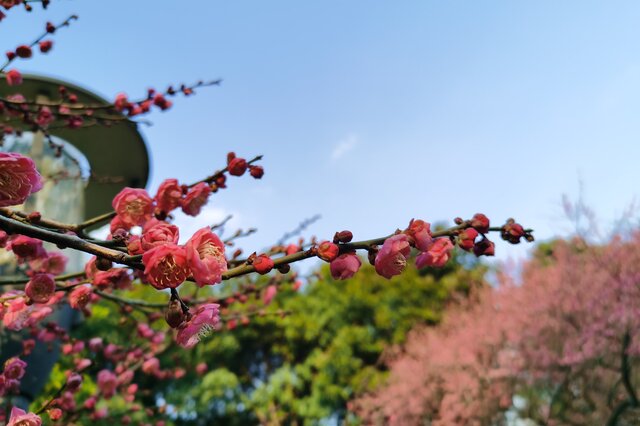
The Plum Blossom is considered the most famous among the top ten flowers in China. Alongside the orchid, bamboo, and chrysanthemum, it is known as one of the “Four Gentlemen,” and with pine and bamboo, it is called “Three Friends of Winter.”
Despite the severe cold, the plum blossom is the first to bloom, announcing the arrival of spring. The Plum Blossom is a small tree or shrub, typically reaching a height of 4-10 meters.
Its bark is very smooth and light grey, sometimes with a hint of green. Its leaves are oval or elliptical, with sharp small serrations on the edges, and are grey-green. The flowers have a strong fragrance and bloom in winter and spring.
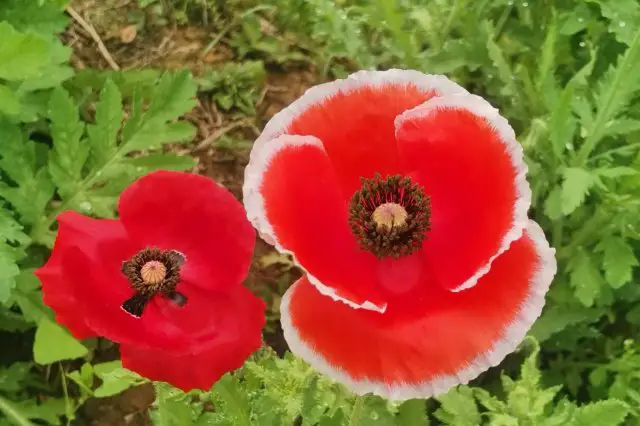
Poppies are annual herbs covered with extended stiff hairs or sometimes hairless. Their stems are upright, measuring between 25-90cm tall and often branched. Leaves are lanceolate or narrowly ovate, pinnately divided with lanceolate segments.
Flowers are single and grow at the tops of stems and branches. The bud is long and oval-shaped, pendulous with 2 wide oval-shaped sepals. Petals are circular, horizontally wide, oval-shaped or wide inverted ovate, measuring 2.5-4.5 cm long with purple-red edges and typically marked with dark purple spots at the base.
The fruit is wide inverted ovate, 1-2.2cm long, hairless and with not prominent ribs. There are many kidney-shaped seeds about 1mm long. They flower and fruit from March to August. Poppies are native to Europe and commonly cultivated in China as an ornamental plant.
The flowers and the whole plant are used in medicine, containing a variety of alkaloids with cough-suppressing, anti-diarrhea, analgesic, and sedative effects. The seeds contain over 40% oil.
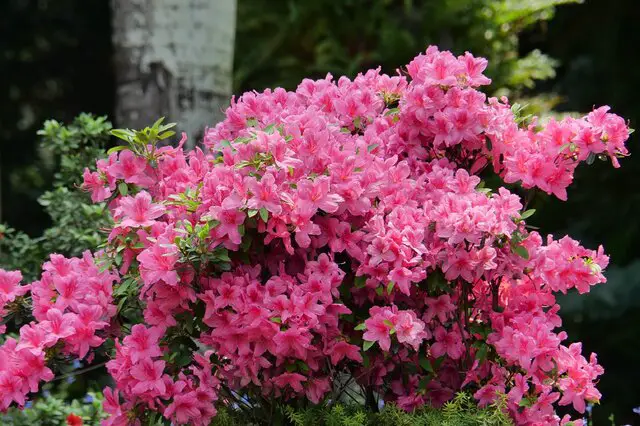
The azalea, also known as the Rhododendron or “Mountain Grenade,” is an evergreen shrub from the Ericaceae family and Rhododendron genus. It usually blooms in the spring with 2-6 flowers per cluster.
The corolla is funnel-shaped and comes in many colors, including red, light red, apricot, bluish snow, and white.
The plant is highly ornamental, boasting a gorgeous array of colors, and is the provincial or city flower of Jiangxi, Anhui, Guizhou, Changsha, Wuxi, and other provinces and cities in China. It was also named as one of China’s top ten famous flowers in 1985.
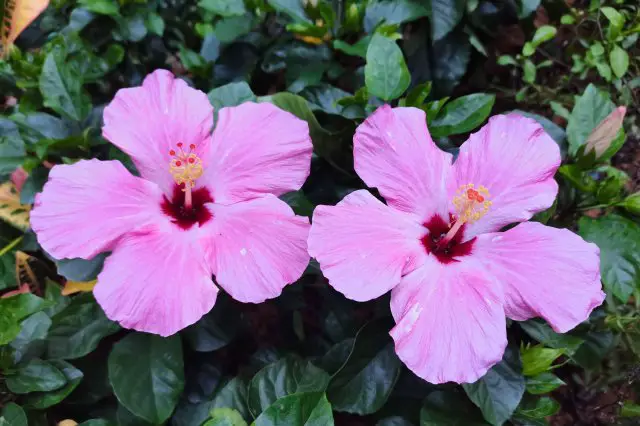
The Hibiscus, also known as the Chinese Rose, is a plant from the Malvaceae family and the Hibiscus genus. It’s often referred to as “Big Red Flower” in the Lingnan region of China due to its large red blossoms.
Native to China, the Hibiscus has a long history of cultivation in the country and is considered a traditional flower. The plant has an upright stem with many branches and can reach a height of up to 6 meters. Its leaves are alternately arranged and resemble the shape of mulberry leaves. The flowers are large and can be either single or double petaled.
Single-petaled flowers are funnel-shaped and typically rose-red, while double-petaled flowers come in red, yellow, pink, and white. The plant flowers all year round, peaking in summer and autumn.
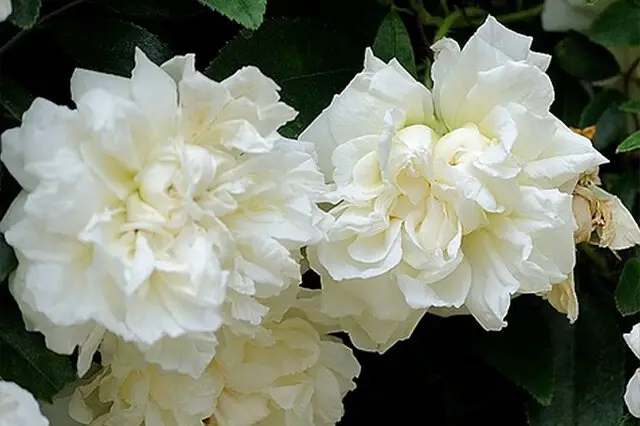
The Double-petaled Rubus, also known as Rubus or “Buddha’s Laughter,” is a variant of the Rubus genus in the Rosaceae family. Its branches are dense, its flowers are numerous and fragrant, and its fruit turns red in the fall. It’s suitable as a hedge, but can also be planted alone at the edge of a lawn.
The fruit can be eaten fresh or used for wine-making, and the root contains tannin which can be extracted for use in making glue. The flowers are a good source of nectar, and can be used to extract essential oils.
It grows in areas between 250 to 2200 meters above sea level and is commonly found in shrubs on slopes, grasslands, mixed forests, along streams, roadside slopes, shady places, and the edge of forests. It’s drought-tolerant but not flood

Peggie was once a high school mathematics teacher, but she set aside her chalkboard and textbooks to follow her lifelong passion for flowers. After years of dedication and learning, she not only established a thriving flower shop but also founded this blog, “Flowers Library”. If you have any questions or wish to learn more about flowers, feel free to contact Peggie.
 English
  العربية
  Bahasa Indonesia
  Deutsch
  Français
  Italiano
  Nederlands
  Português
  Русский
  日本語
日本語