Top 10 Famous Flowers in the World
What are the ten most famous flowers in the world? How are the top ten renowned flowers ranked globally? What are the most popular flowers worldwide? Flowers are herbaceous plants…

China is vast and abundant in resources, with a long history of flower cultivation. Over thousands of years of cultivation and application, rich flower cultures have been accumulated in different regions and periods. Choosing the top ten flowers that have rich cultural connotations and are world-famous has become China’s top ten famous flowers.
In this article, I will inventory the top ten famous flowers in China, which include plum blossom, orchid, peony, chrysanthemum, Chinese rose, azalea, lotus, and camellia. Let’s appreciate them together.
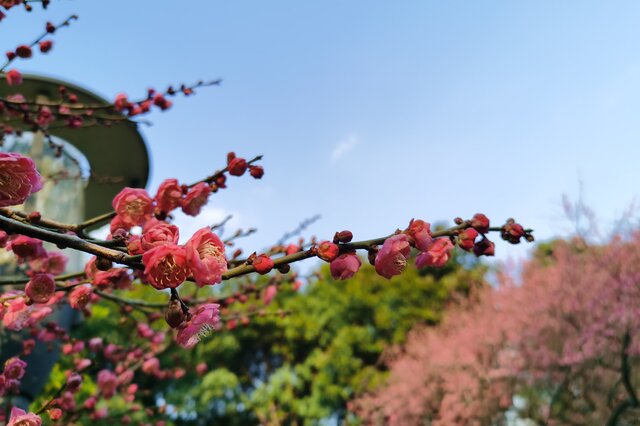
Ranked at the top of China’s ten famous flowers, the plum blossom is one of the “Four Gentlemen,” along with the orchid, bamboo, and chrysanthemum. Coupled with the pine and bamboo, it’s referred to as the “Three Friends of Winter.” In traditional Chinese culture, the plum blossom embodies a spirit of integrity, resilience, and modesty, inspiring people to strive and achieve. Amid the severe cold, it blooms before all other flowers, heralding the arrival of spring. The plum blossom, originally from southern China, has a cultivation history spanning over three thousand years, and there are numerous varieties for both ornamental and fruit-bearing purposes. Many types are not only cultivated for landscape beauty but can also be potted, forming bonsai. Its fresh flowers can be used to extract essential oils, and the flowers, leaves, roots, and seeds can all be used in traditional medicine. The fruit can be consumed fresh, preserved in salt, or smoked into black plum, a remedy known for its cough-suppressing, diarrhea-relieving, salivation-inducing, and thirst-quenching effects.
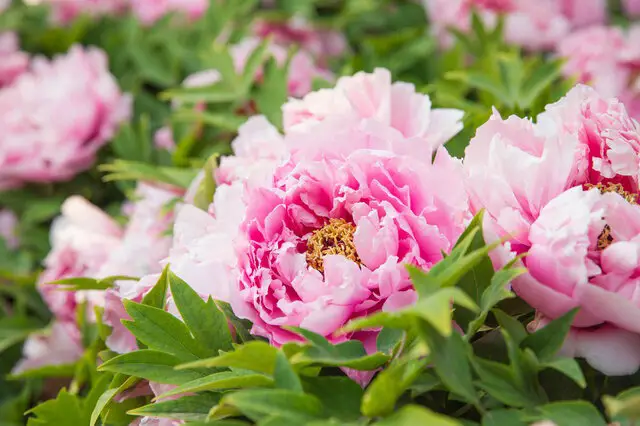
Known for its “national color and heavenly aroma,” the peony is one of China’s ten famous flowers. Peonies are large and fragrant, with a plethora of varieties and hues. Yellow, green, pink, deep red, and silver red are considered top-notch, especially the rare yellow and green ones. Their blooms elicit a charm that’s elegant, luxurious, and regal. In the late Qing dynasty, the peony was even recognized as China’s national flower. In May 1985, it was ranked as the second of China’s ten famous flowers. This prestigious woody plant, unique to China, boasts thousands of years of natural growth and more than 1500 years of cultivation history. Widely grown in China, it has also been introduced to various parts of the world. The peony blooms in May, with fruiting occurring in June.
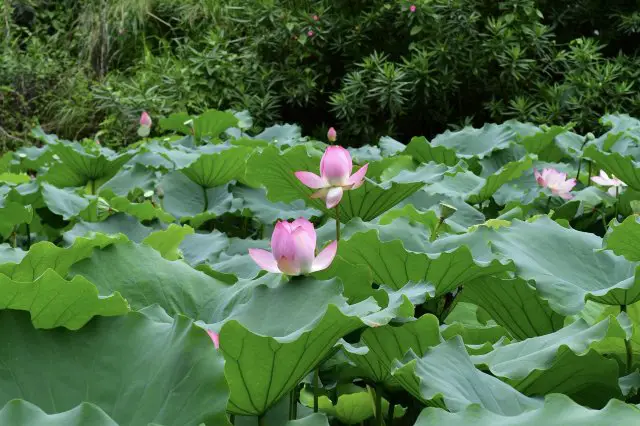
The lotus, one of China’s ten famous flowers, blossoms from June to September, boasting numerous varieties for both ornamental and culinary uses. Its noble character – “standing tall and straight, unstained by the mud from which it emerges, and not bewitched by its clear and lustrous surroundings” – has always been a favored subject for poets and painters throughout history. Native to tropical and temperate regions of Asia, the lotus has been cultivated in China since the Zhou dynasty. Every part of the lotus is valuable: the roots and seeds are edible, while the seeds, rhizomes, nodes, leaves, flowers, and seed germ can all be used in medicine. Its ability to emerge unsullied from the mud is constantly lauded. “The endless green of the lotus leaves reaching to the sky, the unique red of the lotus flower reflecting the sun” – this vividly captures the beauty of the lotus.
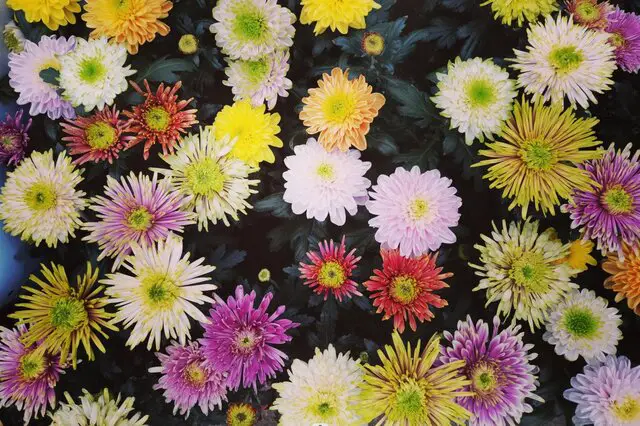
The chrysanthemum is one of China’s ten famous flowers and one of the “Four Gentlemen” (plum, orchid, bamboo, and chrysanthemum). It is also one of the four major cut flowers in the world (chrysanthemum, rose, carnation, and iris), ranking first in terms of production. The chrysanthemum truly is the master of the autumn. Be it the many cultivated varieties like standard chrysanthemums, desk chrysanthemums, cliff chrysanthemums, big daisies, small daisies, and Japanese small chrysanthemums, or wild ones like gan chrysanthemums, ox-knee chrysanthemums, pampas grass chrysanthemums, green chrysanthemums, small red chrysanthemums, and asters, all bloom in competition during the autumn season, offering an eye-catching display. Besides their aesthetic value, chrysanthemums can be used medicinally and drinking chrysanthemum tea can contribute to longevity. They bloom from September to November and come in a plethora of colors.
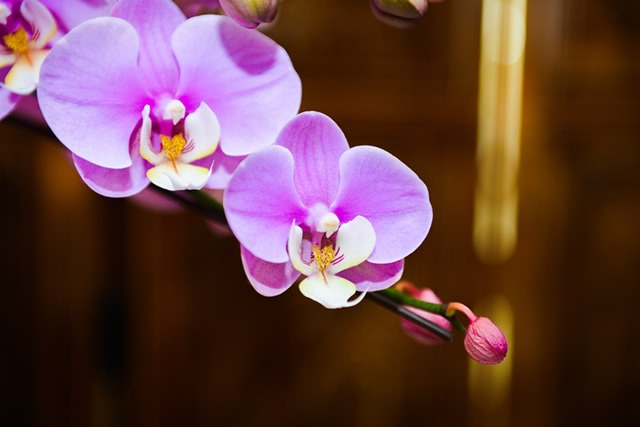
In May 1985, the orchid was named as the fourth of China’s ten famous flowers. Chinese people have always viewed orchids as a symbol of noble and elegant character. Along with the plum, bamboo, and chrysanthemum, they are collectively referred to as the “Four Gentlemen.” The term “orchid chapter” symbolizes the beauty of poetry and literature, and “orchid friendship” stands for genuine friendship. Orchids are also used to express pure love: “As constant as the fragrance of the orchid, as unchanging as the heart of the orchid” and “Finding the secluded orchid to confide in a close friend, a single branch is gifted to dream of Xiaoxiang.” The flowering period of orchids is long, with different flowers blooming in each of the four seasons. The spring orchid blooms around mid-March; the summer orchid, also known as the fragrant orchid, blooms in late May; the autumn orchid, commonly known as Jianlan, first blooms from late July to early August and then again in early October; the winter orchid blooms from mid-November to mid-December.
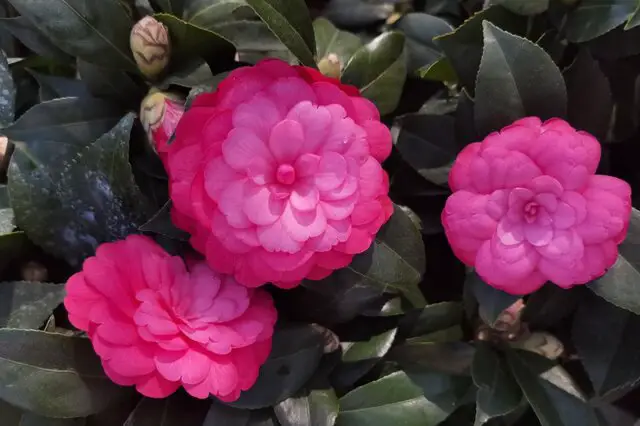
One of the ten famous flowers, the Camellia is also a renowned and valuable plant globally, boasting numerous varieties as a traditional ornamental flower in China. Its flowering period is quite long, from October to May of the following year, with its peak usually between January and March. Camellias come in varying degrees of red, purple, white, and yellow, even including multicolored and patterned varieties. The plant can reach up to 4 meters in height. It prefers warm, humid environments and originates from Eastern China, widely cultivated in the Yangtze and Pearl River basins, Chongqing, Yunnan, Sichuan, Korea, Japan, Taiwan, and India. Its beautiful form, glossy dark-green leaves, and colorful, dazzling flowers are greatly appreciated in the world of horticulture.
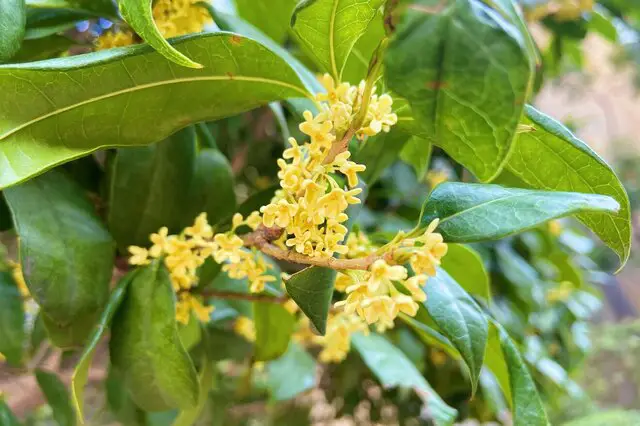
The osmanthus is one of China’s traditional ten major flowers. As an excellent ornamental and practical garden species, it brings together greening, beautification, and fragrance. Its scent, clean enough to dispel dust and strong enough to spread far, is truly remarkable. It blooms in early September to October, primarily in golden hues. Especially during mid-autumn, when osmanthus flowers burst forth in a serene, moonlit night, drinking wine and enjoying the intense fragrance is an invigorating experience. In the history of Chinese poetry, there are many works praising the osmanthus. Since ancient times, it has been loved by the Chinese people and is considered a traditional famous flower. The flowers of osmanthus grow between the leaves, with small, four-lobed, coalescing corolla. It has many horticultural varieties, the most representative of which include golden osmanthus, silver osmanthus, cinnabar osmanthus, and moon osmanthus. Osmanthus can be used in food, cosmetics, pastry, candy, and even in wine brewing.
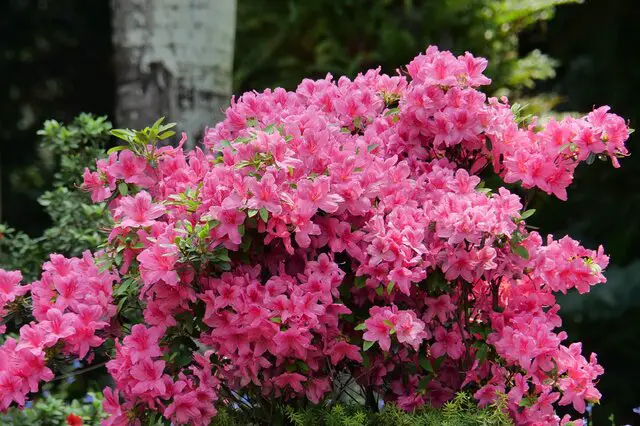
One of the ten famous flowers of China, the Azalea is known for its bright red petals and high ornamental value, cultivated in parks worldwide. The name comes from an ancient tale of a bird, the cuckoo, crying day and night until it coughed up blood, staining the surrounding flowers red. The entire plant is used medicinally, promoting blood circulation, replenishing deficiency, treating internal injury cough, kidney deficiency deafness, irregular menstruation, and rheumatism. The Azalea typically blooms in the spring, with 2-6 flowers per cluster. The funnel-shaped flowers come in red, light red, apricot red, bluish snow, white, etc., making them rich and dazzling.

52 cities in China have chosen the rose as their city flower, and it was ranked as the fifth of the ten famous flowers of China in May 1985. The rose blooms all year round, typically in red or pink, occasionally in white and yellow, thus also known as the “Monthly Red”. With their splendid beauty and diverse forms, roses are deeply loved by people. They are rich and colorful, not only in single colors such as red, pink, yellow, and white, but also in mixed colors and silver-edged varieties. Most of the species are fragrant. With nearly 10,000 varieties worldwide, and over a thousand in China, the rose is one of the most diverse flowers. China is one of the original habitats of the rose.
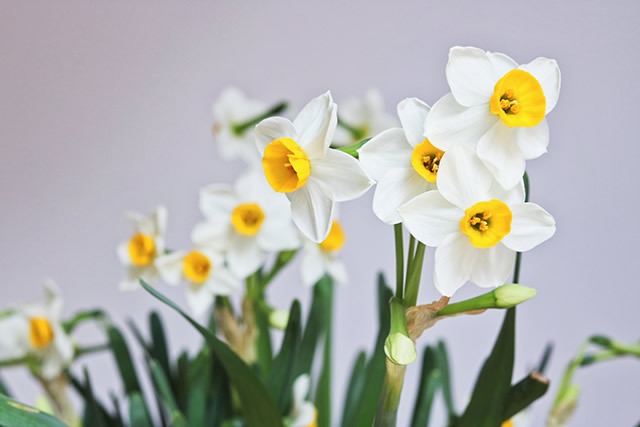
Ranked tenth among the ten famous flowers of China, the Narcissus is a traditional ornamental flower with a cultivation history of over a thousand years in China. It usually blooms in winter. The Chinese Narcissus has a unique natural beauty, a fresh fragrance, purity, elegance, and transcendence. Therefore, it has been ranked with orchids, chrysanthemums, and irises as the “four nobles” among flowers since ancient times. It is also listed with plum blossoms, camellias, and wintersweets as the “four friends” in the snow. With just a plate of clear water and a few pebbles, it can bring a touch of spring to a windowsill or desk during the cold winter months, offering a sense of auspiciousness and warmth. People use it to celebrate the New Year, as a flower offering for the “New Year’s morning.

Peggie was once a high school mathematics teacher, but she set aside her chalkboard and textbooks to follow her lifelong passion for flowers. After years of dedication and learning, she not only established a thriving flower shop but also founded this blog, “Flowers Library”. If you have any questions or wish to learn more about flowers, feel free to contact Peggie.
 English
  العربية
  Bahasa Indonesia
  Deutsch
  Français
  Italiano
  Nederlands
  Português
  Русский
  日本語
日本語