600+ Types of Flowers A To Z (With Names and Pictures)
Types Of Flowers By Names (A-Z) Types Of Flowers By Color Types Of Flowers By Season Types Of Flowers By Blooming Time 600+ Types of Flowers No. Flower Name No.…

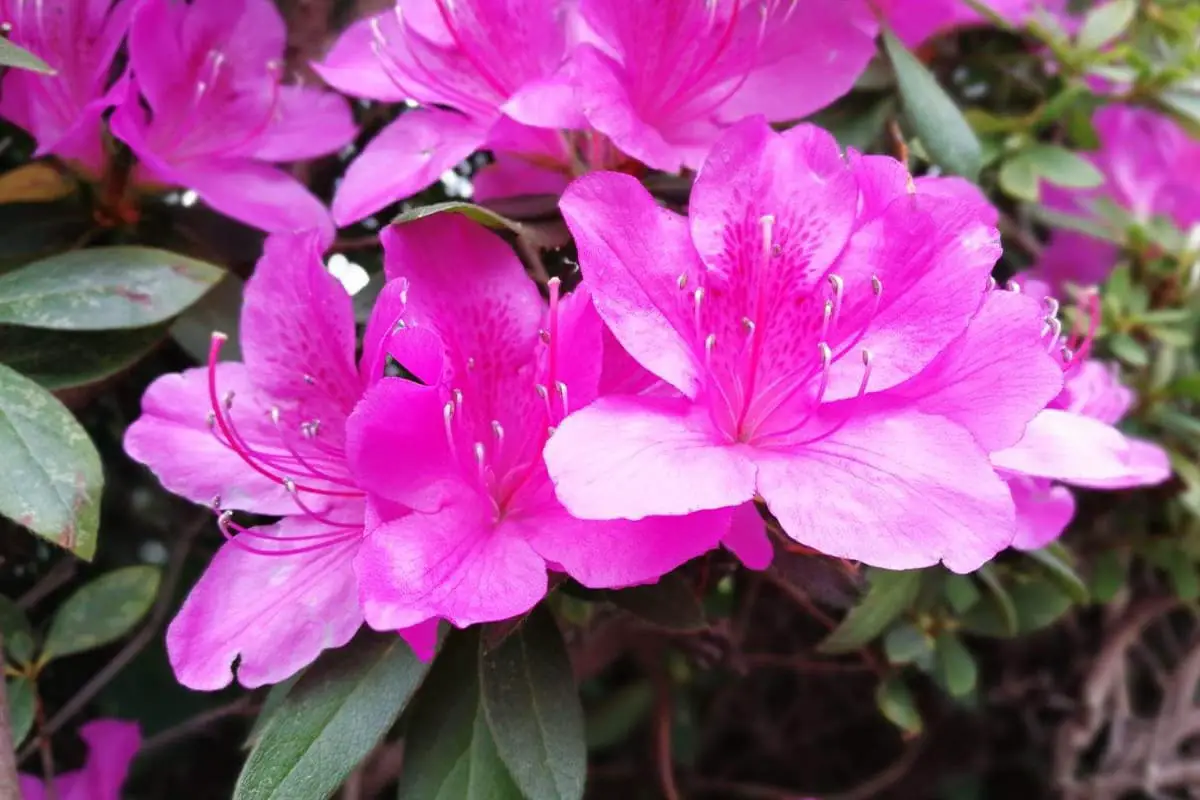
The Rhododendron, colloquially known as the Azalea, also dubbed the Red Mountain Azalea or Mountain Pomegranate, is a perennial evergreen shrub and deciduous shrub, classed under Dicotyledoneae, Rhododendron family and genus.
The Azalea typically blooms in spring, with each cluster containing 2-6 flowers. Its funnel-shaped corolla comes in various shades – red, light red, apricot, pale blue, white, etc. The vibrant array of colors gives the Azalea a high aesthetic value, leading to its selection as one of China’s top ten famous flowers in 1985.
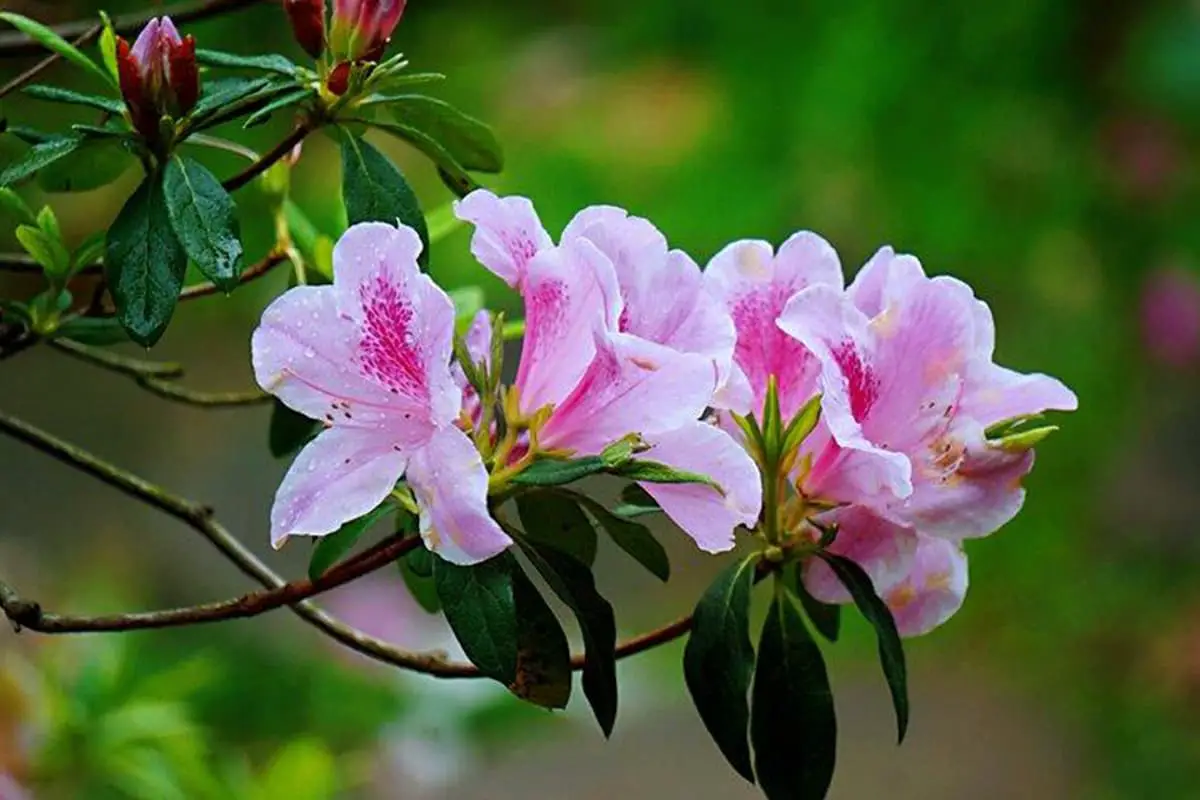
Azalea, also called Red Mountain Azalea or Mountain Pomegranate, is a perennial evergreen or deciduous shrub. As the ancient story goes, the name originated from a mythical bird called the Azalea, which cried day and night until it bled, staining flowers all over the mountains red.
The Azalea tends to bloom in spring, producing clusters of 2-6 flowers, their funnel-shaped corolla boasting a myriad of colors, creating a vibrant, beautiful spectacle. Thriving under the pine forests or sparse shrubs in mountainous areas from 500-1200m in altitude, Azaleas are typical acid-soil indicating plants found in central, south, and southwest China. With its bright red corolla, this notable flowering plant possesses substantial ornamental value, hence cultivated in parks worldwide.
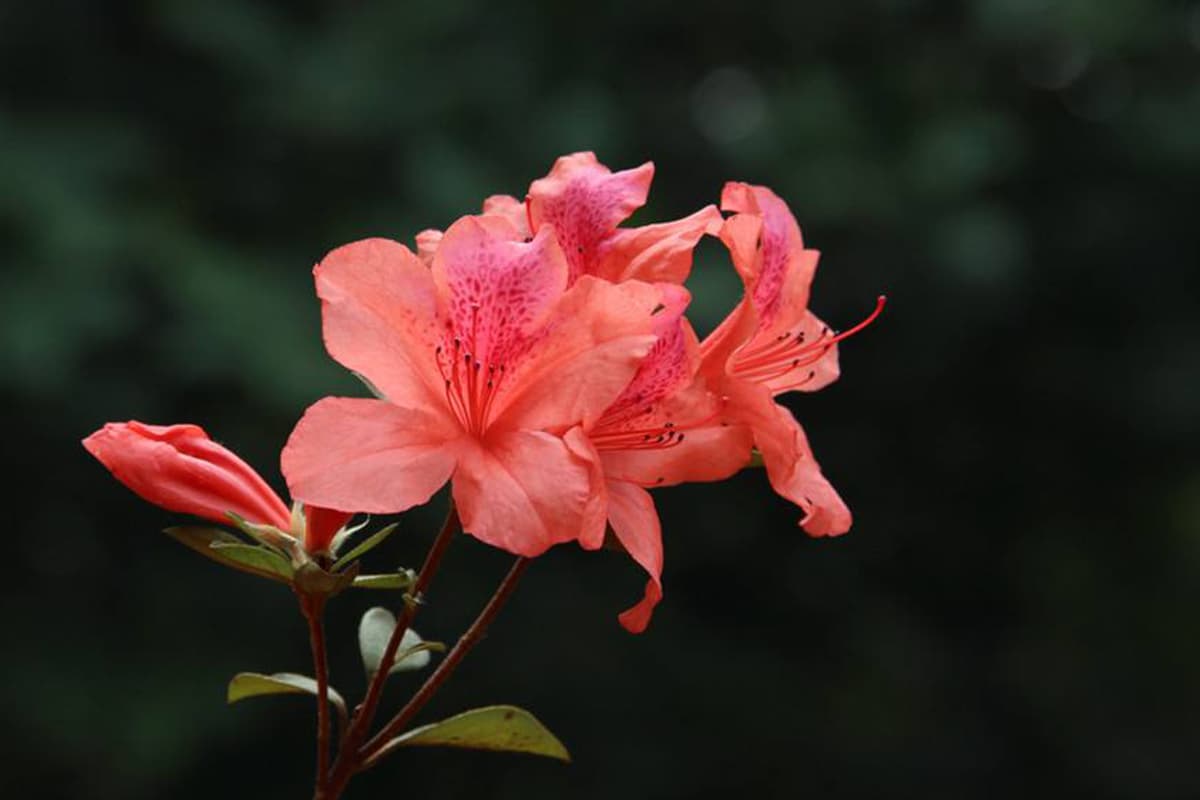
Azaleas are classified into five major lines: the Spring Azalea, Summer Azalea, Western Azalea, Eastern Azalea, and Alpine Azalea.
Spring Azaleas are early bloomers that flower before sprouting leaves in mid-April, late April, or early May. Because they bloom in spring, they were named Spring Azaleas, a title that has persisted until today.
Also known as the “hairy azalea” due to its hairy leaves or “large-leaf azalea” for its large leaves, Spring Azaleas are variants and hybrids of the white azalea and brocade azalea. These evergreen, upright shrubs grow either as a single stem or in clusters and boast vibrant growth. They bloom in late April to early May, with their branches covered in flowers.
Each bud produces three flowers, large, and their corolla is wide and bell-shaped, mostly single-petaled and five-lobed, with deep spots on the throat. They come in shades of bright red, dark red, and brocade.
After flowering, 3-5 or 6-7 new shoots emerge, and by July to August, they begin to form flower buds. They are frost-resistant and primarily used for ground planting. Owing to their rapid growth and propagation, they are often used as rootstock for grafting Western Azaleas or other new varieties. Simultaneously, they are commonly used in landscaping work, often as ground-cover color blocks or for scene creation.
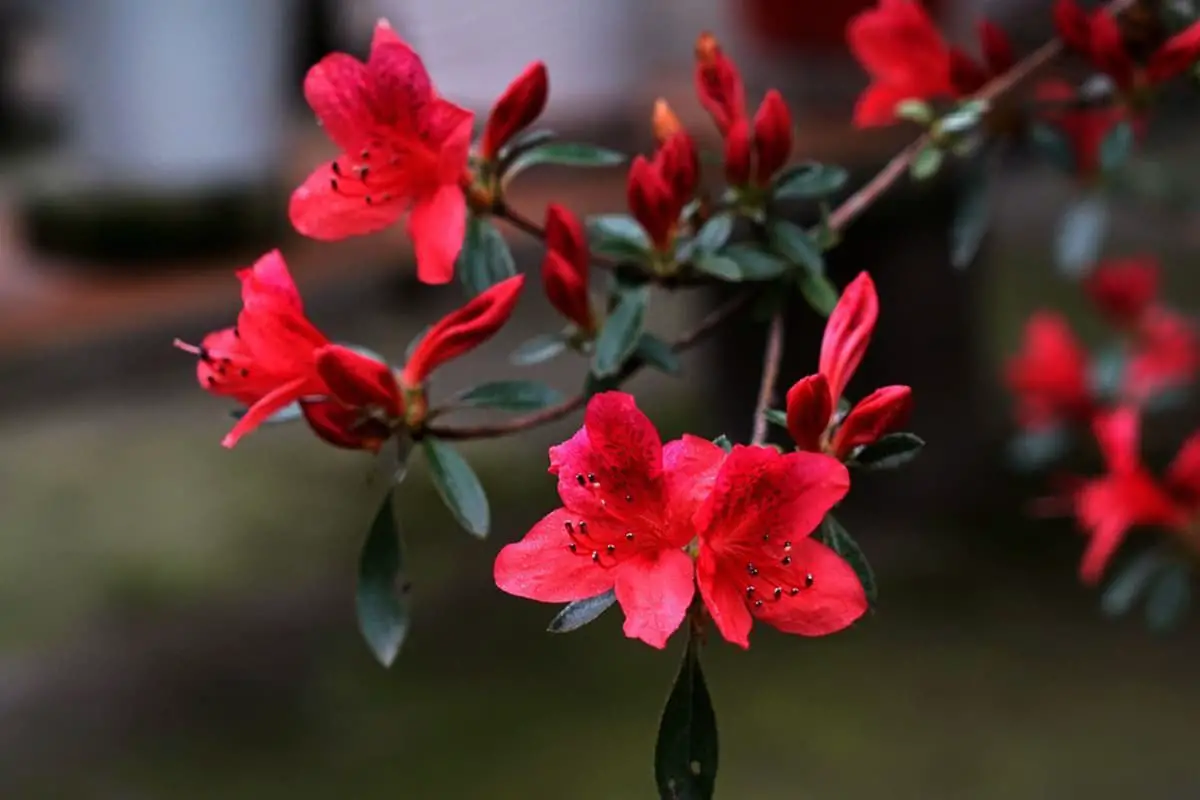
Summer Azaleas sprout leaves and branches in spring, blooming around May to early June, hence their name. Their main parents are reportedly the Gao Yue Azalea and May Azalea.
Distinctive features include a spreading evergreen shrub, a low and dense plant with strong branching, and a full crown that is trim-tolerant. The leaves are thick, dark green, and hairy, turning dark red after frost. Blooming period is from mid-May to June, sometimes extending until July-August. The corolla is wide and bell-shaped.
The flowers can be single-petaled, double-petaled, or nested, with great variation in petal shape, including round, smooth, wavy, or curled. Blooming all year round, with yellow, red, white, and purple flowers, Summer Azaleas beautify the environment throughout the four seasons. They can be planted in pots or in the ground under shady conditions.
Summer Azaleas grown on balconies should be pruned into a spherical shape for aesthetic purposes, while those planted in the yard should be pruned into an umbrella shape, enhancing the landscape with their charming form.
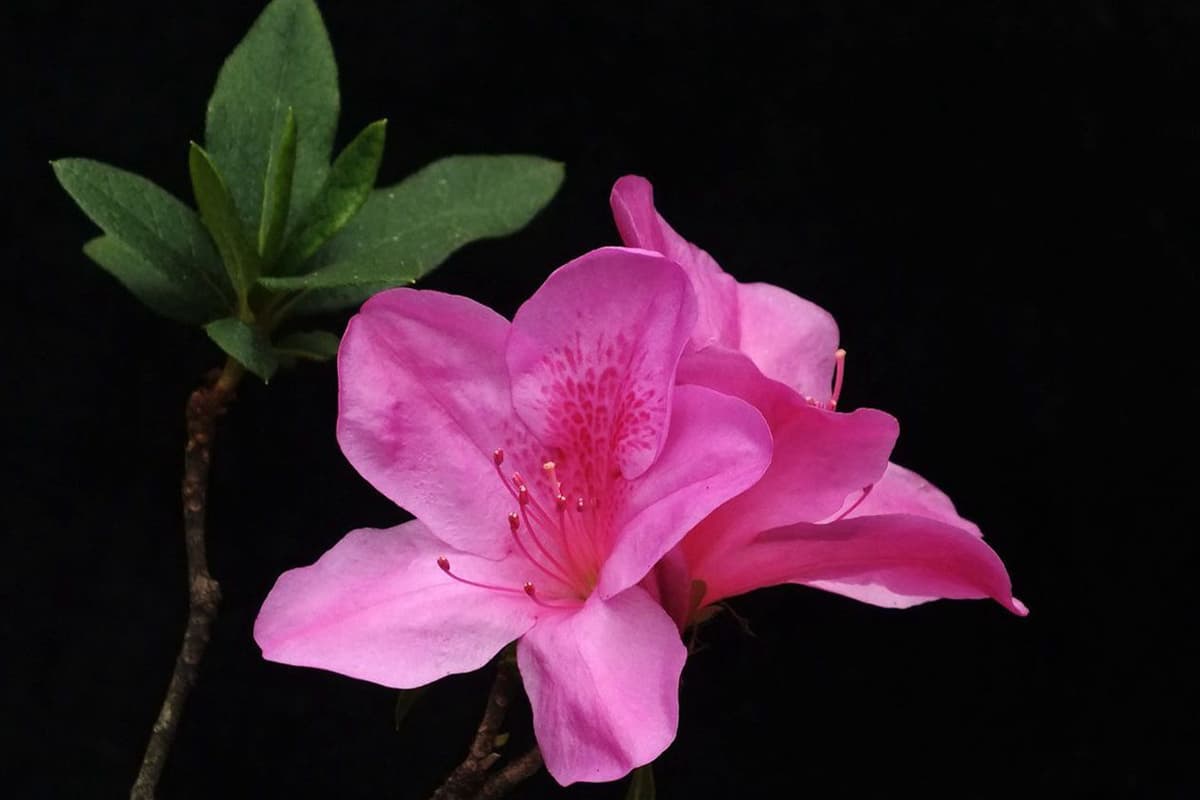
Eastern Azaleas are variants of the Japanese Rock Azalea and its numerous hybrids. They are referred to as Eastern Azaleas in response to the Western Azaleas. They bloom in spring, and in some areas, they are categorized under Spring Azaleas.
Key characteristics include low-lying, soft, and thin branches. Leaves are ovate, thin, sparsely hairy, tender green, and glossy. The 3-4 flower buds at the tip of the branches create a dense bloom, often described as “more flowers than leaves.” The small, funnel-shaped corolla often features a two-layered calyx that transforms into the corolla, referred to as double or nested. Flower colors range from red, purple, white, pinkish white, tender yellow, greenish white, to bi-colored or brocade.
Some have five stamens, while others have petalized stamens forming highly double-petaled flowers. They bloom a few days earlier than the hairy azalea. In July-August, old leaves wither as flower buds form. While they prefer shade, they can be grown outdoors, demonstrating vigorous regeneration and high pruning tolerance. Their fine flowers, branches, and leaves make them ideal for landscaping and shaping potted plants.

Renowned for their stunning flowers, Western Azaleas are very popular. Specifically, the Belgian Azalea, a horticultural variety bred in Europe and America, is named Western Azalea. Western Azaleas were introduced to various countries from Japan, and their Japanese translated names are still in use for those brought in from Japan.
Alpine Azaleas are a variety of evergreen shrubs or small trees from the Rhododendron family, typically found in high-altitude regions.
Alpine Azaleas are characterized as evergreen shrubs or small trees, ranging 1-3m in height. They have sturdy branches with leaves clustered at the top, and their thick, leathery leaves bloom between April and May.
The majority of the flowers are nested or double-petaled, with a minority being single-petaled. They bloom for approximately a month and come in shades of white, pink, and yellow. Commonly found in the wild, at altitudes between 600-800m, they possess strong adaptability. With proper cultivation and domestication, Alpine Azaleas can become common evergreen ornamental plants in landscaped green spaces.
Rhododendrons grow in mountainous sparse shrubs or under pine forests at altitudes of 500-1200 meters. They prefer acidic soil and do not grow well in calcareous soil, sometimes not growing at all. Therefore, soil scientists often use rhododendrons as indicators of acidic soil. Rhododendrons thrive in cool, moist, and well-ventilated semi-shaded environments.
They are sensitive to extreme heat and cold. The optimal temperature for growth ranges from 12°C to 25°C. If the summer temperature exceeds 35°C, new shoots and leaves grow slowly, entering a semi-dormant state. It is important to provide shade protection in summer and ensure warmth and cold protection in winter. They should avoid intense sunlight and prefer to grow under diffused light with moderate intensity.
Excessive sunlight can cause burning of tender leaves and result in leaf scorching, and in severe cases, plant death. In winter, measures should be taken to protect rhododendrons grown in open ground to ensure safe wintering. Among ornamental rhododendron varieties, the “Western Azalea” has the weakest cold resistance and is susceptible to frost damage when the temperature drops below 0°C.
Originally from East Asia, they are distributed in China, Japan, Laos, Myanmar, and Thailand.
Rhododendrons are deciduous shrubs, growing 2-5 meters tall. They have many slender branches densely covered with shiny brownish-brown flat rough hairs. The leaves are leathery, usually clustered at the ends of branches. They are ovate, elliptical, inverted ovate, or inverted lanceolate in shape, with short acuminate tips and wedge-shaped or broadly wedge-shaped bases.
The edges are slightly curled with fine teeth. The upper surface is deep green and sparsely covered with rough hairs, while the lower surface is pale white and densely covered with brown rough hairs. The midrib is concave on the upper surface and convex on the lower surface. The leaf stalks are 2-6 millimeters long and densely covered with shiny brownish-brown flat rough hairs.
The flower buds are ovoid, and the scales on the outer surface are covered with rough hairs above the middle, with eyelashes along the edges. The flowers are clustered in groups of 2-6 at the top of the branches. The flower stalks are 8 millimeters long and densely covered with shiny brownish-brown rough hairs. The calyx is deeply divided into 5 triangular or elongated-ovate lobes, covered with rough hairs and eyelashes along the edges.
The corolla is wide funnel-shaped, with colors ranging from rose, bright red to dark red. The 5 lobes are inverted ovate, with deep red spots on the upper lobes. There are 10 stamens, which are about the same length as the corolla. The filaments are thread-like and covered with fine hairs below the middle. The ovary is ovoid, with 10 chambers and covered with shiny brownish-brown rough hairs. The style extends beyond the corolla and is hairless.
Rhododendrons are shade-loving plants, and direct sunlight is detrimental to their growth. Therefore, when establishing a rhododendron garden, it should be located in a shaded area or consider incorporating tall trees into the landscape design.
Rhododendrons prefer well-drained acidic soil. However, due to the use of cement for roads and pavements in gardens and landscapes, the soil in the planting area can become compacted and alkaline, which is unfavorable for rhododendron growth. Therefore, the soil in the planting area must be replaced and supplemented with a certain amount of peat soil.
North of the Yangtze River, rhododendrons are mainly cultivated in pots for ornamental purposes. The potting soil consists of leaf mold, sandy soil, and garden soil in a ratio of 7:2:1, mixed with cake fertilizer and stable manure, and then planted. Generally, repotting or soil replacement is done in March during spring. In the southern regions, ground planting is more common. Rhododendrons should be planted before the onset of spring sprouting.
Choose a location that is well-ventilated and semi-shaded. The soil should be loose, fertile, and rich in humus. Acidic sandy loam soil is most suitable. It is important to avoid waterlogging as it is not conducive to the normal growth of rhododendrons. After planting, firm the soil and water thoroughly.
Rhododendrons are best planted in early spring or late autumn. If planted in other seasons, shading should be provided, and during planting, the roots and soil should be compacted evenly but not excessively. The soil near the rhizome should form an arc-shaped surface, which protects the shallow root system from freezing cold and aids in drainage.
In late April, move the plants out of the greenhouse and place them in a sunny, wind-sheltered area. Provide shade during summer or place them under the shade of trees to avoid direct sunlight. The optimal temperature for growth is between 15°C and 25°C, and it should not exceed 32°C. In mid-October, move them indoors and place them in a sunny location. Maintain a temperature of 5-10°C, ensuring it does not drop below 5°C as it will inhibit growth.
Rhododendrons prefer moist, but not waterlogged, soil. In general, for rhododendrons planted in open ground during spring and autumn, watering thoroughly every 2-3 days is sufficient. During hot summer months, watering should be done at least once a day.
Avoid using alkaline water for irrigation, and pay attention to the water temperature. Using excessively cold water, especially during hot summers, can cause a sudden decrease in soil temperature, affecting water absorption by the roots and disrupting the plant’s physiological balance.
After planting or repotting, water thoroughly once to ensure good contact between the roots and soil, promoting root establishment and growth.
During the growing season, starting from March, gradually increase the amount of watering, especially in summer when water should not be withheld. Keep the potting soil moist but not waterlogged. After September, reduce watering, and in winter, allow the potting soil to dry out before watering again.
Rhododendrons prefer a high humidity environment. However, some rhododendron gardens are located in areas with fast airflow, such as squares or roadsides, which can be relatively dry. Therefore, it is necessary to regularly spray the foliage or mist the surrounding air to maintain humidity in the rhododendron garden.
During late winter or early spring, apply organic fertilizer as a basal dressing for the rhododendron garden. After the rhododendrons bloom in April or May, as they consume a large amount of nutrients during the flowering period and develop new shoots, fertilize every 15 days.
During the late summer when most branches have stopped growing and physiological activities are reduced, fertilizer application can be discontinued. In autumn, as the climate becomes cooler with frequent autumn rains, which are favorable for rhododendron growth, a final round of fertilization can be done. Avoid fertilizing during winter.
Proper fertilization is key to maintaining healthy rhododendrons. Use a dilute solution of cake fertilizer every 10 days during the vigorous growth period in spring and autumn. This can be prepared by fermenting rice water, fruit peels, vegetable leaves, etc.
Additional phosphorus and potassium fertilizer can be applied in autumn. This can be prepared by fermenting fish or chicken offal, rinsed meat water, rice water, and some fruit peels. In addition to homemade organic fertilizers, commercially available fertilizers can also be used, but remember to apply them sparingly.
Apply dry fertilizer once before winter, and avoid applying bottom fertilizer during repotting. Furthermore, when watering or fertilizing, do not use tap water directly. It should be acidified and used when the pH value reaches around 6.
Pruning is an important maintenance measure for regulating growth and promoting vigorous development. Regular pruning involves removing diseased and weak branches, as well as thinning out crowded branches to improve ventilation and light penetration, which benefits plant growth. Regular inspection of the rhododendron garden is necessary to identify and promptly remove dead and diseased branches, minimizing the spread of pests and diseases.
During the bud stage, timely removal of buds helps concentrate the nutrient supply and promotes vibrant and colorful flowers. Pruning of branches is generally done in spring and autumn, removing crossing branches, overcrowded branches, overlapping branches, and weak ones. Remove faded flowers promptly. When shaping the plant, follow a natural tree form with slight artificial modification, allowing personal preference and desired tree aesthetics.
If you want to see flowers during the Spring Festival, you can move potted rhododendrons to a sunny greenhouse at a temperature of 20°C in January or 20 days before the Spring Festival. Keep the other management practices normal, and you can enjoy the flowers during the Spring Festival. If you want to see flowers during the May Day holiday, you can move the pots to a cool indoor storage area below 5°C before the early spring bud break.
On April 10th, place them in a sunny greenhouse at a temperature of 20°C. On April 20th, move them outdoors, and you can see the flowers during the May Day holiday. Therefore, temperature adjustment can control the flowering period according to your preferences, allowing blooming throughout the year. Additionally, plants that are pruned immediately after flowering can bloom in late October.
Pruning during the vigorous growth season can delay the flowering period by approximately 40 days. If combined with pruning during the propagation by cuttings, the flowering period can be delayed until the following year in February. Different pruning times also affect the timing of flowering.
Rhododendrons can be propagated by cuttings, grafting, layering, division, and seed sowing. Among these methods, cuttings are the most common and yield a large number of plants. Layering is fast, while grafting is more complex and is only used for varieties that are difficult to root via cuttings. Seed sowing is mainly used for breeding new varieties.
This method is widely used and has the advantages of simple operation, high survival rate, rapid growth, and stable characteristics.
① Timing: For “Western Azalea,” it is suitable to take cuttings from late May to early June. For “Mollis Azalea,” it is suitable to take cuttings in mid to late June. For “Spring Azalea” and “Summer Azalea,” it is suitable to take cuttings in late June. During this period, the branches are moderately mature, and the climate is warm and humid.
② Cuttings: Take newly woody branches from the current year’s growth, break them off with a heel, remove the apical buds, and retain 3 to 5 leaves at the top. Keep the cuttings moist until ready for insertion.
③ Cutting Management: The rooting medium for cuttings can be composed of orchid soil, high-mountain humus soil, yellow loam, and vermiculite. The depth of insertion should be about one-third to one-half of the length of the cutting.
After inserting the cuttings, thoroughly spray with water, cover with a thin film to maintain moisture, and provide appropriate shading. Keep the rooting medium moist throughout the month. “Mollis Azalea,” “Spring Azalea,” and “Summer Azalea” usually root within a month, while “Western Azalea” may take 60 to 70 days.
High mound layering is commonly used. Rhododendron layering is usually done between April and May. The specific procedure is as follows: Select vigorous branches from the potted mother plant, which are 2 to 3 years old. About 10 to 12 centimeters below the top of the branch, use a sharp knife to make a 1-centimeter-wide circular cut to remove the bark cleanly.
Gently peel off the phloem to cut off the passage for downward transport of organic substances, allowing them to accumulate and promote cell division, forming nodular protrusions and developing root buds. Then loosely wrap the area with a rectangular plastic film, winding it two times. Tie it tightly with a string about 2 to 3 centimeters below the lower end of the circular incision, leaving the upper end of the plastic film open like a trumpet-shaped bag.
Immediately fill the bag with damp soil and a little moss, and then tie the upper end of the bag tightly. Place the pot in a location where direct sunlight cannot reach for daily management. When watering, spray water onto the leaves, allowing it to flow down the branches and slowly penetrate into the bag, ensuring that the soil inside the bag remains moist, facilitating the healing of the wound on the branches and promoting the early formation of new roots.
After approximately 3 to 4 months, when the roots are about 2 to 3 centimeters long, the branches can be cut off from the mother plant and planted in new potting soil.
Multiple grafting on a single stock, with multiple varieties, results in fast growth and good plant form, and has a high survival rate.
① Timing: Grafting is usually done between May and June, using the approach grafting or cleft grafting method.
② Stock: Select 2-year-old “Mollis Azalea” as the stock. The new shoots and scion should be of appropriate size. Good stock varieties include “Mollis Azalea – ‘Yu Hudie’ (Butterfly Yellow)” and “Mollis Azalea – ‘Zi Hudie’ (Butterfly Purple).”
③ Scion: On the mother plant of “Western Azalea,” cut tender shoots that are 3 to 4 centimeters long, remove the lower leaves, and retain 3 to 4 small leaves at the top. Cut the base into a wedge shape with a length of approximately 0.5 to 1.0 centimeters.
④ Grafting: Cut the new shoots of “Mollis Azalea” at a length of 2 to 3 centimeters above the base and remove the leaves at that section. Make a vertical incision of about 1 centimeter, insert the scion with the wedge-shaped end, aligning the cambium layers, and tie the joint with plastic film.
Cover the top with a plastic bag, tied tightly for moisture retention. Place it in a shaded area, avoiding direct sunlight and exposure. After 7 days of grafting, if there are small water droplets inside the bag and the scion does not wither, it is possible that it will survive. After 2 months, remove the bag, and the following spring, untie the binding tape.
Most rhododendrons can produce seeds, except for those with heavy double petals. Generally, the seeds mature from October to January each year. When the fruit skin turns from green to yellowish-brown, and the top of the fruit cracks open, the seeds start to scatter, and they should be collected promptly. Harvest the seeds that have not fully cracked open and spread them in a well-ventilated indoor area to dry naturally.
Remove the fruit shells and impurities, and store the seeds in paper bags or cloth bags in a cool and well-ventilated place. If you have a greenhouse, you can sow the seeds immediately after harvesting for higher germination rates. The general sowing time is from March to April, using pot sowing. Since the seeds are small, clean both the inside and outside of the pot, dry them in the sun, sterilize them, and sterilize the soil as well.
Use a potting mix with good permeability, moist and fertile, and rich in organic matter. To ensure even germination, mix the seeds with some fine soil, sprinkle them on top of the pot, and cover with a thin layer of fine soil. Water them by bottom watering, allowing the water to seep into the pot. Place the pot on a sunny windowsill and cover it with glass or plastic film to increase the temperature inside the pot. After the seedlings emerge, gradually reduce the covering time.
Pay attention to temperature changes, sudden fluctuations, and strong light, as the seedlings are tender and small. The seedlings grow slowly, and it takes until May or June for them to develop 2 to 3 true leaves.
At this time, perform the first transplantation indoors. The spacing between plants should be 2 to 3 centimeters, and the seedlings should be about 2 to 3 centimeters in height (around November). For larger seedlings, plant one in a 10-centimeter pot, and for smaller seedlings, plant three in one pot. Water them with a fine mist spray and diluted fertilizer solution. In the second year after sowing, they will flower in the spring, and they should be cared for under a shade structure.
In June, transplant them into 13.3-centimeter pots. In the third year, the plants will be about 20 centimeters tall, with several branches and flower buds appearing. Transplant them into 16.7-centimeter pots, and then transplant them into larger pots each year based on the size of the plant.
Leaf spot disease is a major disease affecting rhododendrons. At the initial stage of the disease, small brown spots appear on the leaf surface, gradually developing into irregularly shaped large spots. Many black or gray-brown dots form on the lesions, causing the affected leaves to turn yellow and fall off, which affects flowering in the current year and the development of flower buds in the following year. This disease often occurs during the rainy season when humidity is high.
To treat leaf spot disease, pay attention to ensuring good ventilation and light for the plants to prevent excessive humidity. Apply organic fertilizers and mixed fertilizers containing nitrogen, phosphorus, and potassium to enhance the plants’ resistance and growth ability. If diseased leaves are found, remove them promptly and burn them. In the early stages of the disease, spray with 0.5% Bordeaux mixture or 0.4% thiram and add 4% flour to increase adhesion. Leaf spot disease and black spot disease can also be treated using the same methods.
Chlorosis commonly occurs in areas with alkaline soil. When the disease is mild, the plants exhibit delayed greening. When severe, the leaf tissue can turn completely yellow, and the leaf edges may become scorched. The symptoms are most pronounced on the leaves of the plant’s top shoots and are generally caused by iron deficiency in the internal tissues.
To prevent and control chlorosis, change the soil properties to reduce soil alkalinity. Apply organic fertilizers to transform clayey soil. For iron-deficient plants, directly spray them with a 0.2% to 0.3% ferrous sulfate solution. Alternatively, make several holes about 15 centimeters deep around the plant’s soil and slowly inject a 1:30 ferrous sulfate water solution to fill the holes, increasing soil acidity and reducing alkalinity.
Black spot disease has similar occurrence conditions and environmental requirements as leaf spot disease. Prevention and control methods can also be similar.
The azalea lace bug is a small and flat insect, about 4 millimeters long, and black in color. It is a serious pest that affects evergreen rhododendrons. It often pierces and sucks the leaf sap from the back of the leaves, causing yellow-white spots to appear on the upper leaf surface. This can lead to leaf loss, weaken the vigor of the plant, and affect growth and flowering. Azalea lace bugs are particularly prone to infestations in greenhouses.
The main method of control is spraying with insecticides. You can use a 1000-fold dilution of 90% diazinon solution, a 1500-fold dilution of 40% oxymetholone emulsion, or a 1000-1500-fold dilution of 50% monocrotophos emulsion to spray and control the pests.
Aphids mainly harm young shoots and leaves of rhododendrons. In mild cases, they can cause the leaves to lose their green color, while in severe cases, the leaves become curled, hardened, and brittle, unable to absorb nutrients, thereby affecting flowering.
To prevent and control aphids, pay special attention to overwintering aphids. After winter arrives, spray a 5% thiram solution on the plants to eliminate overwintering eggs. Remove weeds near the flowers to eliminate sources of aphids. During the period when aphids are active, use a 40% malathion or oxymetholone solution diluted to 1200 times with water for continuous spraying. Repeat the treatment 3-4 times to see results.
The eriophyid mite is one of the important pests of rhododendrons. It often sucks the sap near the veins on the back of the leaves, causing oily patches to form on the leaf undersides, eventually leading to leaf drop.
The mites are small, about 0.3 millimeters in length, flat and oblong in shape. Their bodies can be red, dark red, or woody red, with irregular black spots on the back. These mites are more common in hot and dry weather during the summer, and their population decreases with increased rainfall.
The control method is to spray with a 0.5% thiram and 25% sulfur solution in late October and early March.
Ornamental Value
Rhododendrons are known for their lush foliage, beautiful and diverse blooms, strong sprouting ability, and tolerance to pruning. They have unique root systems and are excellent materials for bonsai. In gardens, they are often planted in clusters near the edge of forests, by streams, ponds, and rocks, or scattered in open spaces within sparse woodlands.
Rhododendrons are also ideal for creating hedges, and azaleas can be pruned into various forms. Rhododendron-themed gardens have their own unique characteristics. During the flowering season, rhododendrons create a lively and bustling atmosphere. Even when they are not in bloom, their deep green leaves are suitable for planting in gardens as low walls or barriers.
Medicinal Uses
Roots (Rhododendron roots): Sour, sweet, warm. They invigorate the blood, alleviate pain, dispel wind, and stop bleeding. They are used for vomiting blood, nosebleeds, irregular menstruation, excessive menstruation, rheumatic pain, and injuries from falls.
Leaves (Rhododendron leaves): Sour, neutral. They clear heat, detoxify, and stop bleeding. They are used for boils, swellings, abscesses, external bleeding, and rashes. Flowers (Rhododendron flowers): Sour, sweet, warm. They invigorate the blood, regulate menstruation, and dispel wind and dampness. They are used for irregular menstruation, amenorrhea, excessive menstruation, injuries from falls, rheumatic pain, vomiting blood, and nosebleeds.
Economic Value
Some leaves and flowers can be used in medicine or to extract essential oils. Some flowers are edible, and the bark and leaves can be used to produce rosin. The wood can be used for handicrafts and other purposes. Rhododendrons with well-developed root systems are excellent plants for soil and water conservation.
Legends
There is a beautiful and mysterious legend about rhododendrons and cuckoo birds. According to the legend, in ancient times, there was a king named Du Yu in the Shu Kingdom of China. He loved his people dearly and retired to practice Taoism after abdicating the throne.
After his death, he transformed into a cuckoo bird. People called it the rhododendron cuckoo. Every spring, the rhododendron cuckoo bird would come and awaken the common people by singing, “Kuai kuai bu gu! Kuai kuai bu gu!” As it sang, blood would flow from its beak, dyeing the rhododendrons on the mountainside red.
The rhododendrons that cover the mountainside are said to be dyed with the blood of countless martyrs. They bear witness to the heroic resistance during wartime. Rhododendrons have become deeply rooted in China’s long history and culture, serving as embellishments to history.
Rhododendron Flower Language
Rhododendron flower language: Joy of love, good luck, exuberance, purity, loyalty, homesickness.
Rhododendron flower language: Prosperity, resilience, optimism, thriving career.
In the West, there is also a special fondness for rhododendrons. They believe that blooming rhododendrons signify “good luck, flourishing business,” and this is especially true for fully red rhododendrons.
White rhododendrons are considered pure and elegant, and when exchanged between men and women, they exude an air of gracefulness. Red and white rhododendrons hold a deeper meaning, symbolizing the desire to blend together seamlessly and create a beautiful future.

Peggie was once a high school mathematics teacher, but she set aside her chalkboard and textbooks to follow her lifelong passion for flowers. After years of dedication and learning, she not only established a thriving flower shop but also founded this blog, “Flowers Library”. If you have any questions or wish to learn more about flowers, feel free to contact Peggie.
 English
  العربية
  Bahasa Indonesia
  Deutsch
  Français
  Italiano
  Nederlands
  Português
  Русский
  日本語
日本語