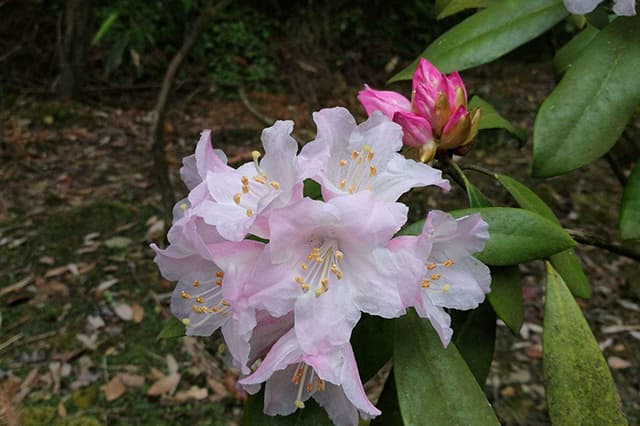
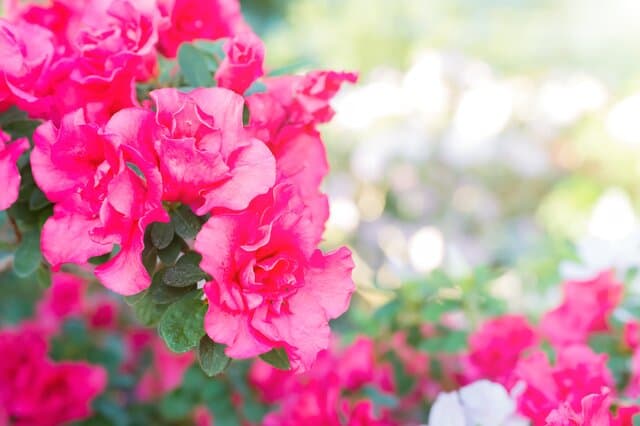
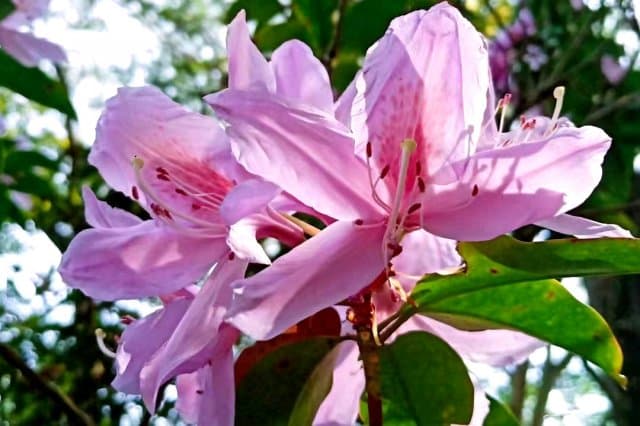
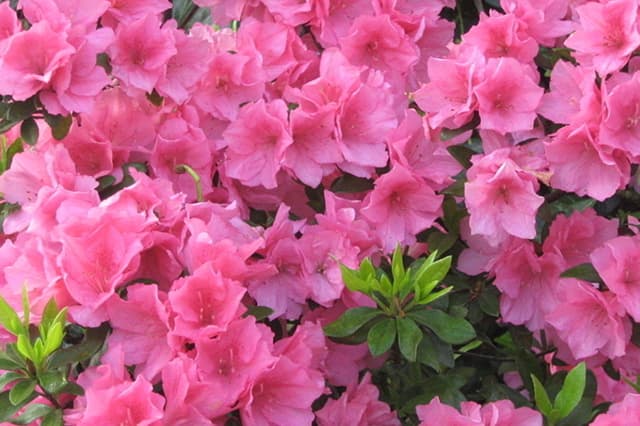
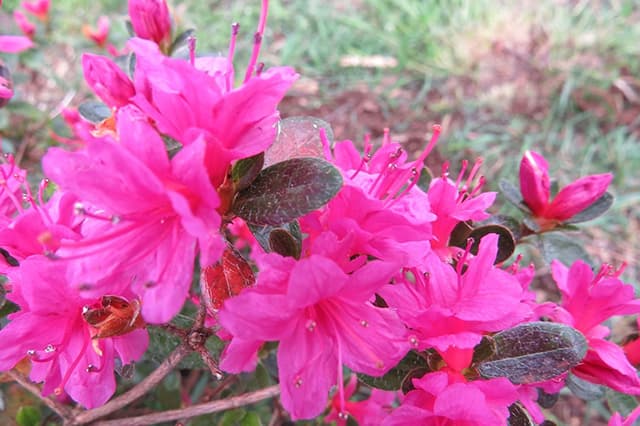
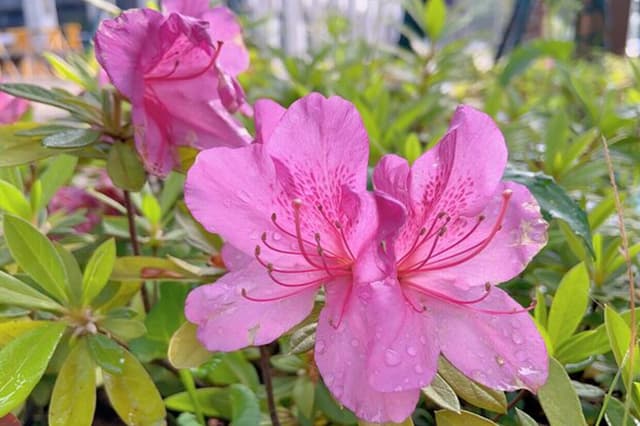
The Rhododendron, with its abundant branches and lush leaves, presents an array of dazzling colors and holds exceptional ornamental value.
The five common categories include Spring Rhododendron, Summer Rhododendron, Alpine Rhododendron, Western Rhododendron, and Eastern Rhododendron. Which variety of Rhododendron do you find most attractive?
I’ve gathered a list of the ten most beautiful Rhododendron varieties for you, such as the Yunjin Rhododendron, Yellow Rhododendron, Xingan Rhododendron, Purple-Blue Rhododendron, Monkey Head Rhododendron, Gaoyue Rhododendron, and Deer Antler Rhododendron.
Let’s explore them together.
1. Yunjin Rhododendron
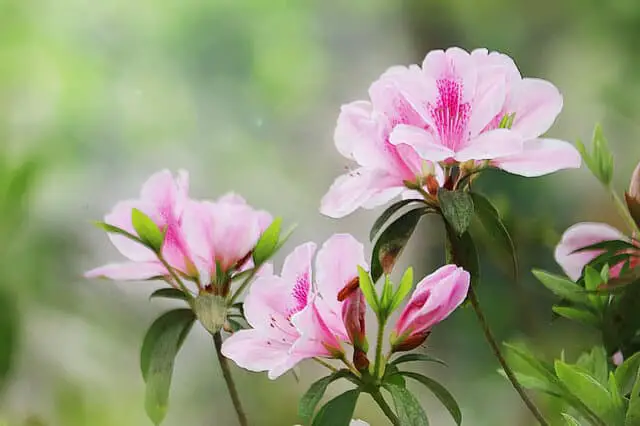
The Yunjin Rhododendron is acknowledged as one of the most beautiful Rhododendron species. Documented in the “Illustrations of Higher Plants of China”, it’s a standout among Rhododendrons and a precious, uniquely Chinese tree species.
The Yunjin Rhododendron buds in July each year, blooming in May of the following year, akin to a human gestation period. Each bud opens to reveal seven to twelve blossoms, available in vibrant red, pink, white, and purple. At peak bloom, the flowers are as large as bowls, brilliant and cloud-like, hence the name Yunjin (cloud brocade) Rhododendron.
Planting it in hotels, small gardens, or public places results in vibrant, charming, captivating beauty that makes one linger; placed on a windowsill, balcony, or in a guest room, it radiates brilliance and adds a joyful atmosphere.
2. Yellow Rhododendron
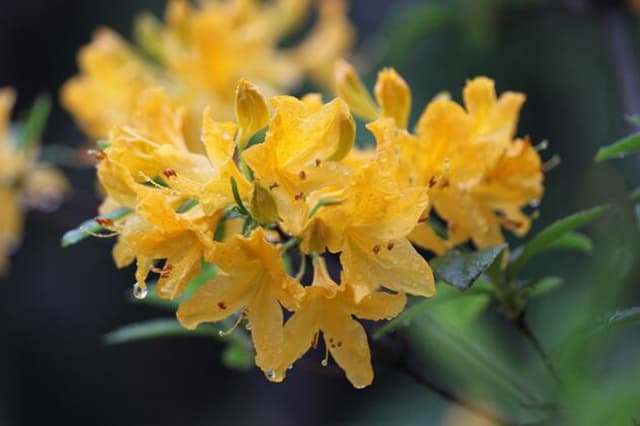
The Yellow Rhododendron, in my opinion, is the most beautiful Rhododendron variety. Typically, it thrives in damp places within mixed forests or among shrubs on limestone slopes. The flower is a wide, funnel-shaped yellow blossom, mildly bilaterally symmetrical, measuring 2-2.5 cm in length, split into five sections in the middle.
The outer portion is sparsely covered in scales and densely coated in short, soft hair. Its stamens are unequal in length, with the longer ones protruding significantly. The ovary is divided into five chambers, densely covered in scales, with a slender and clean pistil.
Ideal for planting in clusters by the edge of forests, beside streams, around ponds, or near rocks. It can also be planted individually under sparse trees and makes excellent hedge material, and can be pruned into various shapes.
3. Xingan Rhododendron
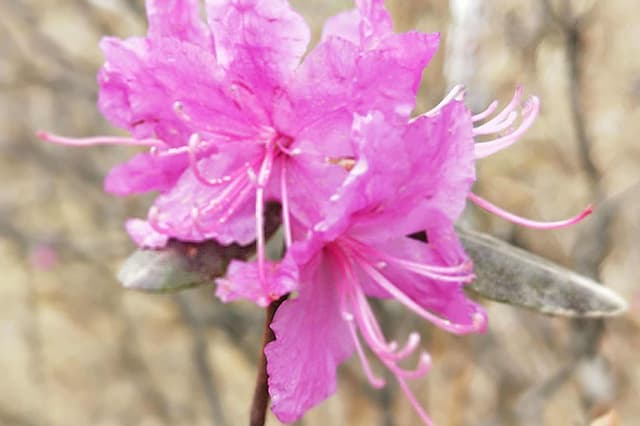
Among all the varieties of Rhododendrons, the wild Xingan Rhododendron is a nationally protected Class II wild plant, typically found in Heilongjiang, Inner Mongolia, and Jilin in China. This type of Rhododendron is hardy against cold and is popular for its vibrant, fragrant flowers.
With its radiant blooms, it can be planted in groups or alone to create beautiful landscapes and is also an excellent choice for rock gardens. Besides, it has a robust root system, making it an effective plant for soil and water conservation.
Its roots are dense and knotted, suitable for creating bonsai or root carving crafts. The Xingan Rhododendron flowers early, enlivening the cold early spring of the north with its brilliant colors, a sight to behold.
4. Purple-Blue Rhododendron
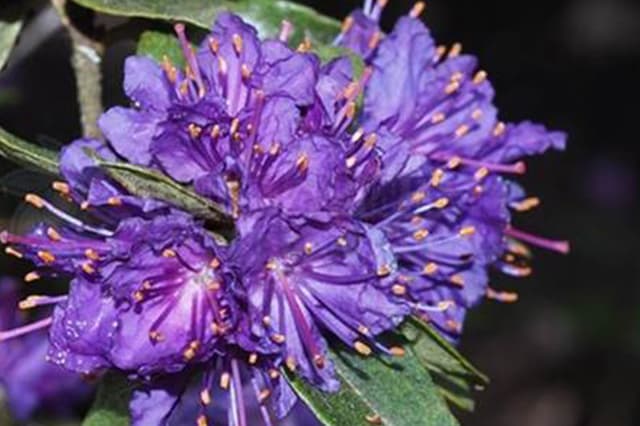
The Purple-Blue Rhododendron is an evergreen shrub with leathery leaves that are oblong-elliptical, oblong, or oval. The top is gray-green or dark green, and the bottom varies in color. The flower cluster grows at the top, forming an umbrella-like globe shape with 6-10 flowers.
The corolla is a wide funnel shape, 13-20mm long, in colors ranging from purple-blue and indigo to purple or rose. The fruit is ovoid. The flowering period is from May to June, and the fruiting period is from July to August.
This species is cultivated for its beautiful and vibrant flowers, and its many hybrid varieties have high horticultural value.
5. Monkey Head Rhododendron
Of course, the most beautiful Rhododendrons include the Monkey Head Rhododendron, known for its elegant shape. Its flowers are cream or pink, exceptionally eye-catching against the green leaves. It can be grown in clusters or individually in gardens and can also be used as cut flowers.
A note for gardeners: Ensure the nursery is cool and ventilated, and the soil is best fumigated with formaldehyde solution for sterilization; control the soil moisture during the seedling stage; prevent damping-off disease.
In spring rain and plum rain seasons, spray a 800-1000 times diluted solution of methyl tobujin or Carbendazim every 7-10 days. Moreover, choose a nursery with good ventilation and drainage; ensure the water for irrigation is clean.
6. Gaoyue Rhododendron
The Gaoyue Rhododendron is one of the most attractive Rhododendron varieties. It’s a semi-evergreen shrub, 1-2 meters tall, with numerous branches. The twigs are firm, initially densely covered with reddish-brown rough adpressed hair, but later nearly hairless.
The leaves gather at the branch ends, almost leathery, narrow lanceolate or inverted lanceolate, dark green and glossy on top, sparsely covered with rough adpressed hair, pale on the underside. The flowers, 1-3 in number, grow at the branch top; the corolla is bright red or occasionally rose red, wide funnel-shaped.
The species is cultivated for its beautiful and vibrant flowers, offering high horticultural value. The flowering period is from May to June.
7. Staghorn Rhododendron
The Staghorn Rhododendron can reach up to 5 meters in height. Its small branches are gray or pale white and hairless. Its leaves are clustered and almost whorled, leathery, ovate-elliptical or oblong-lanceolate.
The tops are dark green and glossy, while the undersides are light grayish-white. The flower buds are long and conical, occurring singly at the leaf axils at the tops of the branches. The calyx is not very pronounced. The corolla is white or pinkish, the segments are long and oval, and the filaments are flat.
Note: Pruning is generally carried out after the flowers have faded in spring and in autumn, cutting off dead branches, slanted branches, overgrown branches, and some crossing branches to avoid nutrient loss, allowing the whole plant to bloom fully.
8. Welcoming Red Rhododendron
The Welcoming Red Rhododendron is one of the most beautiful varieties of rhododendrons. It gives off a lively and bustling feeling during the blooming season. Outside of the blooming season, its dark green leaves can be planted in gardens as low walls or barriers.
To speed up the blossoming, it’s common to pinch off the top of the plant to promote new branches. If the flowers are clustering and affecting the flower shape, you can thin the buds early. This not only makes the current year’s flowers larger and brighter but is also beneficial for the plant’s growth and flowering in the coming year.
To delay the flowering of the rhododendron, keep the budding rhododendron in a low-temperature state, maintain the temperature at 2-4℃, water when the pot is dry, move it outdoors in summer and autumn, and it can bloom within two weeks.
9. Blunt Leaf Rhododendron
Many people say that the Blunt Leaf Rhododendron is one of the most attractive varieties. Originally from Japan, it is a famous cultivated species of Rhododendron, and many horticultural varieties are grown in eastern and southeastern China.
The umbel-shaped inflorescence usually has 2-3 flowers; the corolla is funnel-shaped bell, red to pink or pale red, 1.5 cm long and 2.5 cm in diameter. In the garden, it is best planted in clusters on the edge of the forest, by the stream, by the pool, and beside the rocks.
It can also be scattered under sparse forests, and it makes good hedging material that can be pruned into various forms.
10. Brocade Rhododendron
Jiangxi, Anhui, and Guizhou provinces all use the Brocade Rhododendron as their provincial flower. It not only has ornamental value but also other uses.
The wood of the Brocade Rhododendron is dense and hard, making it suitable for farm tools, walking sticks, and carving. In addition, the leaves and flowers of the Brocade Rhododendron can be used to extract aromatic oil. Some types of Brocade Rhododendron flowers can be eaten, and the bark and leaves can be used to make rosin.
The fruit can also be used medicinally, and in India, it’s used to treat abscesses, ulcers, tumors, skin diseases, hemorrhoids, rashes, rheumatism, and bronchitis. You could say that every part of it is valuable.


 English
  العربية
  Bahasa Indonesia
  Deutsch
  Français
  Italiano
  Nederlands
  Português
  Русский
  日本語
日本語