Top 10 Most Beautiful Flowers in the World
There’s an innumerable variety of flowers in the world, many of which are globally renowned, each with its unique story. So, what’s the most beautiful flower in your eyes? In…

China is richly endowed with a diverse array of flowering plants, serving as the global epicenter for numerous prestigious floral species and earning the revered title of “Mother of World Gardens.”
Among them, the peony, cherry blossom, plum blossom, lotus, azalea, tulip, lily, and Gesang flower are widely acknowledged as some of China’s most beautiful blooms. But beyond these, are you aware of any other Chinese flowers that are high on aesthetics?
In the following, I will curate a list ranking China’s most beautiful flowers for your perusal. Let’s delve into the details together.
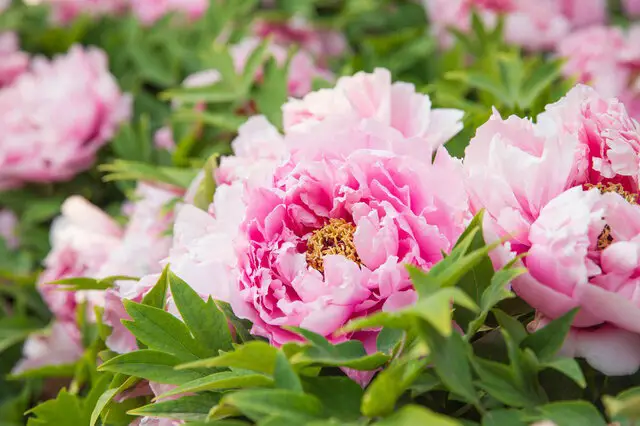
Peony, the King of Flowers, is among China’s top traditional flowers. The peony, originally from northern China, boasts a cultivation history of over 1,500 years.
It’s a uniquely Chinese traditional and esteemed flower, and it’s considered the most beautiful flower in China, earning the moniker “King of Flowers.” In 1985, it was named as one of the “Top Ten Famous Flowers of China.
The peonies, which bloom profusely in May, are renowned for their large, fragrant, and vibrantly colored blooms. Their yellow, green, deep red, silver red, and meaty pink hues are especially prized. Peonies were once China’s national flower during the Tang and Qing dynasties.
Cities such as Luoyang, Heze, Tongling, Zhaotong, Chaohu, and Pengzhou have adopted the peony as their city flower.
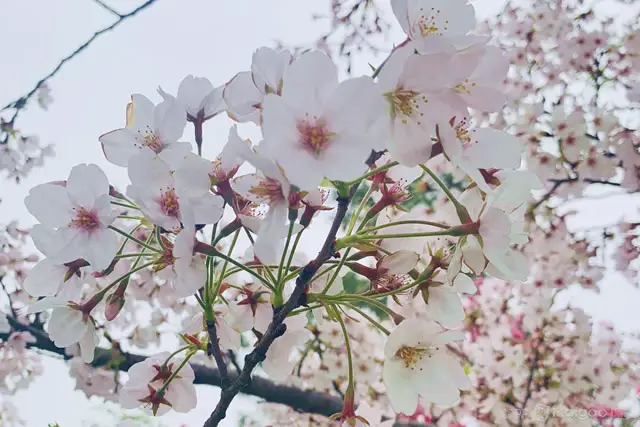
Cherry Blossoms, with a cultivation history that is both long and widespread, are among the most ornamental flowers.
Cherry blossoms originated in China, which is home to over 50 of the approximately 150 wild cherry blossom species in the world. Ancient texts indicate that cherry blossom cultivation in China dates back over two millennia to the Qin and Han dynasties, predating Japan’s cultivation.
Chinese cherry blossom varieties include Bellflower Cherry, Weeping Cherry, Hill Cherry, Double White Cherry Blossom, Winter Cherry Blossom, and China Red. These flowers, primarily white or pink, bloom from late January to mid-May.
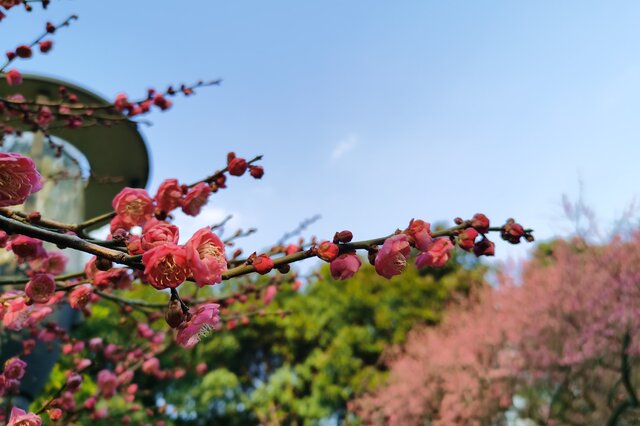
Plum Blossom, the Leader among Flowers, is another traditional flower in China. Originating from Southwest China and regions south of the Yangtze River, the plum blossom has a cultivation history of over 3,000 years.
It is known as the “Leader among Flowers,” distinguished by its color, fragrance, form, and charm, making it one of China’s most beautiful flowers. Plum blossoms come in a variety of colors, including dark red, purple-red, pink, light yellow, light ink, green, and white.
The plum blossom is stunning from afar, reminiscent of a butterfly, rightfully earning a place among the top three most beautiful flowers in China.
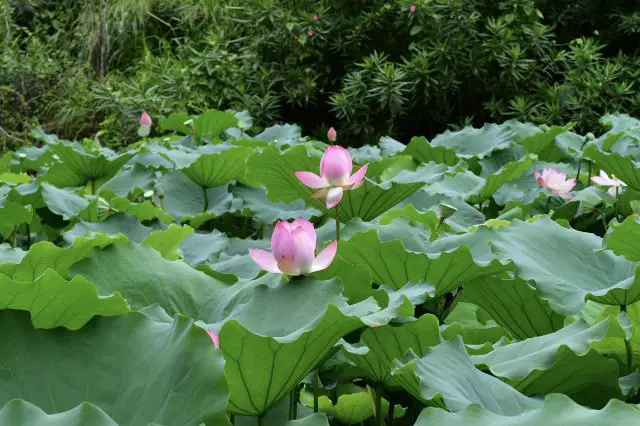
Lotus, also known as Water Hibiscus, is one of China’s traditional top ten flowers. The lotus, a famous aquatic flower in China, was cultivated as early as the Zhou dynasty over 3,000 years ago.
In 1985, it was named one of China’s top ten famous flowers and is also considered one of the most beautiful. China is rich in lotus varieties, with more than 200 traditional types.
The lotus blooms from June to September and is commonly found in parks, lakes, and wetland parks.
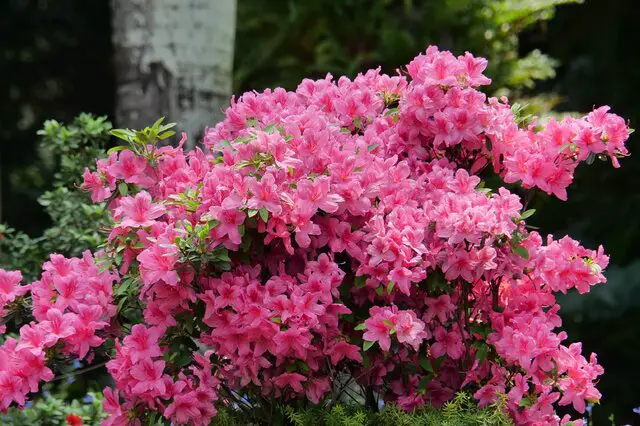
Azalea, also known as the Red Mountain in Reflection, is native to Asia and is one of China’s traditional top ten flowers. Of the approximately 900 azalea varieties worldwide, China has more than 650, which are widely distributed across all provinces and regions.
The Azalea, which blooms in spring with a variety of vibrant colors, was rated as one of China’s top ten famous flowers in 1985 and is also one of the most beautiful flowers in China, earning it the title of “The Western Beauty among Flowers.”
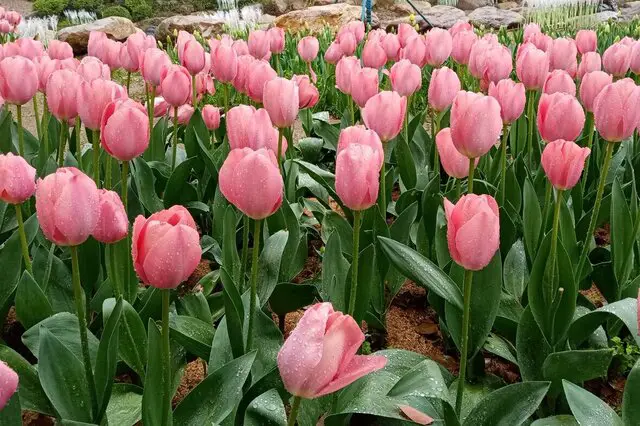
Tulip, also known as Dutch Flower, is a world-famous bulb flower and an excellent cut flower variety. Its erect posture, vibrant colors, and varied changes are popular among people, especially the red, orange, yellow, and purple varieties.
Tulips, originally from the ancient Western Regions and the Tibet-Xinjiang area of China, were introduced to Central Asia via the Silk Road and then spread to Europe and the rest of the world. Now it has become a symbol of fashion and internationalism.
There are over 8,000 varieties worldwide today, about 150 of which are mass-produced, and many are cultivated in gardens across China. The tulip blooms every spring, and the best time to view them is from March to May.

Lily, also known as Qiang Shu, foreign leek, Shan Dan, Dao Xian, and Night Lily, is a variant of the wild lily, native to China. It is mainly distributed in the temperate regions of the Northern Hemisphere such as East Asia, Europe, and North America.
There are at least 120 varieties found worldwide, 55 of which are native to China. The lily, known as the “Fairy in Clouds”, is a symbol of luck in China and is also one of the ten most beautiful flowers in China.
Lilies are widely cultivated in Hebei, Shanxi, Henan, Shaanxi, Hubei, Hunan, Jiangxi, Anhui, and Zhejiang in China. The blooming period of lilies is from June to July.

Gesang Flower, also known as Gesang Meiduo or Happiness Flower, is regarded by the Tibetan people as a symbol of love and auspiciousness and is a cultural symbol of the Tibetan people.
It is often used as a synonym to describe strong women and is considered one of the most resilient wildflowers on the plateau. Its exact botanical identity is widely disputed. The flowering period of the Gesang flower is generally from June to September each year.
The flower is colorful, bright, and has good ornamental value. It is widely adapted and grows vigorously, and is mainly distributed in Tibet, Qinghai, Western Sichuan, and other grassland areas in China. It is also the city flower of Lhasa, the capital of Tibet.
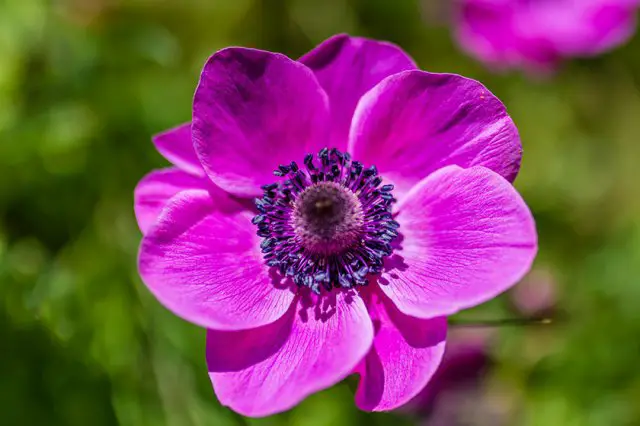
Violet, also known as Grass Osmanthus, is native to the Mediterranean coast and is widely cultivated in southern China. It is one of Europe’s famous flowers and loved by many flower enthusiasts.
The violet blooms in a panicle, with a large number of flowers, looking like a naturally tied bouquet; the edges of the petals are cracked and slightly curled, looking like four petals. Although it is called “purple” violet, the color is not only purple, but also includes purplish red, pink, blue, and pale white. The flowering period is relatively long, generally from April to May.
When the flowers bloom, they have a faint fragrance, and now they have gradually become the original material for perfume. Violets are often introduced in large cities in southern China and planted in garden flower beds or greenhouses in the north, becoming one of the most beautiful flowers in China.
The best places to view violets in China include: Shunfengshan Park, Yunhai Grassland Expo Park, Liuxi River Forest Park, Beiyang Xiangxi Flower Valley, Xianyue Park, Huangju Gate Colorful Dream Garden, etc.
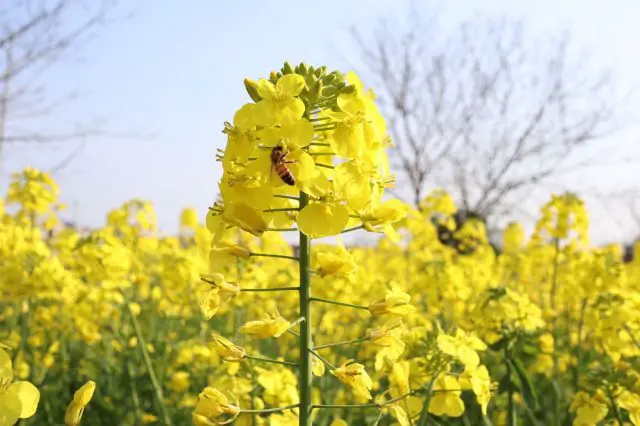
Rapeseed flower, also known as kale, is native to Europe and Central Asia and is an annual herb of the Brassicaceae family.
In China, rapeseed flowers are concentrated in Wuyuan Hengling in Jiangxi, Hanzhong Basin and Jiangling terraces, Luoping plain in Yunnan, and Menyuan plateau in Qinghai.
Every year when the rapeseed flowers bloom in March and April, the golden color attracts people’s eyes, attracting butterflies and bees to dance among the flowers, which is beautiful.
In addition, the tender stems and leaves of rapeseed flowers can be used as vegetables, and it is also the largest edible plant oil material in China. Therefore, rapeseed flower has ornamental value and important economic value.
The most beautiful places to view rapeseed flowers in China include: Luoping Rapeseed Flowers, Menyuan Hundred Mile Rapeseed Flower Sea, Xinghua Qiantuo Rapeseed Flowers, Wuyuan Rapeseed Flowers, Tongnan Rapeseed Flowers, Zhaosu Rapeseed Flowers, Hanzhong Rapeseed Flowers, Wanfenglin Rapeseed Flowers, etc.
Peggie was once a high school mathematics teacher, but she set aside her chalkboard and textbooks to follow her lifelong passion for flowers. After years of dedication and learning, she not only established a thriving flower shop but also founded this blog, “Flowers Library”. If you have any questions or wish to learn more about flowers, feel free to contact Peggie.
 English
  العربية
  Bahasa Indonesia
  Deutsch
  Français
  Italiano
  Nederlands
  Português
  Русский
  日本語
日本語