There are many attractive and easy-to-care-for flowers. Most of them are vibrant in color and demonstrate strong vitality, making them suitable for flower beds, gardens, and potted plants.
They are adored by many. In this article, I will introduce ten beautiful flower species: Dwarf Morning Glory, Carnation, Pansy, Bellflower, Poppy, Star-of-Bethlehem, Dianthus, Sunflower, Persian Chrysanthemum, and Butterfly Bush.
Let’s explore them in detail.
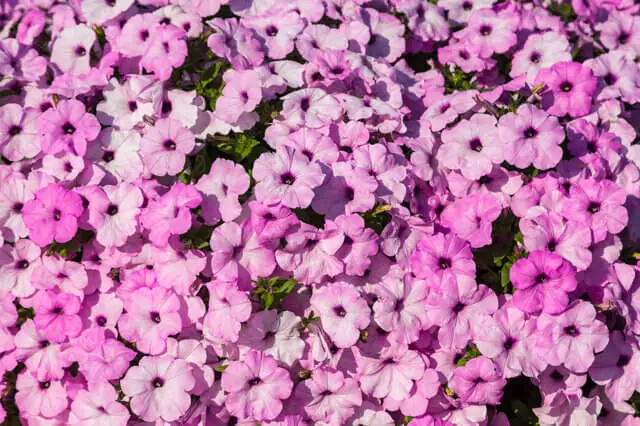
1. Dwarf Morning Glory
Known scientifically as Convolvulus tricolor, the Dwarf Morning Glory is also called the Hybrid Morning Glory, Ganoderma Peony, Dwarf Trumpet, and Shuttlecock Flower. It originally grew in South America but now thrives worldwide.
A perennial herb, it’s a beautiful and easy-to-care-for flower often referred to as the “King of Flowers.” With a wide array of varieties, its colors range from white to different shades of yellow, red, blue, purple, and more. Some varieties even feature dual colors or patterns with star-shaped radial stripes.
Many even have a subtle fragrance, making this flower an uncommonly aromatic and colorful delight. The Dwarf Morning Glory’s strong flowering ability, long blooming period, vibrant colors, low cultivation cost, and robust vitality make it an excellent choice for flower beds and pots. It has also quickly become the top choice for urban greening in China.
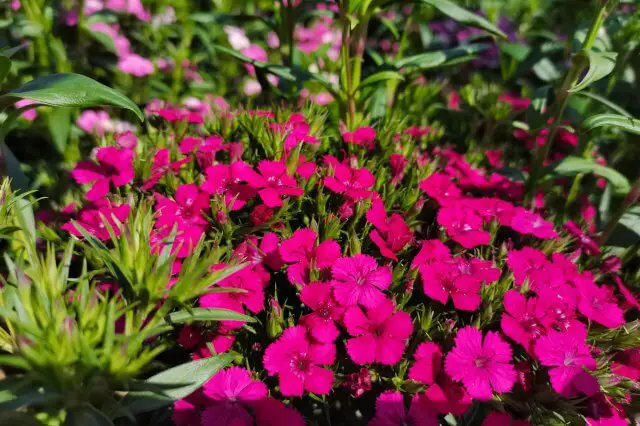
2. Carnation
Also known as Luoyang Flower, Stone Pillar Flower, Stone Chrysanthemum, Embroidered Bamboo, Perennial Summer, Sunset Grass, and Quinoa Grass, the Carnation is a perennial herbaceous plant of the Caryophyllaceae family.
Its stem has nodes and swells like bamboo, hence its name. Carnations come in a variety of colors, producing small, abundant flowers in umbel-like clusters during the spring and summer seasons. Not only a wonderful ornamental flower, but it is also one of China’s traditional prestigious flowers.
The Carnation is cold-resistant, sun-loving, and prefers well-drained fertile soil in a dry, ventilated environment. Originating in northern China, it now grows broadly across both north and south, where potted specimens can bloom year-round.
Given its relatively simple maintenance requirements, it is a popular choice and often ranked among the top three most beautiful flowers.
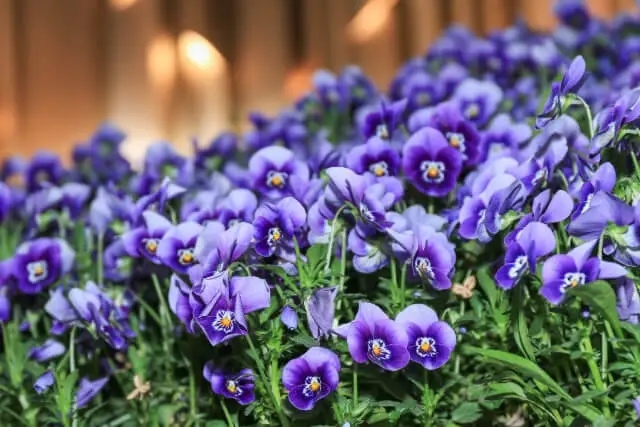
3. Pansy
The Pansy, an attractive and easy-to-care-for flower, is a biennial or perennial herbaceous plant in the Violaceae family. Each flower typically features a trio of purple, white, and yellow colors, hence its name, Pansy. Although it’s a common wildflower species in Europe, its vibrant and diverse colors have long made it a popular garden plant.
It’s widely cultivated in both northern and southern China. Pansies are cold-resistant, prefer cooler climates, and thrive in sunlight. Flowering is greatly influenced by sunlight, and it is best suited to outdoor cultivation. It’s suitable for flower beds, gardens, and pots, but not indoor planting.
Furthermore, the Pansy has medicinal uses—it can be used as an antimicrobial treatment for skin issues like acne, blackheads, and allergies. A Pansy herbal bath can also have beneficial effects on breast enlargement.
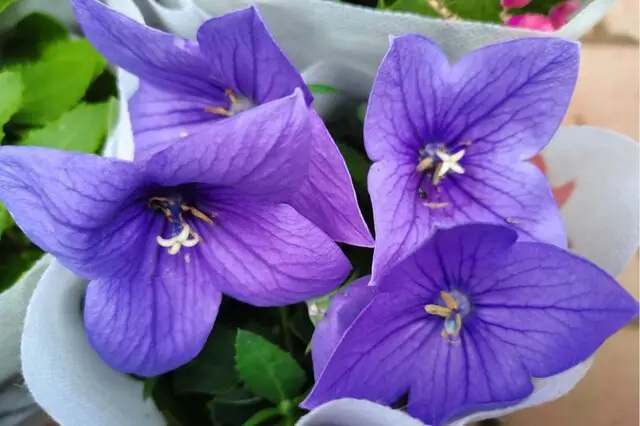
4. Bellflower
Among the various types of flowers, Bellflower, or Campanula, comes to mind. Contrary to its name, it has no direct relation to oranges or citrus fruits. Bellflower is a perennial herbaceous plant and a common flower species, known also as the Money Bag Flower, Monk’s Hood Flower, Hexagonal Lotus, or Bellflower.
It blooms from July to September, with stem heights varying from 20 to 120 centimeters. It is typically hairless, occasionally densely short-haired, unbranched, and rarely branched in the upper part. The leaves are arranged alternately to wholly in whorls, shaped from oval to elliptic-lanceolate.
The flowers, blossoming at the top of the stem, are brightly colored in shades of blue, purple, and white, among others. Its beautiful form makes it an attractive ornamental flower suitable for flower beds and bouquets, and it is quite easy to cultivate.
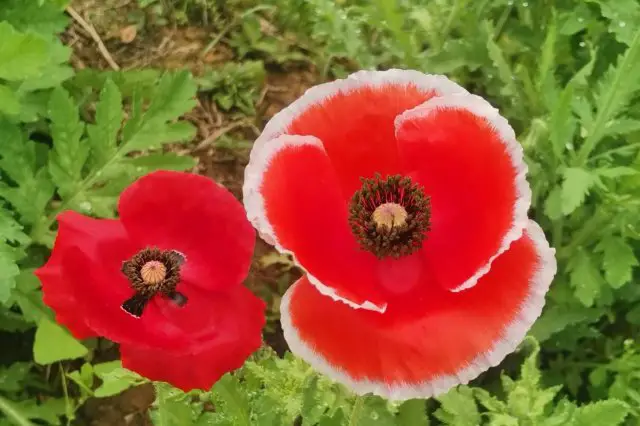
5. Poppy
The Poppy, also known as the Poppy Grass, Lichun Flower, Fairy Artemisia, Spring Garden, or Peony Competitor, is an annual herbaceous plant native to Europe and commonly cultivated throughout China.
Poppies hold great ornamental value with their elegant blooms in colors like white, red, purple, and yellow. Its petals are as thin as wings and sway gracefully with the wind, earning it the nickname “Dancing Grass.”
With a long flowering period, it is suitable for planting in flower beds or gardens, or for use as a potted plant or cut flower. It’s easy to grow, and when in bloom, the vibrant colors are a delight to the eyes. The Poppy also has medicinal value, being used for its cough suppressant, analgesic, and antidiarrheal properties; its seeds contain over 40% oil.
6. Star-of-Bethlehem
Scientifically known as Ornithogalum umbellatum, the Star-of-Bethlehem is also referred to as Double Petal Gypsophila, Cone Flower Gypsophila, Cone Flower Grass, Perennial Star-of-Bethlehem, Gypsophila, and Grass.
It is a perennial herbaceous plant in the Asparagaceae family, and one of the most beautiful flowers. The Star-of-Bethlehem, used both as an ornamental and medicinal plant, produces flowers that resemble stars, making it a delightful addition to any home.
Once the flowers bloom, they can be picked and dried for preservation. Its small flowers, available in multiple light shades and offering a fluffy, three-dimensional look, exude an elegant charm.
The blurry effect of its blossoms, combined with an impressive group effect, makes it a popular choice for cut flowers. Despite its high price, its ornamental value and demand remain high. The Star-of-Bethlehem thrives in well-ventilated, cool environments with plenty of sunshine and good drainage.
It dislikes heat and should be watered when the soil is dry, avoiding waterlogging. It’s easy to grow and maintain.
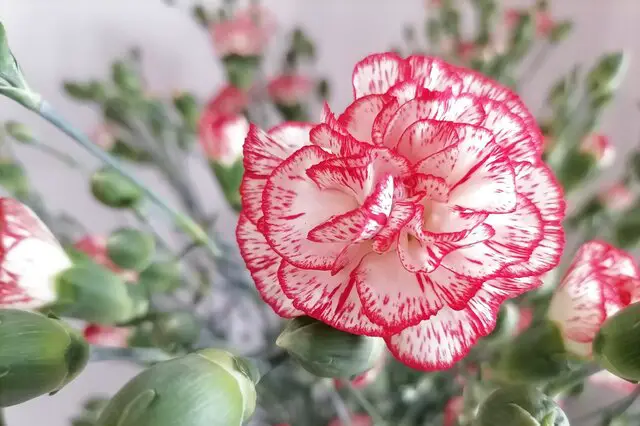
7. Carnation
When it comes to attractive flowers, the Carnation is certainly one of the most beautiful varieties. Carnations are perennial herbaceous plants, scientifically known as Dianthus caryophyllus, and also known as Lion’s Head Dianthus or Large-flowered Dianthus.
The plant height is about 70 centimeters, with a semi-woody base. It blooms from May to August, with the fruiting period from August to September. Carnation flowers are often singly born on the branch ends and are fragrantly scented.
The flowers are arranged in a corymb; the corolla is hemispherical, the calyx is tubular, the buds are acorn-shaped, and the petals are fan-shaped. The inner petals of the flower are usually crinkled. The colors include red, pink, goose yellow, white, deep red, and there are also agate and other mixed colors and edged varieties.
Native to the Mediterranean region, it is now one of the most universally used flowers worldwide. With its rich colors and diverse forms, it has become one of the four major cut flowers in the world.
Since 1907, pink carnations have been symbolic of Mother’s Day, hence they are often given as gifts to mothers.
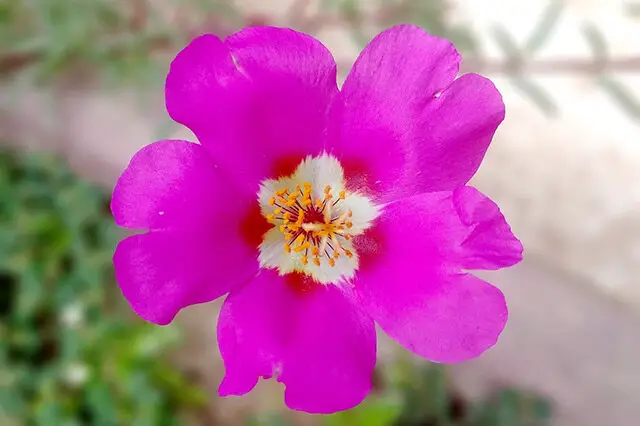
8. Portulaca grandiflora
Portulaca grandiflora, also known as Moss Rose, Sun Plant, Pine Peony, Dragon Beard Peony, Golden Thread Rhododendron, Foreign Purslane, or Noon Flower, is an annual herbaceous plant native to Brazil.
It is often grown in parks and gardens in China and is a beautiful flower with a rich color palette, providing high ornamental value during its flowering period. Portulaca grandiflora loves warm, sunlit environments, and can adapt to nearly all types of soil.
It has a particular fondness for well-drained sandy soil. Easy to propagate by cutting or sowing, it is a visually pleasing and easy-to-care-for flower. It opens its blooms in sunlight and closes them in the early morning, evening, and on cloudy days, thus earning names like Sun Plant and Noon Flower.
Additionally, all parts of Portulaca grandiflora can be used medicinally. It has effects such as dispelling stasis and relieving pain, clearing heat, and detoxifying swellings, and can be used for throat swelling and pain, burns, sprains, and abscesses.
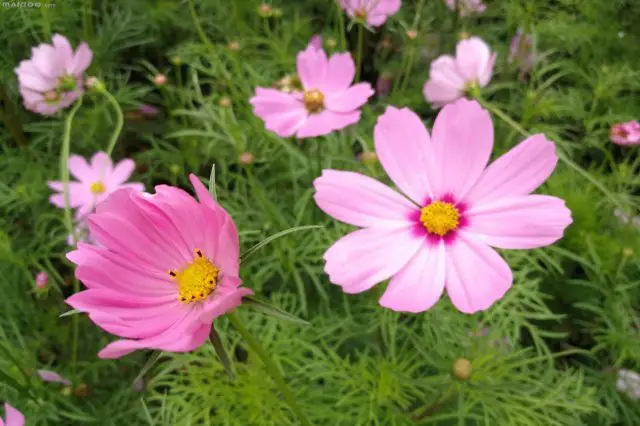
9. Cosmos
Scientifically known as Cosmos bipinnatus, Cosmos is also known as Large Cosmos or Autumn Cherry. It is a species in the Asteraceae family, and is an annual or perennial herb that can grow to a height of 1-2 meters.
Native to Mexico, the Cosmos plant has an elegant form, with feathery leaves that give it a light and ethereal appearance. The flowers are large, brightly colored, and abundant, offering a rich array of colors and high ornamental value. Due to its strong adaptability to different soils and climates, it is easy to cultivate.
Under the warm sun, it can grow freely. Now, Cosmos can be found all over the world, along roadsides, riverbanks, and on high plains. Its vibrant colors are eye-catching, and when planted in large patches in gardens, it can form a spectacular sea of flowers. It is widely cultivated in many countries, making it a common flower variety.
10. Cleome
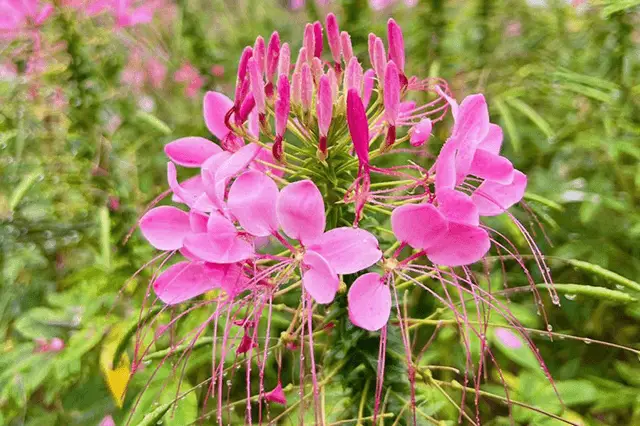
When it comes to flower varieties, the Cleome, or Spider Flower, is one to consider. Known by other names such as White Western Flower, Phoenix Butterfly Grass, Purple Dragon Beard, and Spider Flower, it is an annual herbaceous plant in the Capparaceae family.
The Cleome has a multicolored single flower, and its diverse colors often intoxicate butterflies, thus earning it the name “Butterfly Drunk Flower”.
Its most distinctive feature is the particularly long stamens that extend beyond the corolla, looking like claws, spiders, dragon beards, or fluttering butterflies. Hence the saying: “The flower does not intoxicate, but the person is intoxicated by the flower.”
The Cleome prefers to grow in sunlit environments. It likes warm weather but is not cold resistant. It is usually propagated by seeds, and its seeds also have the ability to self-sow. Its blooming period is from June to September, making it easy to care for.



 English
  العربية
  Bahasa Indonesia
  Deutsch
  Français
  Italiano
  Nederlands
  Português
  Русский
  日本語
日本語