Wisteria floribunda, commonly known as Japanese Wisteria or Multiflora Wisteria, is indeed a top recommendation among the beautiful wisteria varieties. This stunning species stands out from the more common Chinese Wisteria (Wisteria sinensis), showcasing a rare tender pink hue in some cultivars, along with white, purple, and violet variations. Its subtle, sweet fragrance is often likened to that of grape blossoms rather than pea flowers.
The most distinct feature of Wisteria floribunda is its exceptionally long flower clusters, known as racemes. These can reach lengths of 30-50 centimeters (12-20 inches), sometimes extending up to 1 meter (3 feet) in certain cultivars, making them nearly twice the size of other wisteria species. Each raceme comprises numerous small, delicate flowers, typically 1-2 cm in length, arranged in a loose, cascading manner.
When planted in large areas or trained over pergolas and arbors, the result is truly breathtaking. The pendulous flowers create a magical, flowing effect reminiscent of a floral waterfall. Wisteria floribunda blossoms from late April to mid-May in most temperate climates, with the exact timing depending on local conditions and the specific cultivar.
After flowering, the plant produces elongated, velvety seed pods that develop from May to July. These pods, measuring 10-15 cm (4-6 inches) in length, ripen to a brown color and may persist on the branches well into winter, adding visual interest to the dormant vine.
It’s worth noting that while Multiflora Wisteria is prized for its beauty, it is also a vigorous grower and can become invasive if not properly managed. Regular pruning is essential to control its growth and encourage abundant flowering. Additionally, it may take several years (sometimes up to a decade) for a newly planted wisteria to mature and produce its spectacular floral display, requiring patience from gardeners.
2. Chinese Wisteria (Wisteria sinensis)
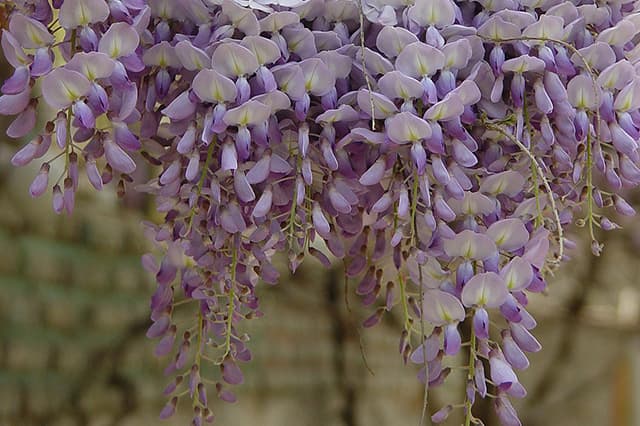
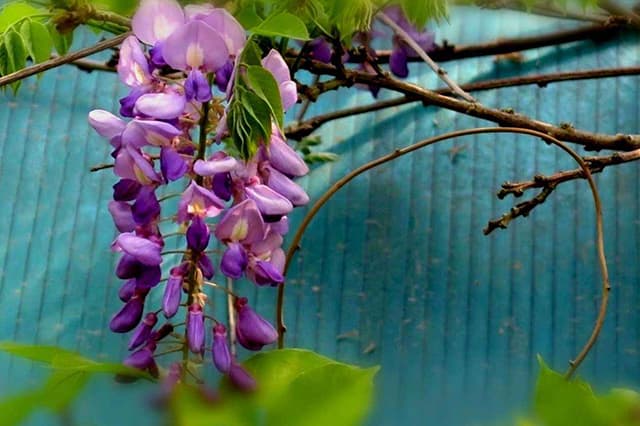
Chinese Wisteria (Wisteria sinensis), native to China, is a magnificent flowering vine renowned for its elegant habit and captivating beauty. This robust climber is characterized by its dense, pinnately compound leaves and large, pendulous flower clusters, which typically display a soft color palette ranging from pale lavender to rich violet-blue.
The long, sinuous vines of Chinese Wisteria are remarkably pliable, making it an excellent choice for adorning various garden structures. It excels in covering pergolas, arbors, and trellises, creating stunning green corridors or softening the appearance of walls and rocks. The plant’s vigorous growth and twining habit allow it to ascend to impressive heights, often reaching 10-25 meters (30-80 feet) in mature specimens.
Chinese Wisteria typically bursts into bloom in mid-spring, usually from April to May, transforming gardens with its breathtaking floral display. The racemes, which can grow up to 30 cm (12 inches) in length, emerge before or alongside the foliage, creating a striking contrast against the young, pale green leaves. Each fragrant flower cluster consists of numerous pea-like blossoms, opening from the base to the tip in a gradual progression that prolongs the flowering period.
Following the flowering season, the plant develops elongated, velvety seed pods from June to July. These pods, initially green, mature to a brown color and may persist on the vine throughout winter, adding visual interest to the dormant plant.
It’s worth noting that while Chinese Wisteria is prized for its ornamental value, it requires careful management due to its vigorous growth. Regular pruning is essential to maintain its shape and control its spread, especially in regions where it can become invasive. When properly cared for, Chinese Wisteria offers a spectacular display of cascading blooms, making it a cherished addition to many gardens and landscapes.
3. White Wisteria
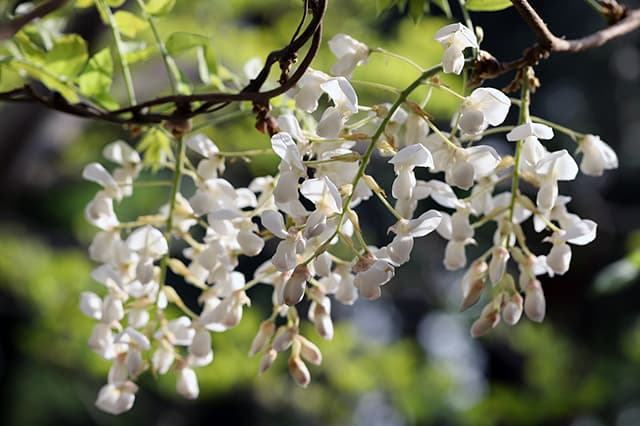
Often referred to as Silvery Wisteria, the white wisteria (Wisteria floribunda ‘Alba’) captivates with its pure, flawless white blooms and a strong, intoxicating fragrance. This cultivar typically features multiple vine trunks, though they tend to be more slender compared to other wisteria varieties.
As a natural mutation of the purple wisteria, the white variety exhibits some distinct characteristics. It is generally less cold-hardy than its purple counterpart, thriving best in USDA zones 5-9. This relative rarity adds to its allure among gardening enthusiasts.
The cascading racemes of white wisteria, which can reach lengths of 12-18 inches (30-45 cm), create a stunning visual impact. These pendulous clusters typically bloom in late spring to early summer, transforming the vine into a breathtaking display of white.
White wisteria is exceptionally versatile in landscape design. It excels as a decorative element for:
Galleries and pergolas: Its twining stems can create romantic, flower-covered archways.
Fences and walls: The vine can soften hard landscaping features with its lush foliage and flowers.
Rockeries: When allowed to cascade over rocks, it adds a touch of elegance to naturalistic gardens.
Container cultivation: With proper pruning and care, white wisteria can thrive in large pots, bringing its beauty to patios and balconies.
Bonsai: Its slender growth habit makes it an excellent subject for the art of bonsai, allowing for miniature representations of its graceful form.
Whether used to beautify outdoor gardens or bring a touch of nature indoors, white wisteria offers a combination of delicate beauty and powerful fragrance. However, it’s important to note that like all wisteria species, it requires regular pruning to control its vigorous growth and encourage abundant flowering. Additionally, all parts of the plant are toxic if ingested, so care should be taken when planting in areas accessible to children or pets.
4. Double Black Dragon Wisteria
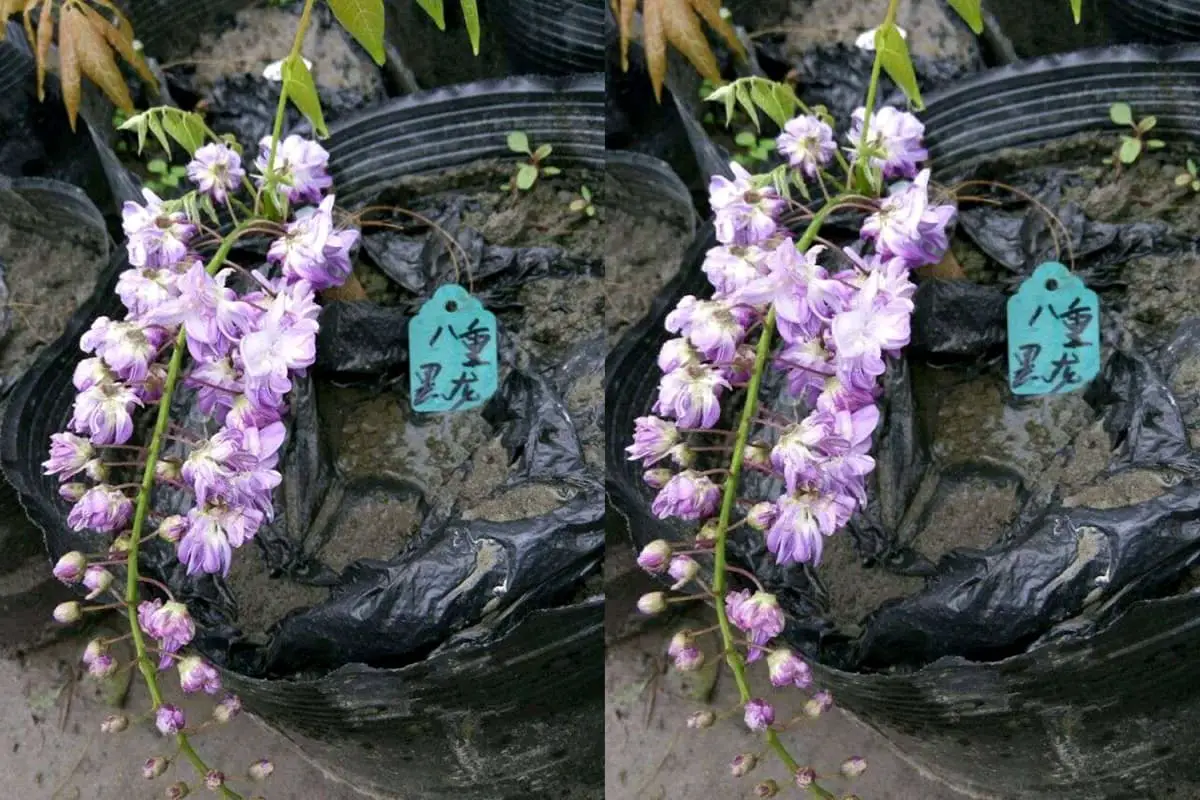
When it comes to the most captivating wisteria varieties, the Double Black Dragon Wisteria (Wisteria floribunda ‘Yae-kokuryu’) stands out as a truly remarkable specimen. This deciduous climbing vine, native to Japan, is renowned for its extraordinary floral display, featuring pendulous flower clusters that can reach an impressive 50-80 centimeters in length.
The bark of this wisteria is characteristically dark gray and smooth, providing an elegant contrast to its lush foliage. In spring, the vine erupts with vibrant, deep purple flowers that bloom in a mesmerizing cascade. These blossoms are not only visually stunning but also emit a sweet, intoxicating fragrance that perfumes the air, attracting both pollinators and admirers alike.
Often poetically referred to as ‘hanging cloud wood’ in its native Japan, the Double Black Dragon Wisteria thrives in full sun to partial shade conditions. It particularly relishes the gentle warmth of spring sunshine, which encourages prolific blooming. The plant’s name, ‘Yae-kokuryu’, translates to “double black dragon,” alluding to its double flowers and the intense, nearly black-purple hue of its blooms.
As a vigorous climbing plant, this wisteria requires sturdy support structures such as pergolas, arbors, or robust trellises to showcase its beauty. When in full bloom, the Double Black Dragon Wisteria creates a breathtaking spectacle reminiscent of a cascading purple waterfall. The double flowers, each comprising multiple layers of petals, add depth and complexity to this already magnificent display.
It’s important to note that while stunningly beautiful, this wisteria variety, like others in its genus, requires careful management. Its rapid growth and substantial weight when mature necessitate regular pruning and strong support structures. With proper care and placement, the Double Black Dragon Wisteria can become a showstopping centerpiece in any garden, offering a truly unforgettable visual and sensory experience.
5. Short-Stemmed Wisteria (Wisteria brachybotrys)
The Short-Stemmed Wisteria, scientifically known as Wisteria brachybotrys, is a highly sought-after variety renowned for its versatility in landscape design. This species is particularly prized for its compact growth habit and stunning floral displays, making it an excellent choice for various garden features.
Native to Japan, this wisteria species is well-suited for pergolas, arbors, and trellises, where its cascading flowers can be showcased to full effect. Its adaptability extends to diverse settings, including lake shores, pond sides, rockeries, and stone arches. The plant’s manageable size and responsiveness to pruning also make it a popular subject for bonsai cultivation.
The inflorescences of Wisteria brachybotrys are distinctive, featuring racemes that measure 10-18 centimeters in length. These flower clusters exhibit a captivating blooming pattern, opening sequentially from the base to the apex, creating a prolonged and dynamic floral display. Each individual flower is relatively small, measuring approximately 1.5 centimeters in length, and is characterized by its short pedicel, hence the common name “Short-Stemmed Wisteria.”
A notable feature of this species is the dense covering of short, soft trichomes (plant hairs) on various parts of the plant, including the flowers, which contributes to its soft texture and subtle silvery appearance. This pubescence serves multiple functions, including protection against pests and regulation of water loss.
The floral structure of Wisteria brachybotrys is complex and intricate:
Calyx: The calyx is cup-shaped and almost bilabiate (two-lipped), covered in fine hairs. A distinctive feature is the fusion of the upper two calyx teeth, creating a seemingly four-lobed structure instead of the typical five.
Corolla: The corolla is predominantly purple, though cultivars with white or pink flowers have been developed. The color intensity can vary depending on growing conditions and genetics.
Standard (Banner) Petal: The banner petal, the uppermost and typically largest petal in papilionaceous flowers, is nearly orbicular in shape. It features a deep emargination (notch) at the apex and a slightly cordate (heart-shaped) base, contributing to the flower’s characteristic butterfly-like appearance.
In cultivation, Wisteria brachybotrys benefits from full sun exposure and well-drained, fertile soil. Regular pruning is essential to maintain its shape and promote abundant flowering. This species typically blooms in late spring to early summer, with some cultivars offering a second, less prolific bloom in late summer.
When incorporating Short-Stemmed Wisteria into garden designs, consider its eventual size and provide sturdy support structures. Its rapid growth and twining habit make it an excellent choice for creating shaded areas or vertical interest in the landscape. However, care should be taken in selection of planting location, as all parts of the plant, particularly the seeds, are toxic if ingested.
6. Bushkiller
Bushkiller (Cayratia japonica), also known as sorrel vine or yabu-garashi in Japanese, is actually not a wisteria variety but a distinct species in the grape family (Vitaceae). Native to East Asia, including Japan, Korea, China, and parts of Southeast Asia, this vigorous climbing vine is often mistaken for more ornamental plants due to its rapid growth and attractive foliage.
The plant produces small, inconspicuous greenish-white flowers in summer, which develop into round, bluish-black berries in autumn. These berries, while visually interesting, are not edible for humans. The plant’s common name “Bushkiller” comes from its aggressive growth habit, which can overwhelm and smother other vegetation.
Bushkiller’s compound leaves are composed of five leaflets, giving it a feathery appearance that can be quite attractive. The foliage turns a vibrant red in autumn, adding seasonal interest to the landscape. However, it’s important to note that this plant does not have the showy, pendulous flower clusters characteristic of wisteria.
In cultivation, Bushkiller requires careful management due to its rapid growth. Regular pruning is essential, not just to maintain shape, but to control its spread. In many areas outside its native range, including parts of the United States, Bushkiller is considered an invasive species due to its ability to quickly colonize new areas and outcompete native vegetation.
For those who choose to grow Bushkiller in controlled settings, such as in pots or in areas where its spread can be limited, pruning should be done throughout the growing season to manage its size and shape. During dormancy, more extensive pruning can be carried out to rejuvenate the plant and maintain its structure.
While Bushkiller can be an interesting addition to a garden when properly managed, it’s crucial to research local regulations and consider potential ecological impacts before planting. In many cases, native alternatives or less aggressive climbing vines might be more suitable choices for ornamental purposes.
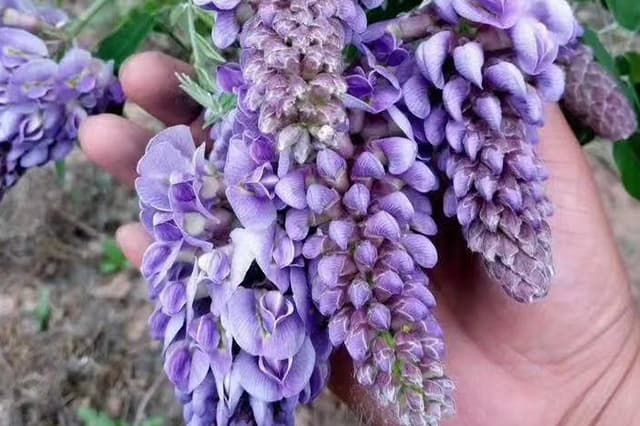
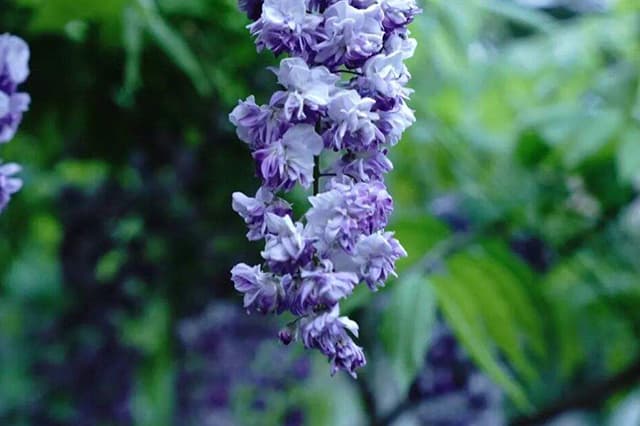
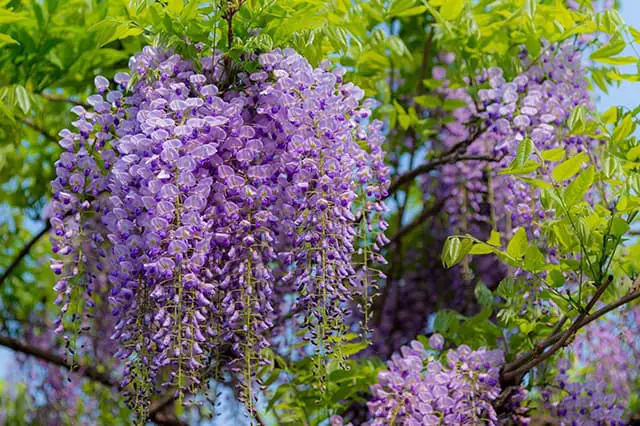
The Purple Crystal Wisteria (Wisteria floribunda ‘Violacea Plena’) is a highly prized cultivar among wisteria enthusiasts. Its magnificent flower clusters, known as racemes, can reach an impressive 60-80 centimeters (24-31 inches) in length, creating a breathtaking display. The blossoms boast a rich, violet-purple hue and emit a delightfully sweet fragrance that perfumes the air.
This cultivar is characterized by its profuse flowering, with densely packed racemes that create a cascading effect. True to its name, the flowers possess a translucent, crystal-like quality that imparts a dreamlike ambiance to any garden setting. The double flowers (indicated by ‘Plena’ in the cultivar name) contribute to this ethereal appearance, with each individual blossom featuring multiple layers of petals.
When cultivating Purple Crystal Wisteria, it’s crucial to understand its root system. Like other wisteria species, it develops a deep and extensive root structure, which contributes to its drought tolerance once established. This adaptation allows the plant to access water from deeper soil layers during dry periods. However, this same characteristic makes it particularly susceptible to root rot if overwatered or planted in poorly drained soils.
To maintain the health and vigor of your Purple Crystal Wisteria:
Soil and Drainage: Ensure well-draining soil to prevent waterlogging. Consider planting on a slight mound if your garden has heavy clay soil.
Watering: Water deeply but infrequently to encourage deep root growth. Allow the top few inches of soil to dry between waterings.
Pruning: If the plant exhibits excessive vegetative growth, judicious pruning of both roots and shoots can help balance growth and promote flowering. Root pruning should be done cautiously and is best performed by experienced gardeners or professionals.
Fertilization: For underperforming or weak plants, apply a balanced, slow-release fertilizer in early spring. Choose a formula with a higher phosphorus content (the middle number in NPK ratio) to encourage blooming. Avoid over-fertilizing with nitrogen, as this can promote leafy growth at the expense of flowers.
Support: Provide sturdy support structures such as pergolas, arbors, or strong trellises to accommodate the plant’s vigorous growth and heavy flower clusters.
Training: Regular training of young vines helps establish the desired shape and encourages better flowering as the plant matures.
By following these cultivation practices, you can enjoy the full splendor of the Purple Crystal Wisteria, with its enchanting, crystal-like blooms creating a magical atmosphere in your garden.
8. Floribunda Wisteria
Floribunda Wisteria, a cultivar developed in the Netherlands, has gained widespread popularity across Europe for its exceptional flowering characteristics. This variety is renowned for its profuse blooms, which emit a delightful fragrance and exhibit an exquisite butterfly-like form.
The vigorous vines of Floribunda Wisteria possess a remarkable ability to twine and ascend various support structures, such as trellises, arbors, and pergolas. In late spring to early summer, typically May to June, the plant produces a spectacular display of pendulous, lavender to purple flower clusters, creating a mesmerizing visual effect accompanied by an intoxicating scent.
As summer progresses, the Floribunda Wisteria transitions from its flowering phase to fruit production. Long, velvety seed pods develop, adding textural interest to the plant. It’s important to note that while the abundant fruit production is a natural part of the plant’s lifecycle, it can be energy-intensive for the vine.
The robust growth habit of Floribunda Wisteria requires careful management in garden settings. Its vigorous twining nature, while ornamentally appealing, can potentially overwhelm nearby plants or structures if left unchecked. Regular pruning is essential to control its growth and maintain the desired shape.
The annual cycle of Floribunda Wisteria begins with the emergence of small flower buds in late winter to early spring, typically around March in most temperate climates. These buds develop over several weeks, culminating in a breathtaking floral display that usually reaches its peak in April, though exact timing can vary depending on local climate conditions.
To maximize the flowering potential of Floribunda Wisteria, it’s crucial to provide proper care, including full sun exposure, well-drained soil, and adequate support structures. With appropriate cultivation, this stunning climber can transform gardens and outdoor spaces into enchanting, fragrant havens.
9. Double-Flowered Wisteria
The Double-Flowered Wisteria (Wisteria floribunda ‘Violacea Plena’) is a cultivar of Japanese Wisteria (Wisteria floribunda). Native to Japan, this ornamental vine was later introduced to regions south of the Yangtze River in China, where it has become a popular garden plant.
This deciduous, woody climber is highly prized by gardeners and landscapers for its spectacular floral displays. Mature Double-Flowered Wisteria vines develop a characteristic twisted and gnarled appearance, adding visual interest even when not in bloom. The plant’s vigorous growth habit allows it to reach heights of 20-30 feet (6-9 meters) with proper support.
The most striking feature of this variety is its abundant, densely-packed flower clusters. Blooming in late spring to early summer, the Double-Flowered Wisteria typically produces violaceous (violet-purple) flowers, though variations in shade can occur. Each individual flower is relatively short compared to single-flowered varieties, but what it lacks in length, it makes up for in fullness and richness of form.
The flowers of this cultivar are distinguished by their multiple layers of petals, giving each blossom a lush, pompon-like appearance. When in full bloom, the pendulous racemes, each measuring 12-18 inches (30-45 cm) in length, create a breathtaking cascade of color reminiscent of hanging grape clusters. This profuse flowering, combined with the double-petal structure, offers an exceptionally strong visual impact and aesthetic appeal in garden settings.
Cultivation of Double-Flowered Wisteria requires careful attention to pruning and training to manage its vigorous growth and encourage prolific flowering. When properly cared for, this variety can create stunning vertical gardens, arbors, or pergolas, providing a dramatic and fragrant display that captivates gardeners and visitors alike.
10. Three-Foot Wisteria
The Three-Foot Wisteria, also known as Nine-Foot Wisteria (Wisteria floribunda ‘Longissima’), is a remarkable variety within the Wisteria genus. This cultivar is renowned for its exceptionally long flower clusters, which are a hallmark of its ornamental value.
True to its name, this wisteria variety boasts impressive racemes that can reach lengths of approximately 60-70 centimeters (24-28 inches). While not the absolute longest among all wisteria species, these pendulous flower clusters are significantly longer than those of most other cultivars, creating a stunning cascading effect when in full bloom.
The individual flowers of the Three-Foot Wisteria are relatively small but numerous, densely packed along the elongated racemes. They exhibit a delicate bluish-lavender hue, often described as a soft purple or lotus-blue color. This subtle coloration adds to the plant’s ethereal beauty and allows it to blend harmoniously with various garden color schemes.
One of the advantages of this cultivar is its versatility in terms of cultivation. With a moderate growth habit compared to some more vigorous wisteria species, the Three-Foot Wisteria is well-suited for both garden landscaping and container cultivation. In gardens, it can be trained over pergolas, arches, or allowed to climb walls, creating breathtaking floral displays. For pot planting, it’s important to provide adequate support and regular pruning to maintain its shape and encourage prolific flowering.
Like other wisteria species, the Three-Foot Wisteria thrives in full sun to partial shade and prefers well-drained, fertile soil. It’s important to note that wisterias can take several years to establish and begin flowering profusely, but with proper care and patience, the Three-Foot Wisteria rewards gardeners with its spectacular, elongated blooms year after year.
Share
Facebook
Twitter
LinkedIn
Email
Share is Caring.
Peggie
Founder of FlowersLib
Peggie was once a high school mathematics teacher, but she set aside her chalkboard and textbooks to follow her lifelong passion for flowers. After years of dedication and learning, she not only established a thriving flower shop but also founded this blog, “Flowers Library”. If you have any questions or wish to learn more about flowers, feel free to contact Peggie.
Before you go
You May Also Like
We picked them just for you. Keep reading and learn more!
Jasmine, a beloved ornamental flower, has captivated gardeners and enthusiasts for centuries. Originally native to tropical and subtropical regions of Asia, particularly Persia (modern-day Iran), jasmine was introduced to many…
Carnations, with over 2,000 years of cultivation history in Europe, are among the most widely used flowers in the world. Their popularity stems from their long-lasting blooms, diverse color range,…
The plum blossom, revered as the foremost among China’s top ten famous flowers, embodies the virtues of nobility, resilience, and humility in traditional Chinese culture. Its ability to bloom in…
In traditional Chinese culture, the lotus (Nelumbo nucifera) symbolizes purity, nobility, harmony, love, marital bliss, prosperity, and spiritual enlightenment, making it one of the most revered and auspicious plants. Its…
Roses are indeed among the most cherished and iconic flowers in the world, with a rich history spanning millennia. Their beauty and diversity have captivated gardeners, artists, and flower enthusiasts…
Determining the exact number of osmanthus varieties is indeed challenging, given the complex taxonomy and numerous cultivars within the genus Osmanthus. The four major lineages you mentioned – Gold Osmanthus,…
Tulips, with their elegant and refined beauty, are like nobility among the myriad of spring blossoms. Since as early as the 17th century, they have graced the royal gardens of…
The gardenia, with its pure white blossoms, abundant fragrance, evergreen leaves, dense foliage, and diverse leaf shapes, holds considerable aesthetic appeal and has always been beloved. But what variety of…
The Begonia is renowned as the “banquet of the nation,” commonly used for urban greening and beautification. It’s also a popular choice for creating bonsai, and its cut branches can…





 English
  العربية
  Bahasa Indonesia
  Deutsch
  Français
  Italiano
  Nederlands
  Português
  Русский
  日本語
日本語