600+ Types of Flowers A To Z (With Names and Pictures)
Types Of Flowers By Names (A-Z) Types Of Flowers By Color Types Of Flowers By Season Types Of Flowers By Blooming Time 600+ Types of Flowers No. Flower Name No.…

The wrinkled papaya, also known as papaya, mao, Chaenomeles speciosa, stick-on hawthorn, iron-foot pear, soup papaya, and Xuan papaya, is a deciduous shrub of the Rosaceae family and papaya genus.
It can grow up to 2 meters with upright and spreading branches that have thorns. The twigs are cylindrical, slightly curved, hairless, and are either purple-brown or black-brown with sparsely grown light brown lenticels.
The petals are obovate or nearly round, extending at the base into a short claw, and are 10-15mm long and 8-13mm wide. They are scarlet, occasionally pale red or white. The stamens number between 45-50 and are about half the length of the petals.
The five flower styles are joined at the base, and are either hairless or slightly hairy. The flowering period is from March to May, and the fruiting period is from September to October.
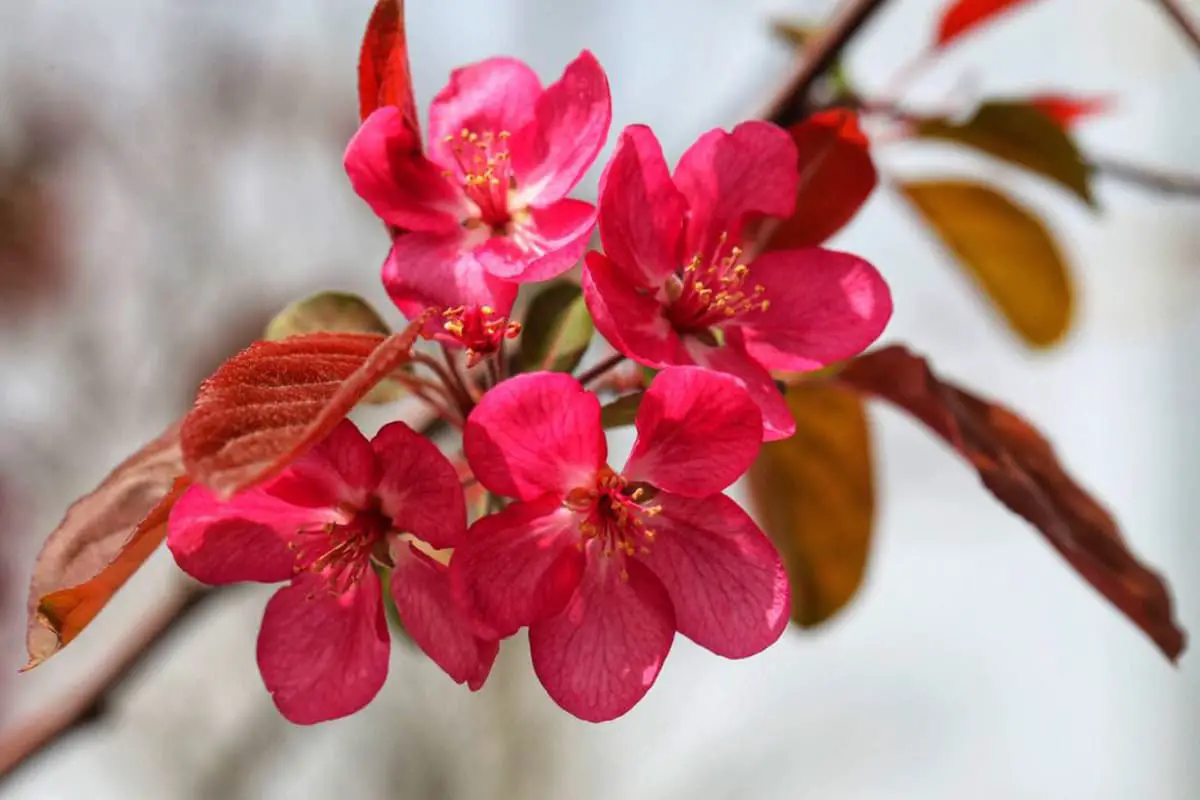
The wrinkled papaya can be used as a unique ornamental tree or as a group of three to five to embellish miniature gardens or green spaces. It can also be cultivated as a single or multi-stemmed shrub for forest patches or courtyard decorations.
In spring, it blooms; in summer and autumn, its fruit can be admired. The plant is subtle yet showy, colorful, and pleasing to look at.
Its most prominent feature is its rich content of tartaric acid and other organic acids, meaning that its processed products do not need to add preservatives, citric acid, essence, or colorants. It is a unique flavored natural green food.
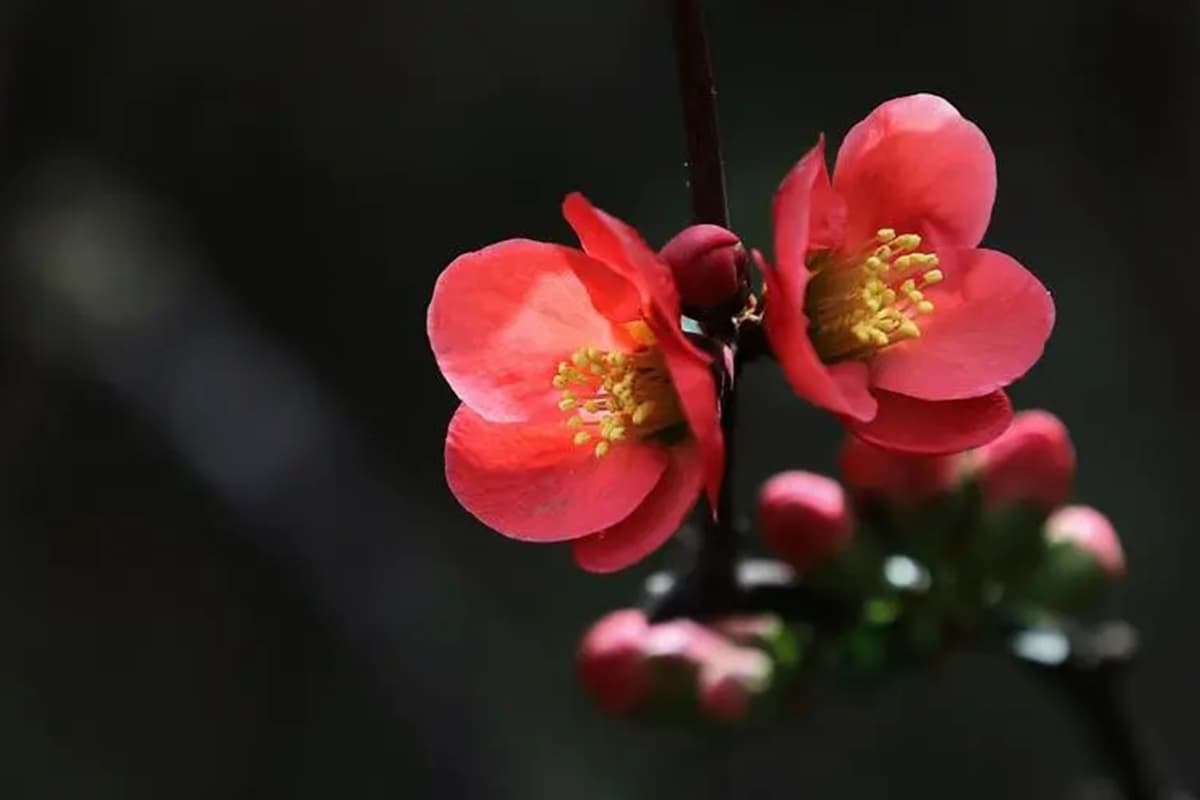
This deciduous shrub can grow up to 2 meters tall. Its branches stand upright and spread out, with thorns. The twig is cylindrical, slightly curved, hairless, and either purple-brown or black-brown, with sparsely grown light brown lenticels.
The winter buds are triangular-ovate with a sharp tip, nearly hairless or with short soft hairs on the edge of the scales, and are purple-brown. The leaves are ovate to elliptical, occasionally elongated-elliptical, 3-9 cm long and 1.5-5 cm wide.
The tip is sharp, seldom blunt, and the base is wedge-shaped to broad wedge-shaped. The margins have sharp serrations, teeth spread out, hairless or soft-haired along the veins on the lower side of the sprouts.
The leaf stalk is about 1 cm long. The stipules are large, herbaceous, kidney-shaped or semicircular, occasionally ovate, 5-10 mm long, 12-20 mm wide, with sharp double serrations on the margins, and are hairless.
The flowers bloom before the leaves, 3-5 clustered on two-year-old branches. The flower stalk is short and thick, about 3 mm long or nearly stalkless. The flower is 3-5 cm in diameter. The calyx tube is bell-shaped, hairless on the outside.
The calyx lobes are upright, semi-circular or ovate, 3-4 mm long, 4-5 mm wide, about half the length of the calyx tube, with a round tip, entire or wavy-toothed, and have yellow-brown eyelashes.
The petals are obovate or nearly round, extending at the base into a short claw, 10-15 mm long, 8-13 mm wide, scarlet, occasionally pale red or white. The stamens number between 45-50 and are about half the length of the petals.
The five styles are joined at the base, either hairless or slightly hairy, with a head-shaped stigma that is not clearly divided, roughly the same length as the stamens. The fruit is spherical or egg-spherical, 4-6 cm in diameter, yellow or yellow-green, with sparse, inconspicuous spots, and is fragrant.
The calyx lobes fall off, and the fruit stalk is short or nearly stalkless. The flowering period is from March to May, and the fruiting period is from September to October.
This temperate tree species is highly adaptable. It enjoys sunlight but can also tolerate partial shade, cold, and drought. It’s not very demanding when it comes to soil, and can grow normally in fertile, well-drained clay or loamy soil. However, it should not be planted in low-lying or saline-alkali soils.
The papaya tree’s major disease is leaf blight, which primarily affects the leaves, causing multi-angled black-brown patches to appear on the affected leaves. This disease can occur anytime during the green leaf period, but it’s particularly severe in July and August.
Preventive measures include removing and burning dead branches and leaves, and spraying a Bordeaux mixture of 1:1:100 on the leaves.
The tree is also susceptible to pests, mainly longhorn beetles and aphids, that can damage the trunk and leaves. To control these pests, a solution of 1500 times dilution of insecticide can be used.
The tree blooms in early spring before the leaves appear and is beautiful. Its dense, thorny branches can serve as green fences.
The papaya tree can be planted on either side of the roads in parks, courtyards, campuses, and squares. Its upright stature, abundant flowers and fruits, brilliant colors, and delightful fragrance create an excellent effect.
As a unique standalone ornamental tree or in small groups of three to five, it can be used to enhance the beauty of small garden designs or green spaces. It can also be cultivated as a single or multi-stemmed shrub for forest patches or courtyard decoration.
Its spring flowers and summer and autumn fruits are elegant and colorful, pleasing to the eye and never boring. The papaya tree can be made into various bonsai styles and is known as one of the “Eighteen Scholars” of bonsai.
It can be placed in halls, flower stands, porch corners, and leisure areas, and can be reasonably matched with architecture, adding charm to the garden landscape and making it more elegant and refined.
According to laboratory analysis, good quality papaya contains 0.45% protein, 0.57% fat, 2.11% crude fiber, 8.8% soluble solids, 9.5% pectin, and 3.22% organic acids.
Every 100g of fresh fruit contains 24.79mg of calcium, 6.04mg of phosphorus, 4.53mg of iron, 96.8mg of vitamin C, and 6.35μg of vitamin A. In addition, it contains 17 types of amino acids, with a total amino acid content of 529m/100g.
The most distinctive feature of the papaya is its rich content of organic acids, such as citric acid. Its processed products do not need to add preservatives, citric acid, flavorings, or colorings, making it a unique natural green food.
The fruit contains malic acid, tartaric acid, citric acid, and vitamin C. When dried, it can be used as a medicine with effects such as driving away wind, relaxing muscles, activating collaterals, relieving pain, reducing swelling, and promoting the smooth flow of qi.
According to a joint measurement by the Shanghai Institute of Pharmaceuticals and other units, papaya contains citric acid, which enhances the body’s immune function and has a broad-spectrum antibacterial effect.
It can strongly inhibit typhoid, dysentery bacillus, and Staphylococcus aureus. In addition, there are many folk remedies for health and disease treatment using papaya, such as boiling it with honey for consumption, which can promote qi, activate blood, and strengthen muscles and bones.
Papaya soup can be used to stimulate lactation in postpartum women. Elderly people using papaya branches as canes can relax their muscles and benefit their longevity.
Furthermore, papaya has excellent effects on symptoms such as waist and leg soreness and numbness, calf muscle cramps, limb convulsions, and rheumatoid arthritis.

Peggie was once a high school mathematics teacher, but she set aside her chalkboard and textbooks to follow her lifelong passion for flowers. After years of dedication and learning, she not only established a thriving flower shop but also founded this blog, “Flowers Library”. If you have any questions or wish to learn more about flowers, feel free to contact Peggie.
 English
  العربية
  Bahasa Indonesia
  Deutsch
  Français
  Italiano
  Nederlands
  Português
  Русский
  日本語
日本語