The Calendula officinalis, also known as marigold, garden marigold, gold bloom, and holligold, is an annual herbaceous member of the Asteraceae family, prevalent in early spring gardens and urban spaces across China.
The plant is renowned for its vibrant golden blooms that resemble glistening cups, hence its name. Pot marigolds range from 20 to 75 cm in height, with the entire plant covered in soft hair; the leaves are alternate and oblong.
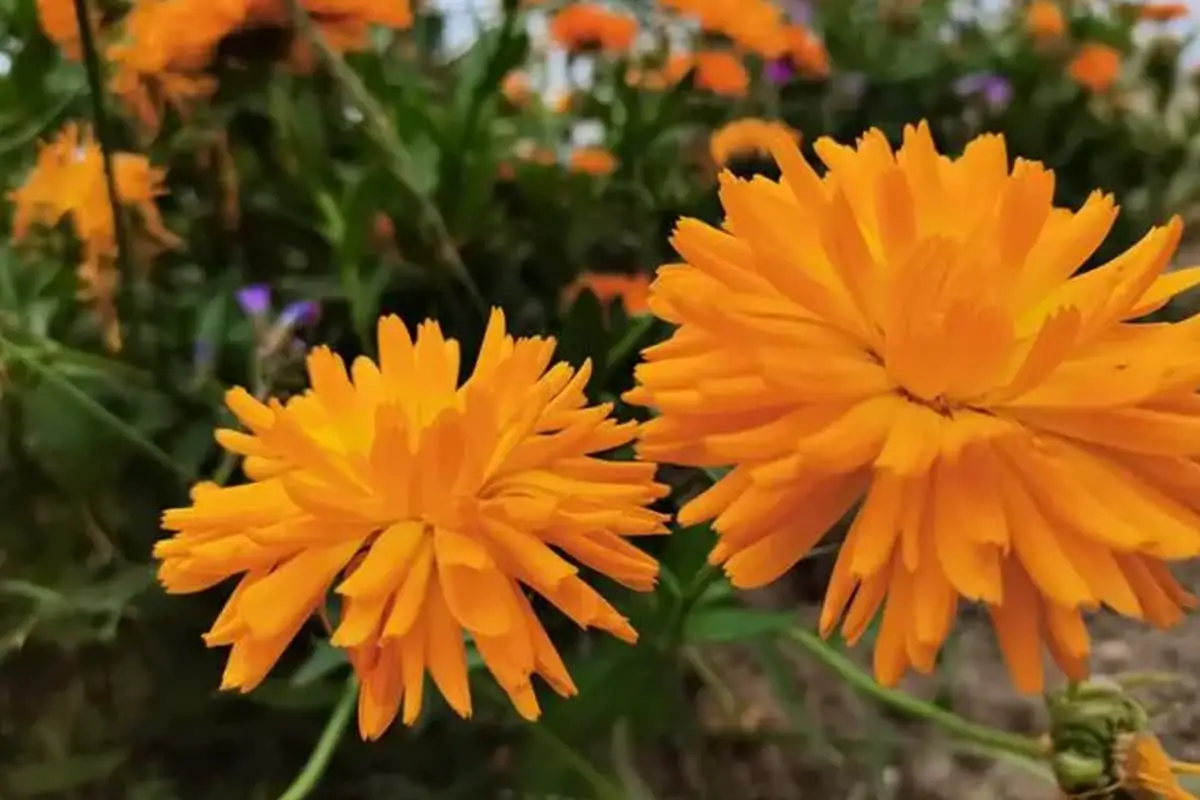
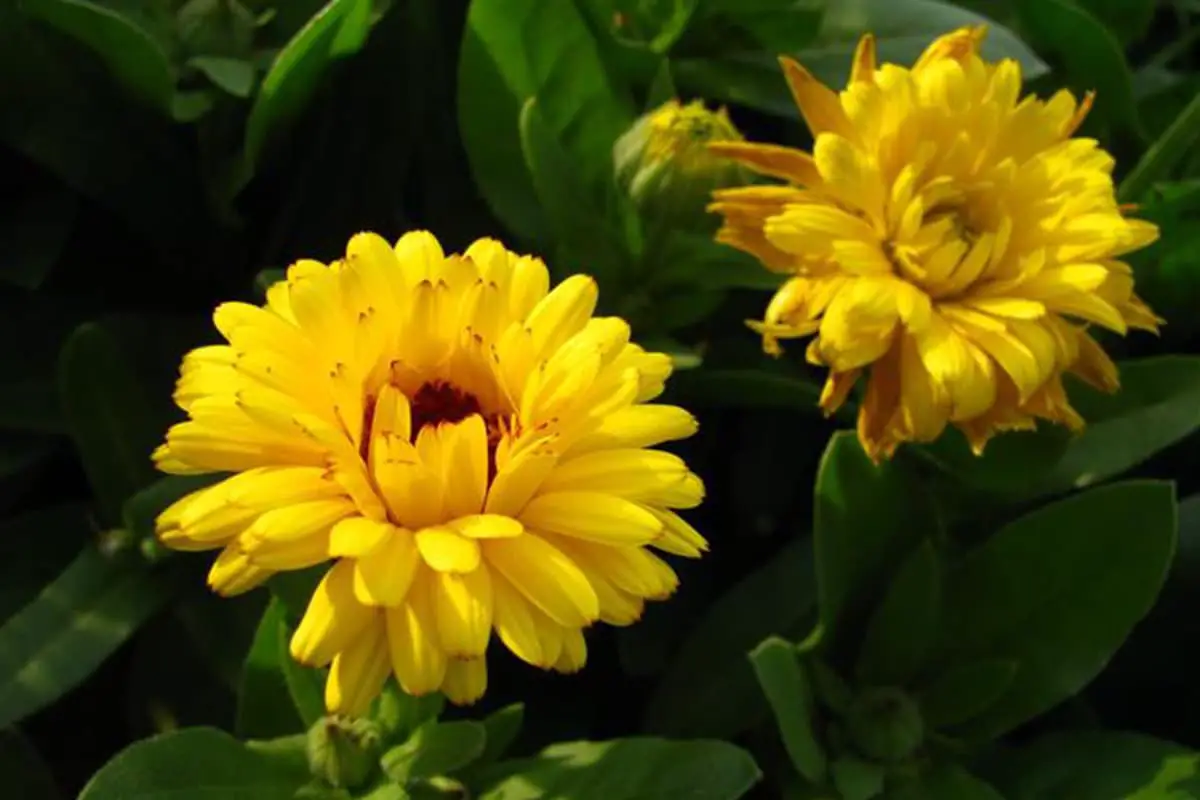
The flowers are solitary, offering a rich palette of colors such as yellow, orange, and white, with double or curled petals, blooming from April to September.
The plant boasts a wide range of applications: it is rich in various vitamins, edible, medicinal, and serves as a raw material for cosmetics.
I. Basic Introduction
The Pot Marigold is an annual herb of the Asteraceae family, with a hairy stem. It has alternate, oblong leaves. Its flowers, blooming from April to September and fruiting from June to October, are yellow or orange-yellow.
The plant prefers mild and cool climates, is heat-sensitive but cold-resistant, and is native to Southern Europe and the Mediterranean region.
Rich in multiple vitamins, especially vitamins A and C, pot marigolds help prevent pigmentation, improve skin luster and elasticity, slow aging, and prevent skin sagging and wrinkling.
Almost every part of the plant is edible; its petals are known for their beautifying properties, containing compounds such as carotenoids, lycopene, lutein, zeaxanthin, volatile oils, resins, mucilage, and malic acid.
The roots contain bitter principles and oleanolic acid glycosides; the seeds have glycerides, fatty alcohols, and alkaloids. When added to shampoos, they can lighten hair color.
Ancient Egyptians believed marigolds could delay aging, while in India, they are revered as sacred flowers. In the Middle Ages, marigolds were used to treat wounds and combat plagues, including the Black Death.
Marigolds are among the most common herbaceous flowers in early spring gardens and cities. In ancient Western cultures, they were used medicinally or as dyes, as well as in cosmetics and food. The leaves and petals are edible, making them a decorative addition to dishes.
II. Varieties of Garden Marigold
Bon Bon
The Bon Bon is a particularly striking variety of garden marigold, displaying a bright gold color. The flowers grow singly on the ends of the stems, with a rounded inverted-egg shape.
The Bon Bon typically showcases pale yellow hues, and the plants range from 20 to 75 cm in height. A popular annual herb of the genus Calendula, it is commonly found in parks and gardens.
Gitana Festival
The Gitana Festival is an early-blooming variety with attractive, densely layered double flowers. The blooms are about 5 cm in diameter and come in shades of yellow, orange, or bicolored with both hues.
Originating in Europe, this variety is easy to cultivate, thriving even in poor soil, and is often used in roadside flower beds for environmental improvement.
Red Top
The Red Top may be the most beautiful of all the marigold varieties. It is a biennial herb with oval to inverted-egg-shaped flowers.
The blooms measure about 4 to 6 cm in diameter, featuring shades of yellow, red, or bicolored red and yellow. The plants are typically 40 to 45 cm tall, and the tongue-shaped petals of the flowers are distinctively red-tipped.
Shangri-La
The Shangri-La marigold is an exceedingly popular variety, not only for its attractive appearance but also for its auspicious name.
It features petals that form a single or multiple flat layers, in bright golden and orange hues that are widely admired. With robust stems about 7 to 8 cm thick, it’s a favored choice for home gardening.
Kablouna
The Kablouna features large flowers among the marigold varieties, standing at about 50 cm tall. It presents a wide range of colors, including apricot, pale yellow, and orange-red, with cream-colored tongue-shaped petals and a lemon-yellow center.
Recognizable and visually appealing, its petals are edible and historically were used for dyeing or medicinal purposes.
Gem
The Gem marigold is a shorter variety, reaching about 30 cm in height with double flowers. It is one of the most famous types of marigolds, boasting large stems typically 6 to 7 cm thick. The colors, lemon yellow and bright gold, make the flowers appear as dazzling gems from a distance.
San Diego
The San Diego variety has been widely cultivated in China and is a very dwarf species, an annual herb.
The green parts of the flower stems are covered with glandular soft hairs, and the flowers themselves are quite large, 8 to 10 cm in diameter, in shades of yellow or orange-yellow.
Blooming from April to September, its large flowers and long blooming period make it a popular choice for beautifying landscapes.
III. Growth and Distribution
Growth Habits
Marigolds are native to the Mediterranean region, thriving in mild and cool climates, and are drought-tolerant. They favor loose, fertile soils with good drainage.
Marigolds have specific temperature requirements, with an optimal growth range between 7-20 degrees Celsius. They can withstand some cold, with seedlings enduring temperatures down to minus 9 degrees Celsius, while mature plants do best at 0 degrees.
They are heat-sensitive; during high summer temperatures, the stems and leaves grow well but the flowers shrink and the petals become fewer.
Marigolds love full sunlight, which promotes robust stem and leaf growth. Insufficient light can cause yellowing leaves and root rot.
Distribution Range
Originally from Europe, marigolds have a long cultivation history there. In China, marigold cultivation began after the 18th century when it was introduced from abroad.
During the Qianlong era of the Qing dynasty, mass production of marigolds was already seen in the outskirts of Shanghai. After 1949, marigolds were widely planted in gardens for potted ornamental use and flower bed arrangements.
Since the 1980s, double-flowered, large-flowered, and dwarf marigolds were introduced to China and have since become one of the country’s significant herbaceous flowers.
IV. Morphology and Characteristics
Marigolds are annual herbs covered in hairs. The leaves are alternate, oblong-shaped.
The solitary capitulum inflorescence has a diameter of about 5 centimeters, with colors ranging from yellow, orange, red-orange, to white, including double-flowered, curled-petal, and varieties with green centers or deep purple hearts.
The whole plant can grow between 20-75 centimeters tall, usually branching from the base of the stem, green, or somewhat glandular-pubescent. Rosette leaves are oblong-ovate or spoon-shaped.
The solitary capitulum inflorescence grows at the end of the stem, with a diameter of 4-5 centimeters; involucral bracts are in 1-2 layers, lanceolate or oblong-lanceolate, with the outer layer slightly longer than the inner, tapering to a pointed tip.
The small flowers are yellow or orange-yellow, twice as long as the involucre, with tongue petals up to 4-5 millimeters wide; the tubular flowers have triangular-lanceolate lobes.
The achene is curved, pale yellow or tan, with the outer achenes mostly inwardly curved, often with small spines, topped with a beak, and winged edges with regular transverse wrinkles.
The flowering period is from April to September, and the fruiting period is from June to October.
V. Marigold Cultivation Tips and Precautions
How to Grow Marigolds
Soil Selection
For potted marigolds, starting with the right soil is key. Based on their growth habits, a loose, fertile, well-drained, slightly acidic soil is best. Marigolds are adaptable and aren’t fussy about the soil as long as it’s not alkaline.
Light Requirements
When cultivating marigolds, pay special attention to sunlight, especially during spring, summer, and fall, when the potted plants should be kept in a shaded area.
This is because marigolds need light but only tolerate weak light. Direct sunlight during these seasons can lead to yellowing and dropping leaves, with growth being very slow or entering a semi-dormant state.
In winter, they require direct sunlight for photosynthesis, flower bud formation, and fruiting.
Water Management
Marigolds prefer moist environments. Water frequently, but during the growth period, avoid overwatering; maintaining soil moisture is the goal.
Increase humidity to 75-85% by spraying water, especially when temperatures are high. During the cultivation process, spray water regularly, ideally 1-3 times a day, increasing on sunny days and decreasing on rainy days.
However, excessive spraying during the budding stage can cause rot due to fungal infections, so be mindful of water quality.
Adequate Fertilization
Fertilization is crucial for marigolds to bloom abundantly and large. During the growth period, fertilize every two weeks. Marigolds are heavy feeders, so don’t skimp on fertilizer. Insufficient nutrients will noticeably shrink and deteriorate the flowers.
Temperature Control
Temperature is another key aspect of growing marigolds; aim to keep it between 7-20℃. Above 10℃ in winter, marigolds can become spindly.
In summer, as temperatures rise, the stems and leaves grow vigorously, but the flowers shrink, and petals are significantly reduced. Both too high and too low temperatures are detrimental.
Marigolds prefer a warm environment, and when temperatures drop too low, protect the leaves with film to prevent frost damage. Throughout the year, control the temperature by ventilating and spraying water to cool the room when necessary.
Timely Pruning
- Every two months, prune branches with old and yellow leaves. With appropriate temperatures, marigolds can bloom throughout the year.
- During blooming, don’t keep seeds; prune wilted flowers to encourage new flower shoots, resulting in more blooms and extending the flowering period.
Precautions for Marigold Cultivation
- Transplant seedlings when they have three true leaves, and settle them in 10-12 centimeter pots when they have 5-6 true leaves. After transplanting for 7-10 days, pinch the tops to promote branching or spray 0.4% paclobutrazol solution on the leaves 1-2 times to control plant height. Fertilize every two weeks during the growth period or use a general-purpose 20-20-20 fertilizer. Adequate fertilization leads to more and larger blooms; conversely, insufficient fertilizer will cause the blooms to diminish in size. After the first flowering, cut off wilted flowers to encourage new growth and extend the blooming period. For seed preservation, select plants with large and brightly colored flowers of pure varieties, collect seeds on sunny days to prevent loss.
- During the marigold’s growth period, keep the soil moist, apply a 10-times diluted mature urine solution every 15-30 days, stopping at the end of February. When marigolds reach the later seedling stage, with 4-5 leaves, pinching the tops can promote lateral branch development and increase the number of flowers. Immediately after the first flowers wilt, topping can also encourage side branches to bloom again.
- Additionally, treating seeds with low temperatures before sowing, by placing them in a 0℃ refrigerator for 24 hours and then directly sowing outdoors, can be beneficial. Shade the seedbed, and germination should occur by mid-August; apply a diluted mature manure solution weekly. By late September, the marigolds can bloom.
VI. Propagation of Marigolds
Seed Propagation
The optimal time to sow marigold seeds is in the latter half of September. Begin by sterilizing the sowing substrate, then select plump seeds and subject them to a 24-hour chill in the refrigerator. Afterward, they are ready to be sown.
Germination
Soak the seeds in warm water—about the temperature of face-washing water—for 3 to 10 hours until they swell with absorbed water. This step can be skipped for commonly germinating seeds that sprout easily.
Sowing
For tiny seeds that are difficult to handle with fingers or tools, moisten the end of a toothpick and use it to pick up and place each seed on the surface of the substrate.
Cover with 1 cm of substrate and set the flowerpot in water, submerging it to one-half to two-thirds of its height, allowing the water to seep up slowly in a method known as “pot soaking” to avoid dislodging the seeds.
Post-Sowing Care
After sowing in autumn, cover the pots with plastic film during cold snaps to maintain warmth and moisture. Once seedlings emerge, remove the film and expose them to sunlight before 9:30 a.m. or after 3:30 p.m. to prevent them from becoming overly delicate.
When most seedlings have three or more leaves, it is time to thin them, removing any that are diseased or unhealthy to allow space for the remaining healthy seedlings. Once the majority of seedlings have three or more leaves, they can be transplanted into pots.
Cutting Propagation
Cutting Substrate
For marigold cuttings, select fertile, loose, and well-aerated sandy soil, rinsing it several times with clean water beforehand to prevent soilborne pathogens.
Selection of Cuttings
Cuttings, known as scions, are typically robust, disease-free tips pruned from the plant. These tips are directly used for cuttings.
Post-Cutting Care
Temperature: The ideal temperature for rooting cuttings is between 18°C and 25°C. Below 18°C, rooting is difficult and slow; above 25°C, the cut ends are prone to rotting due to pathogen invasion, with higher temperatures increasing the likelihood of rot.
If temperatures drop after cutting, wrap the pots or containers with film for insulation. If temperatures rise too high, shade the scions to block out 50–80% of sunlight, mist them 3–5 times a day—more frequently on sunny, hot days and less or not at all on cool, rainy days.
Humidity: Maintain relative air humidity between 75–85% after cutting. Increase humidity by misting the scions 1–3 times a day, with frequency depending on daily weather conditions.
However, excessive misting can lead to fungal infections as many pathogens thrive in water.
Light: Cuttings require sunlight but too much can raise internal temperatures and increase transpiration, hindering survival.
After cutting, shade the sunlight by 50–80%, removing the shade gradually as the roots develop. Remove shading nets after 4:00 p.m. on sunny days and replace them before 9:00 a.m. the following morning.
Potting or Transplanting
When potting seedlings, start with a 2–3 cm thick drainage layer made of coarse substrate or expanded clay pellets, followed by a 1–2 cm thick layer of fully decomposed organic fertilizer as base feed, and then another 1–2 cm layer of substrate.
Place the plant in and separate the roots from the fertilizer to prevent root burn.
The substrate for potting can be one of the following mixes: vegetable garden soil to slag (3:1), or garden soil to medium coarse river sand to sawdust (4:1:2), or one type of rice paddy soil, pond mud, or leaf mold.
Alternatively, use peat to perlite to expanded clay pellets (2:2:1); vegetable garden soil to slag (3:1); peat to slag to expanded clay pellets (2:2:1); or sawdust to vermiculite to medium coarse river sand (2:2:1).
After potting, water thoroughly and keep in a slightly shaded environment for a week.
When transplanting seedlings, prepare planting holes and sprinkle a layer of organic fertilizer as base feed, about 4–6 cm thick, cover with soil, and place the seedling in, ensuring the fertilizer is separated from the roots to avoid root burn.
Fill in the soil, firm it down with your foot, and water thoroughly.
VII. Disease and Pest Control
During the growing period of marigolds, foliar applications of potassium dihydrogen phosphate combined with trace fertilizers 2 to 3 times can enhance nutrition and provide resistance to diseases and pests.
A preventative spray of 70% mancozeb and zinc manganese solution at a dilution of 600 to 700 times can be effective before pest outbreaks occur.
For active disease management, solutions containing methomyl, mancozeb, and agricultural streptomycin can be sprayed as a treatment.
The primary pests affecting marigolds are mole crickets and red spider mites. To control mole crickets, apply 0.5 kg of 40% methamidophos mixed with 30 kg of water per acre during soil preparation and base fertilizer application, spraying it evenly across the soil surface.
Alternatively, mixing 0.5 kg of 40% methamidophos with an appropriate amount of water and blending with 100 kg of sand, then evenly scattering and incorporating it into the soil during soil preparation, can also be effective.
Red spider mites can be controlled by spraying a solution of 1.8% abamectin emulsifiable concentrate at a dilution of 2000 times during the marigold’s growth period.
Marigolds commonly suffer from wilt and downy mildew. A spray of 65% zinc dimethoate wettable powder at a 500 times dilution can be used as a control measure.
As temperatures rise in early summer, rust often affects the leaves; this can be treated with a spray of 50% oxycarboxin wettable powder diluted 2000 times.
Early spring flowering can lead to infestations of red spider mites and aphids, which can be controlled with a 1000 times dilution of 40% dimethoate emulsifiable concentrate.
VIII. Value and Other Uses
Medicinal Benefits of Marigolds
Medicinal Value
- The flowers possess antibacterial and anti-inflammatory properties, particularly effective against staphylococcus and streptococcus. The antibacterial agents are alcohol-soluble but not water-soluble and are more effective in alkaline conditions.
- Marigolds contain saponins that can lower blood lipids, shown to reduce serum cholesterol, free fatty acids, phospholipids, beta-lipoproteins, total lipids, and triglycerides in rats with experimentally induced hyperlipidemia. They can also decrease overall lipids, cholesterol, and triglycerides in the liver.
- The polysaccharides in marigolds have a strong immunostimulatory effect.
- Extracts from marigold flowers have a sedative effect on the central nervous system, can lower reflex excitability, reduce blood pressure, enhance cardiac activity, increase heart contraction amplitude, and slow heart rate.
- They can promote bile secretion and speed up wound healing. Marigold flowers are traditionally ingested in Europe to treat stomach and duodenal ulcers, gastritis, and liver and gallbladder disorders. They can also alleviate symptoms of gastrointestinal cancers, improve appetite and sleep, and are used for menstrual irregularities.
Culinary Value
Marigold is suitable for brewing alone or with green tea. Steep a tablespoon of dried marigold petals for 3 to 5 minutes. The golden-yellow tea, enhanced by the floating petals, has a delicate fragrance with a mildly bittersweet taste, which can be sweetened with honey.
Drinking marigold tea when suffering from a cold can help reduce fever and cool the body. It also has antispasmodic properties, promotes digestion, and is particularly beneficial for those with digestive system ulcers.
Additionally, it can improve blood circulation and alleviate alcohol poisoning, thus supporting liver health. However, marigold tea is not recommended for pregnant women.
Marigold essential oil, extracts, tinctures, and infusions are often used in specialized food flavoring formulations, adding aroma to soft drinks, frozen foods, confections, and baked goods.
Applications in Cosmetics
- Marigold essential oil is an excellent cosmetic base, used in ointments, creams, and various other products, including perfumes, for a gentle, cooling, and lubricating sensation.
- Marigold is suitable as a functional ingredient in cosmetics for its antibacterial, anti-inflammatory, and anti-infection properties.
Industrial Applications
Marigold seeds are rich in high-activity octadecatrienoic acid, which can be used as an adhesive in paints or coatings in the industry. It also serves as an active diluent to reduce solvent evaporation, thereby decreasing potential harm to humans and the environment.
Plant Culture
The Language of Marigolds
The language of marigolds symbolizes relief. This interpretation stems from the flower’s medicinal properties, providing relief and its association with the announcement of the Virgin Mary’s pregnancy.
The Virgin Mary is considered a source of solace for people on earth, hence the connection. Additionally, marigolds represent endurance due to their long flowering period and the ability to maintain blossoms for an extended time.
They also signify protection, as they are seen as natural companions to lilies, existing to guard them. The marigold’s message is noble, making it a fitting gift for someone you wish to protect, implying a lifelong commitment to be by their side.


 English
  العربية
  Bahasa Indonesia
  Deutsch
  Français
  Italiano
  Nederlands
  Português
  Русский
  日本語
日本語