Gardenia jasminoides ‘Variegata’, commonly known as the Variegated Gardenia or Spotted Leaf Gardenia, is a striking cultivar of the classic gardenia from the Rubiaceae family. This variant is distinguished by its uniquely patterned foliage, which creates a captivating visual effect reminiscent of a blend of yellow and green flowers when viewed from a distance.
The Variegated Gardenia combines the allure of its fragrant flowers with ornamental foliage, significantly enhancing its aesthetic value in gardens and landscapes.
I. Characteristics and Features
This evergreen shrub typically reaches heights of 1-2 meters (3-6 feet) with a broad, rounded crown and multiple branches. Its growth habit is characterized by:
- Stem: Ranges from green in young growth to dark brown in mature wood.
- Leaves: Opposite arrangement, ovate-lanceolate shape, 5-6 cm long and 2.5-3.5 cm wide. The foliage is leathery and glossy, with a dark green base color. Young leaves display irregular white variegation, which may green out as the leaves mature. Leaf margins are smooth.
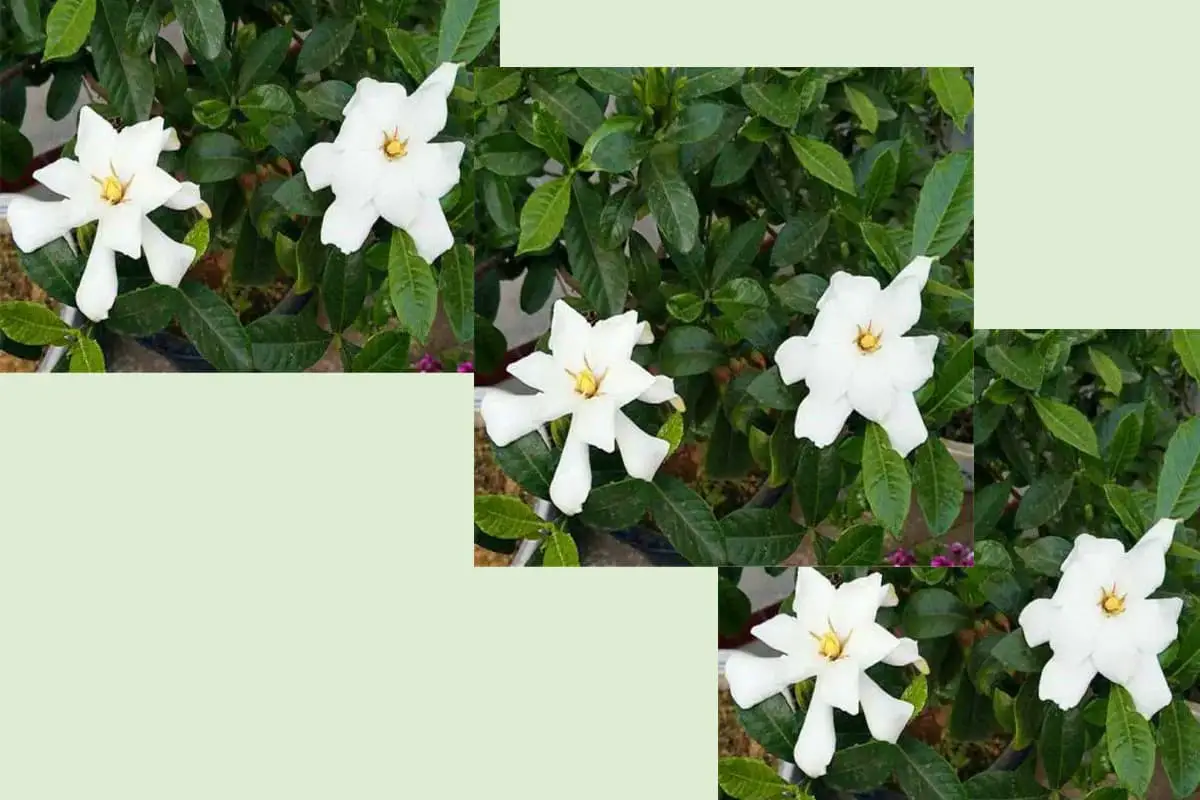
- Flowers: Single blooms appear either terminally or in leaf axils. The buds are greenish-white, opening to reveal double-layered white corollas. These flowers emit the characteristic strong, sweet fragrance gardenias are renowned for.
II. Growth Requirements
- Light: Thrives in full sunlight but can tolerate partial shade. Morning sun with afternoon shade is ideal in hotter climates.
- Temperature: Optimal growth occurs between 18°C-28°C (64°F-82°F). Protect from frost in colder regions.
- Soil: Prefers well-drained, loose, slightly acidic soil (pH 5.0-6.5). Rich, organic matter content is beneficial.
- Moisture: Requires consistent moisture but not waterlogged conditions. Good drainage is crucial to prevent root rot.
III. Cultivation Method
Successful cultivation of Variegated Gardenia involves:
- Soil Preparation: Well-draining, acidic soil rich in organic matter is ideal. Amend heavy soils with peat moss or composted pine bark to improve drainage.
- Watering: Maintain consistent soil moisture, especially during the growing season. Water deeply but allow the top inch of soil to dry between waterings.
- Fertilization: Apply a slow-release, acid-forming fertilizer formulated for acid-loving plants in spring. Supplement with liquid fertilizer during the growing season, following package instructions.
- Pruning: Prune after flowering to maintain shape and encourage branching. Remove any dead, damaged, or crossing branches to improve air circulation.
- Pest and Disease Management: Monitor regularly for common issues such as aphids, scale insects, and sooty mold. Ensure good air circulation and avoid overhead watering to prevent fungal diseases. Nematodes and root-knot diseases can be problematic in some regions.
IV. Propagation Method
Variegated Gardenia can be propagated through:
- Stem Cuttings:
- Take 10-12 cm (4-5 inch) cuttings from semi-hardwood or softwood growth.
- Remove lower leaves and dip the cut end in rooting hormone.
- Plant in a well-draining rooting medium.
- Maintain high humidity (80-90%) and warm temperatures (21-24°C or 70-75°F).
- Roots typically develop in 6-8 weeks.
- Air Layering:
- Select a healthy branch and remove a ring of bark.
- Apply rooting hormone to the exposed area and wrap with moist sphagnum moss.
- Cover with plastic and secure both ends.
- Once roots are visible through the moss (usually in 2-3 months), cut below the rooted section and pot up.
In southern regions with mild climates, propagation can be attempted year-round, though spring and early summer are typically most successful.
V. Landscape Value and Uses
The Variegated Gardenia offers versatile ornamental applications:
- Specimen Planting: Its unique foliage makes it an excellent focal point in gardens.
- Mass Plantings: Create stunning visual effects when planted in groups or hedges.
- Container Gardening: Well-suited for pots on patios, balconies, or as indoor plants in bright locations.
- Mixed Borders: Combines beautifully with other acid-loving plants like azaleas and camellias.
- Fragrance Gardens: Its sweet scent makes it perfect for sensory gardens or near seating areas.
- Topiary: Can be trained into various shapes for formal garden designs.
When used as a potted plant, ensure proper drainage and place in well-lit areas such as balconies, living rooms with ample natural light, or sunrooms. Regular pruning and appropriate care will maintain its compact shape and vibrant variegation, making it an excellent long-term ornamental choice for both outdoor and indoor spaces.



 English
  العربية
  Bahasa Indonesia
  Deutsch
  Français
  Italiano
  Nederlands
  Português
  Русский
  日本語
日本語