Impatiens hawkeri, commonly known as New Guinea Impatiens, is a perennial evergreen herbaceous plant prized for its vibrant flowers and attractive foliage. This species, native to the tropical mountains of New Guinea and nearby islands, has become a popular ornamental plant worldwide due to its long blooming period and adaptability to various growing conditions.
I. Morphological Characteristics
Impatiens hawkeri is a compact plant typically reaching 25-30 cm in height, though some varieties can grow taller. The plant features:
Stems: Succulent, smooth, and either green or reddish-brown, with prominent nodes prone to breakage.
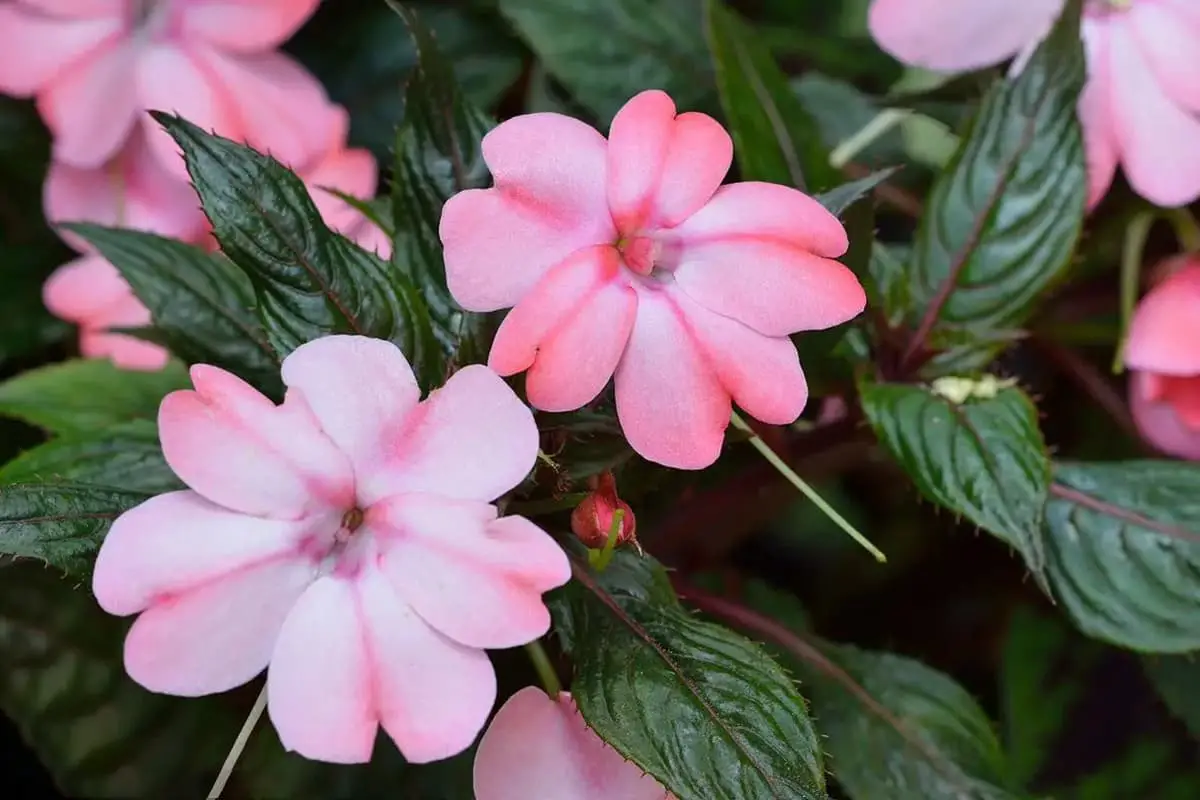
Leaves: Alternate, often forming whorls at stem tips. Ovate-lanceolate in shape, 5-15 cm long, with serrated edges. Leaf color varies from yellow-green to dark green, often with contrasting veins that may correlate with flower color.
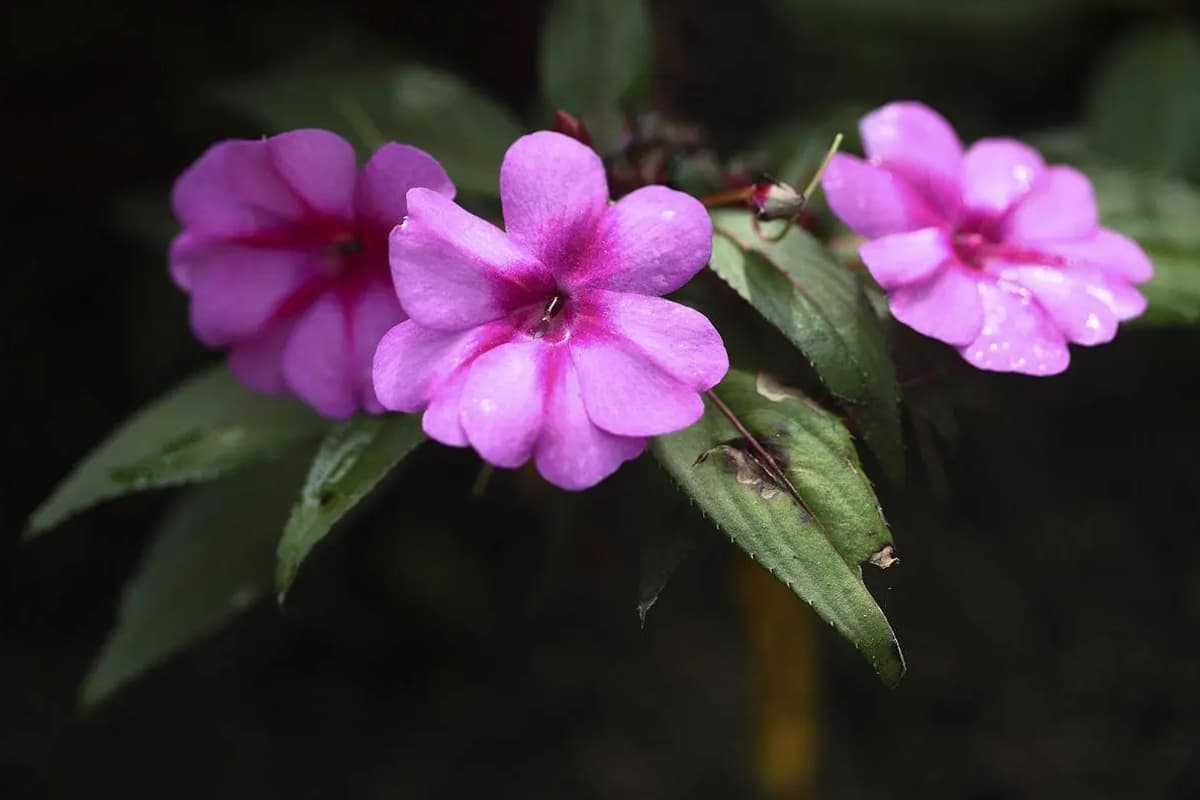
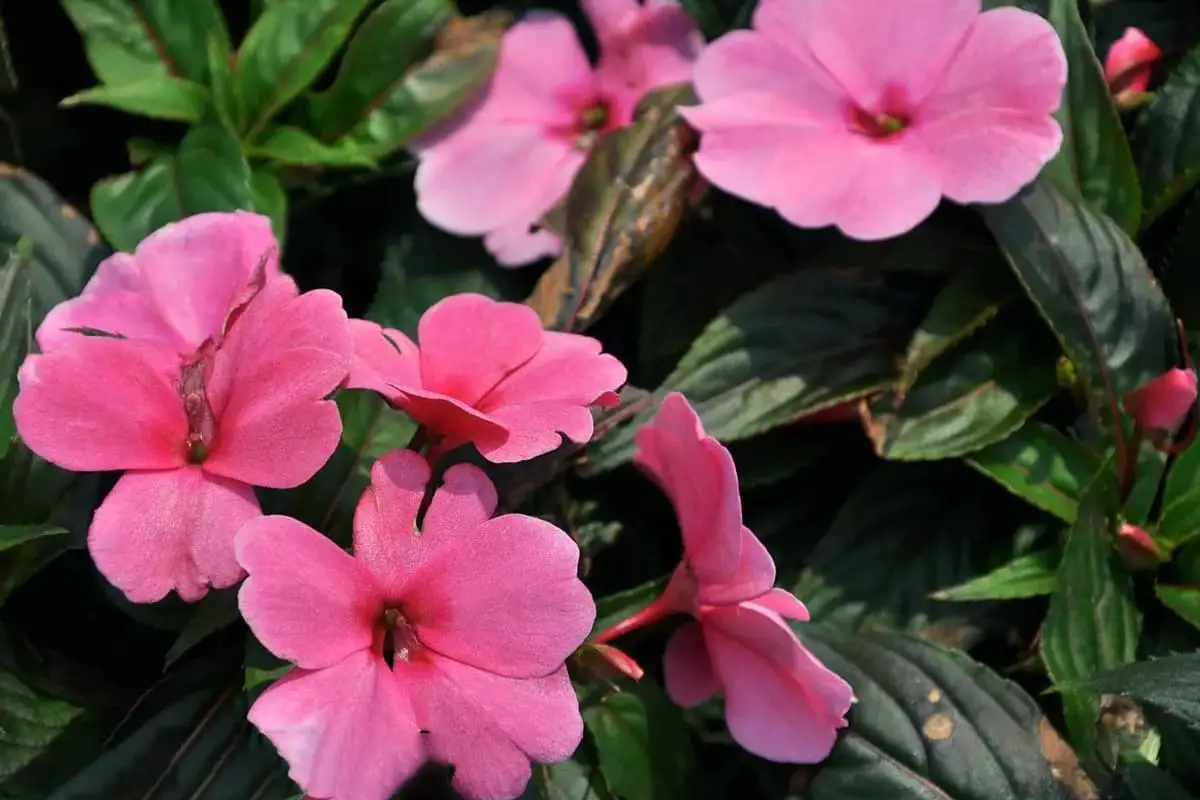
Flowers: Large, showy blooms 5-7 cm in diameter, solitary or in few-flowered umbel-like clusters. Flowers have five petals, with the lower petal modified into a spur. Colors range widely, including shades of red, pink, orange, purple, and white. Some cultivars feature bicolor or multicolor blooms.
Blooming period: Typically flowers from late spring through early fall (June to October in many regions), with peak blooming in summer.
As a member of the Balsaminaceae family, Impatiens hawkeri shares characteristics with other impatiens species but is distinguished by its larger flowers and more robust growth habit.
II. Growing Environment
To thrive, New Guinea Impatiens require:
Light: Bright, indirect light. Can tolerate more sun than other impatiens species, but protection from intense midday sun is beneficial.
Temperature: Optimal growth occurs between 18-27°C (65-80°F). Plants are frost-sensitive and will perish if exposed to temperatures below 10°C (50°F).
Soil: Well-draining, fertile soil rich in organic matter. Ideal pH range is 6.0-6.5.
Water: Consistent moisture is crucial, but avoid waterlogging. Allow the top inch of soil to dry slightly between waterings.
Humidity: Prefers moderate to high humidity levels, typical of its tropical origins.
For container growing, use a high-quality potting mix composed of:
3 parts peat moss or coconut coir
1 part perlite or coarse sand
1 part well-aged compost
This mixture provides excellent drainage while retaining adequate moisture.
III. Propagation
New Guinea Impatiens are primarily propagated through stem cuttings, especially for F1 hybrids and patented varieties. The process involves:
Selecting 8-10 cm long stem tips with 2-3 leaf nodes.
Removing lower leaves and dipping the cut end in rooting hormone.
Planting cuttings in a sterile, well-draining rooting medium.
Maintaining high humidity and temperatures between 22-24°C (72-75°F).
Roots typically develop within 2-3 weeks.
Note: Always respect plant patents and obtain necessary permissions before propagating protected varieties.
IV. Care and Maintenance
Fertilization: Apply a balanced, water-soluble fertilizer (e.g., 20-20-20) every 2-3 weeks during the growing season.
Pruning: Pinch back growing tips to encourage bushier growth and more flowers.
Deadheading: Remove spent blooms regularly to promote continuous flowering.
Winter care: In colder climates, bring plants indoors before frost or treat as annuals.
V. Disease and Pest Management
While generally resilient, New Guinea Impatiens can be susceptible to:
Ensuring proper air circulation and avoiding overhead watering.
Regularly inspecting plants for signs of infestation or disease.
Using insecticidal soaps or neem oil for pest control.
Applying fungicides preventatively in humid conditions.
VI. Landscape and Container Use
New Guinea Impatiens excel in various garden applications:
Bedding plants in partially shaded garden areas
Container plantings for patios, balconies, and indoor spaces
Hanging baskets, particularly cascading varieties
Mass plantings for vibrant color displays
Mixed borders with other shade-loving perennials
Their continuous blooming habit, diverse color palette, and attractive foliage make them versatile choices for both novice and experienced gardeners.
By providing the right growing conditions and care, Impatiens hawkeri can offer months of colorful blooms, enhancing gardens, containers, and indoor spaces with their tropical beauty and charm.
Share
Facebook
Twitter
LinkedIn
Email
Share is Caring.
Peggie
Founder of FlowersLib
Peggie was once a high school mathematics teacher, but she set aside her chalkboard and textbooks to follow her lifelong passion for flowers. After years of dedication and learning, she not only established a thriving flower shop but also founded this blog, “Flowers Library”. If you have any questions or wish to learn more about flowers, feel free to contact Peggie.
Before you go
You May Also Like
We picked them just for you. Keep reading and learn more!
Impatiens walleriana, commonly known as Busy Lizzie, Patience Plant, or Sultana, is a popular ornamental species belonging to the Balsaminaceae family. This perennial herbaceous plant is prized for its continuous…
Types Of Flowers By Names (A-Z) Types Of Flowers By Color Types Of Flowers By Season Types Of Flowers By Blooming Time 600+ Types of Flowers No. Flower Name No.…
1. Ice Begonia The Ice Lotus, often mistaken for a begonia, is actually a unique variety of lotus (Nelumbo nucifera). This perennial aquatic plant features a horizontally growing, thick, swollen…
1. Abelia Grandiflora Abelia grandiflora Abelia grandiflora, commonly known as Glossy Abelia, is a semi-evergreen shrub belonging to the Caprifoliaceae family. This versatile plant is characterized by its arching branches…
The Cardiocrinum cathayanum, is a perennial herbaceous plant of the lily family. It boasts a robust and upright stature, growing up to 150 cm tall. In spring, it develops large…
The Parrot Flower, a peculiar herbaceous plant from the Impatiens genus, is named for its blooms that resemble a parrot. The flowers display a rich mix of colors including purple,…
Indeed, the types of flowers are vast and diverse, not only including flowering plants, but also mosses and ferns. Their cultivation and application methods are also varied. Therefore, there are…


 English
  العربية
  Bahasa Indonesia
  Deutsch
  Français
  Italiano
  Nederlands
  Português
  Русский
  日本語
日本語