600+ Types of Flowers A To Z (With Names and Pictures)
Types Of Flowers By Names (A-Z) Types Of Flowers By Color Types Of Flowers By Season Types Of Flowers By Blooming Time 600+ Types of Flowers No. Flower Name No.…

Impatiens walleriana, commonly known as Busy Lizzie, Patience Plant, or Sultana, is a popular ornamental species belonging to the Balsaminaceae family. This perennial herbaceous plant is prized for its continuous bloom of vibrant flowers and adaptability to various growing conditions.
Native to eastern Africa, particularly Tanzania and Mozambique, I. walleriana has become a globally recognized ornamental plant. It is widely used in gardens, as potted plants, and for urban landscaping due to its attractive appearance and low maintenance requirements.
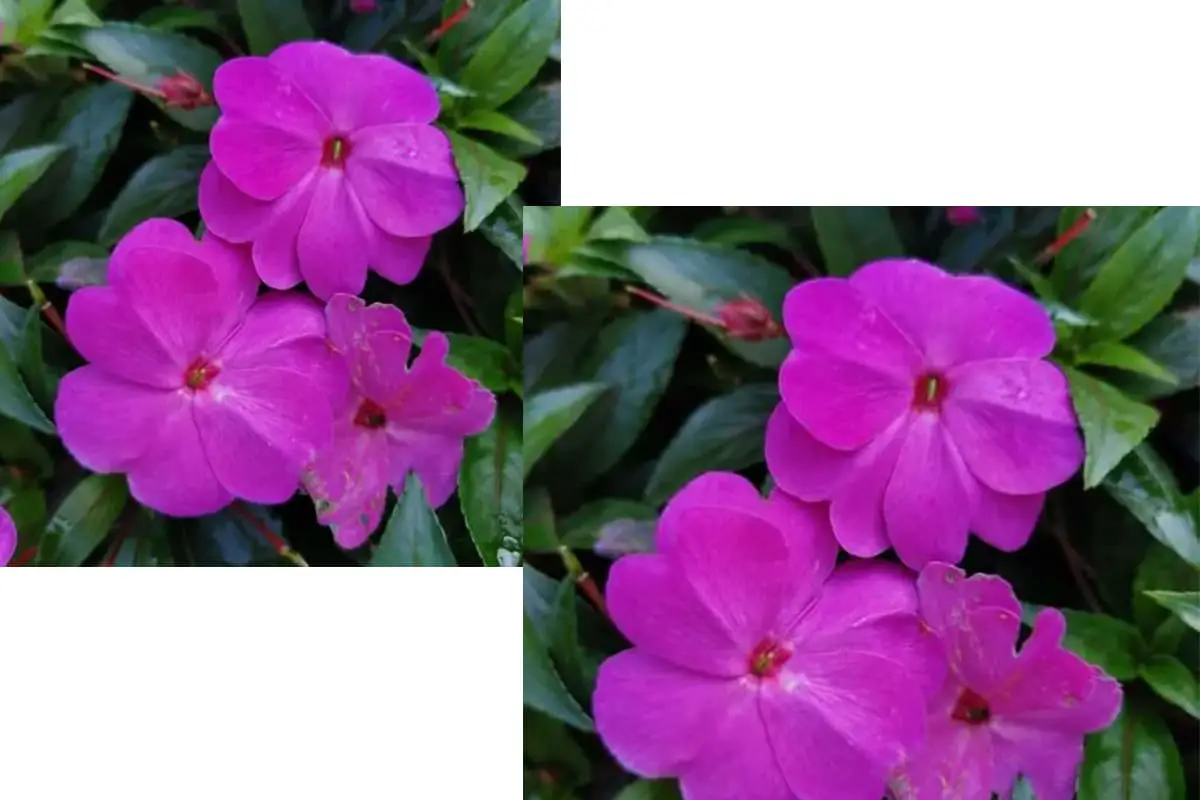
Impatiens walleriana typically grows to a height of 20-75 centimeters (8-30 inches). The succulent stems are erect, ranging from green to pale reddish in color, and may be branched or unbranched. Fine, soft hairs are often present at the stem tips.
The leaves are arranged alternately or spirally, especially towards the plant’s apex. They are petiolate with broad elliptic to ovate or oblong-elliptic blades, measuring 4-12 centimeters (1.6-4.7 inches) in length and 2.5-5.5 centimeters (1-2.2 inches) in width.
Leaf characteristics include:
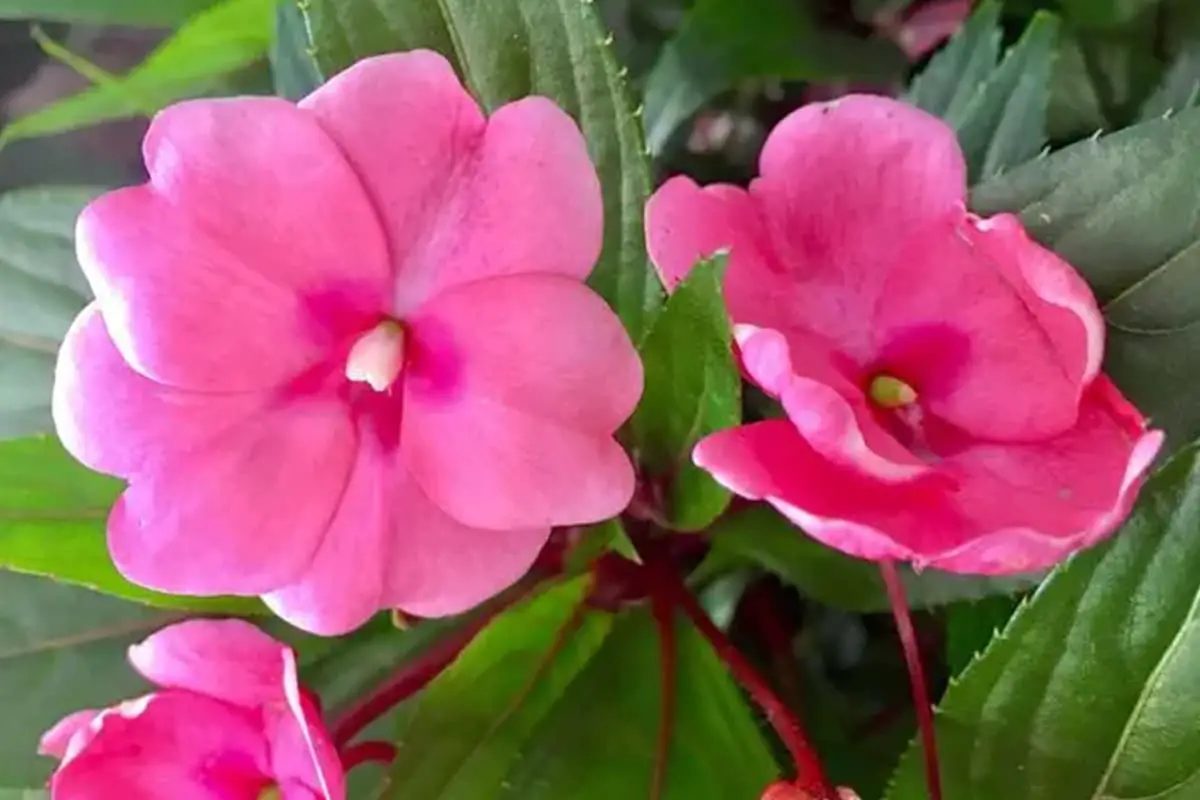
The inflorescences emerge from the upper leaf axils, typically bearing two flowers, though variations from one to five flowers can occur. The entire inflorescence measures 3-6 centimeters in length.
Flower characteristics:
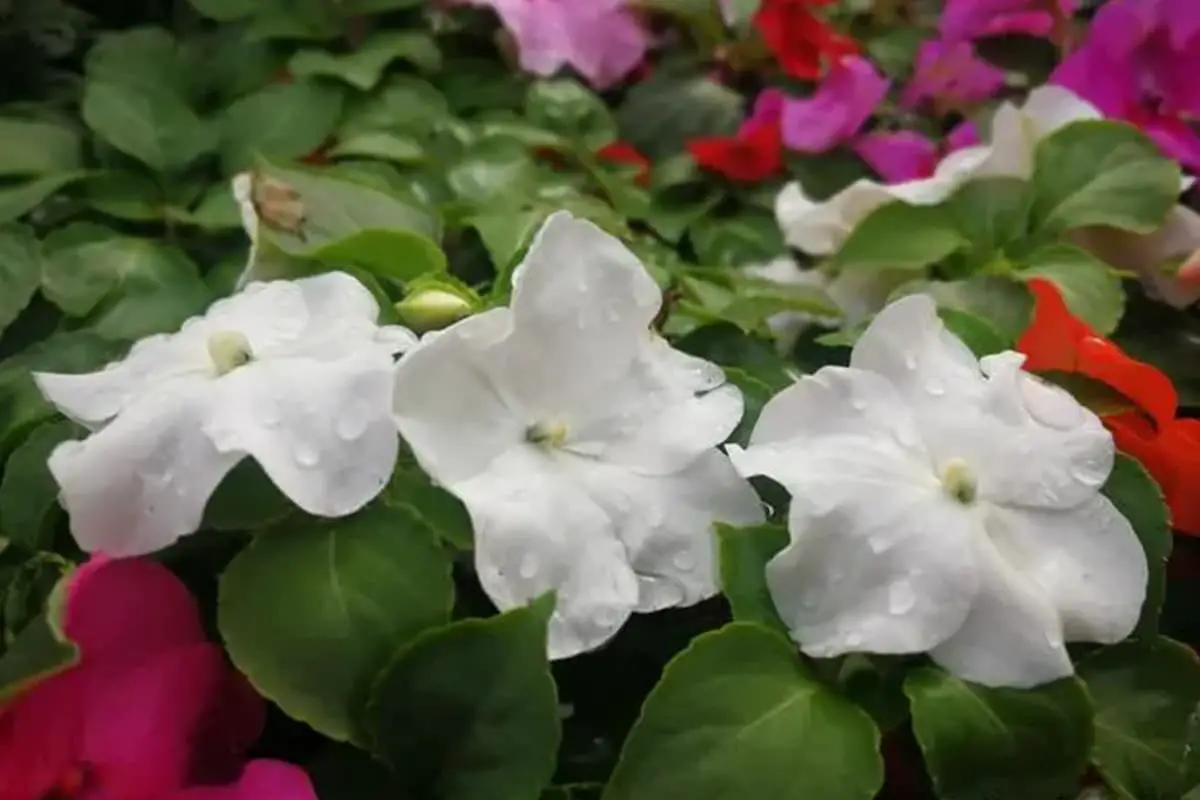
The fruit is a glabrous, fusiform capsule, measuring 15-20 millimeters in length.
Impatiens walleriana flowers from June to October in its natural habitat. However, when grown as an ornamental plant in controlled environments, it can bloom year-round, especially in warm and humid conditions.
This species’ ability to produce a profusion of colorful flowers over an extended period, combined with its adaptability to various light conditions (from partial shade to full sun in cooler climates), makes it a highly sought-after plant for both indoor and outdoor decorative purposes.
African impatiens (Impatiens walleriana) thrive in the damp, shaded areas of coastal forests, naturally occurring at elevations up to 1,800 meters. These plants prefer a warm, humid climate with filtered sunlight, avoiding harsh direct midday sun exposure.
Optimal Growing Conditions:
African impatiens are sensitive to environmental extremes. They require cool, partially shaded conditions during summer and do not tolerate drought or waterlogging. Their adaptability allows for easy transplantation and rapid growth.
Cultivation History and Distribution:
Native to East Africa, African impatiens have been widely cultivated globally. In China, their cultivation history dates back to the Tang Dynasty, as evidenced by their presence in poetry of that era. Today, they are commonly found in greenhouses across various Chinese regions, including Guangdong, Hong Kong, Hebei, Beijing, and Tianjin. Their natural distribution spans central and East African countries such as Kenya, Tanzania, Zambia, Mozambique, Malawi, and Botswana.
Temperature Sensitivity:
Water and Humidity Requirements:
African impatiens have strict water needs. Seedlings require consistently moist potting soil to prevent stunted root and leaf growth. During dry seasons, frequent misting helps maintain air humidity, promoting stem and leaf growth and branching. However, avoid waterlogging, as it can be fatal to the plants.
Light Requirements:
These plants benefit from protection against strong direct sunlight, especially during summer and flowering periods. Shading nets are recommended for outdoor cultivation. For indoor winter cultivation, provide ample sunlight but offer appropriate shading during intense midday sun to promote leaf growth and extend the flowering period.
Blooming Season: June to August
Propagation and Cultivation:
African impatiens produce dehiscent fruits that burst open at maturity, dispersing seeds. Propagation is commonly achieved through seed sowing or stem cuttings. The ideal growing medium is loose, fertile, and well-drained, with peat or leaf mold being particularly suitable.
Years of horticultural cultivation have resulted in a wide variety of leaf and flower colors, making African impatiens a popular and visually appealing potted plant. However, their cultivation requires careful attention to environmental conditions and proper care to ensure optimal growth and flowering.
Native to the Northeastern Usambara Mountains of Tanzania, African Impatiens (Impatiens walleriana) are cultivated in tropical greenhouses on Hainan Island and in the Beijing Botanical Garden in China for ornamental purposes.
These versatile plants are ideal for various garden applications, including flower beds, container gardening, hanging baskets, window boxes, and as potted specimens. African Impatiens are prized for their succulent, translucent stems, glossy green leaves, and prolific, vibrant blooms that persist year-round, showcasing their excellence as ornamental plants. Their adaptability and visual appeal have made them one of the most popular potted herbaceous flowers worldwide.
African Impatiens are particularly well-suited for adorning balconies, windowsills, and gardens. They create stunning displays when mass-planted in flower beds, borders, troughs, and as focal points, demonstrating remarkable ornamental resilience. Their cascading habit makes them especially charming in hanging baskets, floral spheres, and when used to decorate lampposts, corridors, and halls. Innovative applications such as flower walls, columns, and umbrellas add elegance and create dazzling spectacles in landscapes.
In Europe and North America, African Impatiens lead in herbaceous flower applications due to their wide range of vivid colors, vigorous growth, and ease of care. They excel in various settings, including dish gardens, hanging baskets, flower walls, window boxes, and balcony plantings. Additionally, they serve as effective groundcover in gardens and can be used to create colorful flower belts and borders beneath street trees.
The international popularity of African Impatiens is largely due to their exceptional decorative qualities in potted arrangements. They are extensively used in flower beds, planter boxes, decorative containers, and hanging baskets. Their versatility extends to creating floral spheres, columns, and walls, making them particularly valuable for exhibitions where they create striking focal points with outstanding visual impact.
Recognizing their commercial importance, flower companies worldwide have invested significantly in the cultivation and breeding of African Impatiens. Leading producers include PanAmerican Seed and Ball Seed in the United States, Danziger in Israel, Daehnfeldt in Denmark, Selecta Klemm in Germany, and Goldsmith Seeds in the United States. These companies produce high-quality potted plants and seeds for the global market annually, continually developing new cultivars with improved characteristics.
In terms of production scale, the United States holds a dominant position, with African Impatiens accounting for 47% of the total value of its flower production. They rank first among the $1.57 billion worth of bedding and garden plants produced in the country. European countries such as Germany, France, the Netherlands, Denmark, and Belgium generally meet their domestic demand for African Impatiens through local production.
In Asia, while Japan may not rank high in terms of production value and volume compared to other countries, African Impatiens remain a common sight in Japanese flower beds, planting troughs, and home windowsills, reflecting their enduring popularity and adaptability to various cultural contexts and gardening styles.
Indoor cultivation of African impatiens allows for year-round sowing. The seeds are exceptionally small, with approximately 1700 to 1800 seeds per gram. Sowing should be done in a sterilized potting mix composed of equal parts soil, leaf mold, and fine sand to ensure optimal drainage and nutrient retention.
For African impatiens, optimal germination occurs at 22°C (71.6°F), with seeds typically sprouting within 15 to 20 days. New Guinea impatiens, a close relative, prefer slightly warmer conditions, with ideal germination temperatures between 24 to 26°C (75.2 to 78.8°F), resulting in sprouting 7 to 14 days after sowing.
While propagation is commonly done by seed, vegetative propagation through cuttings is also an effective method, particularly for maintaining specific cultivars or double-flowered varieties. The minute seeds require light for germination, so they should be surface-sown rather than covered with soil.
The growing medium should be finely textured, level, and have high moisture retention capacity. After sowing, cover the container with glass or clear plastic film to maintain humidity and place in an environment with temperatures between 20 to 25°C (68 to 77°F). Germination typically occurs within two weeks.
Post-germination care is crucial for seedling establishment. Gently sprinkle a thin layer of fine soil over the seedlings to stabilize them. Proper ventilation, controlled watering, and gradual exposure to light (hardening off) are essential practices to minimize disease incidence and strengthen the young plants.
Sowing can be done in autumn, winter, and spring, provided temperatures are suitable. Flowering usually occurs approximately 3 months after sowing, depending on environmental conditions and cultivar characteristics.
For vegetative propagation, take 5 to 10 cm (2 to 4 inch) long stem cuttings, ensuring they include at least two nodes. Maintain high humidity around the cuttings or immerse the base in water. At 20°C (68°F), roots should form within about 10 days. Once rooted, the cuttings can be potted individually.
African impatiens possess a strong branching habit, which can be enhanced through timely pruning and shaping. When seedlings reach about 10 cm (4 inches) in height, pinch off the growing tips above 2 to 3 leaf nodes. This practice encourages lateral branching, resulting in a fuller plant with more abundant flowering. With proper care, each plant can produce 3 to 5 main branches and form a crown with a diameter of 30 to 50 cm (12 to 20 inches) within 10 weeks.
It’s crucial to apply a fungicide immediately after each pruning session to prevent potential infections through the pruning wounds. This is particularly important given the high water content and relatively fragile nature of impatiens stems.
The succulent stems of African impatiens make them susceptible to breakage and require careful management, especially regarding irrigation. While the soil should never be allowed to dry out completely, overwatering must be avoided to prevent root rot. During the flowering period, reduce watering frequency but maintain consistent moisture levels.
To prevent etiolation (excessive elongation of stems), apply only small amounts of diluted liquid fertilizer during the growing season. Focus on phosphorus and potassium-rich fertilizers to promote flowering and overall plant health, while minimizing nitrogen application, which can lead to excessive vegetative growth at the expense of bloom production.
In regions with hot summers, protect plants from intense direct sunlight by placing them in a well-ventilated area with partial shade. This prevents leaf scorch and helps maintain optimal growing conditions. Increase watering frequency during periods of high temperatures to compensate for increased transpiration and evaporation.
Year-round propagation can be achieved by taking robust, well-grown top branch cuttings, 10 to 12 cm (4 to 5 inches) in length, and inserting them into a sand-based rooting medium. At room temperatures of 20 to 25°C (68 to 77°F), roots should develop within 20 days, and the rooted cuttings can typically be potted within 30 days.
By following these detailed cultivation and propagation techniques, gardeners can successfully grow and multiply African impatiens, enjoying their vibrant blooms and lush foliage throughout the year.

Peggie was once a high school mathematics teacher, but she set aside her chalkboard and textbooks to follow her lifelong passion for flowers. After years of dedication and learning, she not only established a thriving flower shop but also founded this blog, “Flowers Library”. If you have any questions or wish to learn more about flowers, feel free to contact Peggie.
 English
  العربية
  Bahasa Indonesia
  Deutsch
  Français
  Italiano
  Nederlands
  Português
  Русский
  日本語
日本語