600+ Types of Flowers A To Z (With Names and Pictures)
Types Of Flowers By Names (A-Z) Types Of Flowers By Color Types Of Flowers By Season Types Of Flowers By Blooming Time 600+ Types of Flowers No. Flower Name No.…

Taiju is the most premium variety among Hangbai chrysanthemums. The unopened buds of Hangbai chrysanthemums are called Taiju, also known as Bud Chrysanthemum.
Gongju, also known as Huichrysanthemum, is a traditional specialty of Huangshan City, and together with Hangbai chrysanthemum, Chuzhou chrysanthemum and Bozhou chrysanthemum, they are known as the four famous chrysanthemums in China.
So, what’s the difference between Taiju and Gongju? Both Taiju and Gongju have the function of clearing heat and reducing inflammation. Which one is better at reducing inflammation? Let’s find out below.
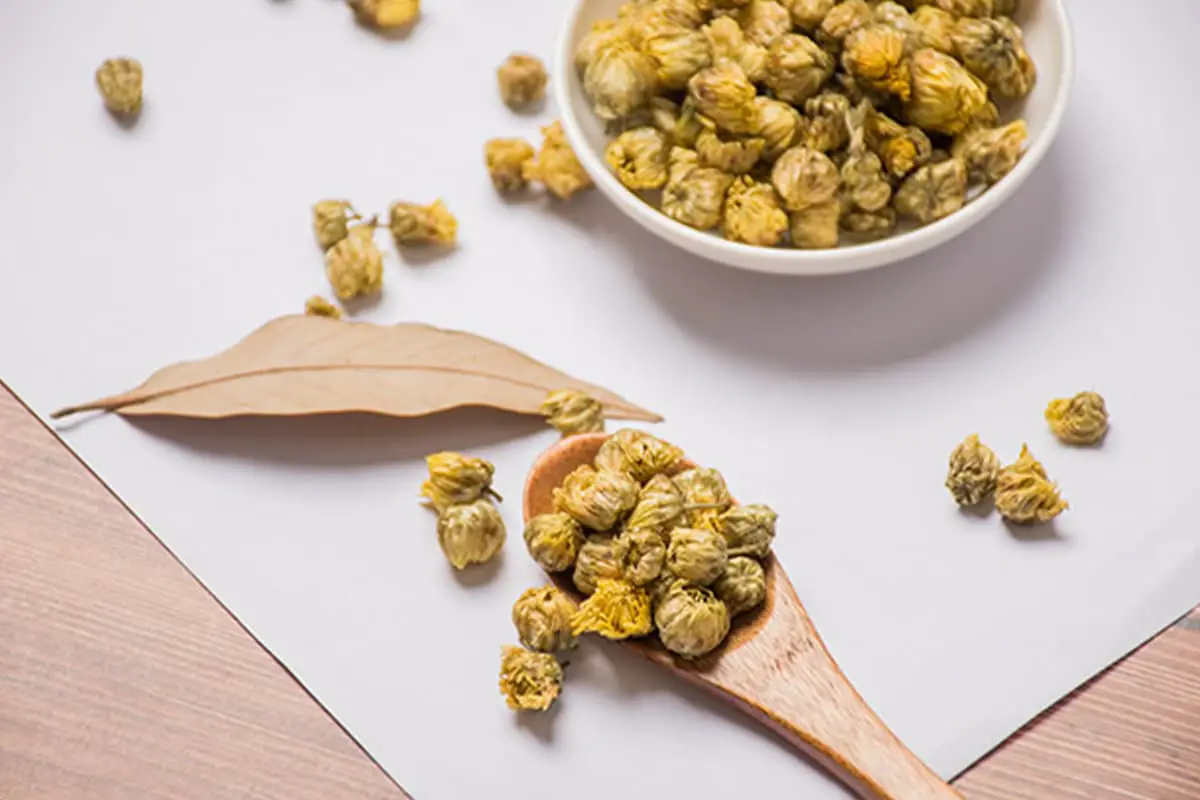
Taiju, also known as sweet chrysanthemum, yellow imperial fetus, or small white chrysanthemum, was a tribute to the royal court in ancient times.
It is the state of the chrysanthemum just forming buds, not yet blooming. When Taiju is brewed in water, it has a pure taste, strong fragrance, sweet taste, and is the finest among chrysanthemum teas.
Gongju, also known as Huichrysanthemum, is harvested from pure, natural, wild chrysanthemums in Huangshan, and is ranked among the four famous chrysanthemums in China, along with Hangbai, Chuzhou, and Bozhou chrysanthemums.
Gongju flowers are complete and neat, uniform, with white petals and green stems. The dried tea has a warm and rich aroma, showing the unique natural flower color of high-mountain Gongju. The flowers are placed in specially made bamboo frames during picking, hence the complete shape of the flowers.
Taiju flowers are small and not bloomed, with millet-yellow particles that are very uniform in size.
Gongju petals are large, and the entire flower is made up of petals, which are off-white in color.
Taiju is made from tender buds when the buds first open, then processed through drying, steaming, and roasting, resulting in a particularly unique, sweet aroma.
Gongju is made by drying fresh chrysanthemums. It does not taste as sweet as Taiju, and its taste is somewhat inferior to Taiju’s, lacking a sweet taste and with a bitter flavor instead.
The main producing areas of Taiju are in Zhejiang, Hubei, Yunnan, and the Guangxi Zhuang Autonomous Region, with the Taiju produced in Tongxiang City, Zhejiang Province being the most famous and highest quality.
Gongju, a traditional specialty of Huangshan City, is ranked among the four famous chrysanthemums in China, along with Hangbai, Chuzhou, and Bozhou chrysanthemums. It was named “Gongju” because it was offered as a tribute to the emperor in ancient times. It is produced in a wide area of Huangshan City, Anhui Province.
Both Taiju and Gongju have a good effect on reducing inflammation, but the way they reduce inflammation differs. One should choose between Taiju and Gongju depending on their personal situation.
Taiju is sweet in taste, cold in nature, and enters the lung, heart, and stomach meridians. It is good at reducing lung inflammation and has the effects of dispersing wind-heat, clearing heat and detoxifying, and anti-inflammation.
Suitable symptoms include wind-heat cold, febrile disease, early stage of carbuncle, redness, swelling and heat pain, etc. It also has a certain effect on dizziness, dry mouth and thirst, excessive sweating and discomfort.
Gongju is bitter and spicy in taste, slightly cold in nature, and enters the liver and heart meridians. Gongju is spicy and bitter and good at clearing and purging liver fire.
It has the effects of clearing heat and detoxifying, and calming the liver by purging fire. Suitable symptoms include wind-heat cold, excessive liver yang, red, swollen and painful eyes caused by liver fire attacking upwards, dizziness, vertigo, swelling and pain in the throat, etc.
Both Taiju and Gongju have the effect of clearing heat and purging fire. For symptoms of excess fire, the combination of the two is even more effective.
It can relieve swelling and pain in the throat, oral and tongue sores, relieve heatstroke symptoms, diarrhea, flu, carbuncles, swelling and toxicity, etc.

Peggie was once a high school mathematics teacher, but she set aside her chalkboard and textbooks to follow her lifelong passion for flowers. After years of dedication and learning, she not only established a thriving flower shop but also founded this blog, “Flowers Library”. If you have any questions or wish to learn more about flowers, feel free to contact Peggie.
 English
  العربية
  Bahasa Indonesia
  Deutsch
  Français
  Italiano
  Nederlands
  Português
  Русский
  日本語
日本語