600+ Types of Flowers A To Z (With Names and Pictures)
Types Of Flowers By Names (A-Z) Types Of Flowers By Color Types Of Flowers By Season Types Of Flowers By Blooming Time 600+ Types of Flowers No. Flower Name No.…

The Lotus, also known as the Water Lily and other names, is a perennial aquatic herbaceous flower of the order Nymphaeales and the family Nelumbonaceae. It is one of China’s ten famous flowers. The lotus leaf is shield-shaped, with a deep green surface and a grayish-green underside.
The rhizome grows in the mud with a particularly long flower stalk growing from the base, lifting the top lotus flower above the water. The flower grows singularly at the tip of the branch, with forms ranging from single, duplex, multiple petals, and double deck, predominantly white and pink, but also available in red and pale purple. The center of the flower is a yellow pistil, and the maturing receptacle turns into a lotus pod containing seeds.
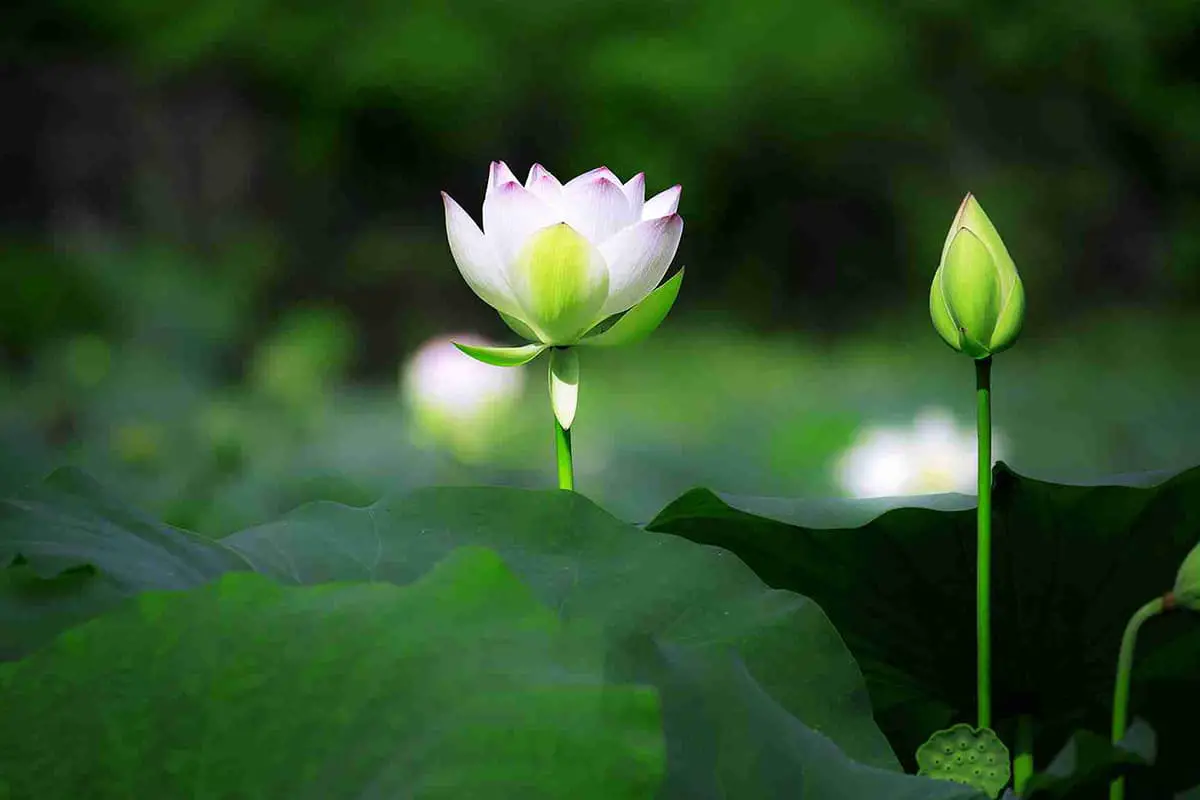
The Lotus flower belongs to the family Nelumbonaceae and is the general term for two species of the genus Nelumbo. It’s also referred to as the Water Lily among other names. It’s a perennial aquatic herbaceous flower of the genus Nelumbo.
The underground stem is long and thick with long nodes and shield-round leaves. It blooms from June to September, with numerous petals that are inlaid in the receptacle, available in red, pink, white, purple and other colors, or with colorful patterns and edgings. The nut is elliptical, and the seed is ovate.
There are many types of lotus flowers, divided into ornamental and edible categories. Originally from tropical and temperate regions of Asia. Every part of the lotus is valuable, the roots and seeds are edible, and the seeds, rhizomes, nodes, leaves, flowers, and seed germs can be used medicinally.
The lotus is the national flower of India and Vietnam.
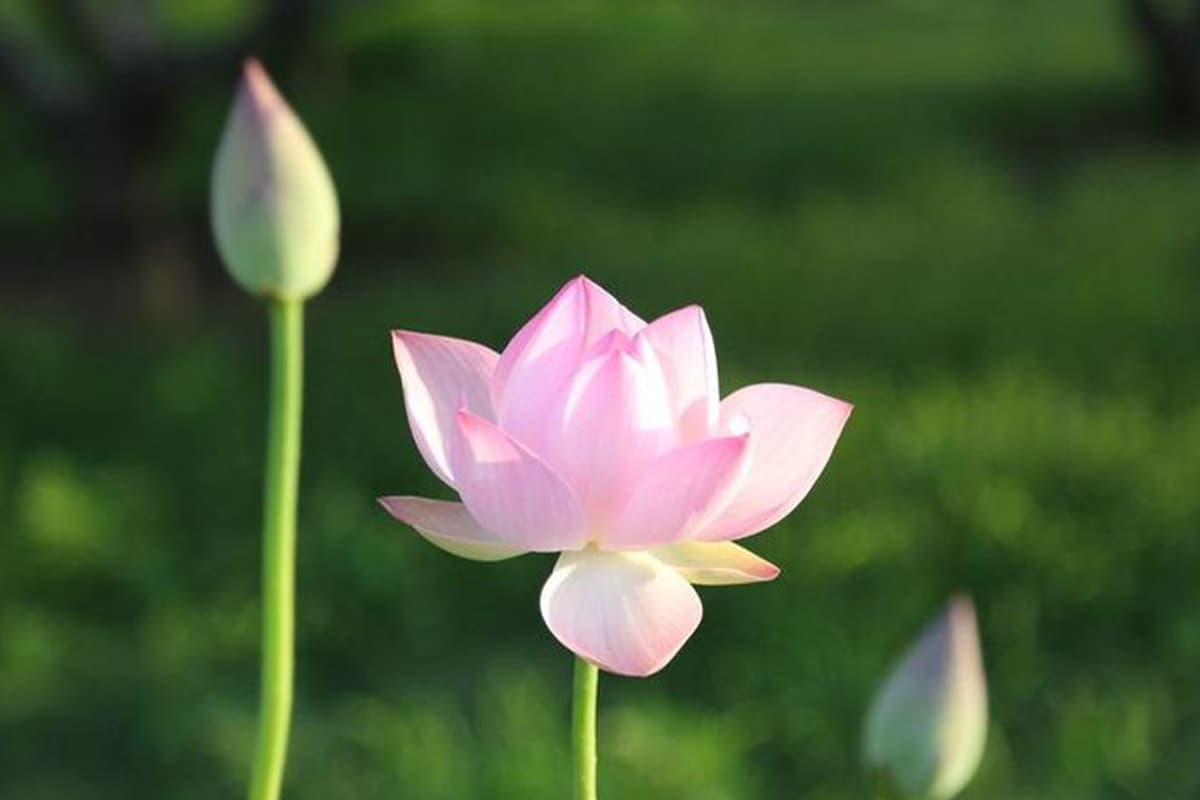
The Little Dancing Princess is one of the main varieties of lotus, with round, shield-shaped leaves. The flowers are full and round, pure white, but the tips are lightly dyed with a soft pink hue. This type of lotus is a single petal variety, with a flower diameter between 16 to 20 centimeters, and blooms in large numbers. It is often found in parks and some courtyards for visitors to admire.
The Green Hair Festival is a very high-yielding, affordable variety of lotus cultivated for its roots. It is lightly tinged with a faint green color, and the flowers are elegantly beautiful. The petals are usually single, with white autumn hair, and the lotus flowers form a cup shape with deep green leaves. The growth cycle of the Green Hair Festival lotus includes budding, leaf expansion, flowering and fruiting, root elongation, and dormancy, usually within one year.
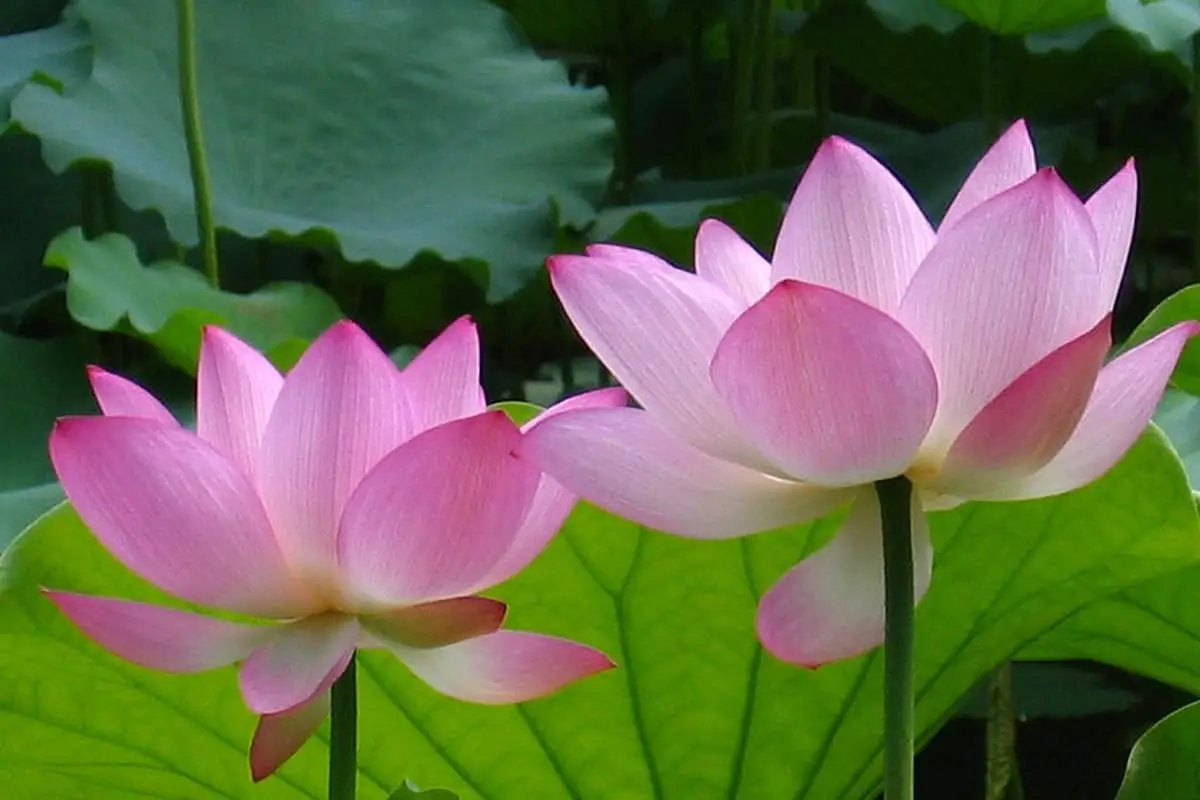
The Red Terrace is a gem among lotus flowers. Also known as the “Zhongshan Red Terrace,” it’s a large, double-deck variety, symbolizing aristocracy. Red Terrace lotus flowers are usually pink and white, with dozens or even hundreds of petals per flower. When blooming, the outer petals fall off layer by layer while the inner petals continue to grow, vibrant and spectacular, representing a noble symbol.
Pink Cloud is a bowl lotus variety, with round and shield-like leaves. The leaf stalk is quite thick, with dense and sharp edges. The flower color is as tender as the colorful clouds, usually magenta, with a flower diameter of 8 to 13 centimeters. The petals are heavily overlapping, often artificially cultivated in smaller bowl-shaped containers.
Dragon Flight is an ornamental variety of lotus, often grown in water jars and basins. Its leaves are verdant green and the flower is a robust single-petal variety. The blossoms are white, with a large blush of pink at the tips. There are typically around 26 petals in total, and the diameter of the flower usually ranges between 15 to 17 centimeters. The flower receptacle is funnel-shaped, and the lotus pod forms a cup shape.
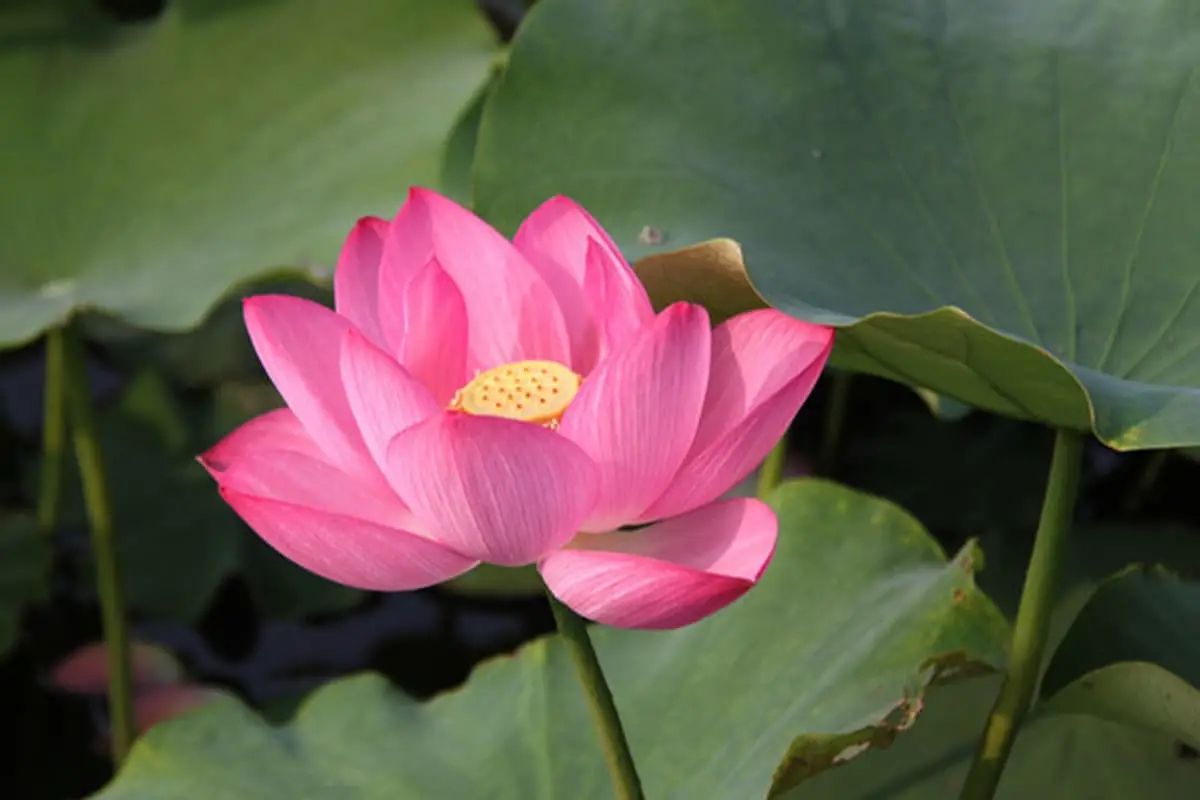
The Jade Bowl lotus flower is predominantly white, with a tinge of yellow and green. When fully bloomed, it takes the shape of a bowl. Its petals have a coarse feel to them. This double-petal lotus has around 24 to 26 petals. The diameter of the flower ranges from 6 to 10 centimeters, with the receptacle taking a cup shape and the lotus pod being flat-round. It is usually cultivated for ornamental purposes.
Fairy Scattered Flowers is a beautiful variety of lotus that, when fully bloomed, resembles a dancing buddha’s lotus seat. It is a double-petal lotus with around 27 pink petals. The diameter of the flower ranges from 14 to 18 centimeters, with the receptacle in a bell shape and the lotus pod resembling an inverted cone.
The Yellow Dance Flight looks like a fairy in a yellow dress hovering over the water surface, exuding an ethereal charm. It’s a double-petal variety that takes a dancing posture, with only around 9 petals, yet its flower diameter can be as large as 18 centimeters. It’s a larger variety of lotus, usually cultivated in water jars for viewing.
The Snow White lotus is pure as snow in color, exuding an innocent charm. Its captivating white color led to its name, Snow White. It’s a double-petal lotus with a peach-shaped bud that’s either green or white in color. The flower’s diameter ranges from 12 to 15 centimeters. As it rarely bears fruit, it’s mainly used for ornamental purposes.
The Ruby Red lotus is a striking variety with its vibrant color similar to a ruby. It’s a double-petal, double-tier lotus with a multitude of petals measuring around 5.5 centimeters. The petals curve inwards, giving the flower a bowl-like shape, making it an aesthetically appealing variety.
The Petite Tri-color Lotus is a tall and slender variety of the bowl lotus. The flower sits at the tip of the stem, with its petals presenting a gradient color – the tips are red, the middle is a creamy white, and the base leans towards yellow. The flower’s diameter ranges from 10 to 12 centimeters. It blooms early and frequently, often found in offices as an ornamental plant for beautifying the environment.
The Lotus, a water-loving plant, thrives best in calm, shallow water, marshlands, and ponds. Its water requirement varies by variety; larger varieties such as the Ancient Lotus and Red Thousand Leaves require deeper water levels, though they should not exceed 1.7 meters.
Medium to small-sized varieties are suitable for 20-60 centimeters of water depth. The Lotus is highly sensitive to dehydration, wilting within three hours without watering during summer, with leaves scorching and buds shriveling if water is withheld for a day. The Lotus also enjoys full sunlight during its growing period, showing a strong tendency towards light and is intolerant to shade.
Lotus flowers are generally found in Central Asia, West Asia, North America, India, China, Japan, and other subtropical and temperate regions. They can be found at elevations up to 2000 meters, and in the mountain ponds of Qinling and Shennongjia.
The Lotus is a perennial aquatic herb. It has a creeping rhizome, thickened with inflated internodes, containing numerous longitudinal air canals. The rhizome nodes are constricted, producing black scale leaves upwards and adventitious roots downwards.
The leaves are round, peltate, with a diameter of 25-90 centimeters, covered in a waxy white powder on a deep green surface, with a grayish-green underside. The entire leaf margin is slightly wavy, and the leaf veins radiate from the center with one to two forked branches.
The leaf stalk is stout, cylindrical, 1-2 meters long, hollow, with small thorns scattered on the outside. The flower stalks are of similar length or slightly longer, also scattered with small thorns; the leaf stalks are cylindrical, densely covered with reversed thorns.
The flower, a solitary entity at the tip of the stalk, sits high above the water, presenting a beautiful and fragrant spectacle. It comes in various forms including single, duplex, double, and heavy platform, with colors ranging from white, pink, deep red, light purple, yellow, or other mixed shades.
The lotus leaves, which are rectangular, elliptical to ovate, decrease in size from outside to inside, sometimes transforming into stamens, with round or slightly pointed tips. The numerous stamens are detached, hidden inside a reverse conical spongy flower receptacle, with the surface of the receptacle featuring numerous scattered honeycomb-like holes.
After fertilization, the receptacle swells into a lotus pod, with each hole housing a small nut. The anthers are rod-shaped, with long filaments attached below the receptacle, the pistil is extremely short, and the stigma is apical.
The nuts are elliptical or ovate, with a leathery, hard fruit skin that turns black-brown when ripe. The seeds are egg-shaped or elliptical, with a red or white seed coat. Lotus blossoms from June to September, opening at dawn and closing at dusk, with the fruiting period from August to October. There are many cultivated varieties of lotus, divided into three main systems based on usage: root lotus, seed lotus, and flower lotus.
Lotus flowers require rich pond mud or rice field mud as cultivation soil, and it is essential to avoid industrially polluted soil. The next requirement is temperature. Lotus has strict temperature demands; it will sprout when the temperature is between 8℃ and 10℃, and the tubers will start to grow at 14℃.
However, beware that excessively high summer temperatures are also not conducive to its growth and development; the optimal growth temperature for lotus flowers is between 22℃ and 35℃. Lastly, light exposure is critical. Lotus needs plenty of sunlight, at least 7 hours per day, to promote more bud growth.
The choice of container can be based on the specific size of the plant, but it should also be waterproof and durable. Pay attention to the depth of the water when pouring. When initially planting, the depth should not be too great—three to five centimeters will suffice. As the plant gradually grows, you can maintain the water depth at around ten centimeters. In autumn and winter, the plant will enter a dormant period, and it won’t require frequent watering.
Being an aquatic plant, lotus flowers can’t be separated from water during their growth period. In the early stages of growth, keep the water level around three centimeters; too much water is not conducive to raising the soil temperature.
If using tap water, it’s best to put it in a separate tank and let it sit in the sun for a day or two before use. Summer is the peak growth period for lotus flowers, and the pot should never lack water. After entering winter, the potting soil should still be kept moist to prevent the tubers from drying out due to lack of water.
The main fertilizers for lotus flowers are phosphorus and potassium, supplemented with nitrogen fertilizer. If the soil is already fertile, no fertilizer is required throughout the year. Well-rotted cake fertilizer, chicken, duck, and goose droppings are ideal fertilizers. Half an ounce is enough for a small pot, and a maximum of 1-2 ounces can be used in a large pot.
Do not over-fertilize, and thoroughly mix it with the soil. During the peak growth period, if you find the leaves turning yellow and weak, you can use 0.5 grams of urea per box mixed into the mud, making it into balls about 10 grams each. Apply one pellet per pot, placed in the center of the pot’s soil; the effect will be visible in 7 days.
After entering winter, simply move the pot indoors or bury it below the frost line. In areas north of the Yellow River, in addition to burying below the frost layer, cover it with agricultural film. Maintain moisture in the potting soil throughout the winter.
First, you need to break the shell. In May-June, grind the concave end of the seed on a cement ground or rough stone to break the shell, then soak the seeds for germination. Ensure the water stays clean and change it frequently.
About a week later, the seeds will sprout, and after two weeks, they can be transplanted—plant one per pot. The water layer should be shallow and must not submerge the lotus leaves. Around 90% of them will flower that year, but not many will bloom.
Mid-March to mid-April is the best time to plant lotus tubers. Planting too early can expose the lotus to cold weather, and the tubers can be easily damaged by frost. In northern areas, you can cover the lotus with a transparent agricultural film during cold spells.
Before planting, the soil in the pot should be mixed to a paste-like consistency. When planting, insert the tuber at a 20-degree angle to the edge of the pot, with the top of the tuber 5 cm deep for bowl lotus and about 10 cm deep for larger lotus flowers, with the head lower than the tail.
The tail should be half-raised to keep it out of the water. After planting, place the pot under the sun to allow the surface soil to develop micro cracks, which will help the lotus tubers stick to the soil. Then add a small amount of water.
As the buds grow, gradually deepen the water level, finally maintaining a water layer of 3-5 cm. The water level in a pond should be the same as in a pot, and later it should not submerge the lotus leaves.
In the early stages, irregular brown spots appear on the leaves, slightly ringed, and in the later stages, black moldy substances grow on the spots. Several spots often join together to form a large spot, and in severe cases, the whole plant can die. Treatment: In the early stages of the disease, spray with a 500-800 times solution of 50% carbendazim or 75% chlorothalonil.
In the early stages, green necrotic spots appear on the leaf edges and then merge into larger spots extending inward. Eventually, the entire leaf turns brown. When the tuber is affected, the center turns brown and gradually decays longitudinally towards the tuber nodes and lotus stalks. Treatment: Spray a 500-600 times solution of 50% carbendazim in the early stages of the disease.
Newly hatched larvae cluster on the back of the leaves and chew on the flesh, leaving the epidermis and veins. The damaged leaves resemble screens and are gray-white. As the larvae grow, they disperse and nibble the leaves into notches, and can also eat buds and flowers. The most severe damage occurs from June to October each year. Treatment: Destroy infected leaves promptly, and when larvae gather, spray with a 1000 times solution of methamidophos in the evening.
Aphids are adaptable to the climate and widely distributed, mainly sucking the stems and leaves of plants, especially tender parts. Aphids reproduce and adapt well, and their population size is enormous. Therefore, it’s challenging to achieve complete control. It requires regular spraying of a diluted solution of 500-1000 times 80% dimethoate emulsion.
Edible
Lotus root is a great vegetable and preserved fruit. Lotus leaves, lotus flowers, and lotus stamens are all loved by Chinese people as medicinal food. This shows the richness and diversity of lotus food culture. Traditional foods like lotus seed porridge, preserved lotus pods, lotus seed powder, meat-stuffed lotus root slices, steamed meat in lotus leaves, and lotus leaf porridge are all examples. Lotus leaves are substitutes for tea and are also used as packaging material.
The underground stems of lotus grow in silt and can be contaminated by toxic substances. Due to the particularly fine epidermal tissue of the lotus root and the presence of tannin in the subepidermal tissue, it has a certain ability to block or absorb toxic substances. Therefore, most toxic substances stick to the epidermis or seep into it. When eating lotus root, peel off the outer skin to avoid consuming the toxic substances.
Medicinal
Various parts of the lotus plant such as the seeds, seed coats, pods, stamens, seed hearts, leaves, stalks, and root nodes can all be used medicinally. The lotus flower can invigorate blood circulation, stop bleeding, eliminate dampness and wind, clear the heart, cool the blood, and detoxify. Lotus seeds can nourish the heart, benefit the kidneys, invigorate the spleen, and astringe the intestines.
Lotus stamens can clear the heart, benefit the kidneys, astringe semen, stop bleeding, relieve summer heat, remove irritability, and quench thirst. Lotus leaves can clear summer heat, promote diuresis, raise yang, stop bleeding, help lose weight, and reduce body fat.
The active ingredient in lotus leaves can effectively cleanse the intestines and reduce fat and blood stasis. Lotus root nodes can stop bleeding, disperse blood stasis, and relieve heat and toxins. Lotus stalks can clear heat, relieve summer heat, regulate qi and water, and lower fire and calm the heart.
In Chinese medicine, the same plant can have different functions depending on the part used: lotus root nodes stop bleeding and disperse blood stasis; lotus leaves clear summer heat, promote diuresis, raise yang, and stop bleeding; lotus stalks clear heat, relieve summer heat, regulate qi and water; lotus leaf stems clear summer heat, remove dampness, harmonize blood, and secure the fetus; lotus flowers invigorate blood circulation, stop bleeding, eliminate dampness and wind; lotus pods eliminate blood stasis, stop bleeding, and remove dampness; lotus stamens clear the heart, benefit the kidneys, astringe semen, and stop bleeding; lotus seeds nourish the heart, benefit the kidneys, invigorate the spleen, and astringe the intestines, with “Xiang Lotus Seeds” from Hunan being the most famous; lotus seed coats can astringe and assist ginseng to nourish the spleen yin; lotus seed hearts can clear the heart, remove heat, stop bleeding, and astringe semen.
Due to the large variety of lotus, the medicinal effects of different parts of different varieties may vary slightly.
Lotus Water Landscape
Pot Planting and Bonsai
Lotus has an extremely strong adaptability to its growing environment. It can not only bloom in large and small lakes and ponds, but even in small pots, it can be graceful and adorn the world. In the history of Chinese lotus culture, the form of potted lotus was initially used only for private garden viewing.
The layout technique that combines pot planting and pond planting has increased the ornamental value of potted lotus, which often appears in garden waterscapes and garden sketches. Lotus water and stone bonsai is an organic combination of lotus pot planting and water stone bonsai, which reflects both the firmness of the rocks and the delicacy of the lotus. Various types of stones such as coral stone, sandstone, ax-split stone, and English stone can be used as materials for lotus bonsai.
Flower Arrangement Art
As the sacred flower of Buddhism, it can be said that flower arrangement has had a close connection with lotus since its rise. During the Tang and Song Dynasties, flower offering was still a major form of flower arrangement.
As people conduct more in-depth research on lotus flower arrangement, not only the use of lotus flowers, lotus leaves, lotus root, and lotus seeds in flower arrangement is becoming more common, but also the ornamental effect of these materials is scientifically compared.
Lotus flower arrangement generally chooses small and medium-sized varieties, and it is also appropriately matched with other plants’ branches, leaves, and fruits, aiming for a clear and bright composition. The ornamental effect can last for 3-4 days.
The lotus symbolizes purity, nobility, and humility (high integrity), indicating qualities of steadfastness, purity, innocence, and integrity. It demonstrates elegance in a low-key manner. The lotus is considered a flower of noble character among flowers.

Peggie was once a high school mathematics teacher, but she set aside her chalkboard and textbooks to follow her lifelong passion for flowers. After years of dedication and learning, she not only established a thriving flower shop but also founded this blog, “Flowers Library”. If you have any questions or wish to learn more about flowers, feel free to contact Peggie.
 English
  العربية
  Bahasa Indonesia
  Deutsch
  Français
  Italiano
  Nederlands
  Português
  Русский
  日本語
日本語