What’s the easiest flower to grow in the world? Which ones are suitable for beginners?
Flowers can bring joy to the eye and purify the air. Many people enjoy growing flowers at home, yet they often face the challenge of keeping them alive, especially beginners. Not knowing which flowers are easy to care for can result in their demise.
Let’s take a look at the top ten easiest flowers to grow in the world. These flowers are hardy and can bloom abundantly with little special care. Let’s explore the world’s top ten easiest flowers to cultivate!
1. Sunflower
Also known as Goldilocks or Sunflower, this succulent plant belongs to the genus Portulaca in the family Portulacaceae. It’s a perennial upright herb that enjoys warmth, tolerates drought, loves strong sunlight, dislikes shade, and thrives in heat. Highly adaptable and easy to plant, it grows 15-50 centimeters tall and usually doesn’t branch out much.
Originally from Brazil in South America, it’s grown in various regions in China. You can sow it outdoors; the seeds will sprout when the temperature is above 20℃, usually germinating about ten days after sowing.
A thin layer of soil is ideal, but it can also grow without soil coverage. It can bloom in about 20 days when temperatures are above 15℃.
When transplanting, you don’t need to carry soil with the plant. During its growth period, it doesn’t need frequent watering and rarely suffers from pests or diseases.
Due to its strong vitality, it can withstand wind and rain, maintaining an upright posture – thus earning it the nickname “Can’t Die”.
2. Creeping Wood Sorrel
Creeping Wood Sorrel (scientific name: Oxalis corniculata L.) is a perennial herbaceous plant with a sparse soft hair covering its body. Its stems are creeping or ascending with multiple branches. Leaves are alternate with three clover-like leaflets.
The Creeping Wood Sorrel is widespread in China and found in Asia’s temperate and subtropical zones, Europe, the Mediterranean, and North America.
It grows in environments such as hillside grass pools, riverside, roadsides, field edges, wastelands, or damp places under forests. It prefers sunny, warm, and moist environments.
In hot summer regions, it appreciates partial shade. It has strong drought resistance, and south of the Yangtze River, it can survive outdoors year-round. It likes damp and shady environments and has a strong adaptability to different types of soil.
3. Geranium
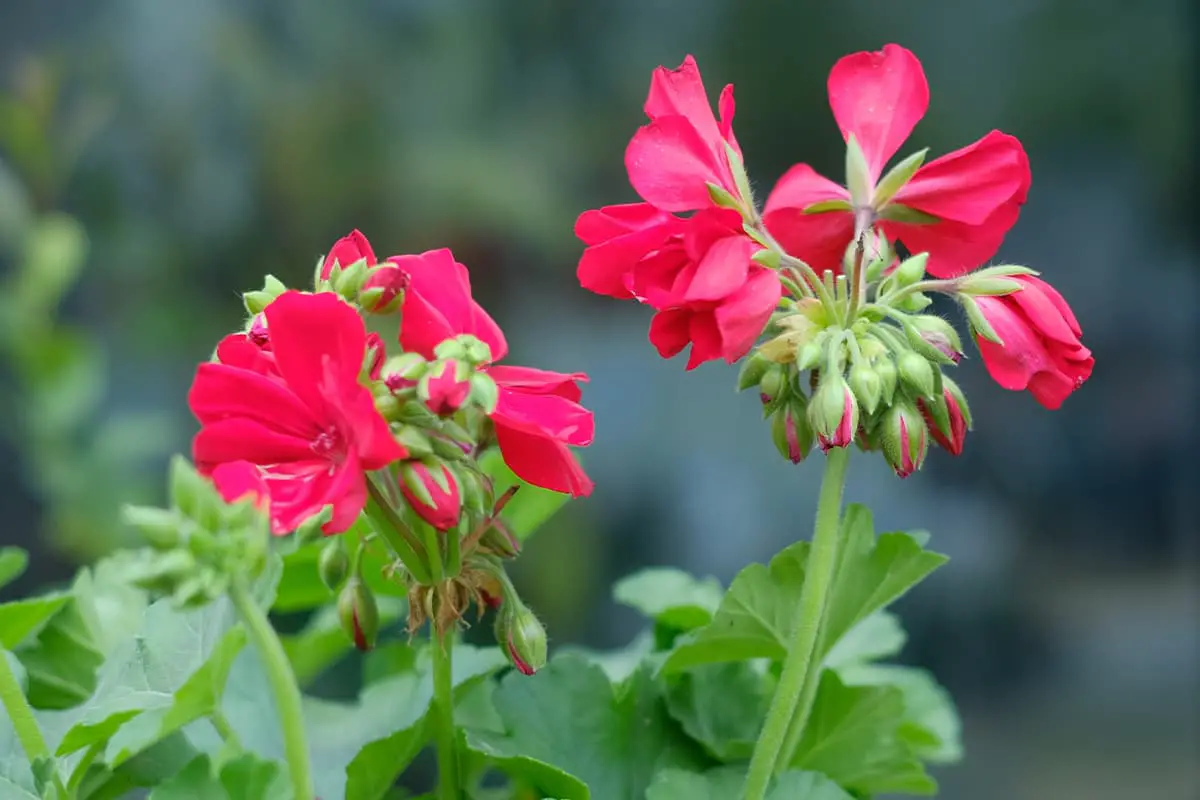
Geranium, also known as Pelargonium or Storksbill, belongs to the Geraniaceae family and includes about 230 species of perennial succulent, sub-shrub, or shrub plants. Geraniums are perennial herbaceous flowers with palmate leaves on long stems.
The flowers are typically umbel-shaped, usually with five petals. They bloom from May to July with a variety of colors such as red, white, pink, purple, etc. Their beautiful and diverse colored blossoms make them highly valuable for ornamental purposes.
It’s worth noting that geraniums are poisonous. Their sap contains a type of alkaloid that can cause skin redness and swelling upon contact.
However, as long as you don’t touch the sap, they are safe to keep at home for viewing, and their fragrance is non-toxic.
4. Christmas Kalanchoe
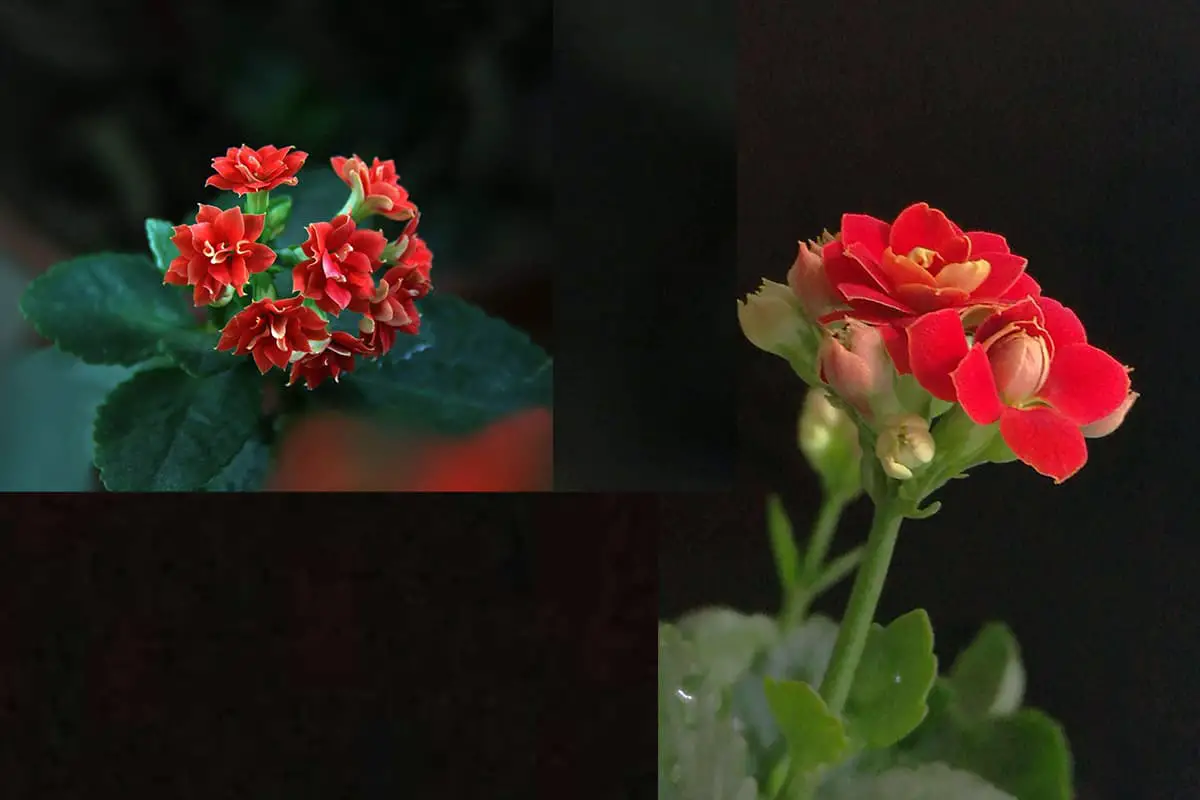
Also known as “Longevity Flower,” Christmas Kalanchoe is a perennial succulent that grows 10-30 centimeters tall with upright stems. Its leaves are elliptical and oppositely arranged with bluntly toothed margins.
It has corymbose inflorescences and the tiny flowers range from orange-red to dark pink. The plant produces capsules full of seeds. Its blossoms come in a variety of vibrant colors including dark pink, peach-red, orange-red, yellow, orange-yellow, and white.
It blooms from January to April. Because its blooming period aligns with the Christmas season and it has a long flowering period, it is often used to enhance the festive atmosphere. This plant has high ornamental value.
Even when not in bloom, its leaves are still attractive, making it an ideal indoor potted plant. The plant is compact with vibrant green leaves and densely packed flowers, making it an ideal potted plant for the winter and spring seasons.
5. Zinnia
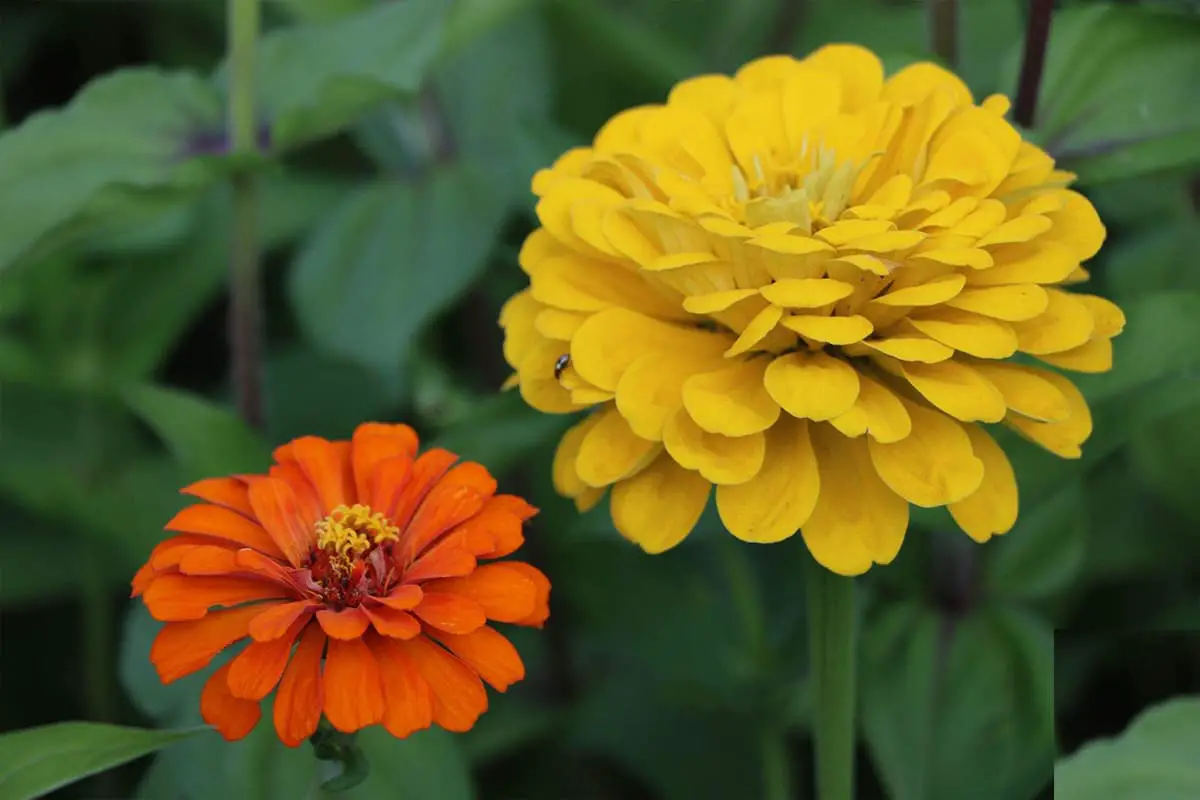
Zinnia is an annual herbaceous plant with branched side stems. It blooms in the summer and fall, with its head-shaped flower clusters appearing singly at the top of the branches. The flowers are about 10 centimeters in diameter and come in various colors.
Zinnias have a long blooming period with many different flower types, most of which are double-petaled. The female zinnia has an inverted ovular fruit, about 6-7 millimeters long and 4-5 millimeters wide, flat, with one ridge in the middle and on the sides, covered with dense hair.
The tube-shaped zinnia has an inverted ovular wedge-shaped fruit, 7-8 millimeters long and 3.5-4 millimeters wide, very flat, sparsely hairy, with short teeth at the top. The blooming period is from June to October, and the fruiting period is from July to October.
Originally from Mexico, there are single-petaled, double-petaled, curled leaves, wrinkled leaves, and various other different colored horticultural varieties. Zinnias have large, vibrant flowers, are drought-resistant, have a long blooming period, and attractive plant shape.
They can be used for flower beds, flower landscapes, flower belts based on their height, and they are also commonly used as potted plants.
6. Plumbago
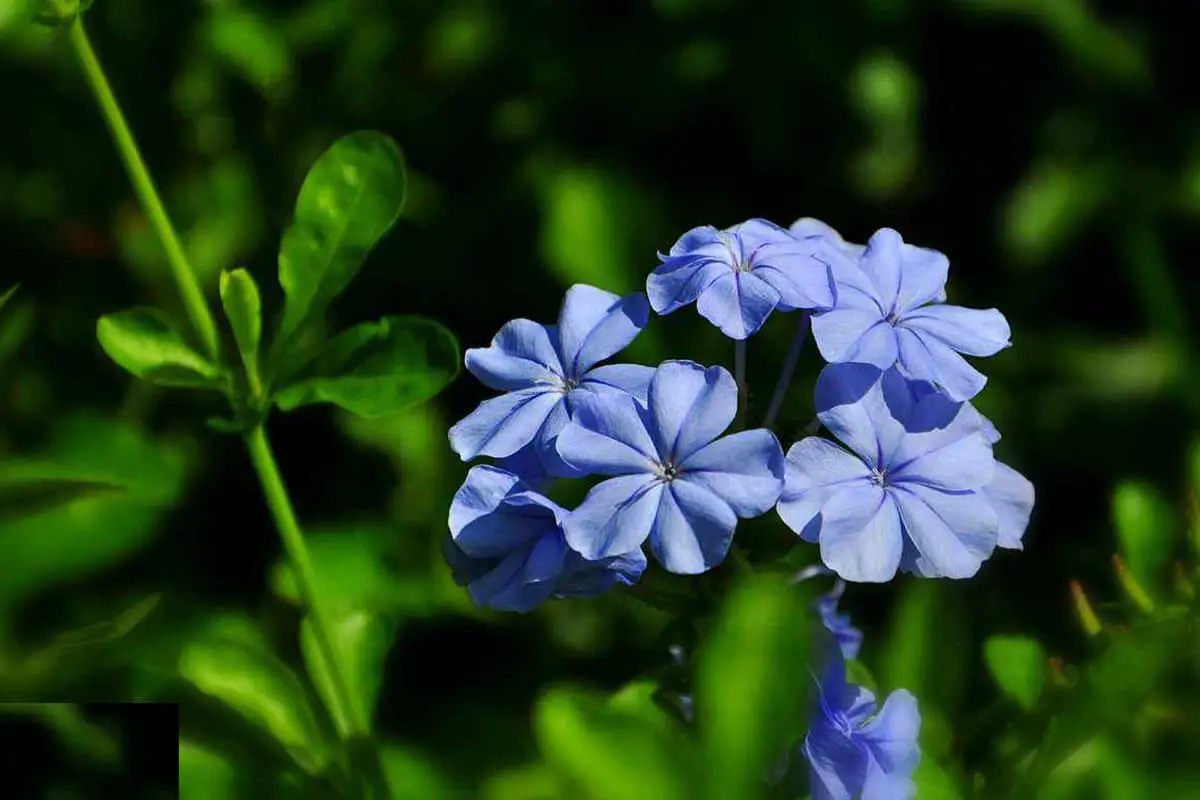
Plumbago (Latin scientific name: Ceratostigma plumbaginoides), also known as Leadwort, is a perennial upright herbaceous plant belonging to the Plumbaginaceae family and Plumbago genus. Plumbago is vigorous, heat-tolerant, and relatively resistant to high temperatures and humidity.
It is rarely affected by pests or diseases, making it easy to manage, and its ornamental period is lengthy. Its leaves are a vibrant green, and its flowers have an understated elegance, offering a cool sensation during the heat of summer. It can be potted to decorate living rooms and balconies.
7. Horned Violet
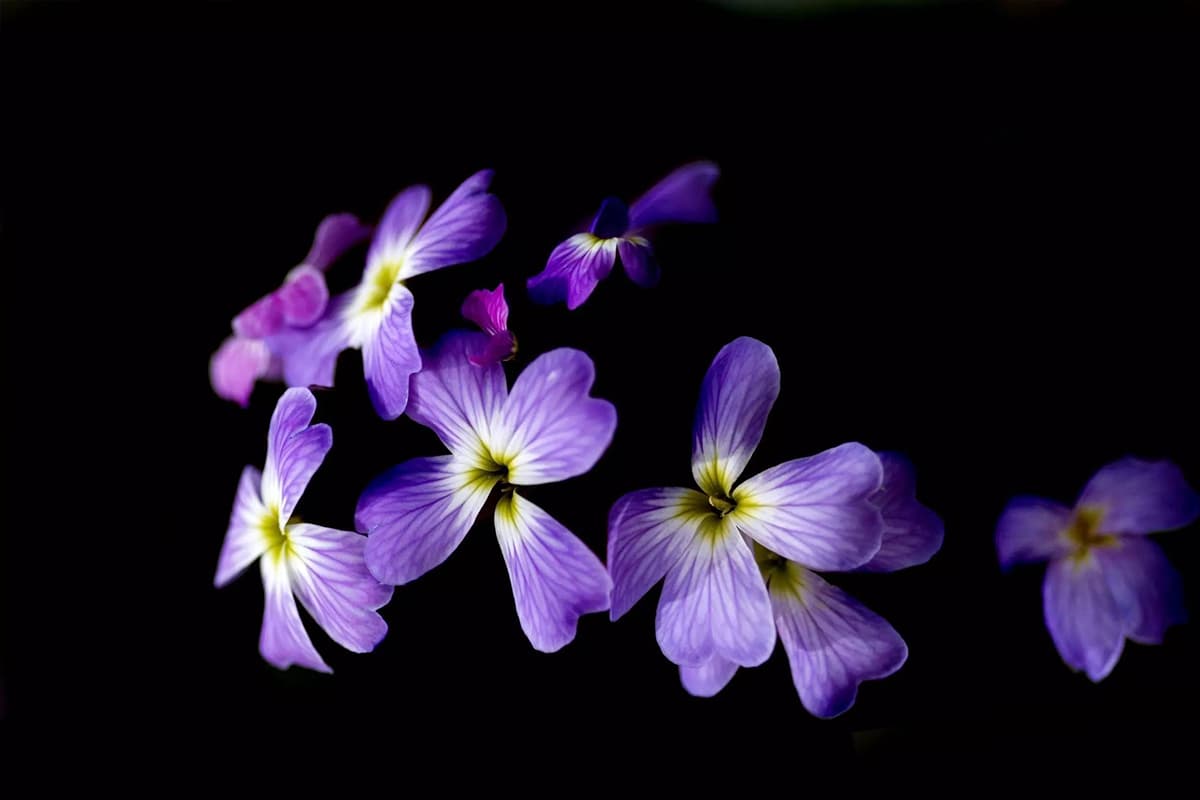
The Horned Violet (scientific name: Viola cornuta L.) is a perennial herbaceous plant from the Violet family and genus. The plant grows 10-30 centimeters tall with a width of 20-30 centimeters and has a rhizome.
Originating from Spain and the Pyrenees, it’s cultivated in many parts of the world, including China. It starts growing at 5℃, with an optimal growth temperature of 10℃-15℃.
The Horned Violet is highly frost-resistant and can withstand mild frost. It can overwinter outdoors in the regions south of the Yangtze River in China, but it does not tolerate heat or high temperatures well.
8. Spider Plant
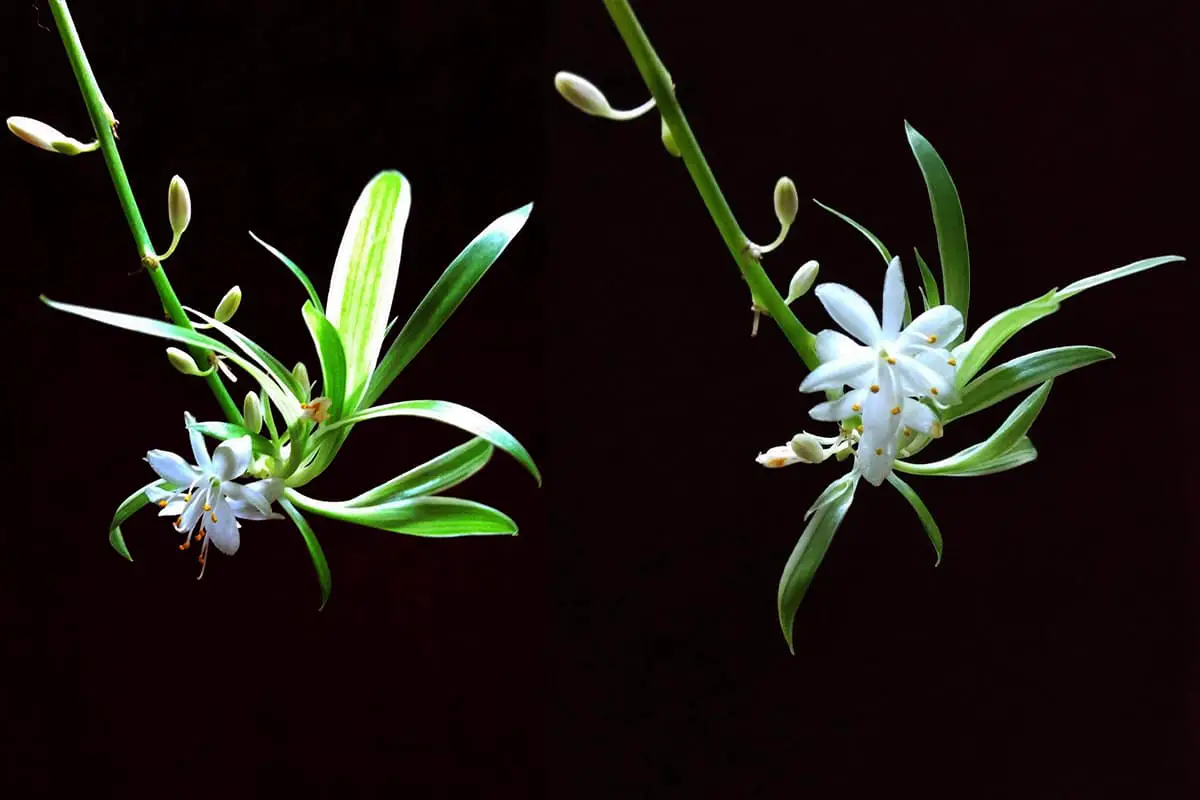
The Spider Plant, also known as Chlorophytum comosum, is a perennial evergreen herbaceous plant of the family Asparagaceae.
Spider plants have long, thin, linear leaves that cluster together. It is a common foliage plant but can also bloom if taken care of properly. Its white flowers usually cluster in groups of 2 to 4 and bloom around May.
There are many varieties of Spider Plants, including those with purple, floral, gold-rimmed, and silver-rimmed leaves.
9. Hyacinth
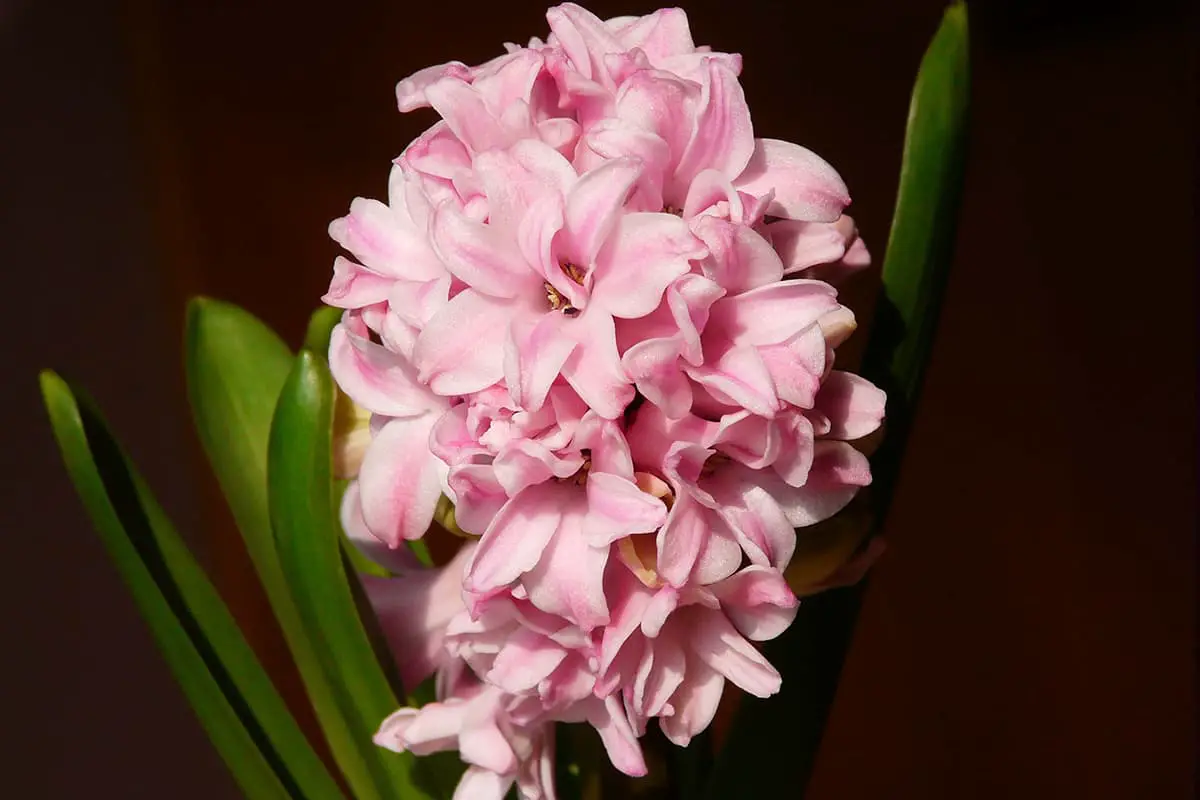
Hyacinth, also known as the Garden Hyacinth or Dutch Hyacinth, is a perennial herbaceous plant of the family Asparagaceae. It’s one of the famous bulbous flowers that bloom in early spring and an important type of potted flower.
There are over 2000 horticultural varieties of Hyacinth, mainly divided into “Dutch” and “Roman” types.
Dutch cultivars are the most common, and they are cultivated all over the world. Common Hyacinth varieties can be divided into white, pink, red, orange, yellow, blue, purple, and black based on flower color, and each color variety has different characteristics in terms of flower color, plant type, and blooming period.
10. Morning Glory
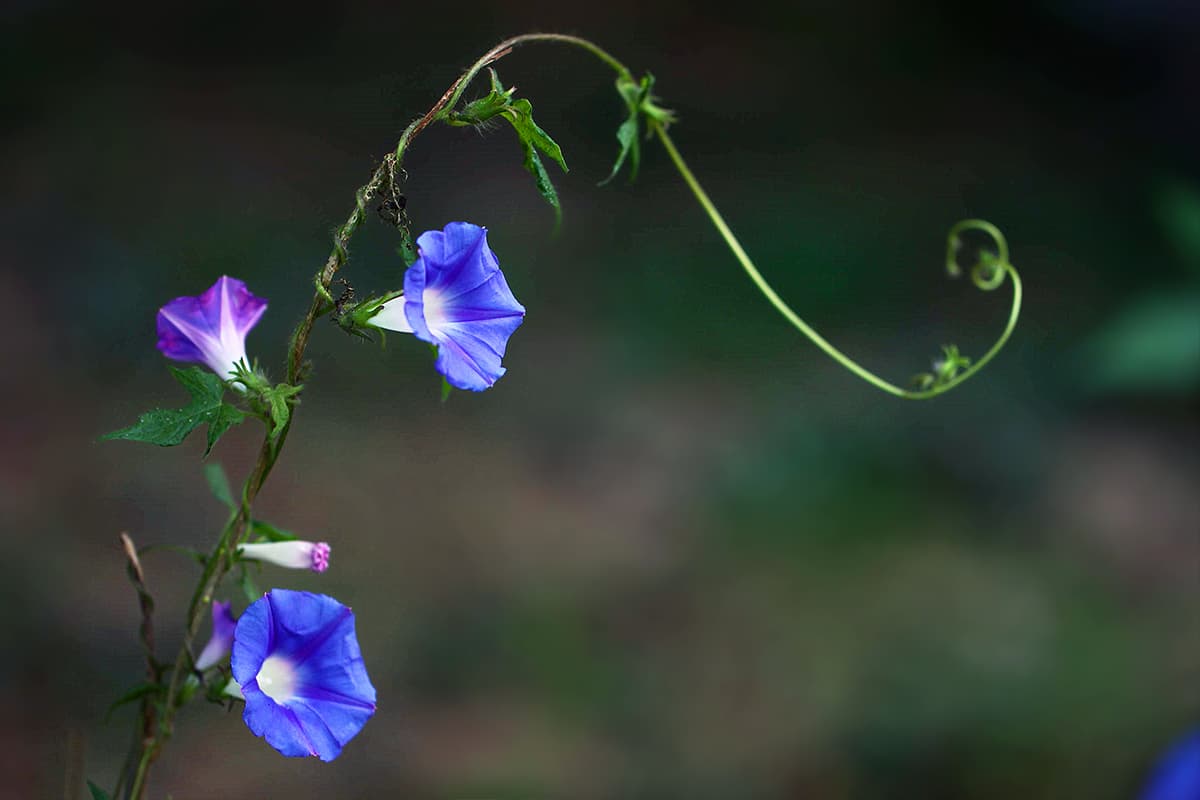
The Morning Glory, also known as Ipomoea, is an annual twining herbaceous flower of the family Convolvulaceae.
It’s a common ornamental plant. Morning Glory leaves are nearly circular, usually with 3-5 lobes, and 4-15 cm in length. The flowers are either solitary or paired and usually grow in leaf axils.
The flowers come in a wide range of colors, including blue, crimson, peach, purple, and others, and some are mixed colors. The plant usually blooms in the summer and is highly ornamental.
Share
Facebook
Twitter
LinkedIn
Email
Share is Caring.
Peggie
Founder of FlowersLib
Peggie was once a high school mathematics teacher, but she set aside her chalkboard and textbooks to follow her lifelong passion for flowers. After years of dedication and learning, she not only established a thriving flower shop but also founded this blog, “Flowers Library”. If you have any questions or wish to learn more about flowers, feel free to contact Peggie.
Before you go
You May Also Like
We picked them just for you. Keep reading and learn more!
1. Magnolia Grandiflora Magnolia grandiflora, commonly known as the Southern Magnolia or Bull Bay, is a majestic evergreen tree belonging to the Magnoliaceae family. Native to the southeastern United States,…
Flowers around the world are astonishingly diverse. Some flowers have unique shapes, some are incredibly expensive, and some are extremely large. Today, I’ve compiled a list of the largest flowers…
The Cherry Parfait, also known as the Duke of Monaco, is a captivating rose variety bred by renowned French rosarians Alain Meilland and his sister. Officially named in 2000, it…
The Lotus, also known as the Water Lily and other names, is a perennial aquatic herbaceous flower of the order Nymphaeales and the family Nelumbonaceae. It is one of China’s…
Amorphophallus Paeoniifolius, also known as Wart Stem Devil’s Tongue, is a plant from the Araceae family, commonly found in shrubs, riverside grass slopes, and wastelands. This plant has yet to…
The Hydnora africana, commonly known as the African White Egret flower, ranks among the sixteen globally recognized notorious yet beautiful plants. Belonging to the Euphorbiaceae family, it is native to…
Introduction to the Giant Taro The Giant Taro, also known as the “Corpse Flower”, “Corpse Stink Amorphophallus”, or “Titan Arum”, is a plant of the Araceae and Amorphophallus genus. When…




 English
  العربية
  Bahasa Indonesia
  Deutsch
  Français
  Italiano
  Nederlands
  Português
  Русский
  日本語
日本語