The Begonia is renowned as the “banquet of the nation,” commonly used for urban greening and beautification. It’s also a popular choice for creating bonsai, and its cut branches can be used for vase arrangements and other decorations.
Which Begonia varieties do you find appealing?
I’ve gathered ten of the most beautiful Begonia varieties, such as the Xi Fu Begonia, Weeping Threadleaf Begonia, Stick-Tight Begonia, Papaya Begonia, Japanese Begonia, Ligulate Begonia, Pear Blossom Begonia, and others. Let’s take a look together.
1. Xi Fu Begonia
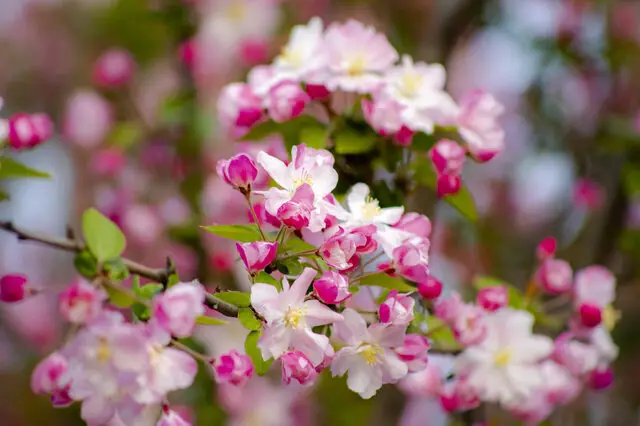
Undoubtedly, the top-ranking Begonia variety is the Xi Fu Begonia. Its blooming flowers are vibrant and captivating. While most Begonias are unscented, the Xi Fu Begonia is both fragrant and bright, the cream of the Begonia crop. Before blossoming, its buds are vibrant red, like spots of rouge.
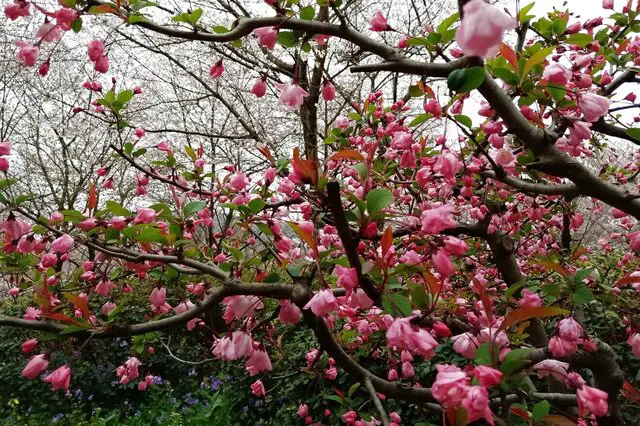
Once bloomed, they gradually turn pink, like the dawn’s rosy clouds. Among Begonias, it stands tall, reminiscent of a graceful maiden. Its red and pink flowers, tender green leaves, and appetizing fruits are stunning, whether planted alone, in rows, or clusters.
It’s most suitable for planting by the water or in a quiet corner of a small garden. The Xi Fu Begonias in Beijing’s Forbidden City and Summer Palace are widely acclaimed.
2. Weeping Threadleaf Begonia
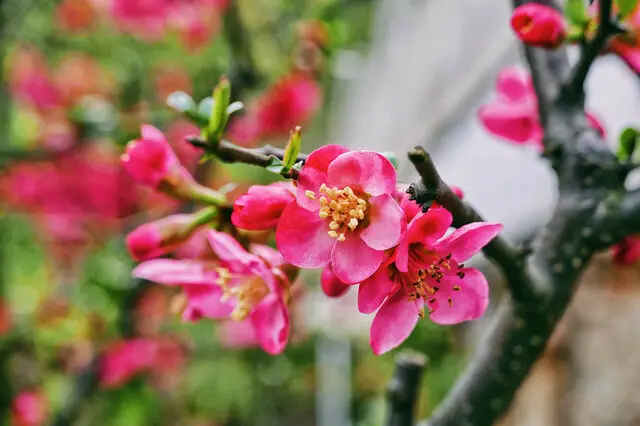
The Weeping Threadleaf Begonia is one of the most beautiful Begonia varieties. Its gentle tendrils flutter in the wind, its blooms droop appealingly, like a modest lady with hair covering her face, exuding profound emotions and graceful charm.
As described in a poem by Yang Wanli of the Song Dynasty, the seductive Weeping Threadleaf Begonia, with its bright red petals, stirs the sky and universe into a red hue, its twinkling purple calyx reminiscent of a purple robe, and the soft, drooping red blossoms look like a tipsy lady, her skin blushing, weak yet charming.
3. Stick-Tight Begonia
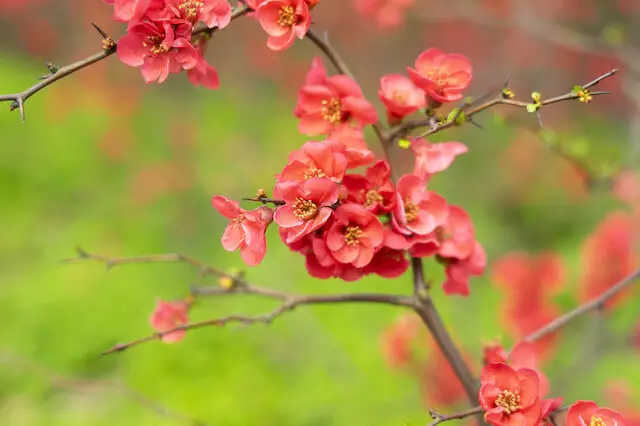
What variety of Begonia is the most attractive? I would say it’s the Stick-Tight Begonia, also known as Wrinkled Papaya. This treasure boasts medicinal, edible, health, and ornamental value all in one.
Enjoy its flowers in spring and its fruits in summer and autumn. Its subtle elegance, colorful appearance, and pleasing charm never get old. Standing tall and proud, with abundant flowers and fruits, it is as dazzling as brocade clouds, with a pervasive sweet scent. It can also be shaped into various bonsai styles, being one of the eighteen scholars of bonsai.
The bonsai can be placed in the hall, on the flower stand, in the corner of a porch, or leisure area. When paired with architecture, it enhances the garden’s appeal and adds a refined elegance.
4. Papaya Begonia
The Papaya Begonia, also known as the Hairy Leaf Papaya, is recognized as one of the most beautiful Begonia varieties. It’s a versatile plant, offering beautiful blooms in spring and fruits to admire in autumn, alongside its medicinal uses.
It has always been very popular. The Hairy Leaf Papaya blooms early, generally in mid-March, when few outdoor plants are flowering. Its flowers are single or cluster-borne on two-year-old branches. The flowers are pink or near-white, with dark green leaves.
The flowers bloom before the leaves, and their unique shapes make them highly ornamental.
5. Japanese Begonia
The Japanese Begonia, also known as the Dwarf Begonia or Japanese Papaya, is a popular variety that is considered one of the most beautiful. Originally from Japan, it is commonly cultivated in gardens in Shaanxi, Jiangsu, and Zhejiang in China.
Its flowers are stunning, with large corollas. When in full bloom, it presents a spectacular array of blossoms, incredibly beautiful, with a long flowering period. Its beauty is captivating, yet not flashy, making it an exquisite flowering and fruit-bearing tree.
It is a star in landscape gardening, an excellent ornamental tree for square greening, and also often used in potted arrangements on balconies or indoors. In spring, its vigorous blossoming is breathtaking.
6. Rieger Begonia
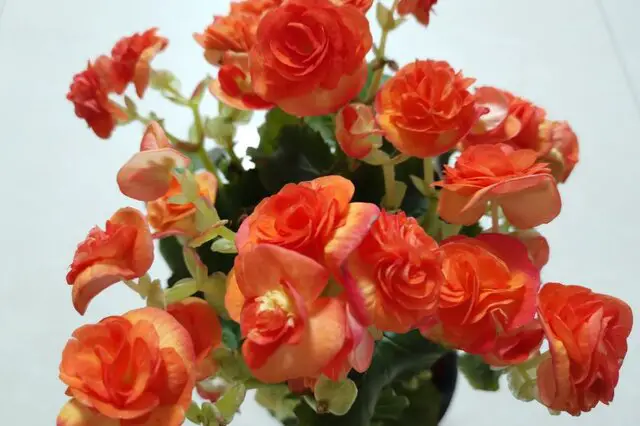
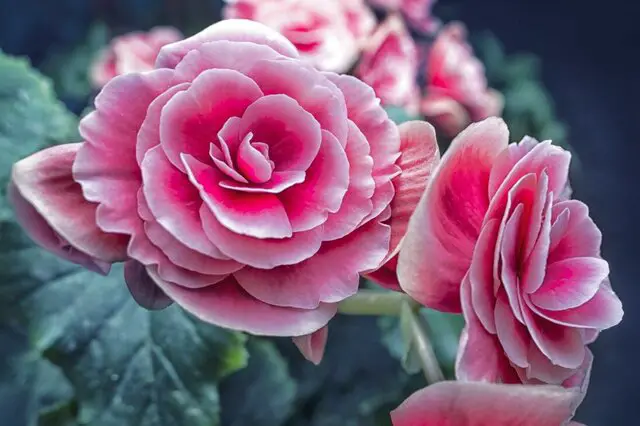
What kind of Begonia is the most beautiful? The Rieger Begonia gets a lot of nominations. Also known as the Rose Begonia, it is widely cultivated as an ornamental herbaceous plant with many varieties and rich flower colors. It’s mainly used for indoor potted plants.
With its long blooming period, diverse flower colors, verdant branches and leaves, and full plant shape, it’s an excellent variety for beautifying indoor environments in winter and is one of the main types of indoor flowering plants all year round.
The Rose Begonia has a variety of flower shapes, mostly double petals, and a rich color palette including red, orange, yellow, and white. Its large, colorful flowers have unique shapes, colors, and scents.
7. Pear Blossom Begonia
The Pear Blossom Begonia is a very popular variety among the numerous Begonia species. It’s one of China’s famous ornamental plants, not only for its vibrant flower color but also for its appealing fruit. It’s a small deciduous shrub with smooth, gray-brown bark.
The leaves are alternate, oval to elongated oval, with a slightly pointed tip, a wedge-shaped base, and blunt teeth on the edges. The leaf surface is deep green and glossy, the back is gray-green with short soft hairs, and the petiole is slender, with two lanceolate stipules at the base.
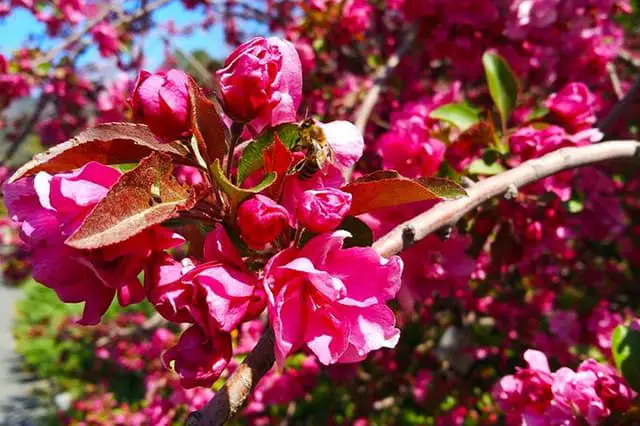
The flowers, in clusters of 5 to 7, are umbel-shaped inflorescences. They are red before blooming and gradually turn pink afterwards. It can be used for courtyard greening or as a bonsai for viewing.
8. Tuberous Begonia
The Tuberous Begonia is one of the most beautiful Begonia species. It is native to several South American countries including Peru and Brazil.
The Tuberous Begonia is industrially cultivated in several European countries such as the Netherlands, Belgium, France, Germany, and Denmark. In 1995, the value of Tuberous Begonia production in the Netherlands was $27.6 million, ranking it fourth among potted flowers. In China, it is usually used to decorate living rooms, showcases, or windowsills.
With its vivid colors and charming beauty, using it to decorate flower beds, borders, and entrances creates an extraordinarily attractive look. Its lush, vibrant colors are also suitable for hanging baskets in halls, balconies, and corridors.
9. Four Seasons Begonia
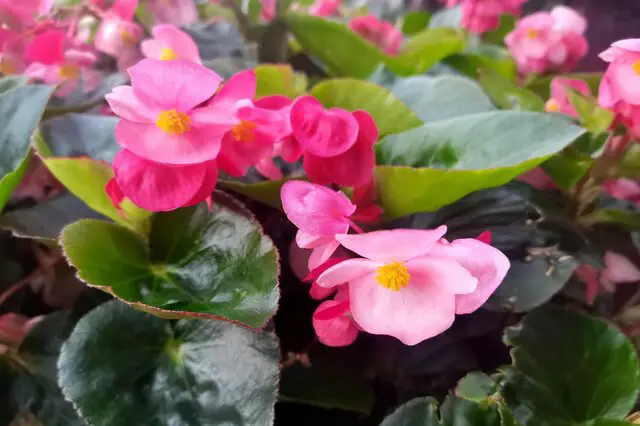
The Four Seasons Begonia, also known as the Four Seasons Autumn Begonia, is so named because it blooms all year round. The Four Seasons Autumn Begonia has shiny leaves, with clusters of flowers blooming in all seasons.
It also comes in many colors and both single and double petal varieties. It is an ideal material for flower beds, hanging pots, planting troughs, and indoor decorations in landscape gardening, and is much loved by landscape gardening workers and the general public.
It is suggested to water the Four Seasons Autumn Begonia according to the principle of “water when dry, water when wet”, avoid water accumulation, and maintain appropriate soil moisture.
After watering, ensure good ventilation to avoid the onset of powdery mildew and gray mold due to prolonged dampness.
10. Diamond Begonia
The Diamond Begonia is a very beautiful variety of Begonia, native to the United States and cultivated in cities like Beijing, Dalian, and Shenyang in China.
It’s a small deciduous shrub with a dense tree form and upright lateral branches. The small branches are dark purple and sparsely covered with soft hairs. The new leaves are purple-red, while mature leaves are bright green on top and light green on the back.
The leaves are ovate, the leaf base is nearly round, the top is gradually pointed, and the edges are serrated. The flowers are in an umbel shape and bloom in mid-April. The flower buds are purple-red and the flowers are rose-red, dense and upright.
This Begonia variety is suitable for both flower viewing and fruit viewing and can be planted alone or in groups.



 English
  العربية
  Bahasa Indonesia
  Deutsch
  Français
  Italiano
  Nederlands
  Português
  Русский
  日本語
日本語