600+ Types of Flowers A To Z (With Names and Pictures)
Types Of Flowers By Names (A-Z) Types Of Flowers By Color Types Of Flowers By Season Types Of Flowers By Blooming Time 600+ Types of Flowers No. Flower Name No.…

Cirsium arvense, also known as the small thistle, is a high-quality wild vegetable. This perennial herb has an underground section that is often larger than the above-ground part, with a long root and a straight stem.
The young stem is covered with white spider-web-like hairs and has edges, standing 30-80 cm tall, with a base diameter of 3-5 mm. The small flowers are purple-red or white.
The female flower corolla is 2.4 cm long, the edge is 6 mm long, and the fine tube part is filamentous, 18 mm long. The bisexual flower corolla is 1.8 cm long, the edge is 6 mm long, and the fine tube part is filamentous, 1.2 mm long.
The achene is pale yellow, oval or oblique oval, flattened, 3 mm long, 1.5 mm wide, and the top is obliquely truncated. The pappus is dirty white, and the flowering and fruiting period is from May to September.
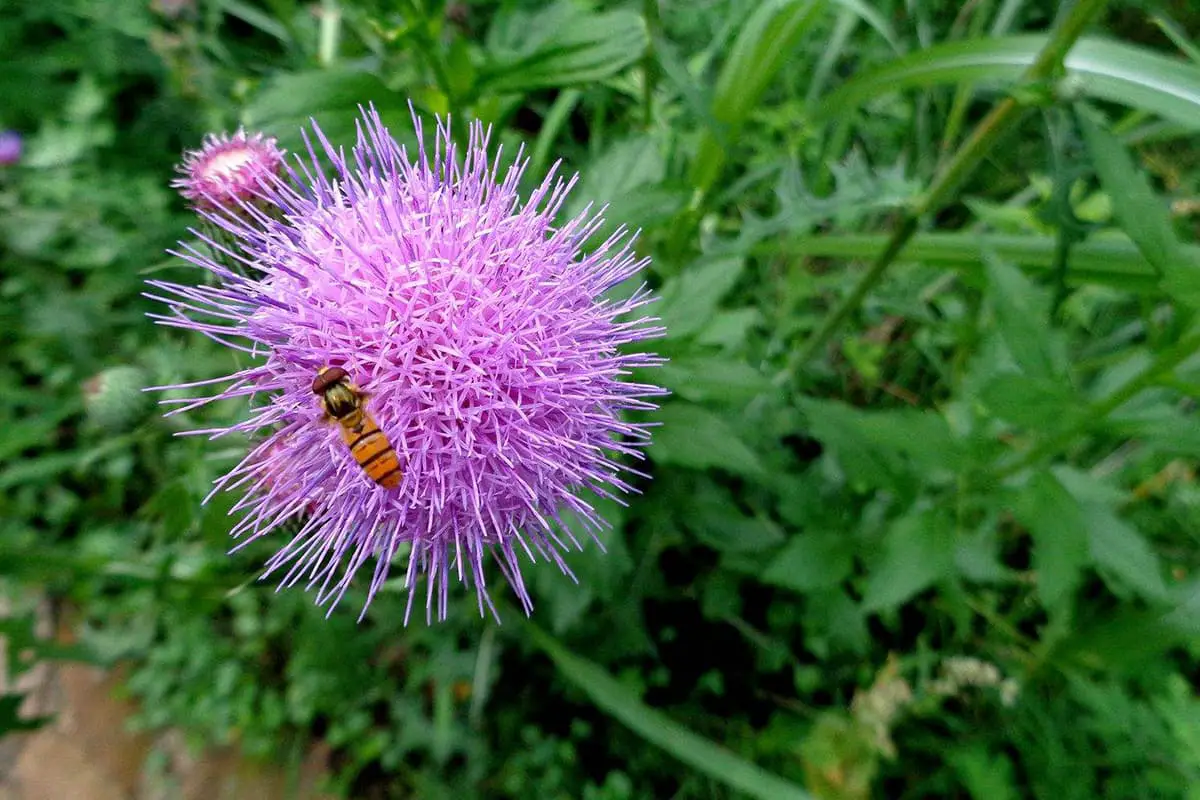
It is distributed in plains, hills, and mountains. During the young and tender period, it is a favorite food of sheep and pigs, but cows and horses eat it less. The plant still remains green after autumn and can continue to be used as pig feed.
The small thistle has hard spikes, and the stems become coarse and hard after lignification, with a utilization period from May to July. It can be grazed in the early stage, or harvested with roots, soil removed, cut into pieces for fresh feeding of pigs, or used as silage.
Around the time of flowering, the plants can be cut, dried, and used for making flour for pig feed in winter and spring.
This is a perennial herb with creeping rhizomes. The stem has edges, and the young stem is covered with white spider-web-like hairs.
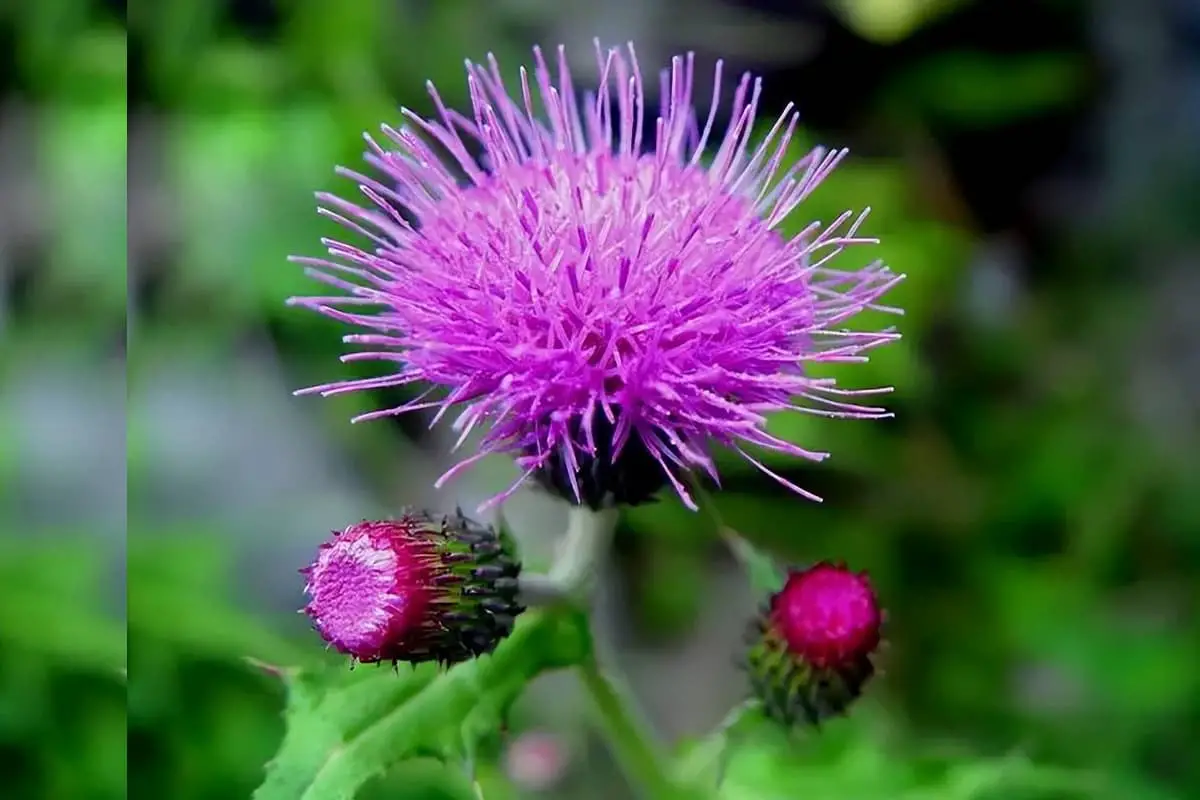
The basal and middle stem leaves are oval, long-oval, or oblong obovate, with a blunt or round tip, a cuneate base, sometimes with a very short petiole, usually without a petiole, 7-15 cm long, 1.5-10 cm wide.
The upper stem leaves gradually become smaller, oval or lanceolate, or linear lanceolate, or all stem leaves are undivided, the leaf edge has fine prickles, and the prickles stick to the leaf edge.
Or the leaf edge has thorny teeth, the thorny teeth are of different sizes, and the prickles can reach 3.5 mm long. The majority of the stem leaves are pinnately shallowly divided or semi-divided or have large round serrated edges.
The lobes or teeth are obliquely triangular, blunt at the top, and the tops of the teeth and lobes have longer prickles. The prickles on the tooth edge and lobe edge are shorter and adpressed.
All stem leaves are the same color on both sides, green or pale underneath, hairless on both sides, very rarely different colors on both sides, green on top, hairless, sparsely or densely covered with fluff on the bottom, appearing gray.
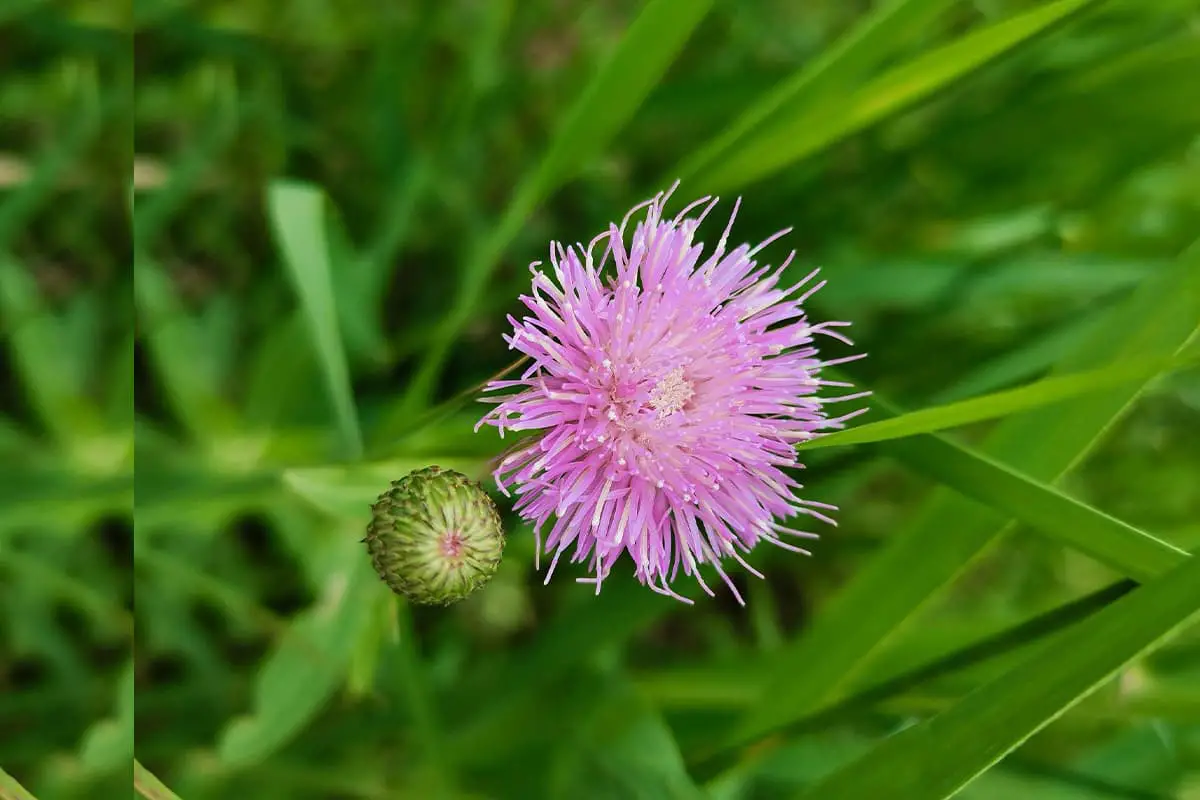
Also very rare are leaves of the same color on both sides, gray-green, both sides covered with thin fluff.
The capitulum is solitary at the stem end, or the plant contains a few or many capitula arranged at the top of the stem in an umbellate inflorescence. The involucre is ovate, long-ovate, or ovate-circular, 1.5-2 cm in diameter.
The involucral bracts are about 6 layers, arranged in a tile-like pattern, gradually getting longer towards the inner layer.
The outer and middle layers are 1.5-2 mm wide, including the top prickles that are 5-8 mm long; the inner and innermost layers are long elliptical to linear, 1.1-2 cm long, 1-1.8 mm wide; the middle and outer bracts have short prickles less than 0.5 mm long at the top, the inner and innermost layers gradually pointed, membranous, with short prickles.
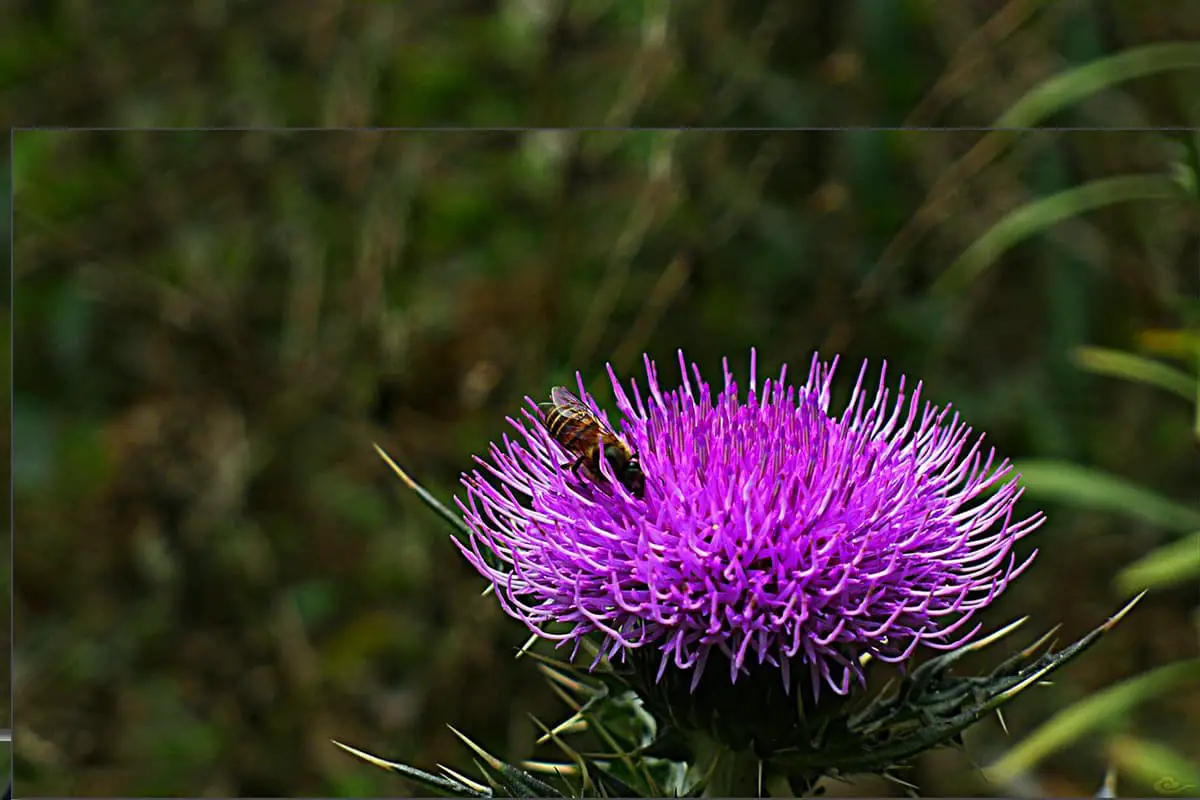
The small flowers are purple-red or white, the female flower corolla is 2.4 cm long, the edge is 6 mm long, and the fine tube part is filamentous, 18 mm long.
The bisexual flower corolla is 1.8 cm long, the edge is 6 mm long, and the fine tube part is filamentous, 1.2 mm long. The achene is pale yellow, oval or oblique oval, flattened, 3 mm long, 1.5 mm wide, and the top is obliquely truncated.
The pappus is dirty white, multi-layered, and falls off as a whole; the pappus bristles are long and feather-like, 3.5 cm long, and gradually thinning at the top. The flowering and fruiting period is from May to September.
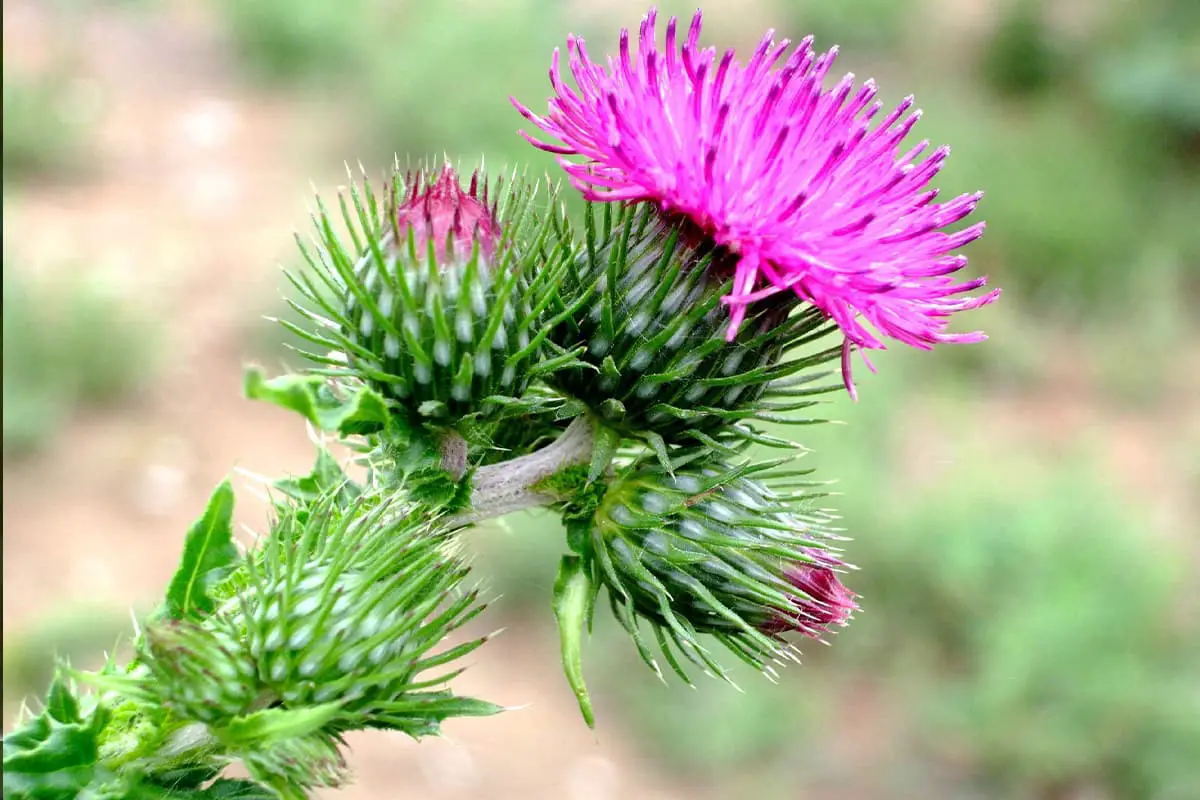
The thistle plant is a common weed that can adapt to any climate conditions and grow ubiquitously in fallow fields, cultivated lands, roadsides, and near villages.
It is widely distributed in Eastern and Central Europe, Eastern and Western Siberia, Far East, Mongolia, North Korea, and Japan. The model specimen was collected from Poland.
The thistle plant propagates through seeds. The seeds are collected in June and July when the flower buds wilt, dried, and stored for later use. The seeds are sown in early spring, in February or March, in holes spaced 20cm x 20cm apart.
The seeds are mixed with wood ash before they are sown into the hole, covered with soil, and watered, ensuring the seeds are completely covered. The soil is kept moist until the seedlings emerge.
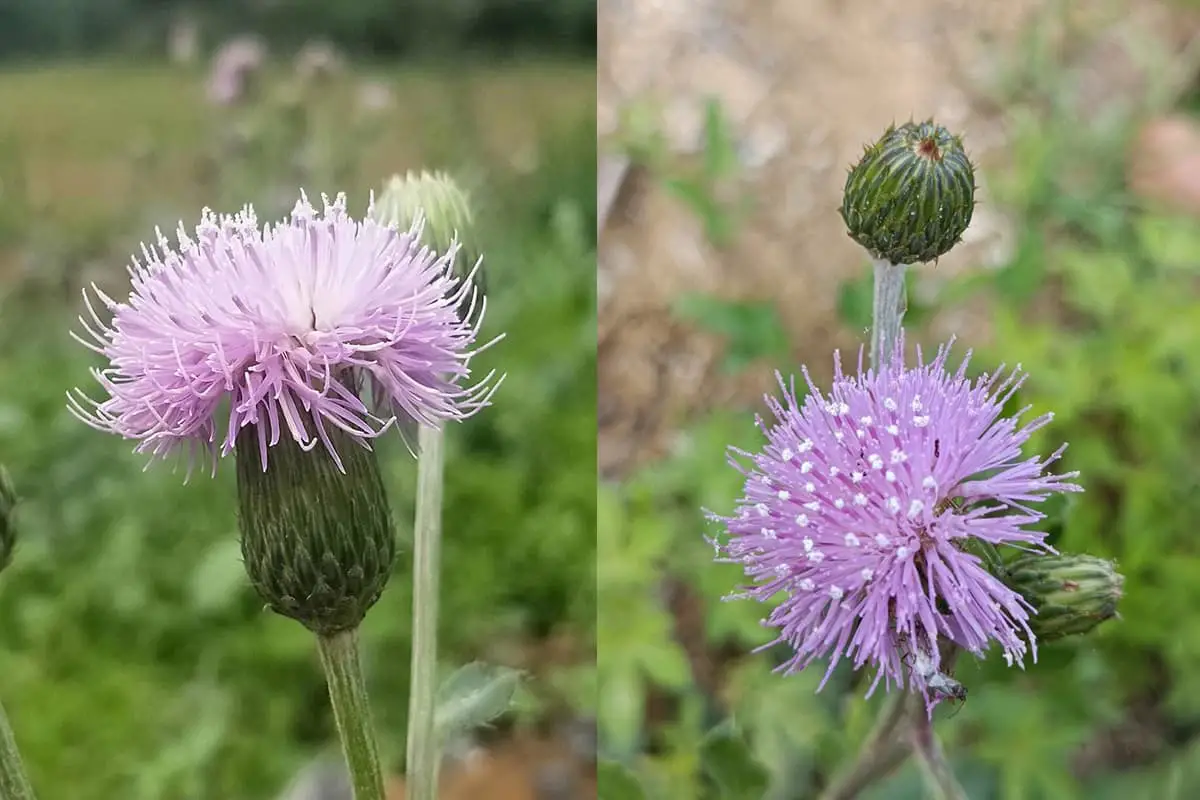
The thistle plant is sweet and bitter, and cool in nature. It is associated with the heart and liver meridians.
Function and Indications
The thistle plant cools the blood, stops bleeding, removes stasis, and reduces swelling. It is used for nosebleeds, vomiting blood, urination with blood, bloody stools, abnormal uterine bleeding, bleeding from external injuries, and abscesses and sores.
Usage and Dosage
Between 4.5 and 9 grams can be taken orally. For external use, an appropriate amount of fresh thistle is crushed and applied to the affected area.
Formulas
Young thistles are a favorite food of sheep and pigs, and less so of cows and horses. After autumn, the plant remains green and can be used to feed pigs. The thistle plant has hard spines and its stem becomes woody and hard after lignification.
The plant is utilized from May to July. It can be grazed in the early stage, or taken home with roots, the soil removed, cut into small pieces and fed to pigs or used as silage.
The whole plant with flowers or the root and stem can be used as medicinal materials. Tender thistle sprouts are also a wild vegetable that can be stir-fried or used in soup.

Peggie was once a high school mathematics teacher, but she set aside her chalkboard and textbooks to follow her lifelong passion for flowers. After years of dedication and learning, she not only established a thriving flower shop but also founded this blog, “Flowers Library”. If you have any questions or wish to learn more about flowers, feel free to contact Peggie.
 English
  العربية
  Bahasa Indonesia
  Deutsch
  Français
  Italiano
  Nederlands
  Português
  Русский
  日本語
日本語