600+ Types of Flowers A To Z (With Names and Pictures)
Types Of Flowers By Names (A-Z) Types Of Flowers By Color Types Of Flowers By Season Types Of Flowers By Blooming Time 600+ Types of Flowers No. Flower Name No.…

The lotus, scientifically known as Nelumbo, is a perennial aquatic plant belonging to the family Nelumbonaceae. It is also referred to as “lotus,” “water lily,” or “water lotus.”
The lotus is native to various provinces in China and can be found in other countries such as Russia, North Korea, Japan, India, Vietnam, southern Asia, and Oceania. It grows naturally or is cultivated in ponds or paddy fields, preferring warm and moist climates with ample sunlight. It thrives in fertile, relatively stagnant water and is primarily propagated through seeding and rhizome division.
The lotus is native to China and thrives in aquatic environments, commonly cultivated in ponds. It is a perennial water plant with underground rhizomes known as lotus tubers, which sprawl horizontally in the muddy soil at the bottom of rivers or ponds, consisting of segmented structures with air channels, reaching up to three meters in length.
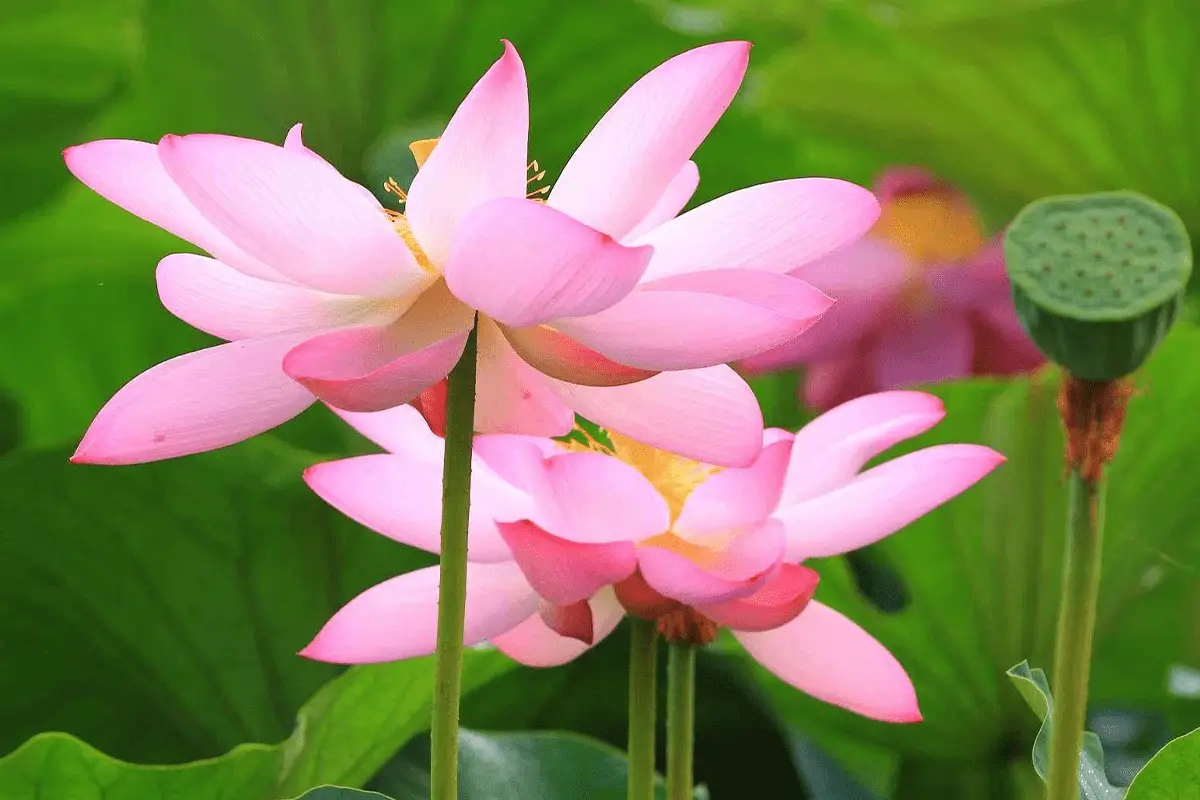
The leaves are known as lotus leaves or water lily leaves, possessing the ability to float on water. They grow to approximately 150 centimeters in height, with a round shape and a diameter of about 60 centimeters. The flowers, typically slightly taller than the leaves, have a diameter of up to 20 centimeters and bloom during the summer season.
The petals of the lotus flower are numerous and enclose a structure called the receptacle, which develops into a fruit-like structure known as a lotus pod. Each pod contains around 20-30 lotus seeds, which are edible. The lotus flower stems emerge a few centimeters above the water surface, with individual flowers blooming on some stems, while others may have double or multiple blooms.
The lotus plant can reach a height of 150 centimeters, with its rhizomes anchored in the muddy substrate of ponds or river bottoms, while the lotus leaves extend above the water surface. The leaves can grow up to 60 centimeters in diameter.
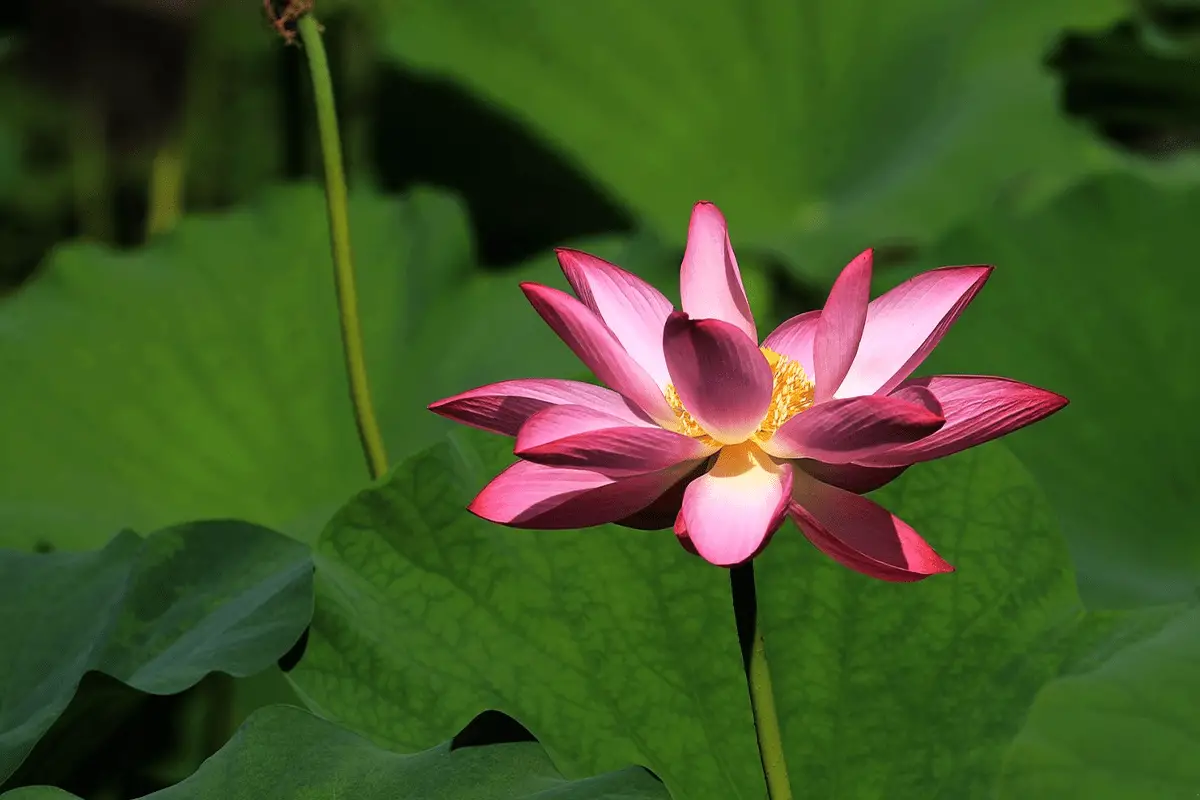
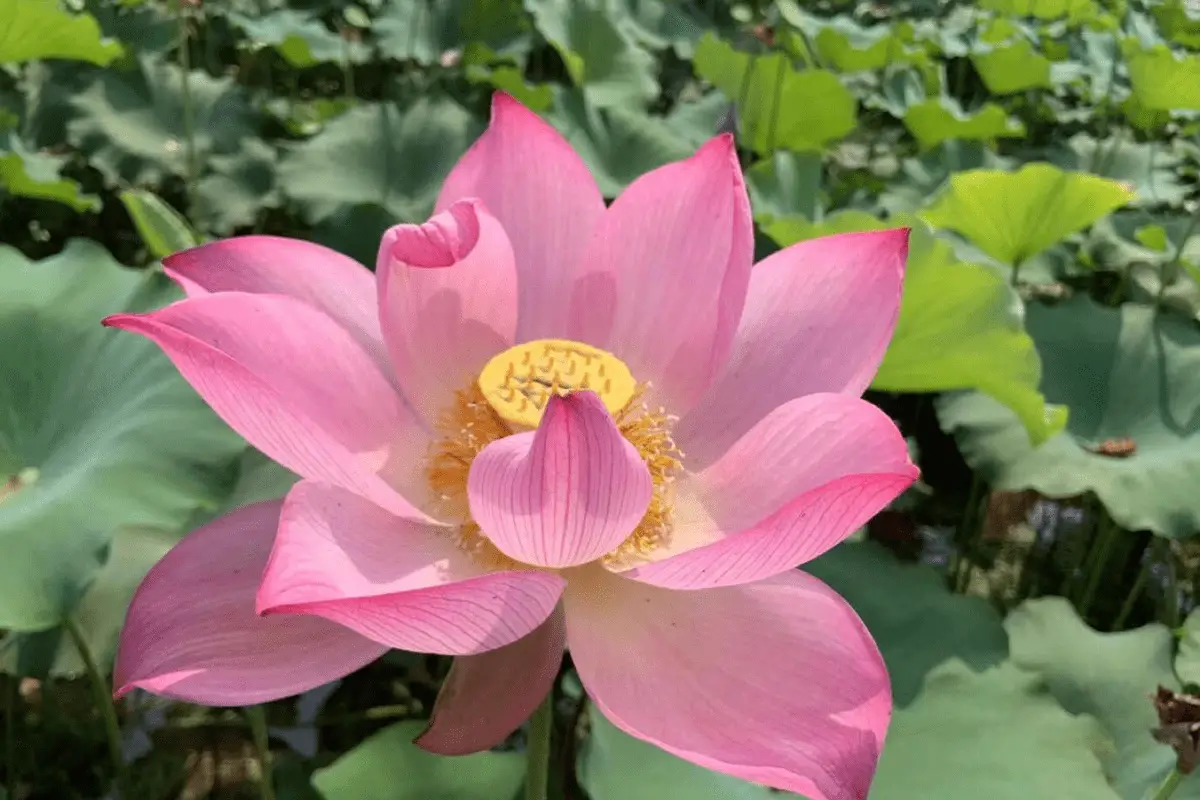
The remarkable lotus flower can reach a maximum diameter of 20 centimeters and comes in various cultivars, including colors ranging from pure white and yellow to light pink, deep yellow, and dark red, with variations such as spotted or streaked patterns.
Although the lotus and water lily may appear similar, they are distantly related, and the water lily is not a subspecies of the lotus. They can be differentiated by the growth position and shape of their leaves. The lotus is a perennial herb with large, segmented rhizomes that grow horizontally in the muddy substrate.
Its shield-shaped leaves have a deep green color on the upper surface and are covered in a waxy white powder, while the lower surface appears grayish-green. The single flowers emerge at the top of flower stalks, standing above the water surface. They come in various colors such as white, deep red, light purple, or intermediate shades, and develop fruits in an oval shape.
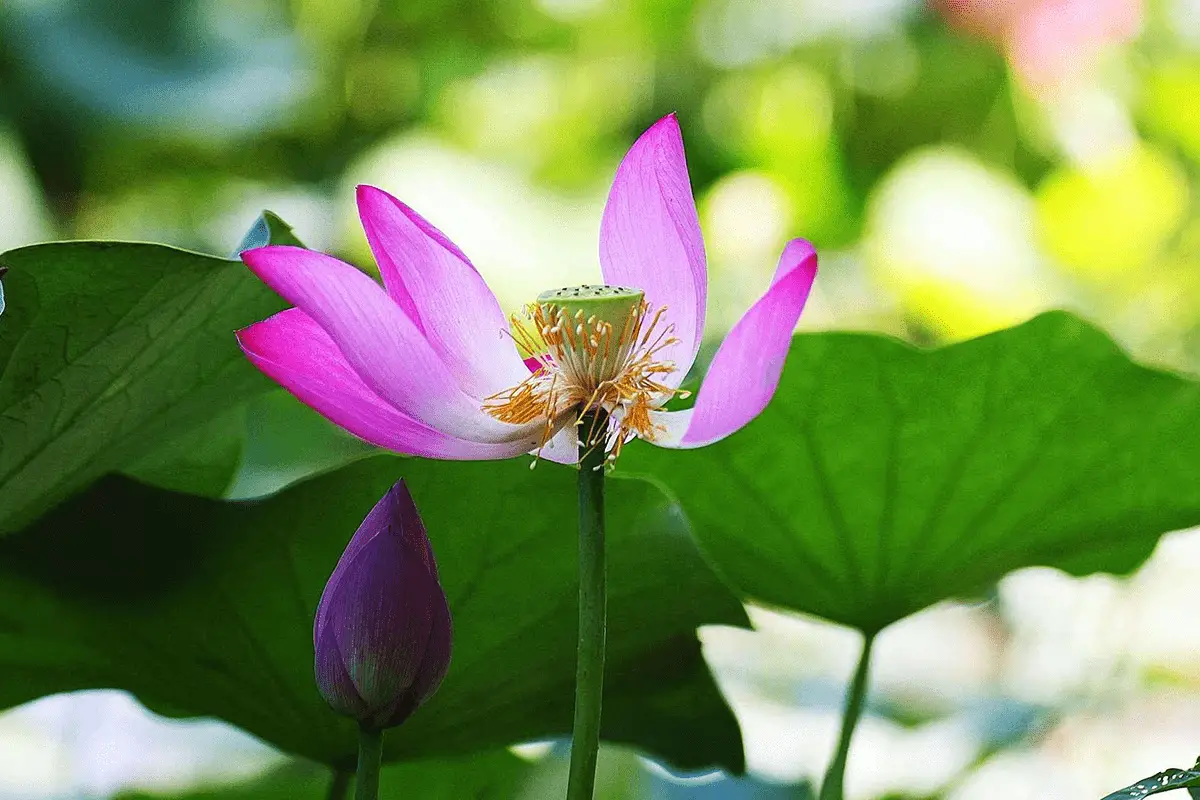
Lotus is an aquatic plant that thrives in relatively calm and shallow waters. It can also grow well in marshes, ponds, and lakes. The water requirements and depth of lotus plants vary depending on the cultivar. Some varieties can tolerate deeper water levels.
When lotus plants experience water scarcity, their leaves may become scorched. Lotuses prefer abundant sunlight and require full sunlight during their growth stages. They are highly intolerant to shade, and their growth can be limited in partially shaded environments.
Lotus plants rely on rhizome propagation. If the growth of rhizomes is hindered, it can affect flowering and result in relatively smaller plants. The choice of pots for lotus cultivation varies depending on the type of lotus. Miniature varieties can be planted in pots that are around 15 centimeters wide and 10 centimeters deep. Small-sized varieties require pots that are approximately 25 centimeters wide and 15 centimeters deep.
Medium-sized varieties need pots that are 40 centimeters wide and 30 centimeters deep. Large-sized varieties are typically grown in ponds or fields and require pots that are 60 centimeters wide or more, with a depth of 90 centimeters or more for optimal growth.
However, some varieties can adjust their size according to the pot. Planting them in pots that are too small may result in reduced number of petals, smaller leaves with no wavy edges, or even no flowering and decreased fruit yield.
The best time for lotus planting is in spring. While transplantation can also be done in summer, precautions must be taken to avoid water loss. When transplanting, it is advisable to wrap the leaves in a bag and plant them in a partially shaded area. Once the number of leaves increases, they can be moved to a location with full sunlight.
Additionally, water temperature should be taken into consideration. Transplanting in summer often results in water temperatures exceeding 30°C, which is known to reduce flowering. By the time the leaves are sufficient to cover the water’s surface, the climate has cooled down and there is reduced sunlight exposure.
Lotus can be propagated using seeds or rhizomes. Lotus seeds, known as lotus nuts, can remain viable for thousands of years. Some scientists have successfully cultivated lotus plants from seeds that are thousands of years old, demonstrating the enduring vitality of lotus propagation.
Lotus is one of the top ten famous flowers in China. It is not only known for its large and vibrant flowers, enchanting fragrance, and elegant appearance but also for its exceptional adaptability. Lotus plants can be widely cultivated in lakes, creating a magnificent spectacle, or they can be grown as potted plants or used for floral arrangements, adding a unique charm.
Edible Value: Various parts of the lotus plant are edible. For example, lotus seeds can be used to make porridge, lotus seed snacks, lotus seed flour, and lotus root slices stuffed with meat. Lotus leaves can be used for steaming meat or making leaf-wrapped dishes and lotus leaf porridge. These culinary creations are not only visually appealing but also offer delightful flavors.
Medicinal Value: Different parts of the lotus plant have medicinal properties. For instance, lotus flowers can promote blood circulation, stop bleeding, and have antipyretic and detoxifying effects. Lotus seeds can nourish the heart and intestines. Lotus stamens can clear the mind and relieve heat. Lotus leaves can cool the body, remove dampness, promote yang energy, stop bleeding, and aid in weight loss and slimming.
Aesthetic Value: Lotus flowers are admired for their beauty in floral arrangements, and their presence in garden landscapes enhances the overall aesthetics. Whether used as cut flowers or as water features in gardens, lotus plants add a distinctive and captivating touch to the surroundings.

Peggie was once a high school mathematics teacher, but she set aside her chalkboard and textbooks to follow her lifelong passion for flowers. After years of dedication and learning, she not only established a thriving flower shop but also founded this blog, “Flowers Library”. If you have any questions or wish to learn more about flowers, feel free to contact Peggie.
 English
  العربية
  Bahasa Indonesia
  Deutsch
  Français
  Italiano
  Nederlands
  Português
  Русский
  日本語
日本語