600+ Types of Flowers A To Z (With Names and Pictures)
Types Of Flowers By Names (A-Z) Types Of Flowers By Color Types Of Flowers By Season Types Of Flowers By Blooming Time 600+ Types of Flowers No. Flower Name No.…

Hyacinth is a perennial herbaceous plant belonging to the Asparagaceae family and the Hyacinthus genus. Its scientific name derives from the Greek mythological figure Hyacinthus, a beautiful young man loved by the sun god Apollo, who accidentally killed him with a discus throw.
Hyacinths are native to the Mediterranean coast and the region of Asia Minor and can be classified into two types: Dutch and Roman.
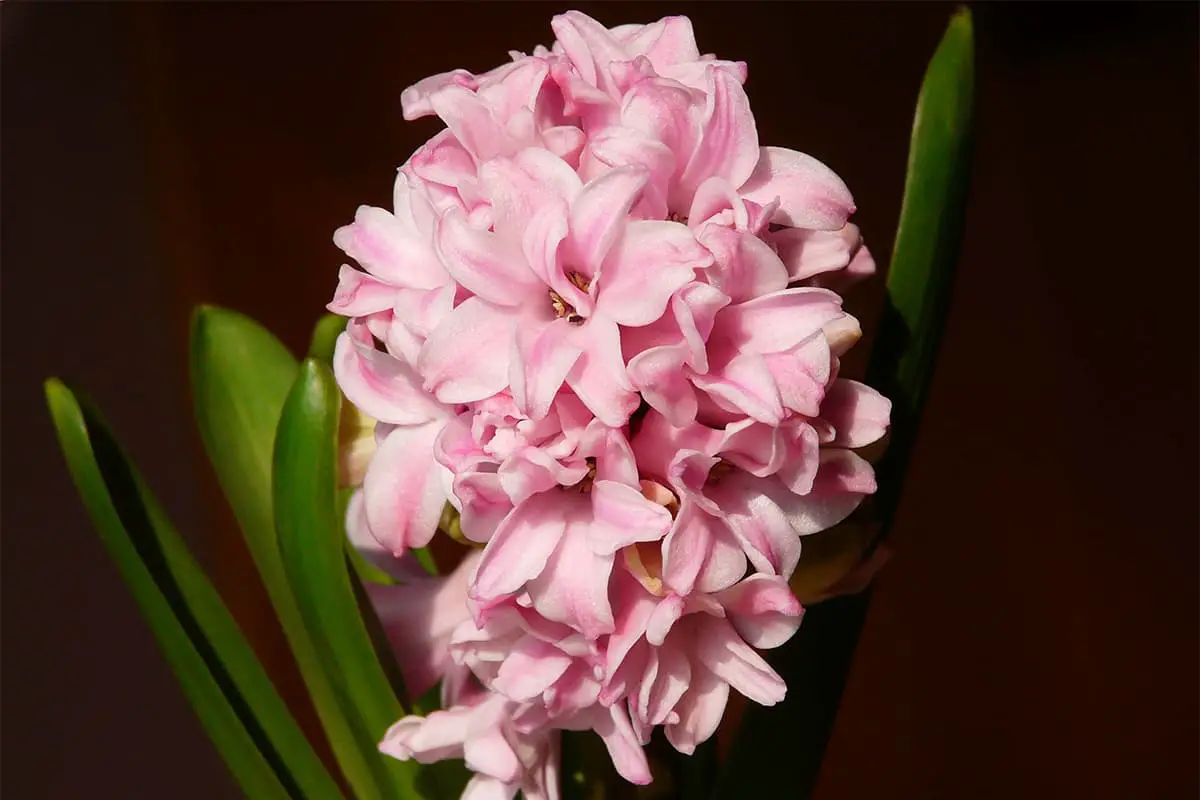
Stem: Hyacinths are perennial herbaceous plants with bulbous roots. The bulbs are spherical or flattened with membranous outer scales. The outer membrane color can be purple-blue or white, and it correlates with the flower color. When not in bloom, they resemble garlic bulbs.
Leaves: The plant has 4-9 lanceolate leaves that are fleshy, basal, thick, and green with a glossy appearance. They have shallow longitudinal grooves.
Flowers: The flower stem is fleshy, ranging from 15 to 45 centimeters in height, hollow, and bears a terminal raceme.
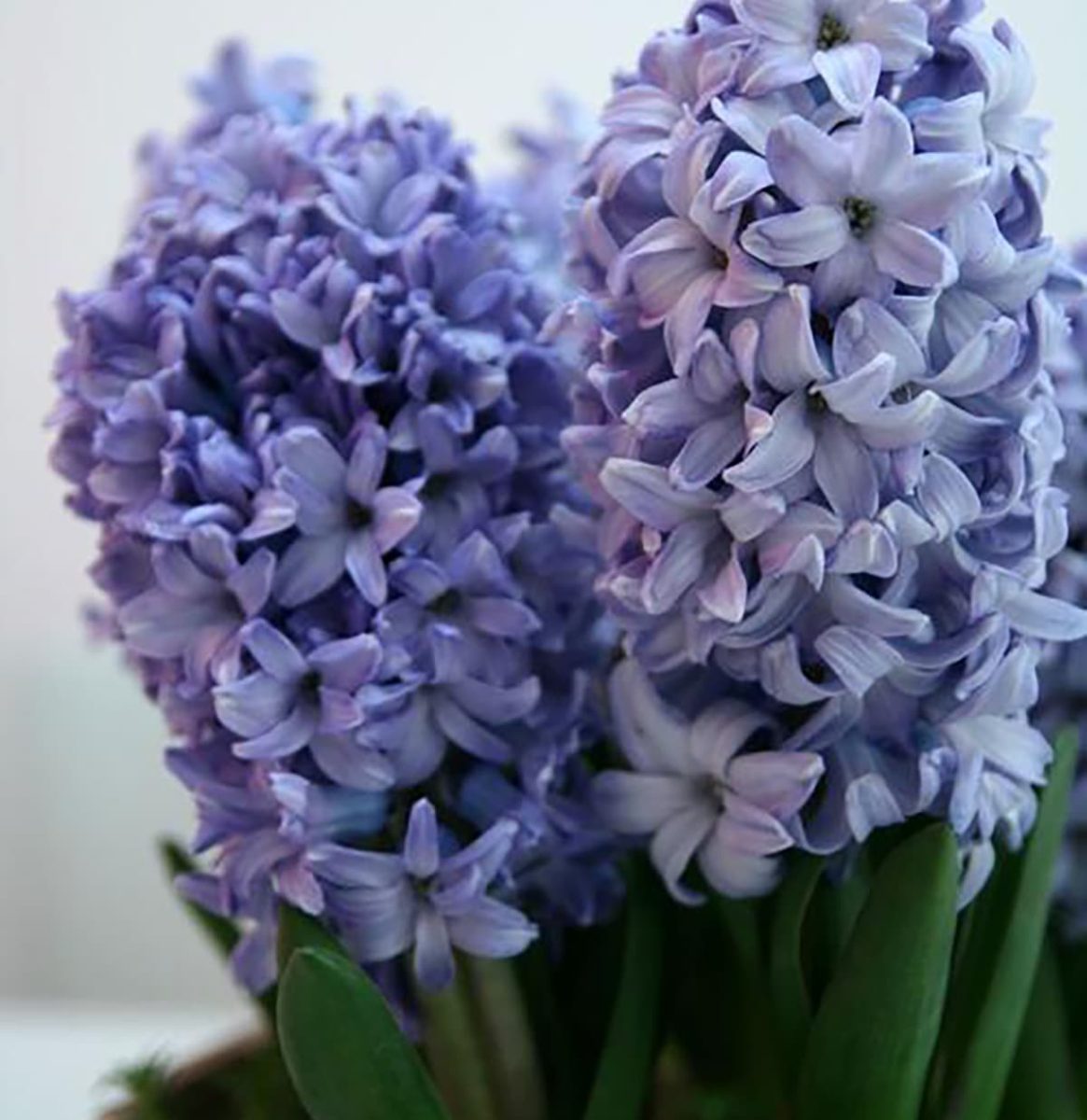
The small flowers are densely clustered at the upper part of the stem, mostly growing horizontally with few drooping. They have a funnel shape with tubular perianths that are divided into four upper lobes.
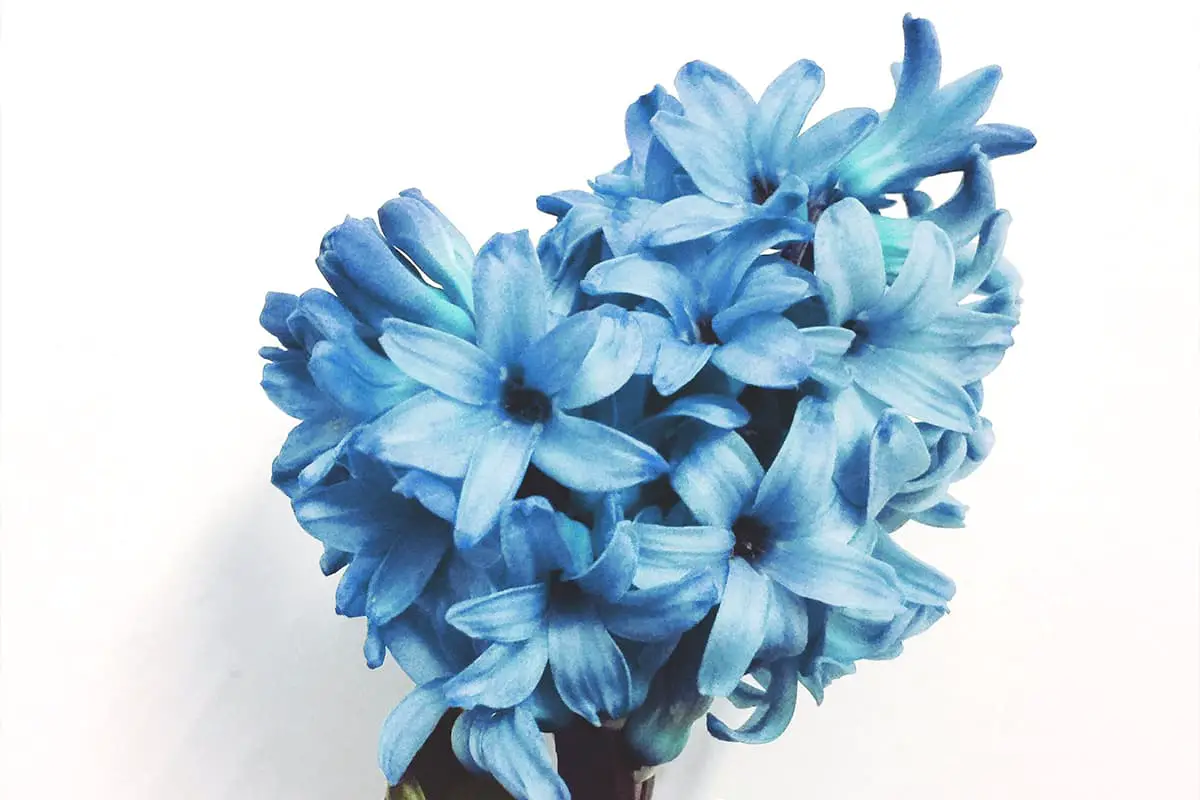
The corolla is funnel-shaped with a longer basal tube and five lobes that curl outward and downward. Depending on the color, there are approximately eight cultivars, including blue, pink, white, pale yellow, purple, yellow, crimson, and red.
The wild species are light purple and fragrant. The plant forms capsules. The natural blooming period is in early spring, usually occurring in March or April.
Hyacinths prefer sunny locations and cold-resistant environments. They thrive in cool and moist conditions with loose and fertile sandy soil, avoiding waterlogging. They prefer a winter with warm and moist conditions, a slightly cool and dry summer, and ample sunlight or partial shade.
They require fertile soil with good drainage, such as sandy loam. They can be grown in the ground, in pots, or in water.
The bulbs grow in autumn, and new shoots emerge in early spring. The flowers bloom in March, with fruit ripening in late May. By early June, the aboveground parts of the plant wither, entering a dormant stage.
Flower bud differentiation occurs during dormancy, with an optimum temperature of around 25°C and a process taking approximately one month. After bud differentiation, there should be a two-month period of low temperatures before elongated growth occurs, with temperatures not exceeding 13°C.
During the growth process, the best root growth of bulbs occurs at temperatures of 2-6°C. Shoot emergence is favored at temperatures of 5-10°C, while leaf growth occurs at temperatures of 5-12°C.
The most favorable temperature for bud development and flowering is 15-18°C. The ideal temperature for bulb storage is 20-28°C, with 25°C being the most suitable, as it promotes flower bud differentiation. The plant can tolerate brief periods of frost.
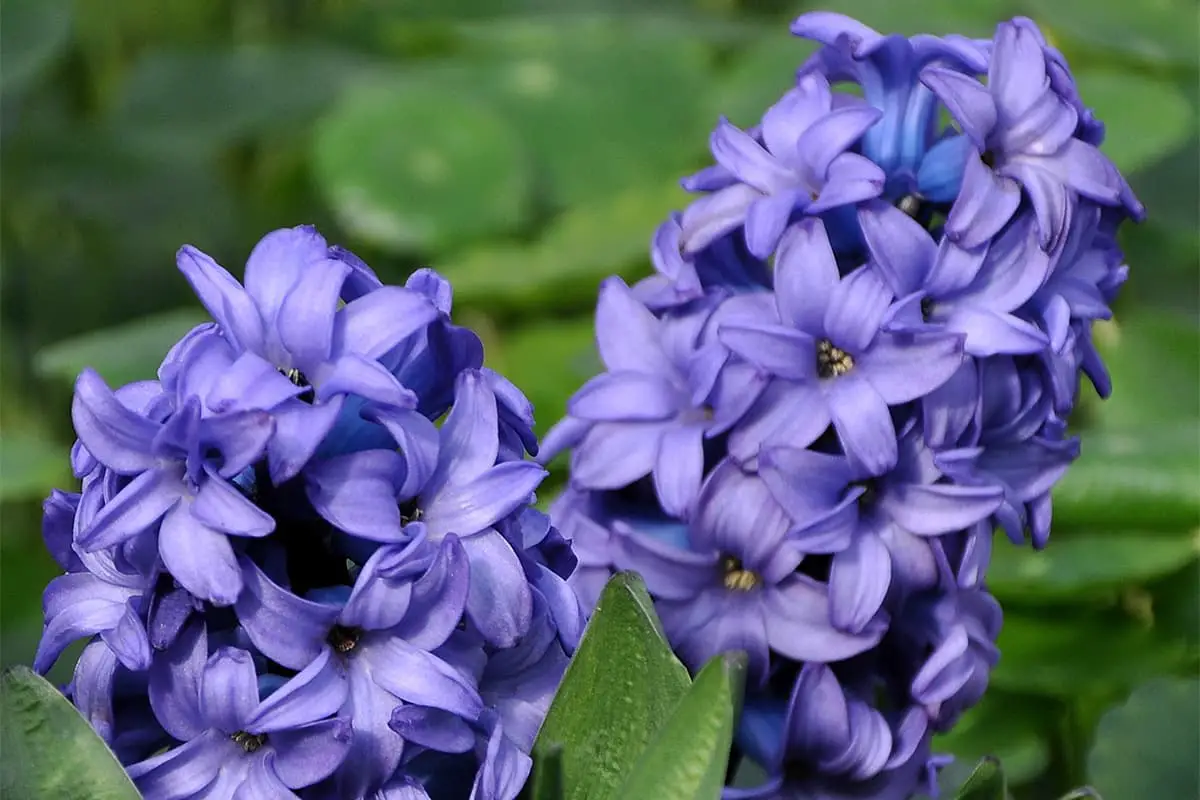
The main varieties of hyacinth include extremely early-flowering, early-flowering, mid-flowering, late-flowering, double-flowered hyacinths, and other varieties.
Hyacinths are originally from the southern coastal regions of Europe, the Mediterranean, and the region of Asia Minor, as well as the Netherlands. Nowadays, they are cultivated worldwide.
Wild species can be found in the limestone areas at elevations above 2,600 meters in Western and Central Asia. In the late 19th century, hyacinths were introduced to China and cultivated in coastal areas.
It was not until the 1980s that hyacinths began to develop on a larger scale throughout China and were widely used in spring flower exhibitions and potted plant sales.
Today, cultivated hyacinths are increasingly used for indoor decoration in homes and public places, with the demand growing each year. However, China has not yet achieved self-breeding and still needs to import from abroad.
Bulb Division:
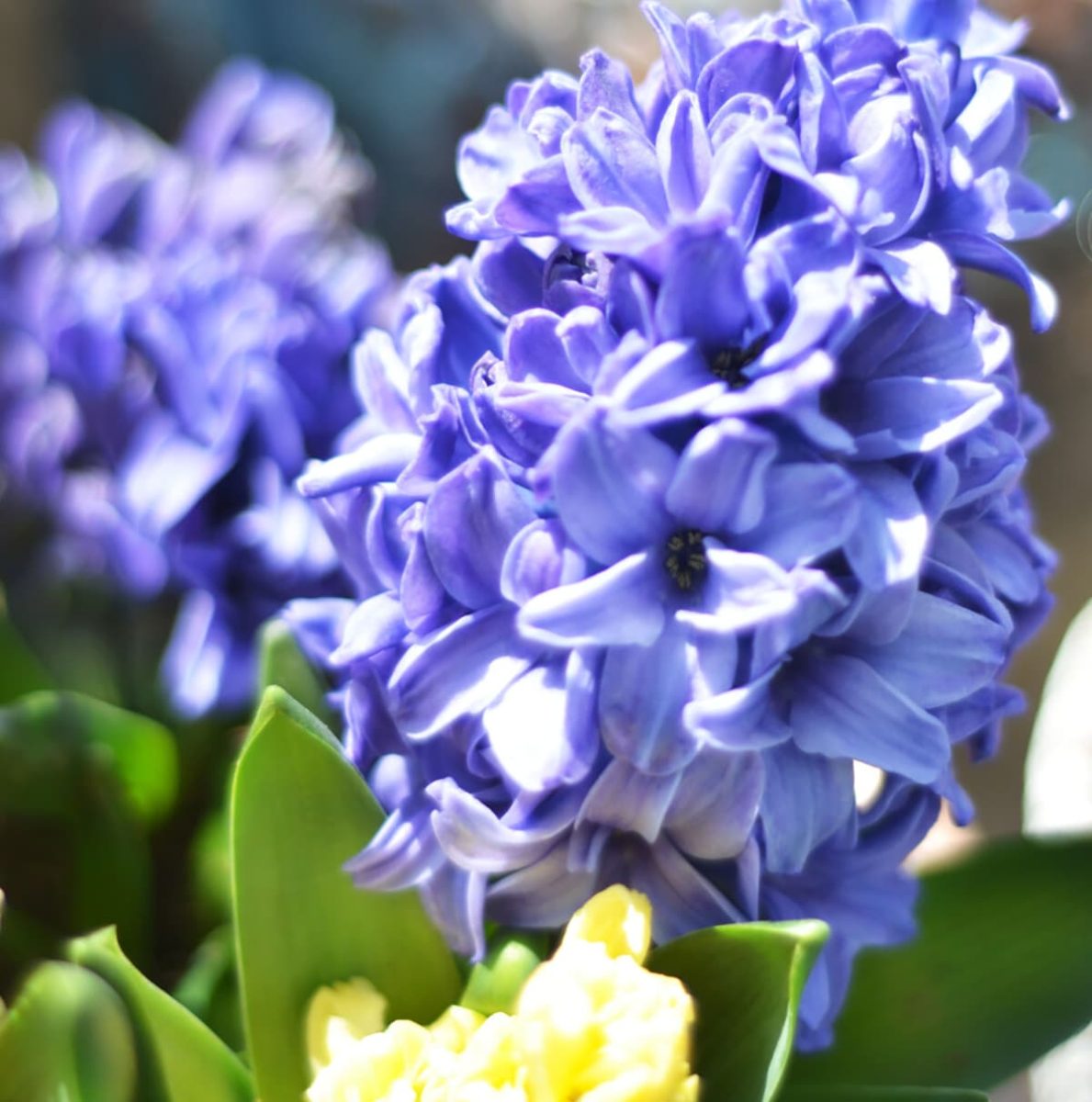
In June, after digging up the bulbs, separate the large bulbs from the offsets. The large bulbs can be planted in autumn and will bloom in early spring of the following year, while the offsets need to be cultivated for three years before they can bloom.
Since hyacinths have a low natural bulb division rate, typically only producing 1-2 offsets per mother plant after one year of cultivation, to improve the propagation rate, surgical castration can be performed on the large bulbs during the summer dormancy period to stimulate the growth of offsets.
Seeding:
Seeding is mostly used for cultivating new varieties. It involves sowing the seeds in the cold frame with a layer of 1 centimeter of cultivation soil in the autumn. Germination occurs in late January to early February of the following year.
The small bulbs produced from seed propagation will flower after 4-5 years. Under normal storage conditions, the seed viability can be maintained for up to 3 years.
Hyacinth language of flowers: Victory, competition, joy, love, happiness, intensity, admiration, stubbornness, life, pride, eternal remembrance.
Hyacinth new varieties for horticulture: Attention.
Blue hyacinth: Life.
Purple hyacinth: Sadness, jealousy, melancholic love, apology, regret.
Pale purple hyacinth: Gentle temperament, romantic sentiment, sadness.
White hyacinth: Serene, calm love, secret admiration.
Red hyacinth: Thank you for the love that moved me.
Pink hyacinth: Admiration, romance.
Light green hyacinth: If you want no secrets, first have a kind heart.
Symbolism
Wedding Flowers
In the UK, blue hyacinth has always been an indispensable representation of purity for the bride’s bouquet or floral decorations at weddings, symbolizing the hope for happiness.
Peggie was once a high school mathematics teacher, but she set aside her chalkboard and textbooks to follow her lifelong passion for flowers. After years of dedication and learning, she not only established a thriving flower shop but also founded this blog, “Flowers Library”. If you have any questions or wish to learn more about flowers, feel free to contact Peggie.
 English
  العربية
  Bahasa Indonesia
  Deutsch
  Français
  Italiano
  Nederlands
  Português
  Русский
  日本語
日本語