600+ Types of Flowers A To Z (With Names and Pictures)
Types Of Flowers By Names (A-Z) Types Of Flowers By Color Types Of Flowers By Season Types Of Flowers By Blooming Time 600+ Types of Flowers No. Flower Name No.…

Sambucus javanica is a tall herbaceous or subshrub plant in the family Adoxaceae. Its stems are angular with white pith. The leaves are alternate or opposite, narrow ovate in shape, pinnately compound with leaflets that resemble leaf-like glands or are blue.
The calyx is cup-shaped, with triangular teeth. The corolla is white, and the stamens are yellow or purple. The fruit is red when ripe, nearly circular, with ovoid seeds covered in small wart-like protrusions.
It blooms from April to May and fruits from August to September. It gets its name from its reputation for treating bruises, injuries, and bone fractures.
Elderberry prefers cooler and more humid climates, tolerates shade and cold, and can be grown in most types of soil, although waterlogged areas are not suitable for cultivation.
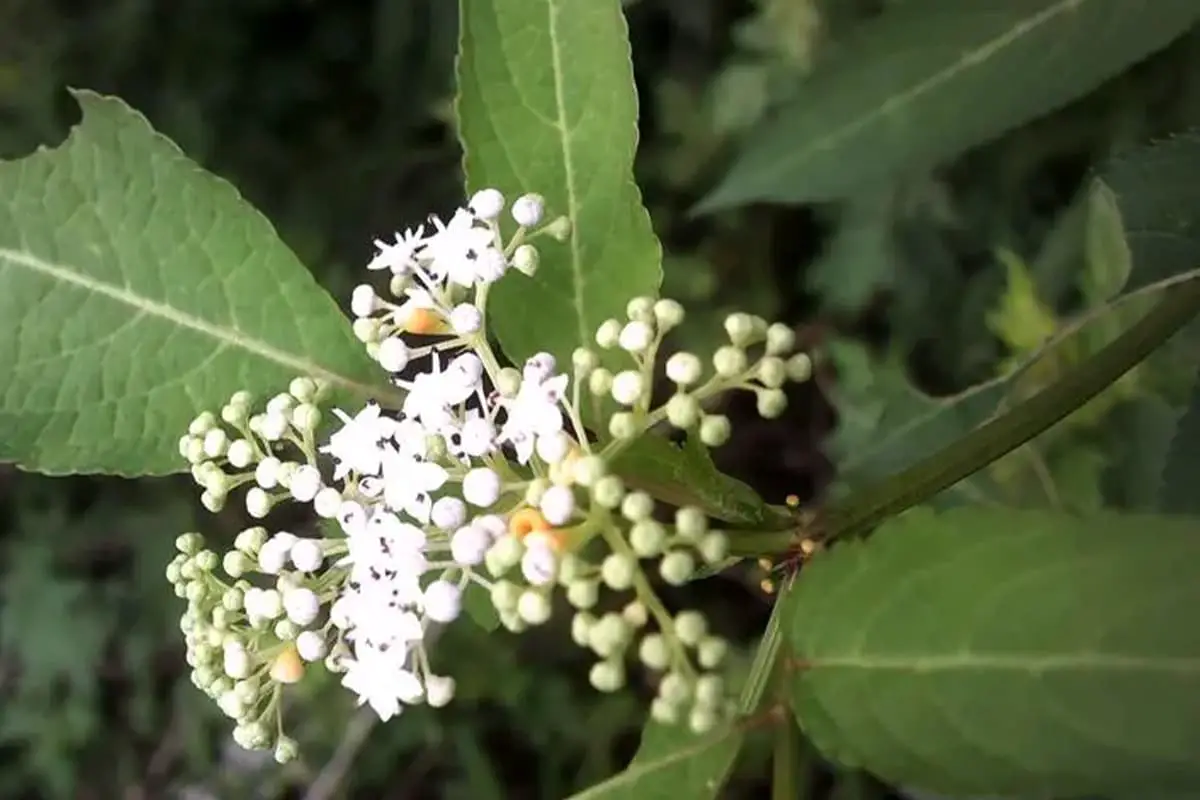
It dislikes high temperatures and is commonly found in hillside thickets or grasslands. It reproduces through cuttings.
The roots, stems, leaves, flowers, and fruits of Elderberry can all be used for medicinal purposes. The root or whole plant has the effects of dispelling wind and dampness, promoting blood circulation, and dispersing blood stasis.
Apart from its medicinal uses, Elderberry has vibrant green foliage and an elegant growth habit, making it a fast and visually appealing option for landscaping. It is also considered a highly ornamental plant.
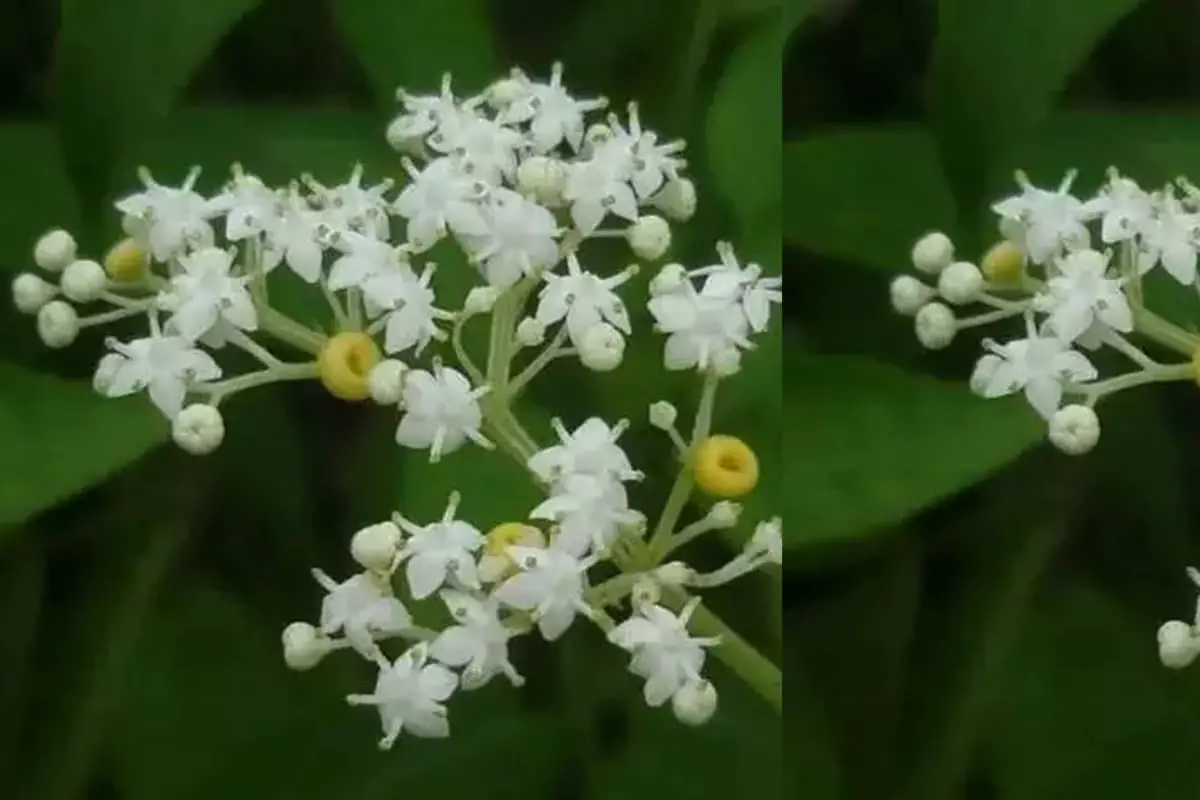
Elderberry got its name due to its effectiveness in treating bruises, injuries, and bone fractures.
Elderberry is a tall herbaceous or semi-shrub plant, reaching a height of 1-2 meters. Its stems are angular with white pith. The leaf-like stipules of the pinnately compound leaves are sometimes glandular and blue.
There are 2-3 pairs of leaflets, which are alternate or opposite. The leaflets are narrowly ovate, measuring 6-13 centimeters in length and 2-3 centimeters in width. The upper surface of the leaflets is sparsely covered with long soft hairs when young.
The leaflets have a gradually pointed tip, a rounded base, unequal sides, finely serrated margins, and one or several glandular teeth near the base or below the middle.
The terminal leaflet is ovate or inverted ovate, with a wedge-shaped base, sometimes connected to the first pair of leaflets, and lacks stipules. The first pair of leaflets sometimes has a short stalk.
The compound umbel inflorescence is terminal, large, and sparse. It is supported by leaf-like bracts at the base of the peduncle, which branches 3-5 times and is slender, covered with sparse yellow hairs.
The sterile flowers of the cup-shaped calyx do not fall off, while the fertile flowers are small. The calyx is cup-shaped with triangular teeth. The corolla is white, united only at the base, and the stamens are yellow or purple.
The ovary has 3 chambers, with a very short or almost absent style, and a 3-lobed stigma. The fruit is red, nearly circular, with a diameter of 3-4 millimeters.
It contains 2-3 ovoid seeds, measuring 2.5 millimeters in length, with small wart-like protrusions on the surface. It blooms from April to May and fruits from August to September.
Elderberry prefers cooler and more humid climates, tolerates shade and cold, and can be grown in most types of soil. However, it is not suitable for waterlogged areas and dislikes high temperatures. It is commonly found in hillside thickets or grasslands.
Elderberry is distributed in Japan. It grows on slopes, forest understories, along ravines, and in grasslands at elevations ranging from 300 to 2600 meters. It is also cultivated.
Elderberry is propagated through cuttings.
Propagation by cuttings: Using seedling transplantation method, select healthy and pest-free branches in the germination area in February. Cut the branches into cuttings that are 20-25 centimeters long, with at least 3 buds on each cutting.
The upper and lowermost buds should be 1-1.5 centimeters away from the cut. Then, prepare the soil and create a 3-meter-wide bed. Dig horizontal trenches with a spacing of 26 centimeters and a depth of 16-20 centimeters.
Place 15-20 cuttings in each trench, with the uppermost bud of the cutting exposed above the ground. Cover the trenches halfway with soil and compact it, ensuring that the fine soil is level with the bed surface.
Transplanting should be done after leaf fall in the winter or before spring germination in the second year.
Dig holes with a spacing of 1.3-1.8 meters between rows and a depth of 21-25 centimeters. Transplant one seedling per hole and press the soil firmly, slightly higher than the ground level.
When the seedlings reach a height of 13-17 centimeters, perform the first round of inter-row cultivation and weeding, as well as apply additional fertilizers.
The main fertilizer is manure from humans and livestock. In the 2-3 years following transplantation, weed once in the spring and once in the summer.
Elderberry can be harvested throughout the year, either used fresh or cut and dried.
Chemical control methods, usually employing a combination of indoor toxicity testing and field efficacy trials, are commonly used to screen for agents to control root rot.
Chemical pesticides such as carbendazim, chlorothalonil, dexamethasone, mancozeb, imidacloprid, and fenhexamid are commonly used for the prevention and control of root rot.
The roots, stems, leaves, flowers, and fruits of Elderberry can all be used for medicinal purposes. The root or whole plant has the effects of dispelling wind and dampness, promoting blood circulation, and dispersing blood stasis.
【Properties】Sweet and bitter in taste, neutral in nature. Belongs to the Liver meridian.
【Functions and Indications】Dispels wind and eliminates dampness; promotes blood circulation; stops bleeding. Mainly used for rheumatic arthralgia, gout, osteoarthritis, acute and chronic nephritis, rubella, bruises, bone fractures, and swelling and pain caused by external injuries.
【Dosage and Administration】Orally: Decoction, 15-30g; or in pill or powder form. Topically: Apply an appropriate amount, either as a poultice or for decoction fumigation and washing, or as a powdered sprinkling.
【Precautions】Not suitable for pregnant women.
Elderberry has lush green branches and leaves, a graceful growth habit, and rapid growth. It can quickly achieve a pleasing greening effect, making it a highly ornamental plant.

Peggie was once a high school mathematics teacher, but she set aside her chalkboard and textbooks to follow her lifelong passion for flowers. After years of dedication and learning, she not only established a thriving flower shop but also founded this blog, “Flowers Library”. If you have any questions or wish to learn more about flowers, feel free to contact Peggie.
 English
  العربية
  Bahasa Indonesia
  Deutsch
  Français
  Italiano
  Nederlands
  Português
  Русский
  日本語
日本語