600+ Types of Flowers A To Z (With Names and Pictures)
Types Of Flowers By Names (A-Z) Types Of Flowers By Color Types Of Flowers By Season Types Of Flowers By Blooming Time 600+ Types of Flowers No. Flower Name No.…

Padus avium, commonly known as cherry plum or bird cherry, is a deciduous tree in the Rosaceae family. It can reach a height of up to 15 meters and has rough and mottled bark. The leaves are elliptical, oblong, or oblong-ovate in shape.
The cherry plum flowers are white as snow, and in autumn, the leaves turn yellow with a hint of red, complemented by purple-black fruit clusters, making it exceptionally beautiful. The flowering period is from April to May, and the fruiting period is from May to October.
Cherry plum is a great ornamental tree and can be planted individually, in groups, or as street trees in gardens, scenic areas, and residential areas. It is also a high-quality source of nectar for bees.
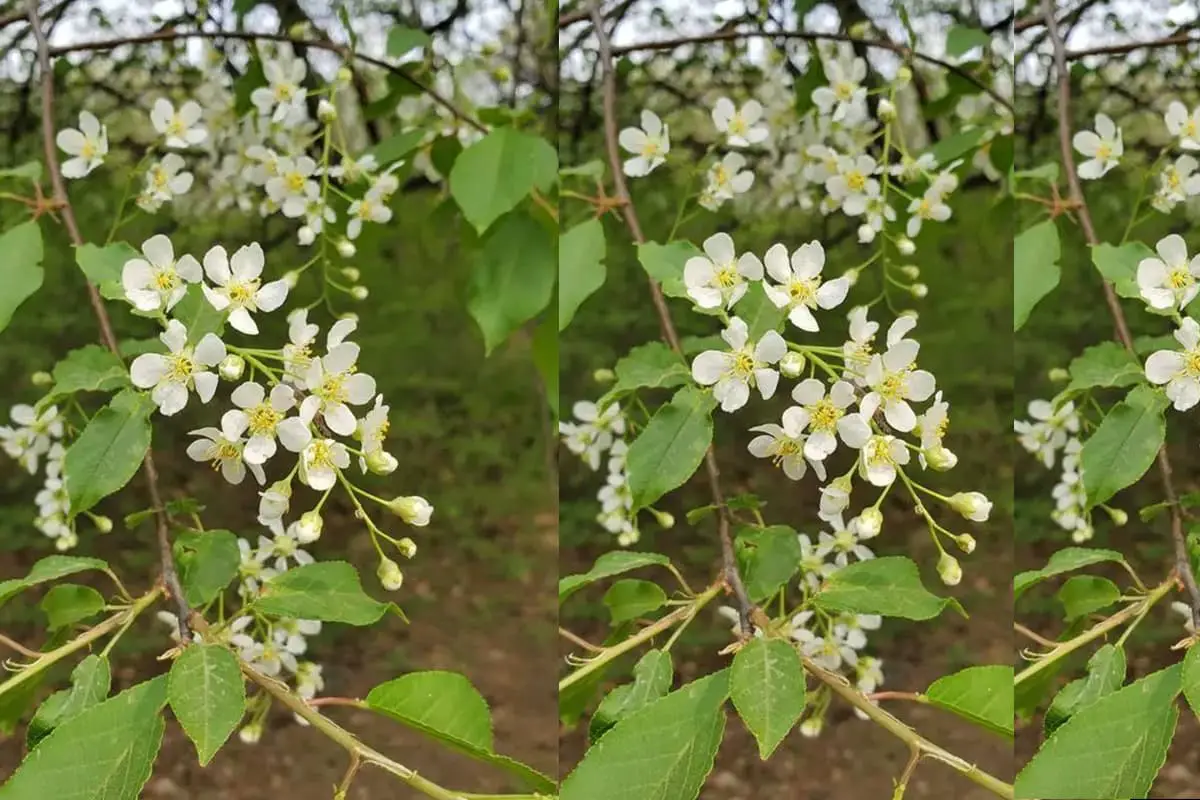
Padus avium, a plant in the Rosales order, Rosaceae family, and Padus genus, is a deciduous tree that can grow up to 15 meters tall. It has rough and mottled bark, with older branches being purplish-brown or grayish-brown and having light-colored lenticels.
The leaves are elliptical, oblong, or oblong-ovate in shape, with membranous stipules and linear leaflets. They gradually taper towards the tip and have glandular serrations along the edges.
The leaves fall early. The inflorescence is a raceme with multiple flowers, measuring 7-10 centimeters in length, and usually has 2-3 leaves at the base.
The fruit is ovoid with a pointed tip. The flowering period is from April to May, and the fruiting period is from May to October.
It is distributed in North Korea, Japan, and Russia, and grows on slopes, valleys, or in thickets at altitudes ranging from 880 to 2500 meters.
It has been cultivated in Europe and northern Asia for a long time, and there are various cultivated varieties for ornamental purposes, such as weeping forms, variegated leaves, large or small flowers, double flowers, yellow or red fruit, etc.
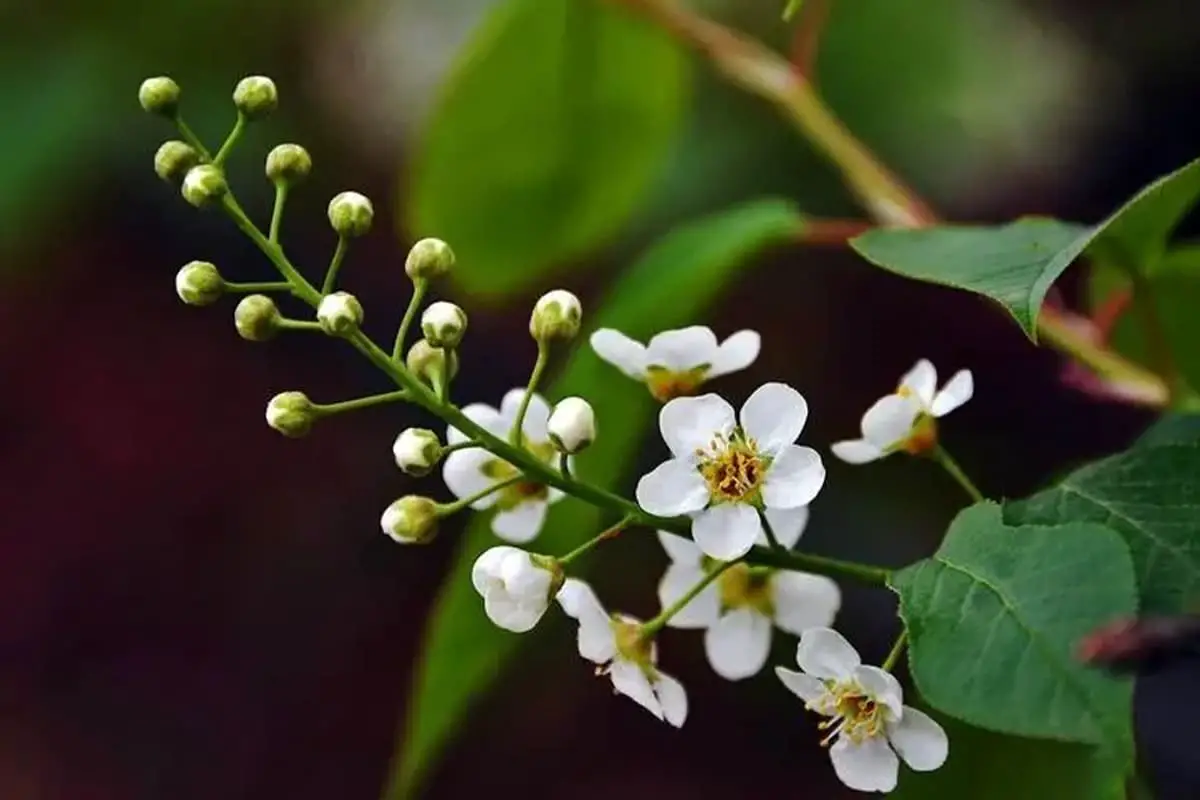
This variety is characterized by brownish long soft hairs on the twigs, undersides of the leaves, leaf stalks, and at the base of the inflorescence.
The leaf edges are either fully expanded or closely serrated, and the serrations are lanceolate. It flowers from April to June and fruits from June to October.
It is found in Hebei, Shanxi, Inner Mongolia, and Henan, growing in mountain slopes, thickets, valleys, shady slopes, and damp areas at altitudes of 1280-1925 meters.
This variety is very similar to the North Asian variety, except that the latter only has short soft hairs on the twigs and inflorescence, and lacks the brownish soft hairs on the undersides of the leaves and leaf stalks.
This variety is characterized by short soft hairs on the twigs, racemes, pedicels, and peduncles. It flowers from April to June and fruits from June to October. It grows on slopes, forest edges, broad-leaved forests, hills, and riverbanks at altitudes of 800-2700 meters.

Cherry plum prefers full sun to partial shade and has strong cold resistance, being able to withstand temperatures as low as -30°C. It grows well in fertile, well-drained sandy soil.
It has strong sprouting ability and is resistant to diseases and pests. However, it is not tolerant of drought or poor soil conditions, and it is slightly sensitive to waterlogging.
It can adapt to various soil types and withstand harsh climates. It grows on mountain slopes, valleys, or in thickets at altitudes ranging from 880 to 2500 meters.
It is distributed in North Korea, Japan, and Russia.
Cherry plum is a deciduous tree that can reach a height of up to 15 meters. It has rough and mottled bark, with older branches being purplish-brown or grayish-brown and having light-colored lenticels.
The small branches are reddish-brown or yellowish-brown and are covered with short pubescence when young, which later falls off, leaving them smooth. The winter buds are ovoid and either hairless or only have cilia along the edges.
The leaves are elliptical, oblong, or oblong-ovate in shape, measuring 4-10 centimeters in length and 2-4.5 centimeters in width.
They have a tapering tip, a rounded or wide-wedge-shaped base, and irregular sharp serrations along the edges, sometimes mixed with coarsely serrated teeth.
The upper surface is dark green, while the lower surface is pale green, and both sides are hairless. The midrib and lateral veins are raised on the lower surface.
The leaf stalk is 1-1.5 centimeters long, covered with short pubescence when young, but nearly hairless after falling off, with a gland on each side at the top.
The stipules are membranous, linear, and gradually taper to a point, with glandular serrations along the edges. They fall off early.
The inflorescence is a raceme with multiple flowers, measuring 7-10 centimeters in length, and usually has 2-3 leaves at the base. The leaflets are similar in shape to the stem leaves but are usually smaller.
The pedicels are 1-1.5 (-24) centimeters long, and both the peduncles and pedicels are usually hairless. The flowers have a diameter of 1-1.6 centimeters.
The calyx tube is bell-shaped and slightly longer than the calyx lobes, which are triangular-ovate with an acute or rounded tip and finely serrated edges with glands.
The petals are white, elongated, wavy at the tip, wedge-shaped at the base, and have short claws, being nearly 1 times longer than the stamens.
There are numerous stamens arranged in two irregular circles, with varying lengths of filaments. There is one pistil, and the stigma is disc-shaped, shorter than the stamens.
The fruit is ovoid with a pointed tip, measuring 8-10 millimeters in diameter. It is red-brown to black, smooth, and has a hairless fruit stalk. The calyx lobes fall off, and the seed has wrinkles. The flowering period is from April to May, and the fruiting period is from May to October.
Cherry plum should be planted in wind-protected, sunny areas with elevations above 700 meters and fertile soil in the foothills and valleys. The pit should be prepared with dimensions of 50×40×30 centimeters.
The spacing between plants should be 2×2 meters. As cherry plum buds start sprouting early in spring, it is recommended to plant them in early spring (late February to early March).
Cherry plum seedlings have a well-developed root system and a survival rate of over 95%. Within 3-4 years after afforestation, loosening the soil, weeding, and nurturing should be carried out.
After 4 years, proper pruning should be done on young trees to maintain a crown that occupies two-thirds of the tree height.
Cherry plum can be propagated through seed sowing or stem cuttings.
Seed Collection and Fruit Processing: The cherry plum seeds mature from late September to early October. It is best to collect them when the drupes turn black.
After collecting the drupes, soak them in water and rub off the black outer and middle seed coats. Dry the kernels (hard inner seed coat and kernel) in the sun for later use as seedlings.
Seed Treatment: The inner seed coat of the seed is hard and dense, and it has poor water permeability.
If not subjected to germination treatment, when sown directly in the nursery in spring, only a small number of seeds will germinate in the same year, and most will germinate the following year.
Therefore, it is generally recommended to sand store the seeds for one winter before sowing to achieve better germination results. For spring sowing, the snow storage method can be used in places with sufficient snow cover.
The seeds are mixed with snow and piled up on the shady side to maintain low temperatures for storage until the following spring sowing.
In areas without long-term snow cover during winter, the wet sand storage method (seeds:sand = 1:3) can be used for germination. This method is simple and effective.
Sowing Time: In spring, the best sowing period is when the average daily temperature approaches 10°C, usually from late April to early May.
For autumn sowing, it is generally done before the soil freezes (around late October to early November), allowing the soil to freeze promptly after sowing to reduce bird damage.
Bed Preparation: The bed should have a height of 10-12 centimeters, a width of 1 meter, and a length of 10 meters. Approximately 720 beds can be prepared per hectare (equivalent to a sowing area of 480 square meters per acre).
Sowing Method: Strip sowing is commonly used, with a strip width of 5-10 centimeters and a row spacing of 20 centimeters. The soil covering should be 2-2.5 centimeters thick.
The seeding rate is 225-270 kilograms per hectare, with approximately 100 seeds sown per meter of sowing furrow. If conditions permit, covering the seeds is beneficial for moisture retention and disease and pest control.
It takes about one month for cherry plum seeds to germinate and reach seedling emergence. The seedlings generally start to emerge around May 20th, with complete emergence by the end of May or early June.
The young seedlings grow slowly, reaching a height of 10-15 centimeters and a ground diameter of 0.2-0.3 centimeters in the first year.
By the second year, they can grow up to 50-60 centimeters in height and have a ground diameter of 0.5-0.7 centimeters. They can be used for afforestation on mountains in the third year.
Selection of Cuttings: Use the strong adventitious root formation ability of cherry plum to cultivate sucker seedlings.
The method involves selecting superior trees in October, digging a circular trench with a width of 10-20 centimeters and a depth of 10-20 centimeters around the outer perimeter of the tree crown of the selected superior tree, cutting off all the roots, and then covering it with a small amount of moist soil to allow the sucker seedlings to grow the following spring.
Each superior tree can yield 10-15 vigorous sucker seedlings. Among the one-year-old sucker seedlings, select the mother trees that exceed the average height by more than 10%, exceed the average ground diameter by more than 15%, have straight and healthy stems, no diseases or pests, and developed lateral roots, with more than 6 lateral roots, and use their roots to establish a cutting plot, and their stems as cuttings.
Timing and Method of Stem Cuttings: The ideal time for stem cuttings is from April 25th to May 5th. The time from cutting the cuttings to planting should not exceed 24 hours.
The planting density of the cuttings should be determined according to experimental requirements, and the planting depth should be 5 centimeters.
Preparation of the Propagation Bed: Use low beds, with each bed covering an area of 10 square meters (10 meters long, 1 meter wide, and the bed height is 10 centimeters lower than the walkway).
The planting substrate can consist of coarse sand, coal slag, and peat, with a thickness of 25 centimeters. The soil temperature should be controlled between 18-22°C.
Treatment of Cuttings: After the cuttings are taken, they are cut into stem segments with a length of 8 centimeters. The base of the cuttings is cut with a scalpel or small fruit knife, and the cuttings are disinfected.
A concentration of 2000×10-6 milligrams per milliliter of NK4 or rooting agent is used, and the cuttings are treated for 24 hours. The rooting rate can reach 89.5%, showing practical value for promotion.
Plastic Greenhouse: Place arch-shaped willow branch plastic film covers with a height of 60 centimeters above the propagation beds, and set up shade nets at a height of 120 centimeters above the propagation beds.
Stem Cutting Management:
Anthracnose
Symptoms: Small brown spots appear on the leaves of the seedlings from June to July each year, gradually expanding and causing extensive tissue death, resulting in leaf drop.
Prevention and Control: To prevent the occurrence of this disease, spray 0.50% Bordeaux mixture once when most of the seedlings have emerged, and then spray once every 15 days. The concentration can be doubled later for better results.
Gummosis
Symptoms: After the main trunk, main branches, and small branches are affected, the tree exudes gum, which oxidizes in the air and turns red, forming hard gum blocks. If there is excessive gum flow, it weakens the tree’s vigor, and can even lead to dead branches or whole tree death.
Prevention and Control: Before the tree starts to sprout in spring, spray 3°-5° copper oxychloride, and apply whitewash to the trunk in late March, May, and late October.
Dieback
Symptoms: This disease mainly affects the leaves and fruits. After infection, circular orange-red spots with a diameter of 2-8 millimeters appear on the leaves. The diseased areas become thick with small red dots.
Later, the diseased areas turn from orange-red to dark red. The front of the leaves becomes concave while the back becomes convex, with black dots resembling steamed buns (the ascospore capsules of the pathogen).
Severe cases result in withered and fallen leaves, and the fruits develop red circular spots with indistinct raised edges, making them prone to fruit drop.
Prevention and Control: Prune infected branches in a timely manner. Before the onset of the disease, spray Bordeaux mixture (1:1:160) for prevention.
In the early stages of the disease, spray 50% methyl thiophanate wettable powder at a dilution of 700 times, or 70% penthiopyrad and zinc-manganese wettable powder at a dilution of 500 times for control.
Above-ground pests of cherry plum include red spider mites and aphids, which mainly damage the leaves, leading to stunted growth, yellowing leaves, and eventually death.
Red spider mites can be controlled by spraying 40% trichlorfon emulsion, while aphids can be eliminated using 40% dimethoate emulsion.
Underground pests
Cherry plum is a majestic deciduous tree that can grow up to 15 meters tall. It is widely distributed in Europe and the northern regions of Asia and is highly valued as an ornamental green plant.
With its different varieties and beautiful flowers, it can be planted in gardens, landscapes, and scenic areas, as well as along roadways, to have a purifying effect on the environment.
The fruit of cherry plum is edible and has a sweet and tangy taste. It contains proteins, sugars, and various acids. When consumed, it provides the human body with a variety of beneficial nutrients.
In addition to being consumed fresh, cherry plums can be processed into fruit juice, apple sauce, fruit wine, and other food products, generating economic benefits for cultivation areas.
Cherry plum has significant medicinal value, mainly in its leaves. When used medicinally, cherry plum leaves can help alleviate coughs and promote expectoration.
They also have antiparasitic properties, eliminating parasites in the human body. In addition to the leaves, the fruit of cherry plum is also rich in many nutrients, beneficial to the human body.
Cherry plum seeds have a high oil content and can be extracted for industrial use as oil. They are an important source of industrial oil.
Cherry plum is a source of nectar and an ornamental tree. The wood of cherry plum is valuable, with a yellow-brown color, dense texture, white sapwood, and reddish-brown heartwood.
It is excellent for construction, high-quality furniture, and artistic carving. Cherry plum is also an excellent raw material for producing wood fungus, as it increases the yield by 50-80% compared to oak, with superior quality.

Peggie was once a high school mathematics teacher, but she set aside her chalkboard and textbooks to follow her lifelong passion for flowers. After years of dedication and learning, she not only established a thriving flower shop but also founded this blog, “Flowers Library”. If you have any questions or wish to learn more about flowers, feel free to contact Peggie.
 English
  العربية
  Bahasa Indonesia
  Deutsch
  Français
  Italiano
  Nederlands
  Português
  Русский
  日本語
日本語