600+ Types of Flowers A To Z (With Names and Pictures)
Types Of Flowers By Names (A-Z) Types Of Flowers By Color Types Of Flowers By Season Types Of Flowers By Blooming Time 600+ Types of Flowers No. Flower Name No.…

The Hibiscus Mutabilis, commonly known as the Cotton Rose, is recognized as the city flower of Chengdu, China. Its floral symbolism represents delicate beauty, chastity, and purity.
The Hibiscus Mutabilis, a deciduous shrub or small tree, prefers warmth and tolerates cool temperatures. It can endure wet conditions but not drought, and it does not require specific soil conditions, making it widely cultivable.
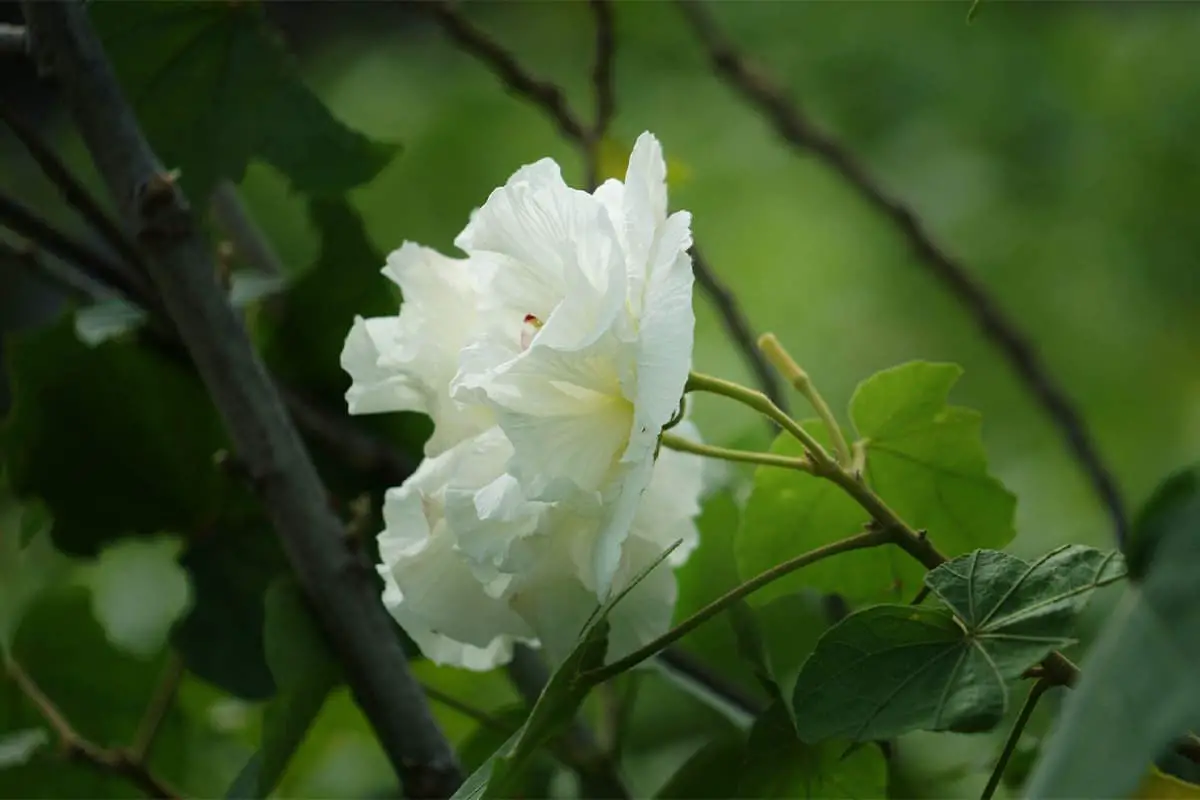
The Hibiscus Mutabilis is also known as the Cotton Rose, the Frost-Proof Flower, the Tree Peony, the Ground Hibiscus, and the Chinese Hibiscus. Native to China, it is a deciduous shrub from the Malvaceae family and the Hibiscus genus.
The Hibiscus Mutabilis thrives in warm, humid, and sun-drenched environments, yet it can also tolerate semi-shade and has some cold resistance.
The Hibiscus Mutabilis is not stringent about its soil requirements but grows best in fertile, moist, well-drained sandy soil.
The Hibiscus Mutabilis can be planted in sunny courtyards or near ponds. It requires relatively low-maintenance. During droughts, ensure it gets adequate watering. Apply some mature organic fertilizer around the plant annually in winter or spring, and water and cover the soil immediately after fertilization.
In colder regions, some tender branches might freeze during winter. Leave them be; new branches will sprout when spring’s warmth arrives.
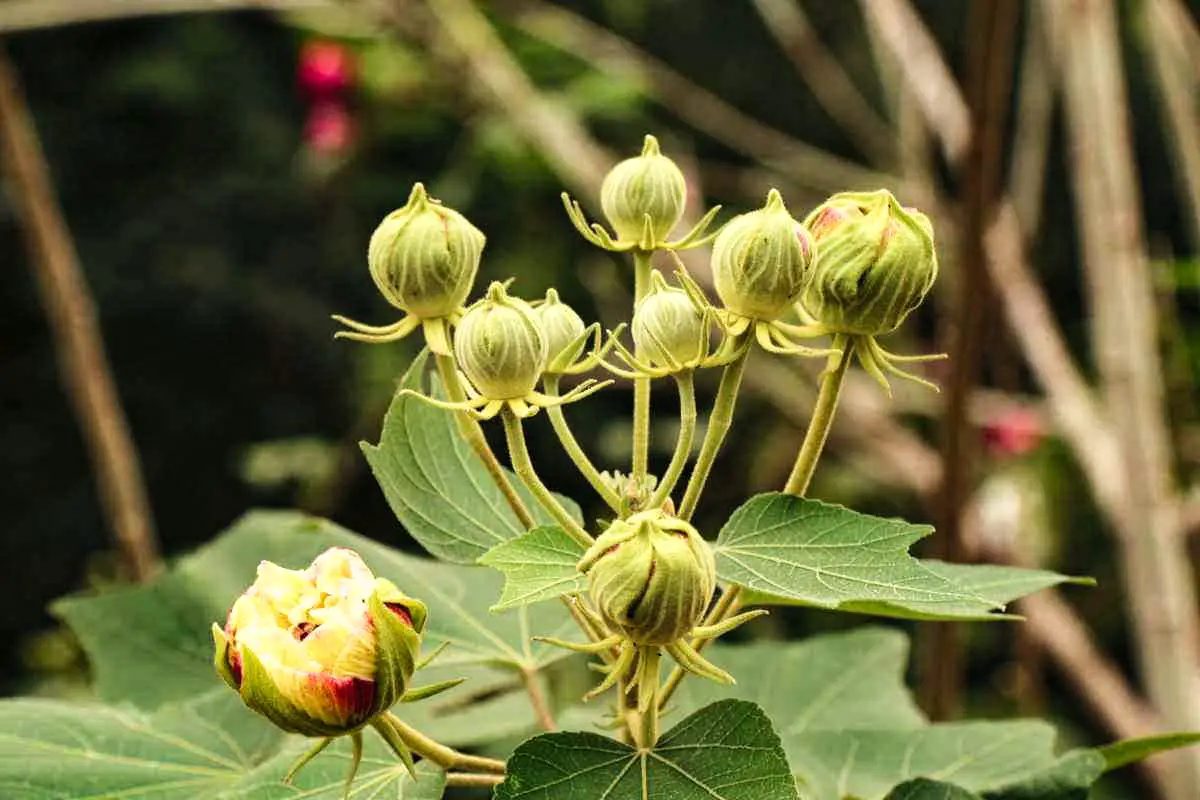
Pruning the Hibiscus Mutabilis is typically done after blooming. The plant can be trimmed into a tree-like or shrub-like form, but in either case, dead, weak, and inward-growing branches should be removed to ensure good ventilation and sunlight penetration in the crown.
The Hibiscus Mutabilis can also be pot-grown. The potting soil should be loose and fertile, with good drainage and breathability. During the growing season, the plant needs ample water to meet its growth demands. In winter, move the pot indoors and maintain a temperature between 0-10°C (32-50°F) to ensure its dormancy.
The Hibiscus Mutabilis is a deciduous shrub or small tree that grows over 1 meter in height.
Its stems are densely covered in star-shaped hairs, and its leaves are alternately arranged, broadly ovate or round ovate, with 3 to 5 shallow lobes. The leaf tips are pointed or tapering, with star-shaped fluff on both surfaces.
The large flowers grow singularly at the branch terminals or leaf axils, in colors such as red, pink, and white, usually blooming from August to October.
The fruits are flat spherical and mature around October to November. In colder areas, it wilts by the end of autumn and regrows from the overwintering roots the following year. It can reach about a meter in height when grown in clusters. In warmer winter regions, it can grow to 7-8 meters, with a trunk diameter of up to 20 centimeters.
The large leaves of the Hibiscus Mutabilis are broadly ovate, divided into 3-5 lobes. The lobes are triangular, and the base is heart-shaped. The leaf edges have blunt serrations, and both surfaces are hairy.
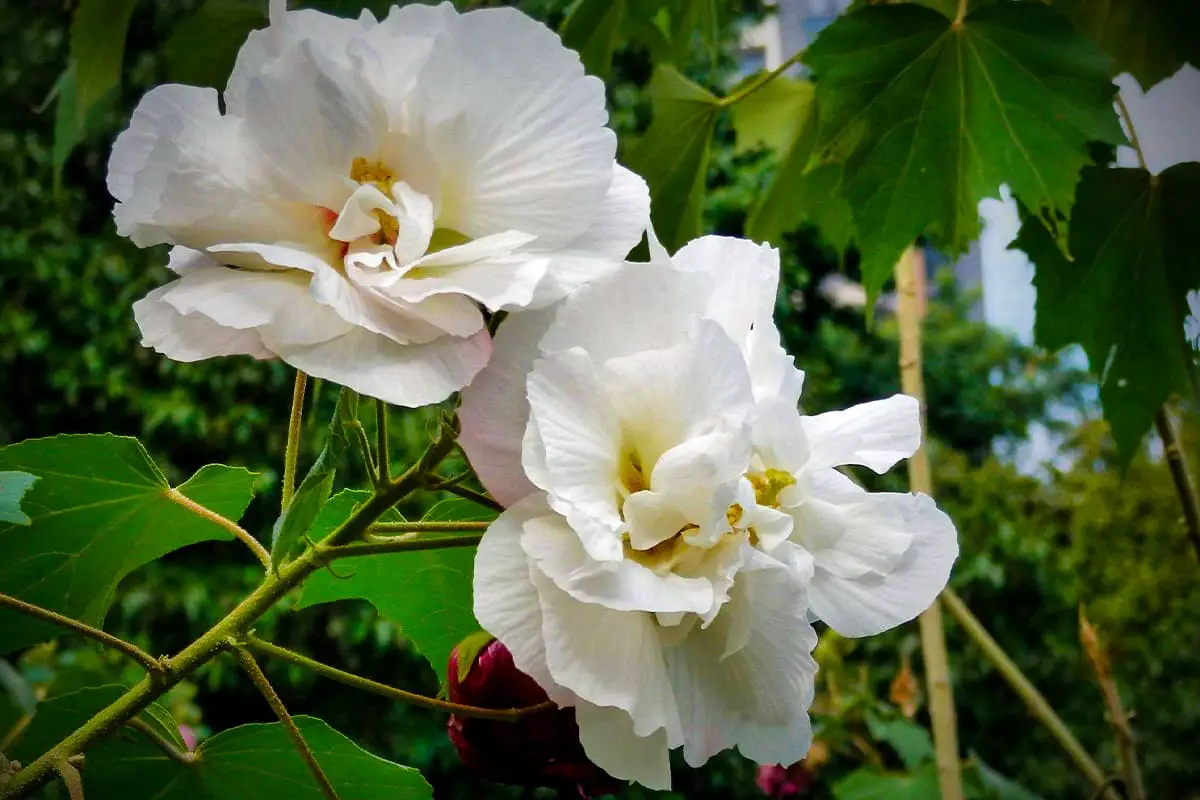
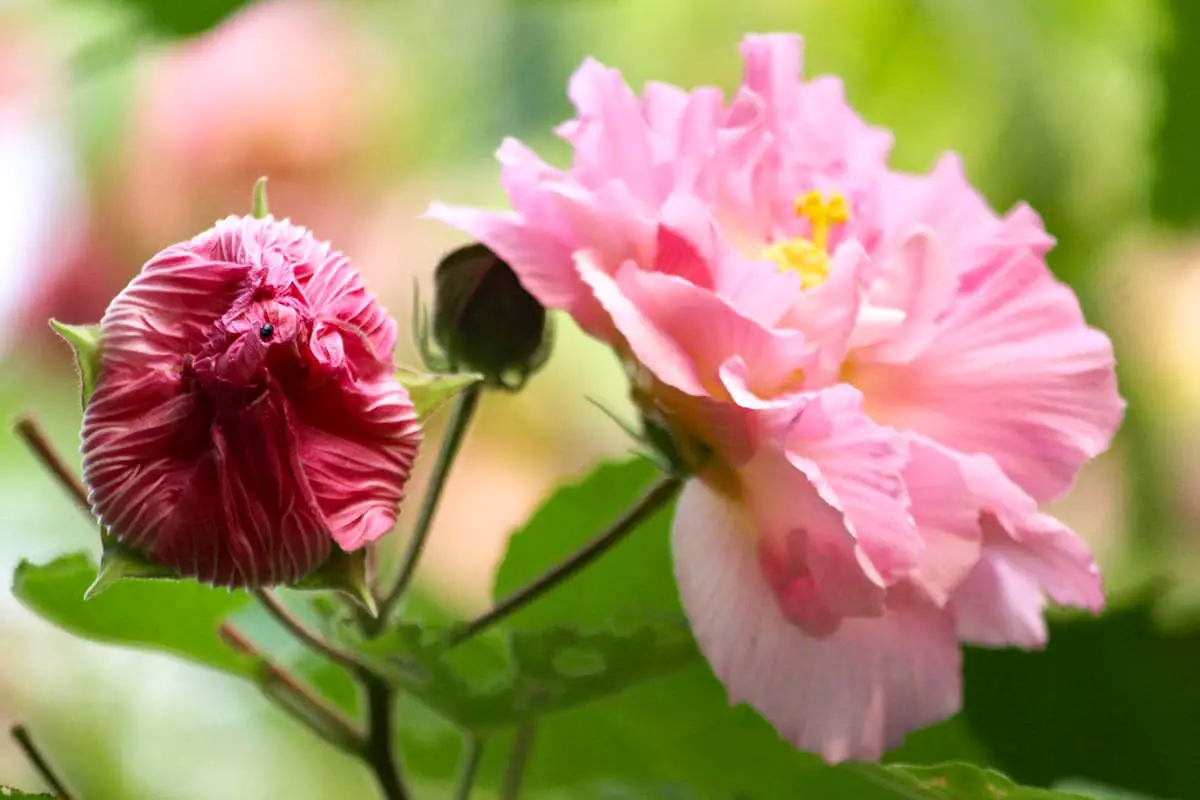
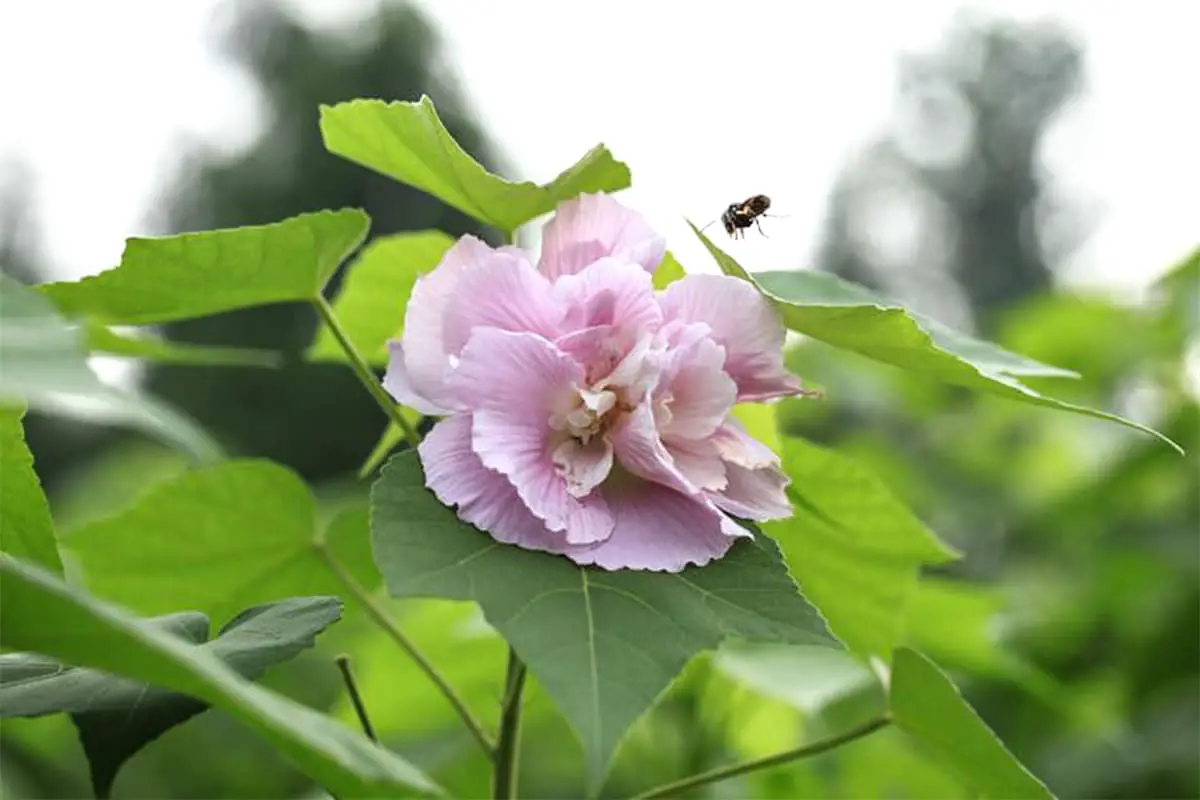
The flowers of the Hibiscus Mutabilis are single, grown between the branch ends and leaf axils, and come in different varieties: white, light red changing to deep red, dark red double blooms, white double blooms, half white-half pink double blooms, and variegated red and white blooms.
Originally from China, the Hibiscus Mutabilis is cultivated in regions south of the Yangtze River and is commonly seen in Hunan and Sichuan provinces. Because of its widespread cultivation, Hunan is known as the “Hibiscus Land.”
The Hibiscus Mutabilis is also cultivated in other provinces of China, Japan, and Southeast Asian countries. It’s quite common in the Chengdu area in China, hence the nickname “Hibiscus City” for Chengdu, where the Hibiscus Mutabilis is also recognized as the city’s official flower.
The Hibiscus Mutabilis can be propagated through cuttings, layering, or division.
Cuttings:
This is typically done in late autumn or early winter. Once the plant has shed its leaves, cut the branches about 5 to 10 centimeters above the ground. Then, cut these branches into 10 to 15 centimeter sections. Bundle every 50 branches together and dig a trench (or pit) on the sunny, wind-sheltered side.
The trench should be about 40 centimeters deep and 50 centimeters wide. Neatly arrange the bundled branches vertically in the trench, then cover with 10 to 20 centimeters of clean, damp sand. Maintain the sand’s moisture afterward.
Layering:
This is usually performed from June to July. Bend the outer branches of the plant and press them into the soil. As the branches easily root, no incision is necessary.
After about a month, the branches will root, and after two months, they can be separated from the parent plant. Dig them up with the roots, pot them, and overwinter them in a greenhouse or cellar. They can be planted outside in the following spring.
Division:
Carry this out from February to March. Dig up the roots of the plant and separate them. Use the moist soil dry planting method, compact the soil after planting, and water thoroughly after five days. The plant will grow rapidly within the year, and by October, it should be able to flower.
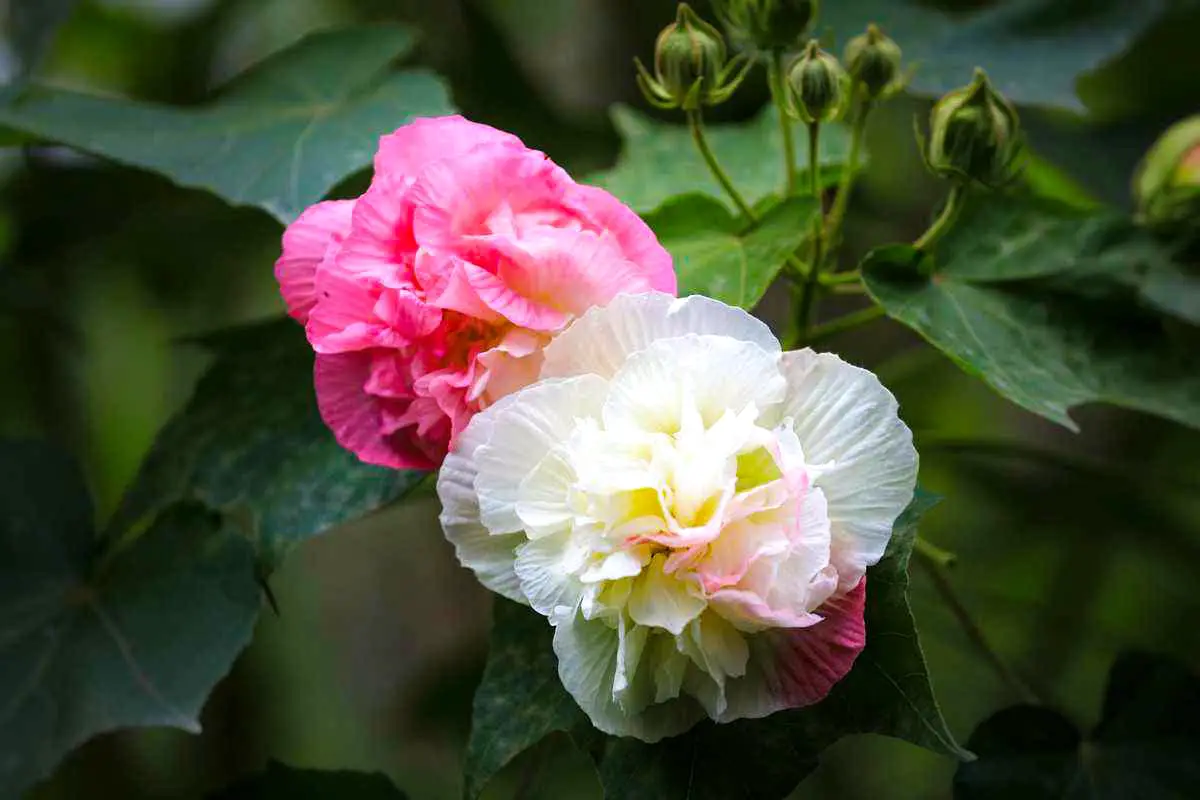
White Hibiscus Mutabilis: Known for its white blooms.
Pink Hibiscus Mutabilis: Distinguished by its pink flowers.
Red Hibiscus Mutabilis: Sports large, double-petaled, deep red flowers, strikingly similar to peonies.
Yellow Hibiscus Mutabilis: Also referred to as Yellow Mallow, it produces yellow, bell-shaped blooms with a dark purple center. Its large, double-petaled flowers resemble peonies, making it a rare variety.
Changing Rose Hibiscus: Sometimes referred to as “Triple Changing Rose Hibiscus”, this valuable and rare variety exhibits an intriguing shift in color throughout the day, presenting white flowers in the morning, shifting to a peachy-pink at noon, and finally transforming into a deep red color by the evening.
Ornamental Value:
Blooming in late autumn, Hibiscus Mutabilis boasts a long flowering period with an abundance of blossoms in various varieties. Its flower color and shape can vary significantly across types, making it an excellent ornamental tree.
Its large and colorful flowers are especially fitting for waterfront planting, casting beautiful reflections that enhance its beauty, hence it’s often referred to as the “Water Reflecting Hibiscus”.
Furthermore, planting it in courtyards, on slopes, along roads, at forest edges, before buildings, or even growing it as a hedge is highly recommended. It can also be admired as a potted plant in the colder northern regions.
Industrial Use:
The bark of Hibiscus Mutabilis contains 39% cellulose, which is pliable and water-resistant, making it an excellent material for ropes, textiles, and papermaking.
Medicinal Value:
The flowers, leaves, and roots of Hibiscus Mutabilis are rich in medicinal components such as flavonoid glycosides, hyperoside, inulin, phenols, and reducing sugars, and can be used in pharmaceuticals.
It can help clear heat, detoxify, reduce swelling, drain pus, cool the blood, and stop bleeding. It is applied in treating lung heat cough, excessive menstruation, leukorrhea, and externally for abscesses, mastitis, lymphadenitis, mumps, burns, snake bites, and bruises. The renowned “Jade Dew Powder” and “Hibiscus Flower Oil” are produced from the flowers and leaves of Hibiscus Mutabilis.
Hibiscus Mutabilis symbolizes delicate beauty, chastity, purity, precociousness, and the bitter longing of a couple forever separated. The petals of Hibiscus Mutabilis are layered, reminiscent of both the delicate beauty of a young girl and the mature intellect of a noblewoman.
After its brilliant bloom, it wilts without hesitation, representing a changeable character. Children blessed by this flower are often more mature, hence the implication of precociousness.
Additionally, in Chinese cultural traditions, hibiscus signifies beauty, used to express admiration for women, symbolizing their beauty and nobility. Another flower language of Hibiscus Mutabilis expresses the sorrow of separation between a couple.

Peggie was once a high school mathematics teacher, but she set aside her chalkboard and textbooks to follow her lifelong passion for flowers. After years of dedication and learning, she not only established a thriving flower shop but also founded this blog, “Flowers Library”. If you have any questions or wish to learn more about flowers, feel free to contact Peggie.
 English
  العربية
  Bahasa Indonesia
  Deutsch
  Français
  Italiano
  Nederlands
  Português
  Русский
  日本語
日本語