600+ Types of Flowers A To Z (With Names and Pictures)
Types Of Flowers By Names (A-Z) Types Of Flowers By Color Types Of Flowers By Season Types Of Flowers By Blooming Time 600+ Types of Flowers No. Flower Name No.…

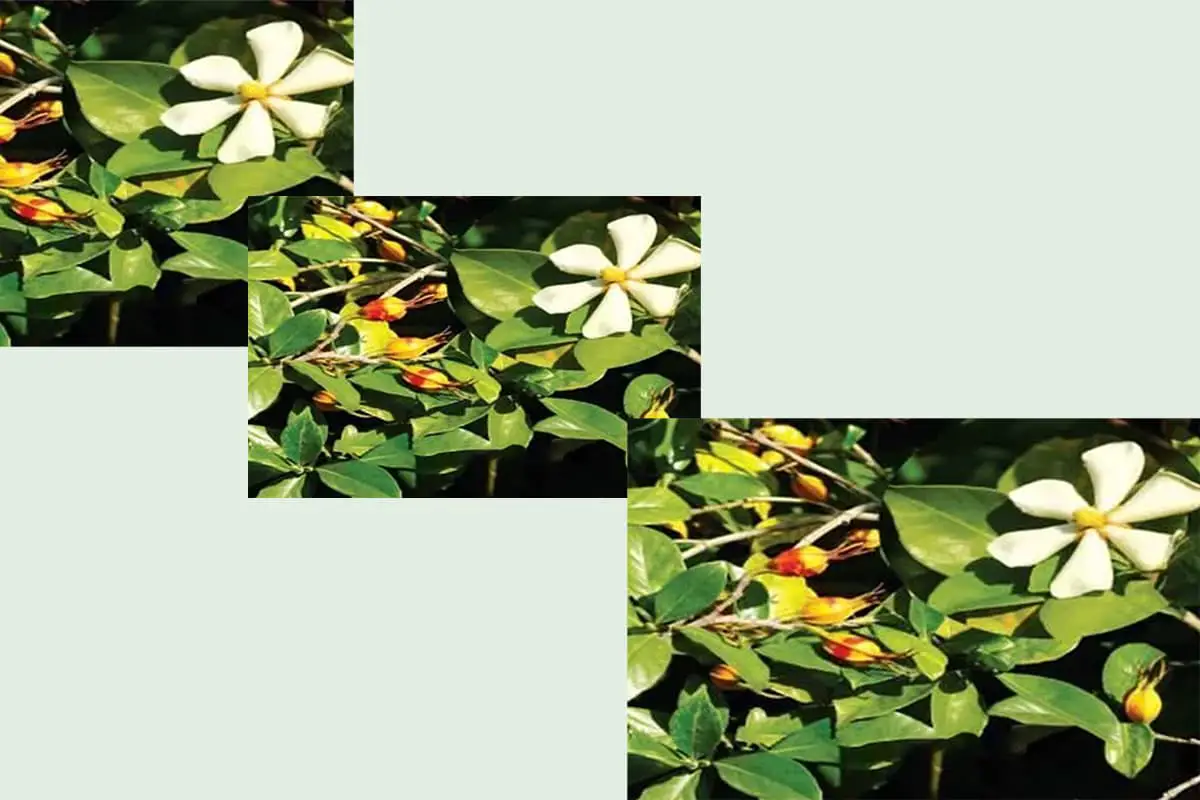
The Gardenia sootepensis Hutchins, a member of the Rubiaceae family, grows in Thailand, Laos, and China, thriving on hillsides, near villages or streams in forests at altitudes of 700-1600 meters.
Its leaves are papery or leathery, ovate, ovate-elliptic, broadly elliptic or oblong, 7-29 cm long and 3-16 cm wide. The flowers are large, about 7 cm in diameter, fragrant, and grow singly at the tips of the twigs.
The flower stem is 1-1.5 cm long, robust, slightly sticky, and covered with soft hairs. The corolla is yellow or white, high-footed dish-shaped, with 5 broad ovate segments, 4-5 cm long.
The fruit is green, elliptical or oblong, flowering from April to August, and fruiting from June to the following April.
This plant is found in Thailand, Laos, and China. It grows on hillsides, near villages or streams in forests at altitudes of 700-1600 meters.
It can grow normally in areas with high temperatures of 42.5°C and in dry, hot river valleys with little rain above 2300 meters above sea level. It requires an average annual temperature above 9°C and annual rainfall above 500 mm.
It is not picky about the soil and has strong adaptability, suitable for wasteland, slopes, flat land, and river valleys. It can grow in yellow soil, red soil, purple soil, clayey soil, and sandy soil, with a soil pH of 5-7.5.
This plant is a tree, 7-10 meters high, often with gummy secretions; its twigs often have obvious nodes, with dense internodes, less than 1 cm long, covered with short soft hairs, which gradually fall off.
The leaves are papery or leathery and shaped as ovate, ovate-elliptic, broadly elliptic or oblong, 7-29 cm long, 3-16 cm wide. The large flowers, about 7 cm in diameter, are fragrant and grow singly at the tips of the twigs.
The flower stem is 1-1.5 cm long, robust, slightly sticky, and covered with soft hairs. The corolla is yellow or white, high-footed dish-shaped, with 5 broad ovate segments, 4-5 cm long, and about 3 cm wide, with veins, hairless, the crown tube is cylindrical, 5-7 cm long, 3-5 mm in diameter.
The fruit is green, elliptical or oblong, covered with soft hairs, often with 5-6 longitudinal ribs, 2.5-5.5 cm long, 1.5-3.5 cm in diameter, with a hard, leathery, about 2 mm thick skin; the seeds are numerous, near round, flat, 3-4 mm in diameter, with a honeycomb-like small hole.
The blooming period is from April to August, and the fruiting period is from June to the following April.
The selection of a plantation site for the large yellow cape jasmine should be based on its biological and ecological characteristics.
Ideal locations are those with convenient transportation, altitudes between 850-1300 meters, an average annual sunlight exposure of about 2,000 hours, and a frost-free period of 250-280 days.
The soil should be of the middle or lower mountain slope, semi-sunny, red or reddish and of medium thickness.
For land preparation, clear and cut the miscellaneous shrubs in the forest land and pile them up for refining the mountain. During the clearing process, try to retain scattered needle and broadleaf tree species and shrubs with cultivation value.
Pay attention to preserving the original vegetation and herbaceous plants on the ridge, middle slope, and gully to enhance soil and water conservation. The land should be prepared in block form, with dimensions of 40cm x 40cm x 30cm, usually done in September.
Planting density: Based on local site conditions, forest species characteristics, local afforestation experience, and local habits, determine the planting density.
Usually, large yellow cape jasmine is planted at a density of 300-370 plants per acre; with a plant row spacing of 1m x 2m or 1.5m x 1.2m.
Planting season: The survival rate of planting is higher in the spring (April-May) or autumn (September-October). It is also suitable to plant in the rainy season of June-July in Jinggu.
Planting method: Before planting, dig holes according to a row spacing of 1.5m x 1.2m (370 plants/acre), with each hole having a diameter and depth of 50cm. Apply 5kg of decomposed manure or compost to each hole, mix it with bottom soil, cover it with 10cm of fine soil, and plant one seedling per hole.
Layer the soil and compact it to allow roots to spread. After planting, water once to establish the roots, and cover the soil slightly above the ground to conserve moisture and ensure survival.
Weeding and tilling: After planting, weed and till three times a year in spring, summer, and winter. In spring and summer, the soil should be lightly loosened and all weeds removed; in winter, tilling should be slightly deeper to clear shrubs and weeds.
Flower and fruit preservation measures: The phenomenon of flower and fruit drop in cultivated large yellow cape jasmine is serious.
According to a preliminary survey from Qing Shan Xiang Shan Branch in Dongzhi County, Anhui Province, the fruit drop rate can reach 20-40%, and in severe cases, it can exceed 50%.
The main causes of flower and fruit drop are: lack of nutrition; imbalance between nutritional growth and reproductive growth; insufficient nutrient supply during flower bud differentiation; incomplete pollination during flowering; and pests and diseases.
Therefore, a series of comprehensive measures to prevent flower and fruit drop, centered on strengthening fertilizer and water management, must be adopted in production.
Scientific fertilization: In the early growth stage of the large yellow cape jasmine, nitrogen fertilizer should be primarily applied to strengthen nutritional growth, enhance photosynthesis, and accumulate more organic matter.
When entering the reproductive growth phase, nitrogen fertilizer should be controlled and phosphorus and potassium fertilizer should be increased to promote more flowering and fruiting.
For instance, after sprouting in the spring, apply 3-4kg of urea per acre to promote sprouting and growth; after flowering, apply 4-5kg of ammonium bicarbonate per acre to facilitate fruit set; and heavily apply fertilizer after the start of autumn.
Interplanting and cover cropping: In the first 1-3 years of the large yellow cape jasmine, the rows in the garden are empty, so you can interplant peanuts, soybeans, and green manure and other short-stemmed crops to improve the soil, feed the long with the short, and increase economic benefits.
Deep turning in winter: This is one of the important measures to achieve high yield, prevent pests and diseases, prevent root aging, and hinder root growth. Every winter, around 15cm away from the tree, deep turn about 30cm.
Winter cold protection: In the first three years, the above-ground part needs to be wrapped with straw in winter, and the root part needs to be banked up with soil to protect the plant over winter. After a few years of planting, it can generally overwinter.
Pruning: After planting, regularly rub off shoots from the lower part of the main stem and shape the large yellow cape jasmine tree into a natural heart shape with a spreading crown.
In the first year after planting, rub off the shoots within 20cm from the ground on the main stem as the fixed stem height. When the summer shoots grow to 18-20cm, select 3-4 sturdy branches with different growth directions to cultivate as the main branches.
In the second summer, select 3-4 strong branches from the axils of the three main branches to grow as secondary main branches in different directions, and then extend the top shoots. Subsequently, let the side branches grow on the secondary main branches.
By the third year, the tree will start fruiting. Through reasonable shaping and pruning, the crown is round and empty inside, the branches are sparse, ventilated and transparent, regulating the balance between growth, branching, flowering, and fruiting, reducing unnecessary nutrient consumption, and increasing the fruiting area.
In addition, every year prune dead branches, weak branches, densely growing branches, overlapping branches, elongated branches, and pest-infected branches.
Also, regularly rub off the unnecessary buds and shoots on the main stem and main branches. After each shaping and pruning, apply organic fertilizer once to help recover the tree vigor.
Harvesting: The large yellow cape jasmine begins to yield 2-3 years after planting. Harvest in November-December when the fruit peel turns red and yellow on a sunny day.
Harvesting too early when the fruit peel is green and immature will result in low yield and poor quality; harvesting too late will make drying difficult and the processed product is prone to mold.
Processing: After harvesting, dry in the sun or dry on a kang (heated bed) promptly, and do not pile up to avoid fermentation and mold.
When drying on a kang, first dry at 55-60℃ for 2 days, then spread out to sweat (re-moisturize) for 7 days, then dry again at 45-50℃ for 1 day, take out, spread out to cool down, and it will become a commodity.
Selection and preparation of nursery: Choose a sandy loam with deep soil layer, fertile, loose and good drainage. There should be a water source nearby.
Plough the land in the winter of the previous year, apply enough base fertilizer, level and harrow finely, and open 1.3 meters wide high ridges for seeding or cutting seedlings. For planting, use waste mountains and hilly areas for large-scale planting.
In the winter of the first year, carry out full reclamation, remove shrubs, weeds, and stones, and arrange them into terraces or fish scale pits more than 1 meter wide to retain water and soil.
It can also be sporadically cultivated in the front and rear corners of the courtyard. After the ground is prepared, dig large holes and apply base fertilizer for planting.
Seed collection: Select a robust mother plant with large, thick fruits, orange-yellow color, and no pest diseases. From late October to early November, collect ripe fruits with full seeds, sun dry with the fruit skin until semi-dry for storage.
Before sowing, peel off the fruit skin, take out the seeds, rinse in clean water to remove impurities, scoop out the deflated seeds floating on the water, take out the full seeds at the bottom of the water, dry slightly, and then sow immediately.
The selected seeds can also be sand-stored for germination. When most of the seeds split and show white, they are sown, and the seedlings emerge more uniformly after sowing.
Sowing method: Spring or autumn sowing. It is best to sow from late March to early April in spring.
On the prepared ridge surface, open furrows transversely at a row spacing of 25 cm, the furrow is 5-7 cm deep, the sowing width is 7-10 cm, first water and apply dilute manure to moisten the bottom of the furrow, then sprinkle the seeds mixed with ash soil or germinated uniformly into the furrow, cover with fine fertile soil about 1 cm thick, and then cover with weeds to keep warm and humid for the emergence of seedlings.
Each acre uses 2-3 kg of seeds. After sowing, keep the bed soil moist. Seedlings can emerge in about 20 days. After the seedlings emerge, remove the cover, carry out intertillage, weed, thin out seedlings, top-dress and other seedbed management measures.
The first year of intertillage weeds 2-3 times; the second year in the spring, summer, and autumn seasons of intertillage weeds 3-4 times; combined with the addition of fertilizer after the middle of the removal.
Nurture until fall and winter, when the seedlings are more than 30 cm high, they can be transplanted out of the nursery. Generally, one acre of nursery can obtain 30-40,000 seedlings.
The branches of nursery gardenia are easy to take root. The tender branches can grow roots when cut and placed in clean water in a cup. Cuttings can be done in spring, summer, and autumn.
Cutting in March-April in spring has a higher survival rate. When cutting, cut off 1-2 year old, well-developed tender branches from a robust mother plant with large, thick fruits and no pest diseases.
Cut into 20 cm long cuttings, each section should have 3 or more nodes, cut off the leaves at the lower end, and leave only 2-3 leaves at the upper end.
Then, quickly dip the lower cut into a 500×10-6 rooting powder (ABT) solution for 15 seconds, take it out and slightly dry the medicine liquid before immediately inserting it.
When inserting, on the prepared nursery bed, draw lines and mark points at a row and plant spacing of 10 cm x 7 cm, use a small wooden stick to make a guide hole on the point, insert the cutting into the hole, the depth of the soil is 1/2-2/3 of the cutting, then press the surrounding soil tightly, water to moisten, and set up a low shed for shading.
After budding and rooting, carry out weeding, top-dressing, watering and other field management measures, nurture for one year, when the seedlings are about 50 cm high, they can be transplanted out of the nursery. The survival rate of cuttings can reach more than 90%.
Leaf Spot Disease: This disease affects leaves. In the early stages, yellow-brown spots appear on both sides of the leaves, which are round with brown edges and small black dots. In severe cases, it causes the leaves to wither and die.
Prevention methods:
① Collect and burn or deeply bury diseased branches and leaves after each pruning to reduce overwintering diseases;
② Apply more phosphorus and potassium fertilizers, or spray potassium dihydrogen phosphate on the leaves when spraying pesticides to enhance disease resistance;
③ In the early stages of the disease, spray a solution of 800-1000 times diluted 50% carbendazim or 1000-1500 times diluted 50% propiconazole 1:1:100 Bordeaux mixture.
Gardenia Yellowing Disease: This disease affects leaves. When branches are diseased, the leaves at the tip of the branches become discolored, but the veins remain green. When the disease is severe, the leaf tissues turn yellow-white, but the veins remain green.
In extreme cases, the leaf tissues turn yellow-white, the edges of the leaves become scorched, and the leaves become discolored or yellowish. Eventually, the leaves dry up, the tree slows its growth, and flowering and fruiting decrease.
Prevention methods:
① Apply more organic fertilizers to improve soil conditions, enhance aeration, promote root development, and improve iron absorption;
② Apply more ferrous sulfate (green vitriol), borax, zinc sulfate, etc., or spray 0.2-0.3% ferrous sulfate solution on the leaves once a week for 3-4 weeks.
Coffee Clearwing Moth: The larvae feed on leaves, young shoots, and flower buds. Prevention methods: Spray a solution of 90% trichlorfon 1000 times diluted, a total of 4 times, each during bud stage, early flowering stage, young fruit stage, and mature fruit stage.
Turtle Wax Scale: One generation per year, with the female adult overwintering on gardenia trees.
Prevention methods:
① After plowing in winter, spray with a solution of 15 times diluted kerosene emulsion or 10 times diluted pine resin compound. In early July, use a solution of 15 times diluted pine resin compound, or a mixture of 40% dichlorvos oil and 50% dimethoate emulsion 1:1:1000 times diluted.
Gardenia Three-lined Moth: Four generations per year. The larvae feed on young leaf tissues and can tie new leaves into buds. It starts to cause damage in mid-May, with the most severe damage occurring from July to September.
After being damaged, it significantly affects the growth of summer and autumn shoots and the formation of flower buds, leading to a decrease in yield in the following year.
Prevention methods:
In late May, use a solution of 90% trichlorfon powder 1000 times diluted, or 50% dimethoate oil 1:1:1000 times diluted, or a mixture of 50% dimethoate and 40% dichlorvos oil 1:1:1000 times diluted.
Edible: According to field records, the fruit can be eaten when ripe. Women of the Dai ethnicity also use it for hair washing.
Economic and Medicinal: The plant is lush with leaves, white flowers, and a fragrant aroma suitable for tea infusion and extraction of edible essence. The fruit is drum-shaped with ridges, turning yellow or slightly red when ripe.
It is an indispensable common application in human and animal diseases, a quality raw material for extracting edible yellow and blue pigments.
The natural pigment extracted from gardenia fruit is used as an additive (colorant) in the food and pharmaceutical industries, serving as an alternative to artificially synthesized chemical dyes.
Ecological: Due to its rough growth, cold and drought resistance, and strong adaptability, it is suitable for planting on barren hills and slopes.
It does not compete with grain and cotton for land, making it a low-investment, quick-yield economic crop and an ornamental crop for beautifying and greening the environment. It plays a significant role, especially in soil and water conservation.

Peggie was once a high school mathematics teacher, but she set aside her chalkboard and textbooks to follow her lifelong passion for flowers. After years of dedication and learning, she not only established a thriving flower shop but also founded this blog, “Flowers Library”. If you have any questions or wish to learn more about flowers, feel free to contact Peggie.
 English
  العربية
  Bahasa Indonesia
  Deutsch
  Français
  Italiano
  Nederlands
  Português
  Русский
  日本語
日本語