600+ Types of Flowers A To Z (With Names and Pictures)
Types Of Flowers By Names (A-Z) Types Of Flowers By Color Types Of Flowers By Season Types Of Flowers By Blooming Time 600+ Types of Flowers No. Flower Name No.…

Camellia petelotii, also known as Golden Camellia, Yellow Camellia, or the “Queen of Tea”, belongs to the family Theaceae and the genus Camellia. It is a close relative to tea, camellia, southern camellia, oil tea, and tea camellia, and is a national level I protected plant.
It was first discovered in Fangchenggang, Guangxi, in the 1960s and is mainly distributed in the 100,000 Dàshān in Fangchenggang, Guangxi.
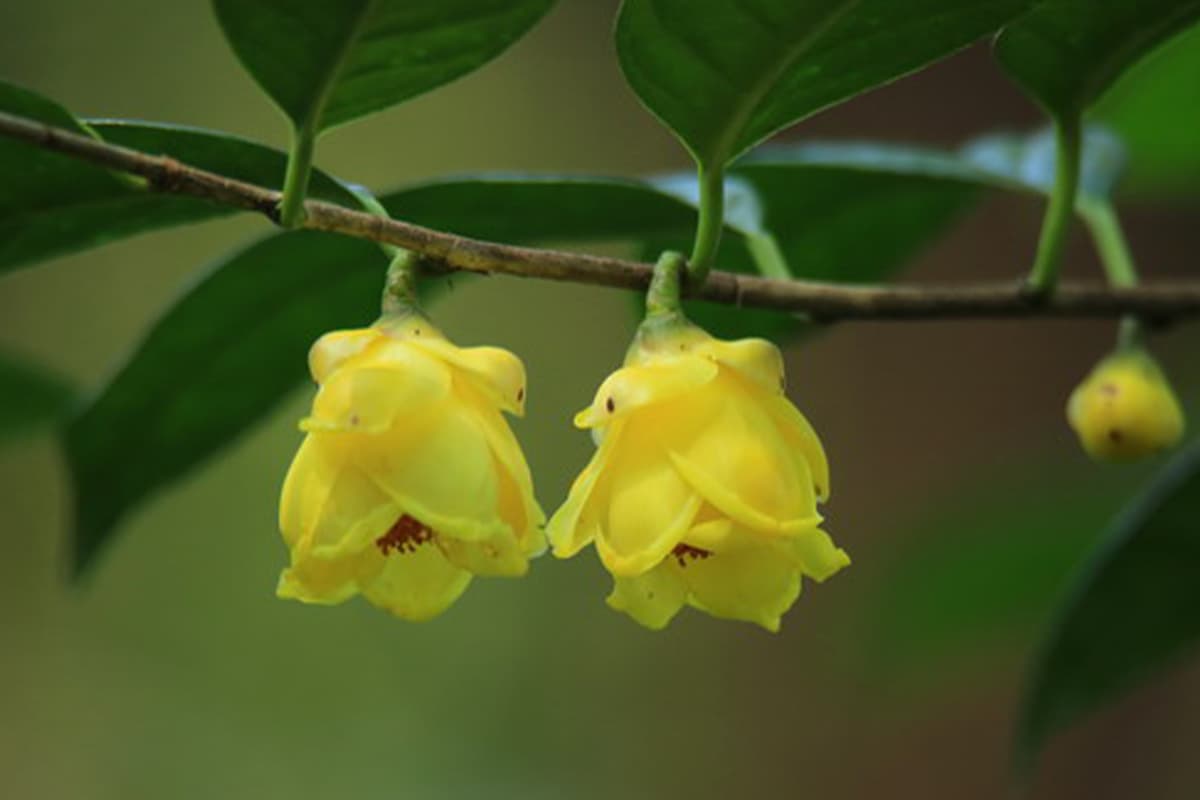
The flowers of the Golden Camellia are golden yellow, eye-catching, and born singly in the leaf axils. When the flowers bloom, they are cup-shaped, pot-shaped or bowl-shaped, delicate and varied, and elegant.
There are also many varieties of Golden Camellia, mainly 28 varieties and several variants, and its camellia is also known as the “Panda of the Plant Kingdom.

Golden Camellia is one of the national level I protected plants, belonging to the family Theaceae and the genus Camellia. It is a close relative to tea, camellia, southern camellia, oil tea, and tea camellia.
The flowers of the Golden Camellia are golden yellow, striking as if coated with a layer of wax, crystalline and oily, giving a semi-transparent sensation.
Golden Camellia flowers bloom singly in the leaf axils, and are cup-shaped, pot-shaped, or bowl-shaped, beautiful and elegant.
People had not seen a golden-colored species before. Golden Camellia is known as the magical Oriental tea, and is hailed as the “Panda of the Plant Kingdom” and the “Queen of Tea”.

Golden Camellia has multiple varieties, mainly 28 kinds and several variants. The following varieties are some of the more common ones:

It is an evergreen shrub to small tree, 2-5 meters tall; the young branches are pale red-brown and hairless. The leaves are narrow elliptic to long elliptic-lanceolate, the apex is tail-shaped tapering or abruptly pointed, and the base is broad wedge-shaped or nearly round.
The flower is golden yellow, 1-2 flowers grow singly in the axils or near the apex, with a flower diameter of 3.5-6.5 centimeters; each flower has 7-13 petals.
The petals are fleshy and thick, with a waxy luster; the ovary has 3 chambers and is hairless, there are 3 styles that are completely separate and hairless; the flowering period is from November to April of the following year, the capsule is flattened spherical or flattened triangular spherical, and the seeds are densely covered with yellow-brown soft hair.
It is mainly distributed in counties such as Fangcheng, Yongning, and Long’an in Guangxi; it grows in the forests of the soil mountains and valleys at altitudes of 50-700 meters.

This is an evergreen shrub to a small tree, 2-7 meters tall; the young branches are densely covered with coarse hair.
The main difference between this species and other Golden Camellia species is that the branches, leaves, bracts, sepals, petals, stamens, styles, and ovaries are all covered with soft hairs. The petals are golden yellow with 9-13 petals, making it highly ornamental.
The flowering period is from November to April of the following year. It is mainly distributed in counties such as Long’an and Daxin in Guangxi; it grows in mixed forests on calcareous soil of limestone mountains at altitudes of 190-230 meters.
This is an evergreen shrub, 3 meters high; the young branches are hairless. The leaves are long elliptic, the apex is tail-shaped tapering, and the base is broad wedge-shaped. The flower is golden yellow, 1-2 flowers grow singly in the axils or the apex, with a flower diameter of 5.5-7 centimeters. The peduncle is slightly drooping and hairless.
Each flower has 12-15 petals, which are wide ovoid to ovoid-elliptical and extremely thin, hence the name Thin Petal Golden Camellia. The ovary is hairless; there are 3 styles that are completely separate and hairless. The flowering period is from December to March of the following year.
It is mainly distributed in Pingguo City, Guangxi; it grows in mixed forests on acidic soil mountains at altitudes of 250-450 meters.
This is an evergreen shrub, 4 meters high; the young branches are purple-brown and hairless. The young leaves are dark purple-red, and the old leaves are broadly ovoid or inverted ovoid-elliptical with the apex sharply pointed, and the base is broad wedge-shaped. The flowers are small, pale yellow, mostly born in the axils, with a flower diameter of 1.5-2 centimeters.
Each flower has 6-8 petals, and the petals are thin. The ovary has 3-4 chambers; there are 3-4 styles that are completely separate and hairless.
The flowering period is from November to January of the following year, it is mainly distributed in Ningming County, Guangxi; it grows in mixed forests on acidic soil mountains at altitudes of 180-900 meters.
This is an evergreen shrub, 3 meters high; the young branches are pale red and hairless. The young leaves are pale purple-red, and the old leaves are elliptical or long elliptical, with the apex sharply pointed, and the base is broad wedge-shaped. The flowers are pale yellow or slightly pink, 1-3 flowers grow singly in the axils or the apex, with a flower diameter of 1.5-2.5 centimeters.
Each flower has 6-8 petals; the ovary has 3 chambers and is covered with gray-white soft hairs; there are 3 styles that are completely separate and hairless. The flowering period is from October to December.
The capsule is flattened spherical, usually with 3 chambers, each chamber has 1-2 seeds, which are brown and hairless. It is mainly distributed in Ningming County, Guangxi; it grows in mixed forests on acidic soil mountains at altitudes of 190-350 meters.
This is an evergreen shrub, 3 meters high; the young branches are hairless. The young leaves are purple-red, and the old leaves are elliptical or inverted egg-shaped, with the apex purely pointed, and the base is broad wedge-shaped.
The flowers are pale yellow, single or 2-3 gathered in leaf axils, with a flower diameter of 2.5-3.5 centimeters. Each flower has 7-10 petals, with the petals base connate; the ovary has 3 chambers, almost hairless. There are 3 styles, completely separate, and hairless.
The flowering period is from November to January of the following year. The capsule is flattened spherical, with 3 chambers, each chamber has 1-3 seeds, which are black-brown and hairless.
It is mainly distributed in Yongning County, Guangxi; it grows in mixed forests on acidic soil mountains at altitudes of 120-250 meters. This species can be used as a parent for hybrid breeding and can cultivate new varieties of yellow camellias.
This is an evergreen shrub, 3 meters high. This variety differs from the original variety of Golden Camellia, with the main differences being that when the flower opens, it is an inverted cone-shaped bell shape, the petals are long oval to elliptical, the color is lighter, and the texture is thinner.
The style is longer and exposed above the group of stamens, sometimes it is serpentine and easy to distinguish. The flowering period is from November to April of the following year. It is mainly distributed in counties such as Fangcheng and Yongning in Guangxi. It grows in mixed forests on acidic soil mountains at altitudes of 36-250 meters.
This is an evergreen shrub, 3 meters high; the young branches are hairless. The young leaves are light purple-red, and the old leaves are elliptical, with the apex tail-shaped tapering, and the base is broad wedge-shaped. The flowers are lemon yellow, single born in the leaf axils, with a flower diameter of 1-2 centimeters. Each flower has 7-8 petals, nearly round or elliptical.
The ovary is nearly spherical and hairless; there are 3 styles that are completely separate and hairless. The flowering period is from October to December, the capsule is triangular and flattened spherical, with 3 chambers, each chamber has 1-3 seeds, which are hairless.
It is mainly distributed in counties such as Longzhou and Ningming in Guangxi; it grows in mixed forests on calcareous soil of limestone mountains at altitudes of 120-300 meters.
This is an evergreen shrub to a small tree, 2-5 meters high; the young branches are hairless. The young leaves are purple-red, and the old leaves are elliptical, with the apex sharply pointed, and the base is broad wedge-shaped.
The flowers are yellow, 1-2 flowers grow singly in the axils or the apex, with a flower diameter of 3.5-4 centimeters, the peduncle is long and drooping.
Each flower has 7-10 petals, with the petals base connate; the ovary has 3-4 chambers and is hairless; there are 3 styles that are completely separate, sometimes there are 4 styles, which are hairless.
The flowering period is from March to April, the capsule is flattened spherical, with 3-4 chambers, each chamber has 1-2 seeds, which are brown and hairless.
It is mainly distributed in Fangcheng County, Guangxi; it grows in mixed forests on acidic soil mountains at altitudes of 180-370 meters.
This is an evergreen shrub, 3 meters high; the young branches are light red and hairless. The young leaves are light purple-red, and the old leaves are elliptical, with the apex tapering, and the base is wedge-shaped.
The leaf margin is almost entire, with only a few unnoticeable fine serrations at the tip sometimes. The flowers are yellow, born singly in the leaf axil or branch tip, with a flower diameter of 2.5-4.5 centimeters.
Each flower has 10-13 petals, with a less noticeable waxy luster; the ovary has 3 chambers, hairless; there are 3 styles, completely separate, hairless.
The flowering period is from December to March of the following year. It is mainly distributed in Zhongdong Township, Fusui County, Guangxi; it grows in mixed forests on limestone at altitudes of 120-230 meters.
This is an evergreen shrub, 2.5 meters high; the young branches are hairless. The young leaves are light purple-red, and the old leaves are long elliptical. The flowers are yellow, born in the leaf axil. Each flower has 8-9 petals, with the petals base slightly connate; the ovary is hairless; there are 3 styles, completely separate.
The flowering period is from November to December, the capsule is flat triangular spherical, hairless, with 3 chambers, each chamber has 1-2 seeds, which are brown.
It is mainly distributed in Longzhou County, Guangxi; it grows in mixed forests on acidic soil mountains at altitudes of 100-250 meters.
This is an evergreen shrub to a small tree, 3-6 meters high; the young branches have coarse hair, and the old branches become hairless.
The leaves are elliptical or long elliptical, with the apex tapering; the base is nearly round; there are more leaf veins, which have obvious depressions on the surface, hence the name Indented Vein Golden Camellia.
The flowers are light yellow, 1-2 flowers grow singly in the axils or the apex, with a flower diameter of 3.8-8 centimeters. Each flower has 9-12 petals, hairless; the ovary has 3 chambers, hairless; there are 3 styles, completely separate, hairless.
The flowering period is from December to March of the following year, the capsule is flattened spherical, hairless. It is mainly distributed in Longzhou and Daxin County in Guangxi; it grows in mixed forests on calcareous soil of limestone mountains at altitudes of 130-480 meters.
This is an evergreen shrub or a small tree, 2-5 meters high; the young branches are red-brown and hairless.
The young leaves are red-purple, and the old leaves are elliptical or long oval elliptical, with obvious leaf veins, hence the name Prominent Vein Golden Camellia. The flowers are deep yellow, single born in the leaf axils, with a flower diameter of 3-5.5 centimeters.
Each flower has 7-9 petals, with a waxy luster; the ovary has 3 chambers, hairless; there are 3 styles, completely separate, hairless. The flowering period is from November to January of the following year, the capsule is spherical, relatively large, hairless, usually with 3 chambers, each chamber has 1-3 seeds, which are black-brown or brown, hairless.
It is mainly distributed in Fangcheng County, Guangxi, and also found in the northern part of Vietnam’s Guangning Province. It grows in mixed forests in the valleys of soil mountains at altitudes of 150-480 meters.
This is an evergreen shrub, 4 meters high; the young branches are red-brown and hairless; the young leaves are light red, hairless, and the old leaves are elliptical or long ovate, with the apex caudate tapering, and the base is broad wedge-shaped.
The flowers are yellow, 1-3 flowers grow singly in the axils or the apex, with a flower diameter of 1.5-3 centimeters. Each flower has 7-8 petals, nearly round or elliptical; the ovary has 3 chambers, hairless; there are 3 styles, completely separate, hairless.
The flowering period is from November to December, the capsule is flattened spherical, hairless. It is mainly distributed in Ningming County, Guangxi; it grows in mixed forests on acidic soil mountains at altitudes of 150-250 meters.
Golden Camellia likes warm and humid climates, prefers well-drained acidic soils, likes shade during the seedling stage, and enjoys filtered sunlight after entering the flowering stage. It is not strict with soil requirements and can grow in slightly acidic to neutral soil. It can tolerate poor soil and also likes fertilizer. It is highly flood-tolerant.
Golden Camellia is an ancient plant, extremely rare, and distributed extremely narrowly.
90% of the wild Golden Camellia in the world are only distributed in the Lanzhou branch of the Shiwandashan in Fangchenggang, Guangxi, China, growing below 700 meters above sea level, more common between 200 and 500 meters.
The lower limit of vertical distribution is about 20 meters above sea level.
For example, Golden Camellia is still distributed on the coastal hilly terraces near Dawangjiang in Fangcheng County. The upper limit of vertical distribution can reach 890 meters above sea level, and the number is extremely small, making it a rare and precious plant in the world.
This is a shrub, 2-3 meters high, and the young branches are hairless. The leaves are leathery, oblong or lanceolate, or inverted lanceolate, 11-16 centimeters long, 2.5-4.5 centimeters wide.
The apex is caudate tapering, the base is wedge-shaped, the top is dark green, shiny, hairless, the bottom is light green, hairless, with black glandular spots, the midrib and side veins are 7 pairs, sunk on the top, protruding on the bottom, the edges have fine serrations, the tooth notches are 1-2 millimeters apart, the leaf petiole is 7-11 millimeters long, hairless.
The flower is yellow, axillary, single, the flower stalk is 7-10 millimeters long; there are 5 bracts, scattered, broad ovate, 2-3 millimeters long, 3-5 millimeters wide, persistent; there are 5 sepals, ovate to round, 4-8 millimeters long, 7-8 millimeters wide, the base is slightly connate, the apex is round, the back is slightly pilose; there are 8-12 petals, nearly round, 1.5-3 centimeters long, 1.2-2 centimeters wide, the base is slightly connate, the edge has cilia; there are 4 rows of stamens, the outer row is slightly connate with the petals, the filaments are almost free or slightly combined, hairless, 1.2 centimeters long; the ovary is hairless, with 3-4 chambers, there are 3-4 styles, hairless, 1.8 centimeters long.
The capsule is flat triangular spherical, 3.5 centimeters long, 4.5 centimeters wide, 3-lobed, the fruit lobes are 4-7 millimeters thick, the central axis is 3-4 angular, the apex is 3-4 split; the fruit stalk is 1 centimeter long, with persistent bracts and sepals; there are 6-8 seeds, about 2 centimeters long. The flowering period is from November to December.
Golden Camellia has certain requirements for soil. It prefers loose, breathable, fertile soil with good drainage. The soil environment suitable for it is more vigorous and convenient for daily management.
When preparing the soil, you can use garden soil, leaf rot soil, decayed cake fertilizer, and river sand for mixing. It is best to make the soil slightly acidic. Note that the prepared soil must be sterilized before it can be used.
Golden Camellia likes light and has a slight shade tolerance. If you want it to grow vigorously and flower better, it should receive 5 hours of light exposure every day, which will promote better photosynthesis and accumulate more nutrients.
The light in summer is too strong and can easily sunburn the plants. It is necessary to shade in time to prevent the branches and leaves from being burnt. If placed in a shaded environment for a long time, a lack of light can easily lead to excessive growth, which will affect flowering.
Golden Camellia likes a warm environment, and the temperature between 18-30℃ is more suitable, which is also conducive to daily growth. In a high-temperature environment in summer, ventilation should be enhanced, and it is best to control the temperature below 32℃.
In winter, the temperature is too low, and warming measures should be taken to keep it stable above 5℃ to avoid frost damage. The temperature in spring and autumn is suitable, which is its growing season, and there is no need to worry about temperature problems.
Golden Camellia likes a moist environment, but it is afraid of waterlogging. Therefore, when watering it, you must control the amount of water.
The soil should be moist, and waterlogging is strictly prohibited. The specific number of watering depends on the season. In the mild climate of spring and autumn, the growth rate is fast, and it usually needs to be watered once every 3-4 days.
In the high temperature in summer, water evaporates quickly, and it basically needs to be watered every day. In winter, the temperature is too low, and temperature control should be appropriately controlled, and water should be added when dry.
If there are continuous rainy days, you need to stop watering first, and outdoor cultivation should also strengthen drainage to avoid waterlogging.
Golden Camellia consumes a lot of nutrients during the growth period. In order to promote vigorous growth, it should be fertilized in time.
Fertilizer should be applied once every half a month during normal times, and application of decayed cake fertilizer water is enough for group nutrition. Before and after flowering, mainly apply phosphorus and potassium element fertilizers to promote it to bloom better.
The fruit of the Golden Camellia generally matures in mid-October, and the seeds crack at the end of October. There is no post-ripening dormancy period after the seeds mature. Seed propagation is suitable for sowing in the autumn.
In mid-October, the harvested fruits are placed in a well-ventilated indoor place to dry in the shade. After the capsules crack and the seeds are taken out, they are immediately sown.
If autumn sowing is not possible, the seeds should be stored in damp sand for spring sowing in February of the following year.
The appropriate time for Golden Camellia cutting propagation is from April to early May, or in mid to late September. The cuttings are taken from the outer parts of the crown that are filled with tissue, have intact leaves, full leaf buds, and no pests or diseases.
They are cut from the semi-mature branches of the year. The cuttings are generally 15 cm long, leaving 2 leaves at the top and a heel at the base.
After treating the branches with IBA 300ppm for 5 hours, they are inserted into the nursery bed according to the plant row spacing of 10~14 cm × 3~4 cm, and the depth of the inserted cuttings is about 3 cm.
The key to the survival of tea seedlings is to maintain enough humidity during the early stage of seedling cultivation, avoid direct sunlight, and control the temperature at around 25℃. Water frequently to cover the seedlings with a thin layer of water film.
After one month, when the new roots grow, gradually increase the sunlight to speed up the lignification of the tea seedlings.
Golden Camellia grafting propagation is divided into bud seedling grafting and semi-mature branch grafting.
Bud Seedling Grafting: The rootstock can be ordinary single-petal mountain camellia and camellia oil flower. First, sow the rootstock seeds on the sand bed. When the seedlings grow to 4~5 cm, they can be grafted.
Before grafting, dig out the rootstock seedlings, remove the sand particles, cut them short at 1~1.5 cm above their cotyledons, and also cut off the root tip, making the total length 6~7 cm. Select well-grown semi-lignified branches as scions, cut them into a wedge shape, and keep them moist in a damp towel.
When grafting, split the stem of the seedling along the cotyledon seam, the depth consistent with the inclined surface of the cut scion.
Quickly insert the cut scion into the rootstock split, align the cambium on one side of the rootstock and scion, and tie it tightly with a plastic film strip. Then plant the grafted seedlings at a row spacing of 8×2 cm in a fertile, loose sandy soil nursery bed. After planting, build a shed on the nursery bed and keep it warm with a plastic film.
Generally, the grafting interface of the grafted seedlings begins to heal after 10~15 days, and the film can be uncovered at night after about 20~25 days. Afterwards, gradually strengthen ventilation, increase light, and remove all the film after the new buds sprout.
Semi-mature Branch Grafting: Usually, rough seed mountain camellia or oil tea mature seedlings are used as rootstocks. For rootstock branches with a diameter of more than 1 cm, a skin-pulling graft is used. That is, in the appropriate part of the rootstock, one cut each is made above, left, and right, deep into the wood, and pull down the skin.
The scion is attached to the inside of the rootstock skin, then the skin is pulled up to cover the scion, tied with a plastic strip, exposing the bud tip, and a plastic bag is added to keep it moist.
After one month, when the scion sprouts new branches and gradually lignifies, untie the tie. If the thickness of the rootstock is close to that of the scion, the abdomen grafting method is appropriate.
The success of semi-mature branch grafting mainly depends on the control of the nursery bed temperature and the choice of grafting period. The suitable temperature for grafting is 25~30℃, and the appropriate period for grafting is May to August.
At this time, the rootstock bark is easy to open, the grafting seedling interface heals quickly, and the survival rate is high.
Common diseases of mature Golden Camellia include anthracnose, sooty blotch, leaf blight, and bud blight.
Anthracnose is a common disease of Golden Camellia, with the disease spots occurring from the leaf tip or edge. The disease spots are irregular, often with black spots on top, and the boundary between the disease and healthy parts is clear.
Usually, a 70% methoxyacrylate 800-times diluted solution is used for foliar spray at the initial stage of disease onset, once every 5 to 7 days, for a total of 3 sprays. The spray volume is 60 kg per mu.
The symptoms of sooty blotch appear as soot-like substances on the leaves. The pathogen also harms branches and shoots, and in severe cases, the branches and leaves are covered with a black layer of soot, hindering the plant’s normal photosynthesis.
Aphids are the primary pests, and control can be achieved by spraying a 50% solution of Leico emulsion diluted 1000 times.
Tea budworms, leafrollers, and tea toxic moths are common pests of Golden Camellia. Aphids and leafrollers can cause Golden Camellia leaves to curl and shrink, unable to stretch. Tea toxic moths bite the leaves into missing pieces, or eat them completely, severely affecting plant growth.
Early prevention and control should be carried out, and a highly effective, low-toxicity, and low-residue pyrethrum emulsion diluted 800 times can be used for spraying.
Protection Level
It is as valuable as the precious “living fossil” plants such as yew, tree fern, and ginkgo. It belongs to the plants listed in Appendix Ⅱ of the Convention on International Trade in Endangered Species of Wild Fauna and Flora (CITES).
It is listed in the International Union for Conservation of Nature Red List (IUCN) as Vulnerable (VU).
Medicinal Value
Golden Camellia has a significant effect on lowering blood sugar and glycosuria, and it can effectively improve the “three highs” symptoms of diabetes.
Golden Camellia can effectively lower blood sugar and blood pressure, and at the same time, it can effectively lower blood lipids, improve various maladaptation symptoms caused by high blood pressure, lower cholesterol and B-lipoprotein in the serum, promote insulin secretion, enhance immunity, regulate blood flow, prevent atherosclerosis, have antibacterial and anti-inflammatory effects, clear heat and detoxify, promote bowel movements and diuresis, enhance liver metabolism, prevent cancer and inhibit tumor growth, etc.
In addition, Golden Camellia has a unique and miraculous effect on lowering blood sugar, blood pressure, blood lipids, and cholesterol, and has a synergistic and balanced regulatory effect on diabetes and its complications.
Ornamental Value
The discovery of Golden Camellia filled the gap of the Camellia family without golden flowers. Its waxy green leaves are crystal clear, the petals are transparent, firm and smooth, dust-free; the flower buds are round and golden; the petals overlap densely, brightly beautiful, dotted among the jade leaves and exquisite branches, charming, golden petals and jade stamens, beautifully pleasing to the eye, with a high ornamental value.
Research Value
Golden Camellia has a special color genetic DNA, which is difficult to reproduce. The use of high-tech to solve the problem of rapid reproduction of various excellent varieties of Golden Camellia’s survival genes, to overcome the difficult problem of its low survival rate; to break through the key technology of Golden Camellia’s slow growth and low yield, greatly improve the yield of large-scale planting of Golden Camellia; to deeply develop a new generation of world-class medical and health products of Golden Camellia, benefiting human health, all have important scientific research value.
Economic Value
Golden Camellia has a very high economic value. First, the price of its ornamental value is high. A Golden Camellia bonsai, 1-1.5 meters high and well-shaped, is priced at 8,000 yuan; around 2 meters high, the price ranges from 26,000 yuan to tens of thousands of yuan; Japan once wanted to purchase China’s Golden Camellia at a price of 25,000 US dollars per plant.
Second, the added value of Golden Camellia is very high. Products produced through industrialized deep processing are recognized and favored by consumers, and the price is steadily rising, especially the price of flower tea is considerable, and the demand exceeds the supply.
Fangcheng District is the first discovery and distribution center of Golden Camellia in China, gathering 23 species and 5 varieties of the existing 32 species and 7 varieties of Golden Camellia in nature. The Golden Camellia National Nature Reserve, named after the protected plant, is located in Fangcheng District.
The most complete and largest Golden Camellia species gene bank in the world is built in this reserve (the reserve was established with the approval of the State Council in 1994, with a total area of 9195.1 hectares, including a core area of 729.4 hectares and a buffer area of 4139.5 hectares). In 2002, Golden Camellia was designated as the city flower by Fangchenggang City.
Golden Camellia Festival
Since the successful hosting of the first Golden Camellia Festival in 2009, the Golden Camellia Festival has become one of the four major cultural festival brands in Fangchenggang City. The Golden Camellia industry has also developed rapidly, emerging a batch of leading enterprises such as Guirentang Golden Camellia Group, Zhonggang Gaoke Guobao Golden Camellia, Baixi Golden Camellia, etc.
The Golden Camellia series products have won the titles of Guangxi Famous Brand Product and Guangxi Famous Trademark, and the products are selling well in domestic and foreign markets, with an annual output value of over 1.2 billion yuan.

Peggie was once a high school mathematics teacher, but she set aside her chalkboard and textbooks to follow her lifelong passion for flowers. After years of dedication and learning, she not only established a thriving flower shop but also founded this blog, “Flowers Library”. If you have any questions or wish to learn more about flowers, feel free to contact Peggie.
 English
  العربية
  Bahasa Indonesia
  Deutsch
  Français
  Italiano
  Nederlands
  Português
  Русский
  日本語
日本語