What Is Golden Camellia?
Golden Camellia (Camellia petelotii (Merr.) Sealy) is a woody plant belonging to the family Theaceae and the genus Camellia. The young branches are light brown, and the small branches of…

The Camellia nitidissima belongs to the tea family and genus. Its flowers are golden yellow, dazzlingly bright, as if coated with a layer of wax, sparkling and oily, giving a semi-transparent impression.
The Golden Camellia blooms individually in leaf axils with cup-shaped, pot-shaped, or bowl-shaped flowers. They are charmingly colorful, delicately elegant, and of high ornamental value.
Golden Camellias thrive in warm and humid climates, prefer well-drained acidic soils, are drought-tolerant, and enjoy fertility, they also have strong flood resistance.
Golden Flower Tea belongs to the Camellia family and genus, making it a twin sister to tea, camellia, southern camellia, oil tea, and tea camellia.
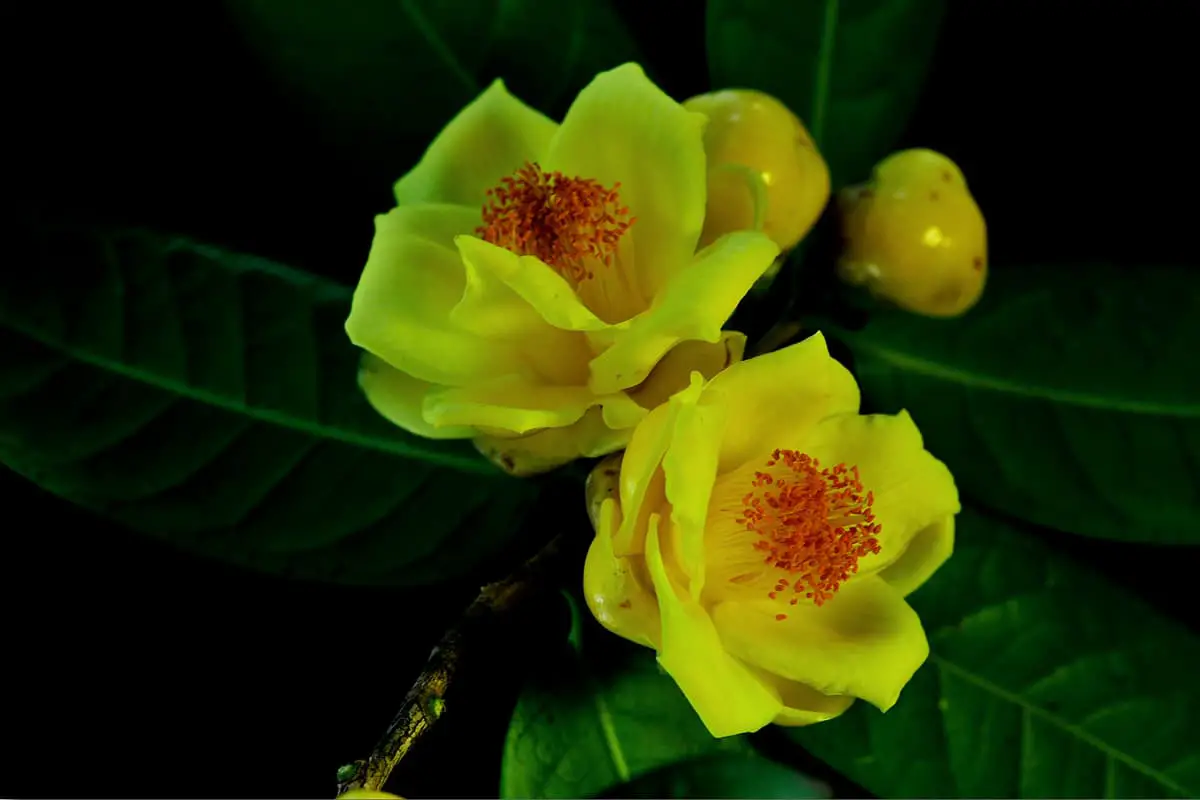
The flower of the Golden Flower Tea is a dazzling golden yellow, as if coated with a layer of wax, shiny and oily, giving a semi-translucent feel.
The Golden Flower Tea blooms individually in the leaf axils, presenting a cup-shaped, pot-shaped, or bowl-shaped flower, charmingly diverse and elegantly exquisite. In the past, people had never seen a variety of this golden hue.
Distribution: The Golden Camellia is an ancient, extremely rare plant with a very narrow distribution. It grows below 700 meters above sea level, and is most commonly found between 200 and 500 meters.
It can be found near the seaside hills near Dawang River in Fangcheng County. Its vertical distribution reaches up to 890 meters, such as in the mountains of Ningming County. However, it is extremely rare, making it a precious plant in the world.
Habits: The Golden Camellia enjoys warm and humid climates and prefers well-drained acidic soil. It likes shade during the seedling stage and enjoys sunshine when flowering.
It can grow in slightly acidic to neutral soil, and is drought-tolerant and enjoys fertility. It has strong flood resistance.
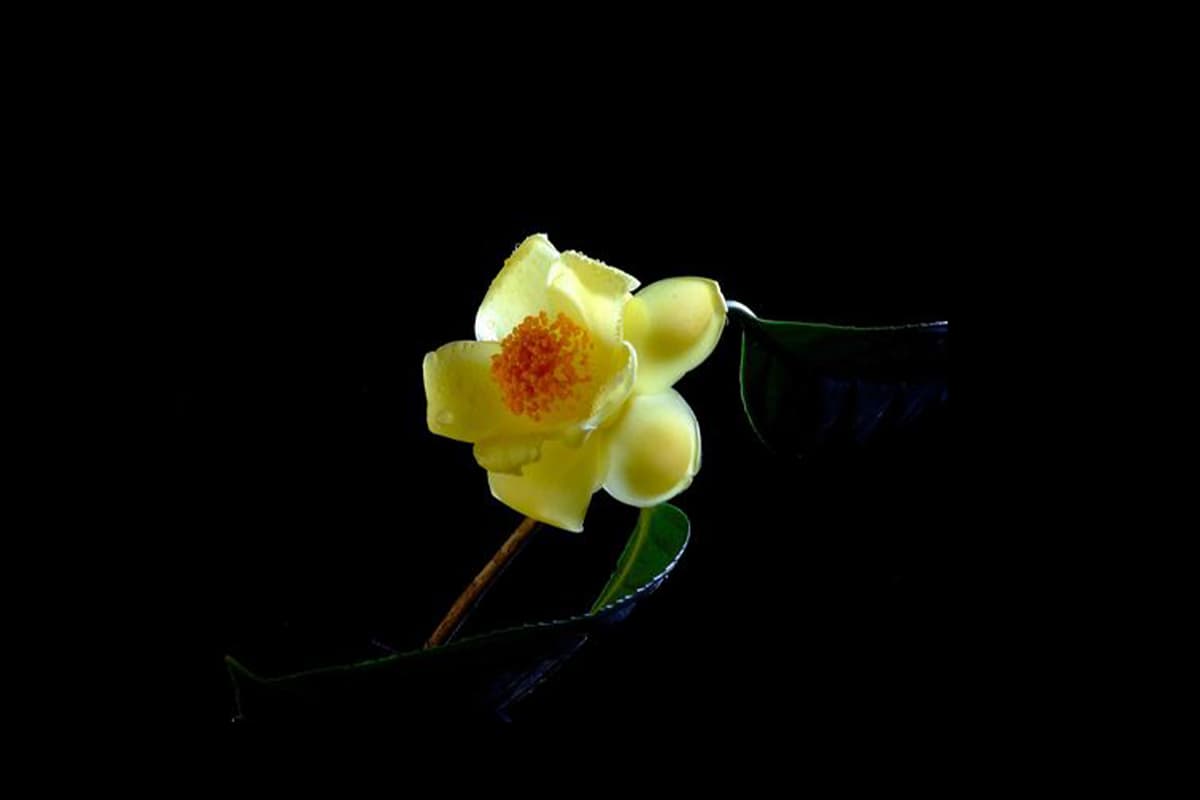
This shrub grows to a height of 2-3 meters, with hairless young branches. Its leaves are leathery, oblong or lanceolate, or inverted lanceolate, 11-16 cm long and 2.5-4.5 cm wide.
The tip is tail-shaped and gradually pointed, the base is wedge-shaped, the upper side is dark green, shiny, hairless, the underside is light green, hairless, with black glands.
The margins have fine serrations, with 1-2 mm between each tooth, and the leaf stalk is 7-11 mm long and hairless.
The flowers are yellow, axillary, solitary, with a stalk 7-10 mm long; there are 5 bracts, scattered, broadly ovate, 2-3 mm long, 3-5 mm wide, persistent; the sepals are 5, oval to round, 4-8 mm long, 7-8 mm wide, slightly connate at the base, rounded at the tip, slightly hairy on the back.
There are 8-12 petals, nearly round, 1.5-3 cm long, 1.2-2 cm wide, slightly connate at the base, with cilia on the edges.
The stamens are arranged in 4 rows, the outer row slightly connate with the petals, the filaments nearly free or slightly fused, hairless, 1.2 cm long; the ovary is hairless, with 3-4 locules, the pistils are 3-4, hairless, 1.8 cm long.
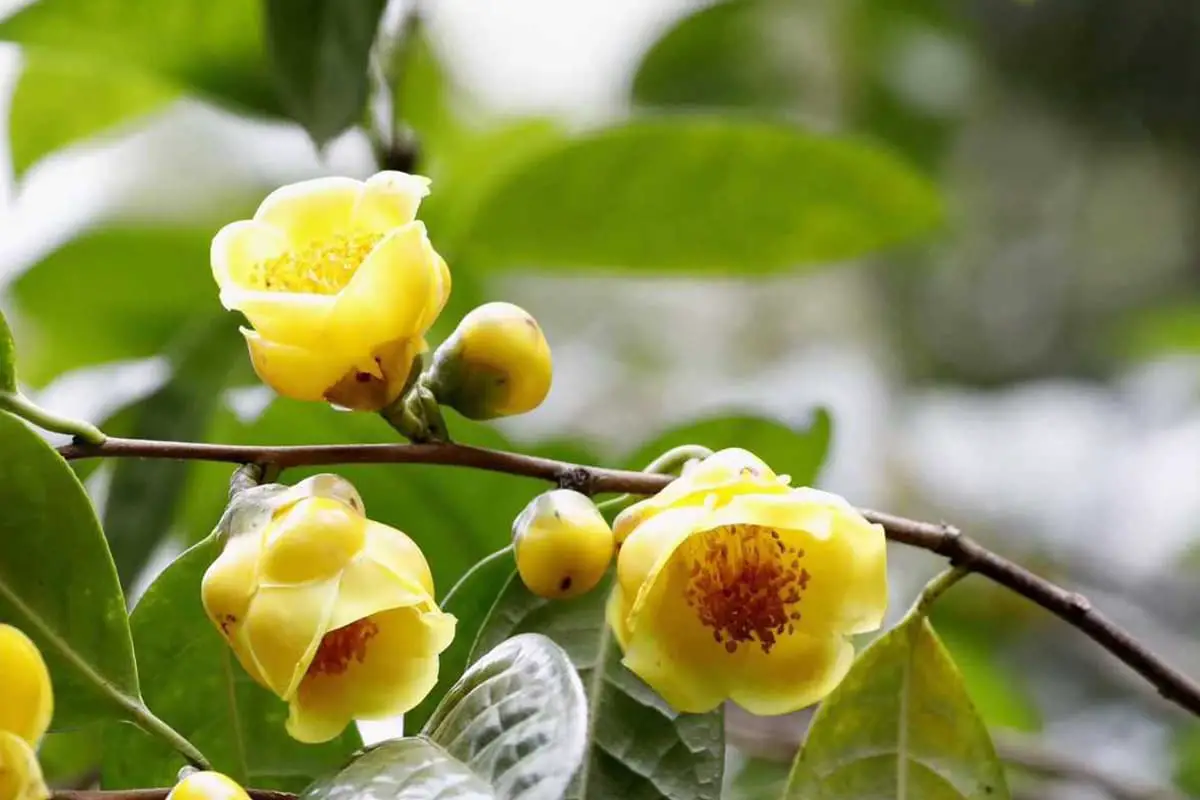
The fruit is flat triangular spherical, 3.5 cm long, 4.5 cm wide, 3-valved, the valves are 4-7 mm thick, the axis is 3-4 angled, the tip is 3-4 split.
The fruit stalk is 1 cm long, with persistent bracts and sepals; there are 6-8 seeds, about 2 cm long. The flowering period is from November to December.
Create a suitable environment for the cultivation of the Camellia chrysantha, which thrives in semi-shaded, cool, and moist areas. Ensure regular ventilation, especially crucial in the north.
In addition to the boiler and radiators for heating in a glass greenhouse, install homemade fogging machines and ventilation fans.
Use pine needle soil prepared proportionately, gradually eliminating the “yellow mud” brought from the south.
The water used for watering the plants must contain 1% Ferrous Sulphate each time, to maintain a constant weak acidity.
In addition to ensuring good ventilation, periodically “exercise” the plant. Blow wind every two weeks, ensuring the wind force is even. This is done to promote balanced metabolism and normal growth through “exercise.”
Control the temperature, maintaining a difference between 7℃ to 10℃. When the cellar temperature is at 20℃, lower the shade cloth after four or five hours, and immediately ventilate.
Fertilize with one of two methods: diluted sour milk, which can be used directly without fermentation, or traditionally, water from fermented soybean cake. Fertilize once a month.
Seeding propagation: The fruit of Camellia chrysantha generally matures in mid-October, cracks in late October, and has no post-maturation dormancy period after seed maturation.
Autumn sowing is suitable for seed propagation. In mid-October, place the harvested fruit in a ventilated indoor area to dry in the shade. When the fruit cracks and the seeds are exposed, sow them immediately.
If unable to sow in autumn, store the seeds in moist sand for spring sowing in February of the following year.
Cutting propagation: The suitable period for cutting propagation of Camellia chrysantha is from April to early May, or in mid to late September. Choose cuttings from the outer crown with full tissues, intact leaves, full leaf buds, and no disease or insect pests.
The cuttings are generally 15 cm long, with 2 leaves at the top and heel at the base. After treating the branches with IBA 300ppm for 5 hours, insert them into the nursery bed according to a plant row spacing of 10-14 cm x 3-4 cm.
The depth of the cuttings into the soil is about 3 cm. The key to the survival of tea cuttings is to maintain sufficient humidity in the early stage of seedling cultivation, avoid direct sunlight, and control the temperature at about 25℃.
Spray water frequently to cover the seedlings with a thin layer of water. After a month, when new roots grow out, gradually increase sunlight to accelerate the lignification of the tea seedlings.
Grafting Propagation: The propagation of Camellia nitidissima by grafting can be divided into budling rootstock grafting and semi-mature branch grafting.
For budling rootstock grafting, the rootstock can be common single-petal camellia or oil tea camellia. The rootstock seeds are first sown in a sand bed, and when the seedlings grow to about 4-5 cm, they can be grafted.
Before grafting, remove the rootstock seedlings, clean off the sand particles, and cut them short about 1-1.5 cm above the cotyledons, also cutting off the root tip, making the total length about 6-7 cm.
Select healthy semi-woody branches as scions, cut them into a wedge shape, and keep them moist in a wet towel. During grafting, split the stem of the budling along the line of the cotyledons, with the depth consistent with the sloping surface cut from the scion.
Quickly insert the prepared scion into the split in the rootstock, aligning the cambium of both, and secure tightly with a plastic film strip. Then plant the grafted seedlings in a fertile, loose, sandy nursery bed at a spacing of 8×2 cm.
After planting, cover the nursery bed with a plastic film for insulation. Generally, the grafting interface of the seedlings begins to heal in 10-15 days, and the film can be removed at night after about 20-25 days.
Gradually increase ventilation and light exposure, and remove all film after the new buds have sprouted.
For semi-mature branch grafting, thick seedlings of camellia or oil tea are typically used as rootstocks. For rootstock branches with a diameter of more than 1 cm, use the bark grafting method, i.e., make a cut at an appropriate part of the rootstock, pulling down the bark, attach the scion to the inside of the pulled bark, pull the bark back up to cover the scion, secure with a plastic strip, leaving the bud tip exposed, and cover with a plastic bag for humidity retention.
After about a month, when the scion has sprouted new branches and gradually become woody, remove the binding. If the thickness of the rootstock is similar to that of the scion, the side veneer grafting method is appropriate.
The success of semi-mature branch grafting mainly depends on the control of the nursery bed temperature and the choice of grafting period.
The suitable temperature for grafting is 25-30℃, and the best time to graft is from May to August, when the bark of the rootstock is easy to pull apart, the grafting interface of the seedlings heals quickly, and the survival rate is high.
Tissue Culture: The embryo culture, cotyledon body culture, and apex and single bud culture of Camellia nitidissima have been successful.
Research results show that the induction of buds and rooting of test-tube seedlings are related to the position of the material, the concentration of inorganic salts, vitamins, sucrose, growth regulators, and light.
For embryo culture, embryos are taken from immature young fruits and cultured with the addition of 0.5-1mg/L 6-BA, 0.01mg/L NAA, 6-8% sucrose, and 500mg/L hydrolyzed casein, etc., on the basis of ER and MS culture medium.
Roots appear in about a week, and after two weeks, the upper embryonic axis sprouts new buds. For cotyledon body culture, the cotyledons of Camellia nitidissima are good materials for inducing embryoids, especially the parts close to the lower embryonic axis, with a high induction frequency of 15-25%.
During the induction process, the cotyledons are cut into 0.5mm pieces and the induction culture medium is 1/2MS, with the addition of 0.2mg/L 6-BA, 0.2mg/L NAA. Both adventitious buds and pseudobulbs appear during the induction process.
Pseudobulbs have a strong ability to divide, and with the use of pseudobulbs, embryoids, adventitious buds, and pseudobulbs can be induced.
For apex and single bud culture, the apex and single bud culture is an important way for the rapid propagation of Camellia nitidissima.
It is convenient to obtain the material, has a high multiplication rate, and the genetics are stable. The explants are taken from young tender apices and single buds of the same year, and the culture medium is MS, with the addition of 6-BA or KT.
Research shows that the multiplication number of apices and single buds increases with the increase of 6-BA concentration, but when the concentration of 6-BA reaches 5.0mg/L, the rate of malformed seedlings is high and the growth is poor.
The combination of 2.0mg/L 6-BA and 0.5mg/L KT results in robust growth of test-tube seedlings, a low rate of malformed seedlings, and a high multiplication number, making it the ideal growth regulator ratio for inducing multiplication.
The Golden Flower Tea plant typically starts to bloom 3 to 5 years after planting. Usually, yellow buds appear between July and August each year. During this period, some weak buds, inward-growing buds, overly dense buds, and malformed buds can be removed.
This process centralizes the plant’s nutrients, allows for a more reasonable distribution of flowers, increases the size of the blooms, and extends the flowering period.
The Golden Flower Tea plant fully blossoms in November and continues to bloom until March of the following year, with the peak flowering period lasting 1 to 2 months.
Common diseases among mature Golden Flower Tea plants include anthracnose, sooty mold, leaf blight, and bud blight.
The typical symptom of anthracnose starts from the tip or the edge of the leaves, presenting irregular spots with common black points, and a clear distinction between healthy and diseased parts.
A solution of 70% methyl tobujin diluted 800 times is typically sprayed on the leaves at the onset of the disease, once every 5 to 7 days, for a total of three times, with a dosage of 60 kg per acre.
Sooty mold manifests as coal-like substances on the leaves, and the disease also affects the branches and tender shoots. In severe cases, branches and leaves are covered with a black sooty layer, hindering the plant’s normal photosynthesis.
Aphids are the main pests leading to this disease, and the prevention strategy involves controlling the aphids by spraying a solution of 50% Leico emulsion diluted 1,000 times.
Common pests of the Golden Flower Tea plant include the tea bud worm, leaf roller, and tea tussock moth. Aphids and leaf rollers can cause the leaves of the Golden Flower Tea plant to curl and wither, preventing them from spreading out.
The tea tussock moth can bite off parts of the leaves or eat them entirely, severely affecting plant growth. Early prevention is essential, and a solution of pyrethrin emulsion oil diluted 800 times can be sprayed for effective control.
Medicinal Value
Golden Flower Tea is non-toxic, contains over 400 nutrients, and has no side effects. It is rich in tea polysaccharides, tea polyphenols, total saponins, total flavonoids, tea pigments, proteins, vitamins B1, B2, C, E, folic acid, fatty acids, B-carotene, and other natural nutrients.
Golden Flower Tea contains dozens of amino acids such as theanine, serine, as well as various trace elements such as organic germanium (Ge), selenium (Se), molybdenum (Mo), zinc (Zn), vanadium (V), and macro elements such as potassium (K), calcium (Ca), magnesium (Mg) that play an important role in human health.
Its main active ingredients and their functions are as follows:
Tea Polysaccharides: Golden Flower Tea is rich in polysaccharides, which can effectively control post-meal blood sugar rise, improve glucose tolerance, and improve lipid metabolism disorder, demonstrating a significant hypoglycemic effect.
Tea Polyphenols: Golden Flower Tea is rich in tea polyphenols, which can clear free radicals, lower DM blood sugar rise, thereby improving its glucose tolerance and stabilizing blood sugar.
Total Saponins: Golden Flower Tea saponin content of 6300mg/kg strengthens the heart, relaxes blood vessels, resists fatigue, slows heart rate, and has a biphasic blood pressure effect.
It promotes the biosynthesis of DNA, protein, and lipids, quenches thirst, generates fluids, discharges pus and reduces swelling, benefits the throat, relieves pain, reduces fever, and analgesic effects.
Total Flavonoids: Golden Flower Tea total flavonoid content is 4400mg/kg, it dilates coronary arteries, reduces high blood pressure, enhances heart contraction, reduces heart rate, quenches thirst, transforms phlegm, has anti-bacterial and anti-inflammatory effects, resists capillary brittleness and abnormal permeability, resists tumors, protects the liver and gallbladder, purges, relieves spasms, has ovum hormone effects, reduces fever and pain, lowers cholesterol, and has diuretic effects.
Tea Pigments: Golden Flower Tea is rich in tea pigments, it lowers blood sugar, urine sugar, blood lipids, glycated hemoglobin, reduces insulin resistance, improves blood rheology, relieves microcirculatory disorders, lowers cholesterol and triglycerides, enhances the function of high-density lipoproteins, and prevents and treats complications of DM – cardiovascular diseases and atherosclerosis.
Selenium (Se): Golden Flower Tea contains selenium, an ingredient in human red cell glutathione. It has antioxidant properties, protects cell membranes, and protects the cardiovascular system.
Chinese scientists have also discovered that selenium is an effective drug for treating Keshan disease and Kashin-Beck disease. Additionally, selenium has a detoxifying function, reducing the toxicity of aflatoxin B1, reducing the toxicity of certain chemical carcinogens, and reducing the damage of toxins to liver cells.
Germanium (Ge): Golden Flower Tea contains germanium, which can reduce the bioelectric potential of cancer cells, change their physiological state, inhibit the proliferation and growth of cancer cells, and induce interferon, an anti-cancer substance in the human body, to transform macrophages into anti-cancer cells.
Therefore, some people use germanium to treat cancer. In addition, germanium has a significant effect on arteriosclerosis, cerebral thrombosis, cerebral hemorrhage, kidney and liver disease, stomach disease, diabetes, arthritis, and chronic neuralgia.
Zinc (Zn): Golden Flower Tea’s zinc content is 283mg/kg, it is high in zinc. Zinc is associated with active enzymes in the human body, such as carboxypeptidase, a key enzyme that promotes the hydrolysis of proteins in the intestines, which contains zinc.
Zinc can increase appetite, promote growth and development, promote tissue regeneration, enhance sexual function, enhance immune function, enhance resistance, and protect vision.
Vanadium (V): It is related to the metabolism of lipids and cholesterol. It can promote hematopoietic function and significantly reduce plasma cholesterol. Animals deficient in V have increased serum triglycerides and cholesterol.
Studies have shown that the total serum cholesterol β-lipoprotein in the Golden Flower Tea group was significantly lower than that in the high-fat animal control group; total serum cholesterol: the Golden Flower Tea group was 35% lower than the high-fat group; the Atorvastatin group was 33.2% lower than the high-fat group; β-lipoprotein: the Golden Flower Tea group was 36.6% lower than the high-fat group; the Atorvastatin group was 23% lower than the high-fat group.
Manganese (Mn): It has a high content, it is an essential trace element for the human body, it participates in multiple enzyme-catalyzed reactions. It can improve lipid metabolism in patients with atherosclerosis.
Prevent atherosclerosis. The incidence of arteriosclerosis is higher in the American population, and the concentrations of Mn, Cr, Cu in their aorta are lower than those in Asians and Africans with lower rates of arteriosclerosis and coronary heart disease.
Potassium (K): It can maintain intracellular osmotic pressure and maintain normal heart contractions.
Vitamin B1: Golden Flower Tea is rich in Vitamin B1, which is effective in preventing glucose metabolism disorders and maintaining the normal functions of the nervous system, digestive system, and heart.
Vitamin B2: It participates in the oxidation-reduction reaction in the human body, maintaining the normal mechanism of the retina.
Vitamin C: Golden Flower Tea is rich in vitamin C, it can maintain the normal toughness and permeability of microvessels, allowing DM patients with fragile microvessels to recover their normal function through tea drinking.
Vitamin A: It can prevent night blindness and cataracts, and has anti-cancer effects.
The Effect of Golden Flower Tea:
Golden Flower Tea has a significant effect on reducing blood sugar and urine sugar, and can effectively improve the “three highs” symptoms of diabetes.
While effectively reducing blood sugar and blood pressure, Golden Flower Tea can effectively reduce blood lipids, improve various maladaptation symptoms caused by high blood pressure, reduce serum cholesterol and B-lipoprotein, promote insulin secretion, enhance immunity, regulate blood flow, prevent atherosclerosis, antibacterial and anti-inflammatory, heat-clearing and detoxifying, promoting bowel movements, diuretic and dampness removal, promoting liver metabolism, preventing cancer and inhibiting tumor growth.
Golden Flower Tea has a unique and magical effect on reducing blood sugar, blood pressure, blood lipids, and cholesterol, and on diabetes and its complications, playing a synergistic balance regulation role.
Ornamental Value
The discovery of Golden Flower Tea filled the void of no golden flowers in the tea family. Its waxy green leaves are crystal clear and dust-free; the buds are round and colorful; the petals are overlapping and dense, bright and beautiful, embellishing the jade leaves and jade branches, graceful and charming, golden petals and jade stamens, beautiful and pleasing to the eye, its ornamental value is unmatched.
Research Value
Golden Flower Tea has a special color genetic gene DNA, its reproduction is difficult to replicate.
The use of high-tech to solve the problem of rapid reproduction of various excellent seedlings of Golden Flower Tea, to conquer its low survival rate; to break through the key technology of slow growth and low yield of Golden Flower Tea, greatly increase the yield of large-scale planting of Golden Flower Tea; in-depth development of a new generation of world-class medical health products of Golden Flower Tea, benefiting human health, all have important scientific research value.
Economic Value
The economic value of Golden Flower Tea is extremely high. First, the appreciation value of flowers is high.
The price of a Golden Flower Tea bonsai that is 1 to 1.5 meters high and well-shaped is 8,000 yuan; the price of one that is about 2 meters high ranges from 26,000 yuan to tens of thousands of yuan; Japan once wanted to buy a Chinese Golden Flower Tea for 25,000 US dollars.
Second, the added value of Golden Flower Tea is extremely high. The products produced by industrialized deep processing are recognized and favored by consumers, the price is steadily rising, especially the price of flower tea is considerable, and the supply is in short supply.

Peggie was once a high school mathematics teacher, but she set aside her chalkboard and textbooks to follow her lifelong passion for flowers. After years of dedication and learning, she not only established a thriving flower shop but also founded this blog, “Flowers Library”. If you have any questions or wish to learn more about flowers, feel free to contact Peggie.
 English
  العربية
  Bahasa Indonesia
  Deutsch
  Français
  Italiano
  Nederlands
  Português
  Русский
  日本語
日本語