600+ Types of Flowers A To Z (With Names and Pictures)
Types Of Flowers By Names (A-Z) Types Of Flowers By Color Types Of Flowers By Season Types Of Flowers By Blooming Time 600+ Types of Flowers No. Flower Name No.…

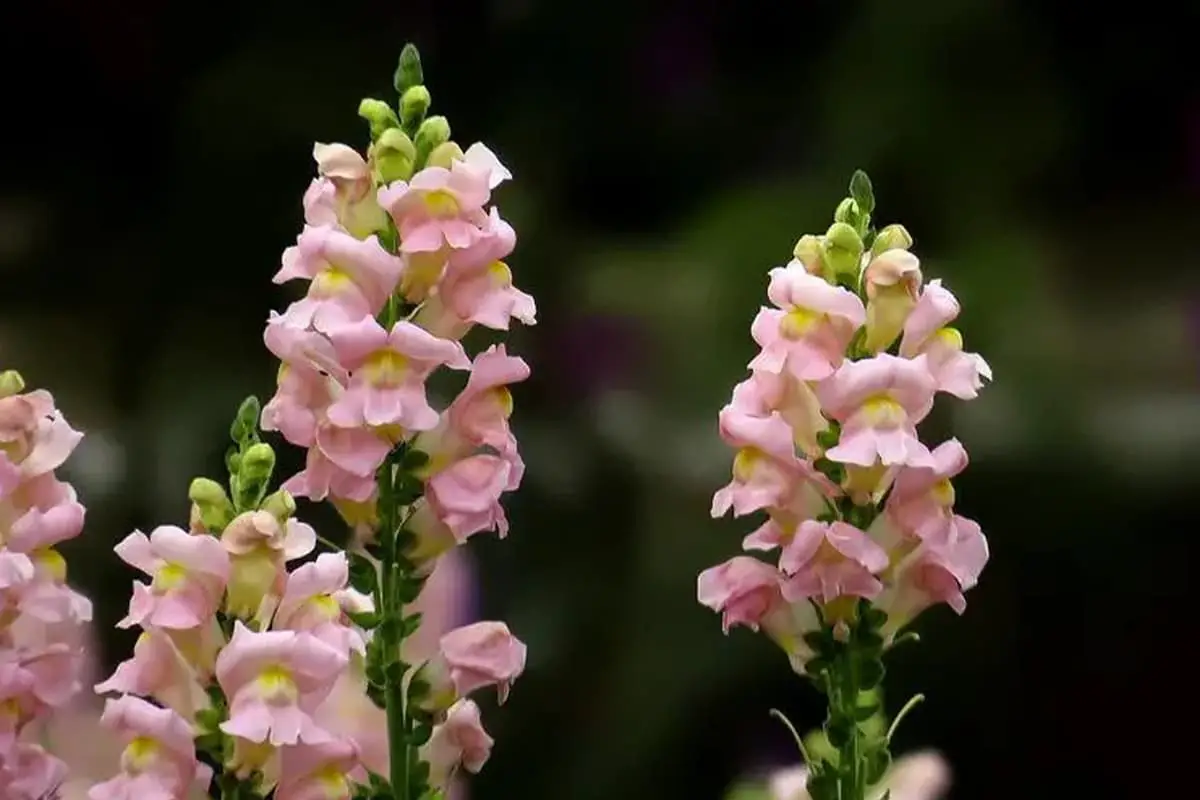
The Antirrhinum majus is a perennial herbaceous plant. It can grow up to 20-70 centimeters tall, with elongated lanceolate leaves. It has a raceme inflorescence, with tubular-lipped corollas.
The base of the corolla swells into a pouch-like structure, with an upright upper lip that is divided into two lobes, and a lower lip that is divided into three lobes, opening outward.
The flowers come in various colors, such as white, light red, deep red, flesh-colored, deep yellow, light yellow, and yellow-orange. It is suitable for potted cultivation, as its vibrant flowers make it highly ornamental.
It is native to the Mediterranean region, with its distribution ranging from Morocco and Portugal in the north, to France in the south, and to Turkey and Syria in the east. The plant gets its name from the resemblance of its flowers to goldfish.
Additionally, it is also used in traditional Chinese medicine for its heat-clearing, detoxifying, cooling blood, and reducing swelling properties. It can also be used to extract oil for consumption, providing nutritional benefits.
It is a perennial, upright herbaceous plant, with the base of the stem sometimes becoming woody, reaching heights of up to 80 centimeters.
The lower part of the stem is hairless, while the middle and upper parts are glandular-hairy, with occasional branching at the base. The lower leaves are opposite, while the upper ones are often alternate, with short petioles.
The leaf blades are hairless, ranging from lanceolate to ovate-lanceolate, measuring 2-6 centimeters in length, with entire margins.
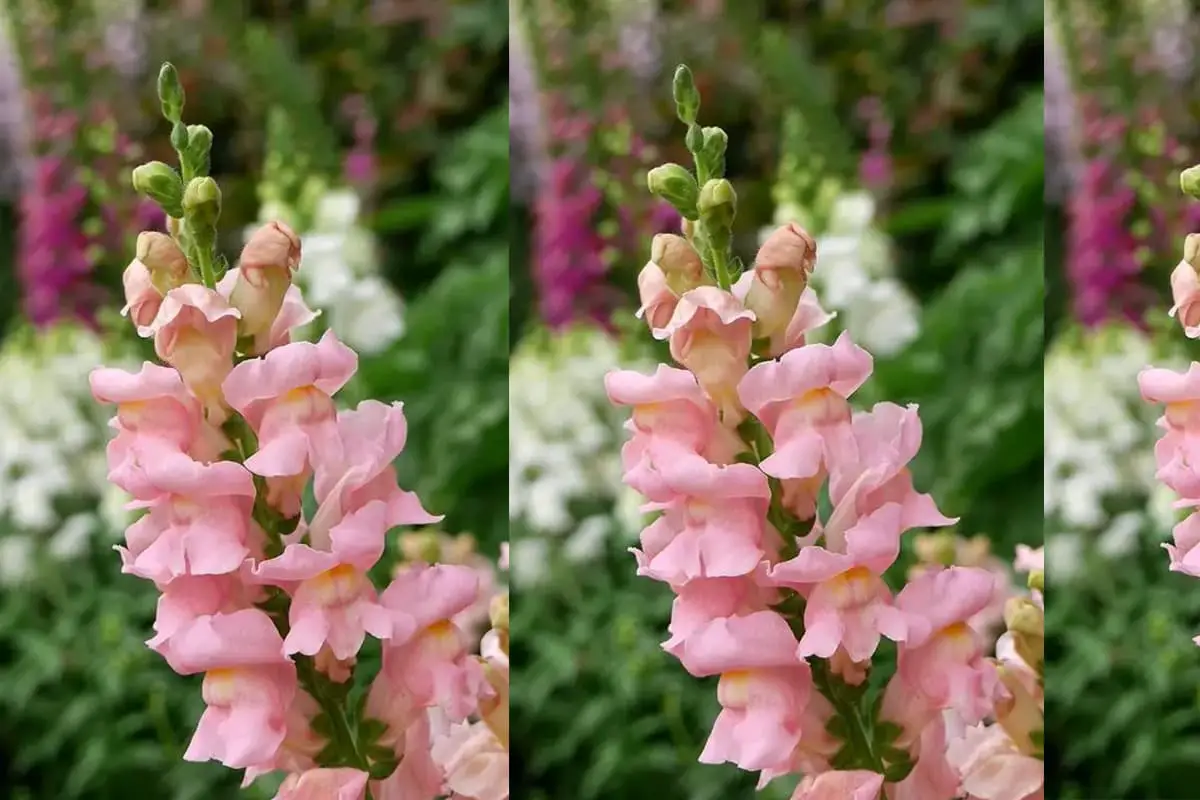
The raceme inflorescence is terminal and densely covered in glandular hairs. The flower stalks are 5-7 millimeters long, and the calyx is almost as long as the stalk, deeply divided into 5 ovate, blunt or acute lobes.
The corolla comes in a variety of colors, ranging from red and purple to white, measuring 3-5 centimeters in length.
The base of the corolla extends forward, forming a hood-like structure, with an upright and large upper lip divided into two lobes, and a lower lip with three shallow lobes.
The middle part of the lower lip bulges towards the upper lip, closing the throat and giving the corolla a mask-like appearance. There are four stamens, two of which are stronger than the others.

The fruit is ovoid, about 15 millimeters long, with a strongly elongated base and glandular hairs, and a terminal dehiscent pore.
It prefers sunlight but can tolerate partial shade. It is relatively cold-resistant but not tolerant of extreme heat. It thrives in loose, fertile, and well-drained soil, and can also grow well in calcareous soil.
It is native to the coastal regions of the Mediterranean, ranging from Morocco and Portugal in the north, to France in the south, and to Turkey and Syria in the east.
During the seedling stage, Snapdragon may be susceptible to damping-off disease, which causes rotting of the rhizome, leading to plant lodging or withering.
Prevention methods include avoiding excessively low soil temperatures. Bordeaux mixture can also be used for spraying.
Snapdragon is a summer and autumn blooming flower widely planted in Chinese gardens. It is suitable for mass planting in flower beds and landscapes, and its combination with other flowers such as Cosmos, Dwarf Morning Glory, Marigold, and Kalanchoe produces excellent visual effects.
Tall varieties can be used as background plantings, while dwarf varieties are suitable for rockeries, window sill flower pots, or edge plantings. It can also be used as a cut flower.

Peggie was once a high school mathematics teacher, but she set aside her chalkboard and textbooks to follow her lifelong passion for flowers. After years of dedication and learning, she not only established a thriving flower shop but also founded this blog, “Flowers Library”. If you have any questions or wish to learn more about flowers, feel free to contact Peggie.
 English
  العربية
  Bahasa Indonesia
  Deutsch
  Français
  Italiano
  Nederlands
  Português
  Русский
  日本語
日本語