600+ Types of Flowers A To Z (With Names and Pictures)
Types Of Flowers By Names (A-Z) Types Of Flowers By Color Types Of Flowers By Season Types Of Flowers By Blooming Time 600+ Types of Flowers No. Flower Name No.…

Zantedeschia aethiopica, also known as Calla Lily, Arum Lily, and Water Lily, is a perennial robust herb in the family Araceae. The plant features a tuberous stem and somewhat thick, arrow-shaped leaves, typical of the Araceae family, with a unique spadix. Its natural blooming period starts from November and can last until May or June of the following year, with a peak blooming period in March and April.
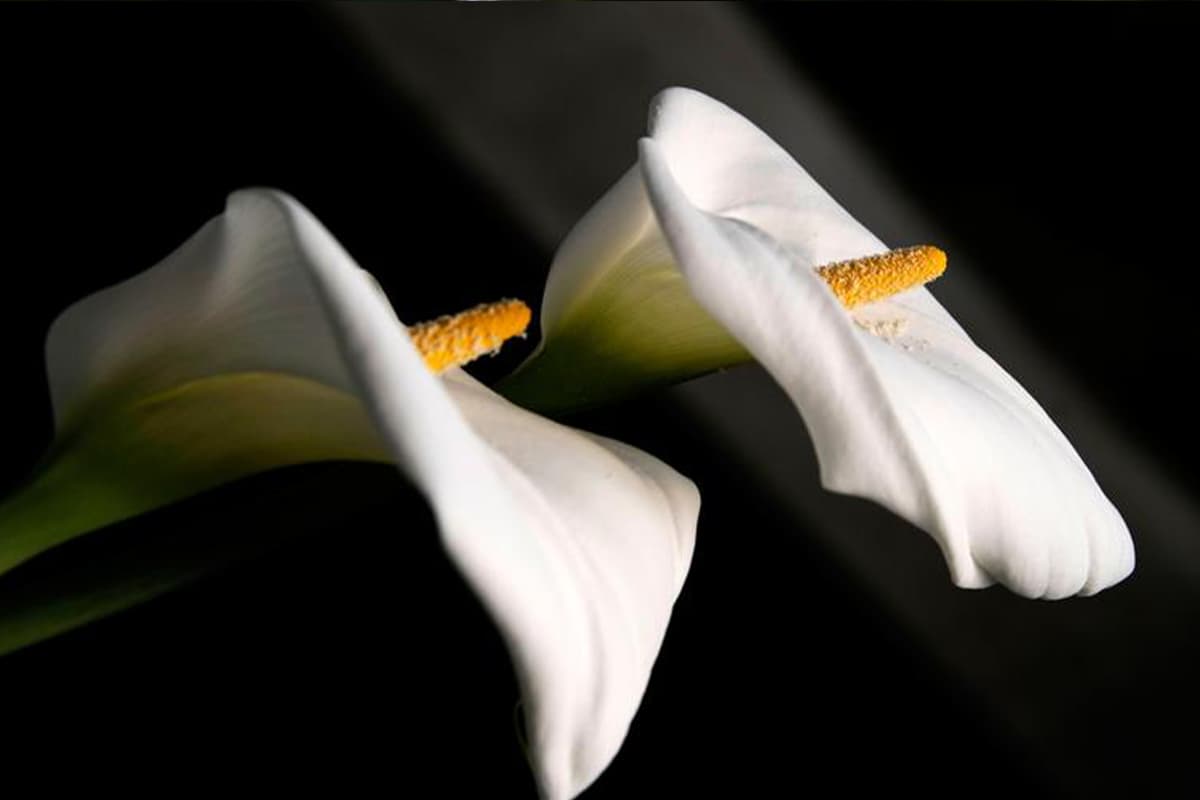
The entire flowering period lasts for 6-7 months, and when in full bloom, the flowers resemble horse hooves. Notably, the entire plant, including its tuberous stem, inflorescence, and spadix, is toxic, containing large amounts of calcium oxalate crystals and alkaloids, which can cause symptoms of poisoning such as drowsiness if ingested.
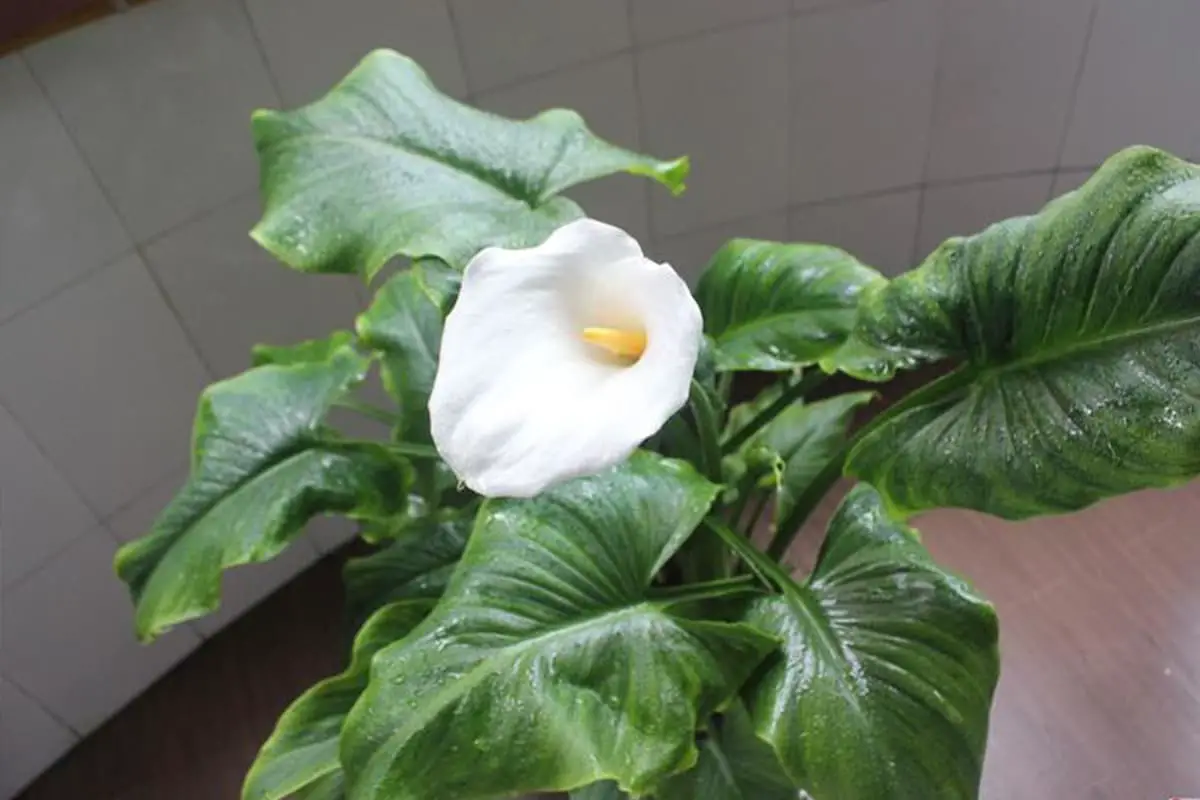
The Calla Lily, also known as Water Lily, Wild Arum, Buddha’s Lotus, and Goddess Lily, is a member of the Araceae family. It is a common flower used in bridal bouquets in Western countries and is the national flower of Ethiopia. It prefers a warm climate, cannot tolerate cold or high temperatures, and thrives at around 20°C. At 0°C, the tuberous stems will freeze and die.
In winter, it requires plenty of sunlight; insufficient light leads to fewer flowers, though it is slightly shade-tolerant. In summer, when the sun is too intense and scorching, it should be properly shaded. It likes damp conditions and can tolerate a little waterlogging, but not drought. It prefers loose, fertile, humus-rich loamy soil.
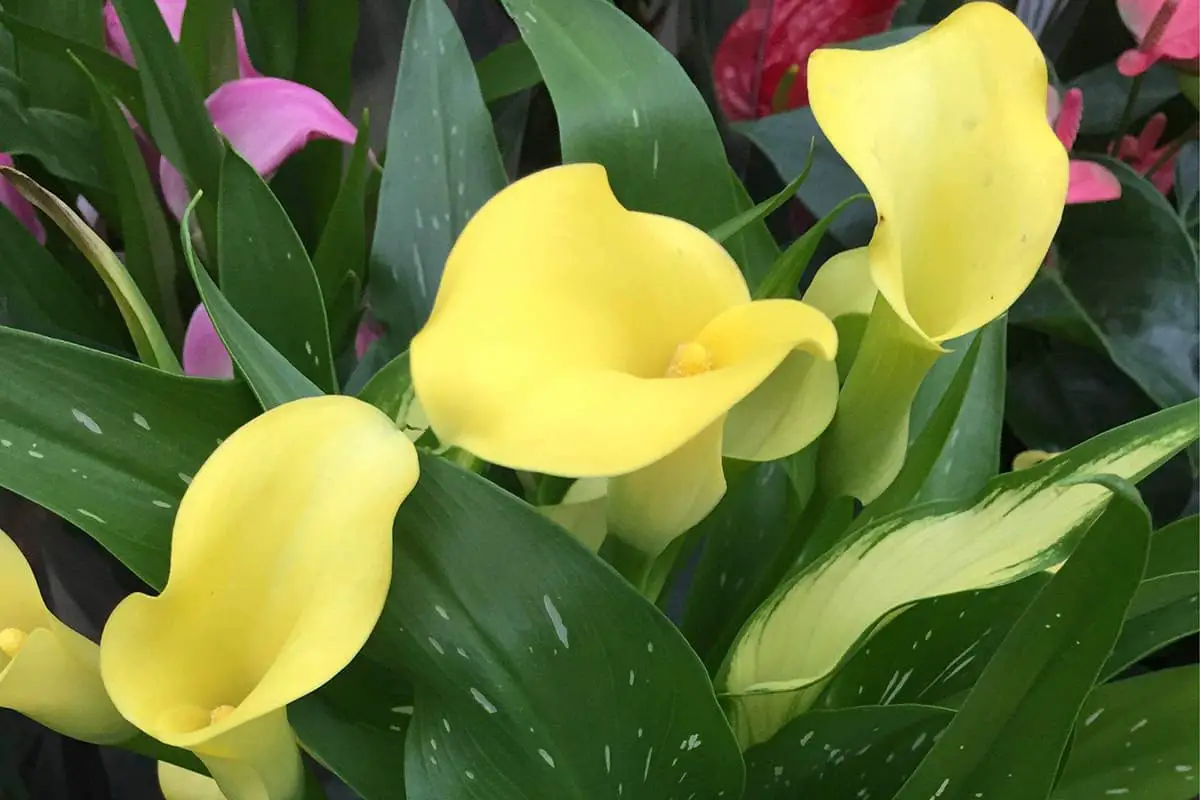
The Calla Lily is elegantly majestic, with pristine white flower buds resembling horse hooves, and verdant leaves adorned with white spots. This combination of attractive flowers and leaves has made it one of the important cut flower varieties in the international flower market.
It is commonly used to create bouquets, flower baskets, flower wreaths, and vase arrangements, all of which have excellent decorative effects.
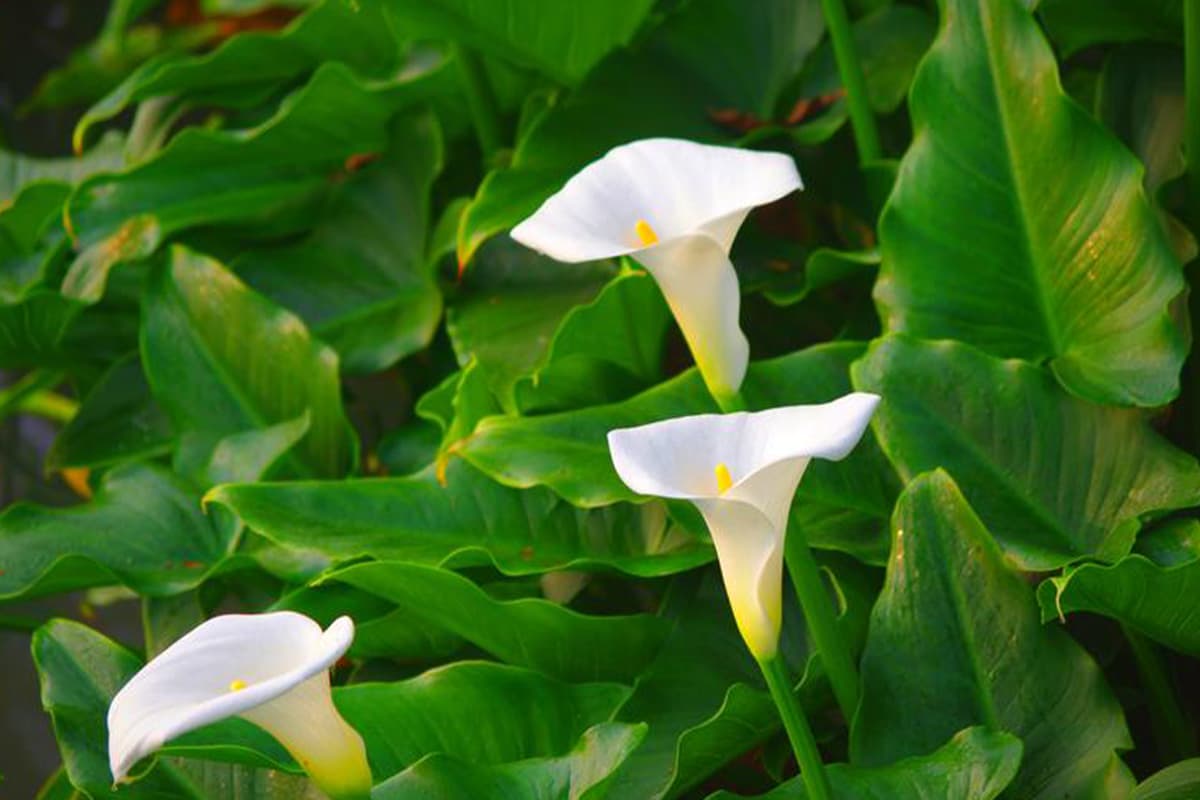
The Calla Lily prefers a warm, damp environment with plenty of sunlight. It cannot tolerate cold or drought. Its ideal growth temperature is between 15-25°C, with nighttime temperatures not lower than 13°C. If the temperature rises above 25°C or falls below 5°C, it is forced into dormancy.
The Calla Lily likes water, so the soil should be kept moist during its growth period. Watering should be controlled after the tuber enters dormancy during the hot summer months. The soil should be fertile, with good water retention, and clay loam soil, with a pH value between 6.0-6.5, is preferred.
It is cultivated for ornamental purposes in many areas of China. Its original habitat is in northeastern and southern Africa.
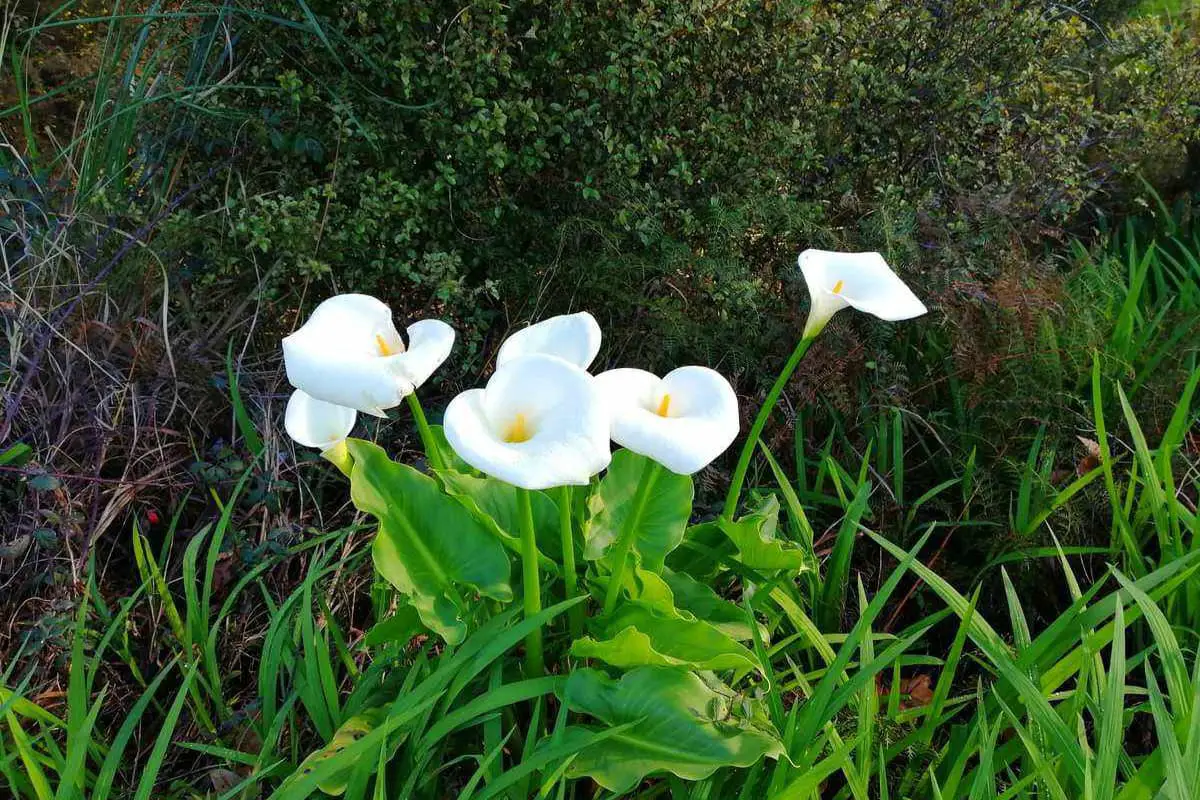
Zantedeschia aethiopica is a perennial robust herb with a tuberous stem. Leaves are basal, petiole 0.4-1 (-1.5) meters long, sheathed at the base. The leaf blade is thicker, green, heart-shaped or arrow-shaped, with a pointed, tapered, or caudate tip, heart-shaped or trident base, entire, 15-45 cm long, 10-25 cm wide, without spots, with a posterior lobe 6-7 cm long. The flower stalk is 40-50 cm long and smooth.
The spadix is 10-25 cm long, with a short tube, yellow; the limb slightly reflexed, acute or tapered, with a conical tip, shiny white, sometimes with green. The cylindrical spadix is 6-9 cm long and 4-7 mm thick, yellow: the female inflorescence is 1-2.5 cm long; the male inflorescence is 5-6.5 cm long. The ovary has 3-5 compartments, tapering into the style, mostly surrounded by three staminodes.
The berries are short ovate, pale yellow, 1-1.2 cm in diameter, with a persistent style; the seeds are ovoid-spherical, 3 mm in diameter.
The primary method of propagating Calla Lilies is by division of bulbs. After the plant enters dormancy, remove the small bulbs around the rhizome for replanting. Seeds can also be sowed for propagation. Once the seeds mature, they can be sowed in pots. The optimal germination temperature is around 20°C.
Dividing: After the flowers fade in May or June and new leaves start to appear as old leaves wither, or in mid-September when repotting, detach the small bulbs around the parent plant and pot them separately. Generally, flowers will bloom three months after planting.
Sowing: Indoor pot sowing is predominant. The suitable germination temperature is 18-24°C, and germination occurs 15-20 days after sowing. Seedlings require 3-4 years of nurturing before they can bloom.

Peggie was once a high school mathematics teacher, but she set aside her chalkboard and textbooks to follow her lifelong passion for flowers. After years of dedication and learning, she not only established a thriving flower shop but also founded this blog, “Flowers Library”. If you have any questions or wish to learn more about flowers, feel free to contact Peggie.
 English
  العربية
  Bahasa Indonesia
  Deutsch
  Français
  Italiano
  Nederlands
  Português
  Русский
  日本語
日本語