Top 10 Rarest Flowers in China
China is home to a rich variety of plant and animal resources, boasting an exceptional botanical diversity that includes numerous rare and endemic species. However, a number of these rare…

The world is full of wonders, with a vast array of flowers we encounter daily like roses and lilies. Yet, you may not have come across some of the rarest and most precious blossoms in the world, such as Ghost Orchids, Corpse Lilies, Titan Arums, and Parrot Flowers. Some of these flowers have incredibly short life spans, blooming their breathtaking beauty for only an hour or two.
Are you familiar with the rarest flowers in the world? This article lists the ten rarest flowers globally, so let’s explore them together.
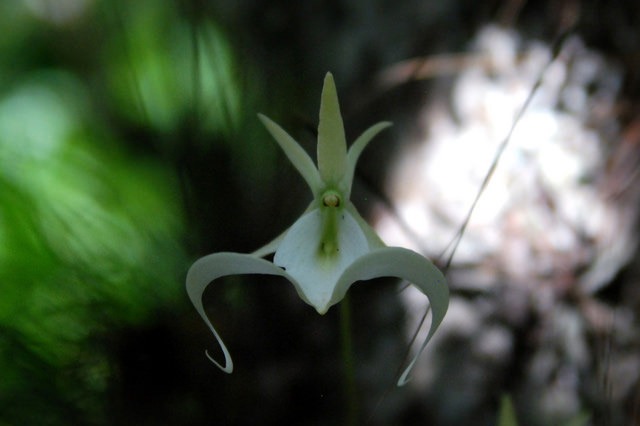
The Ghost Orchid, a member of the Orchid family and the Dendrophylax genus, is an epiphytic plant often found in forest swamps. It commonly grows in the decomposed leaves of beech trees, standing 5-25 centimeters above the ground, devoid of leaves. The flowers are striking and uniquely shaped, resembling leaping frogs. The Ghost Orchid’s roots integrate well with tree bark, and its conspicuous white flowers seem to float in the air like phantoms, hence the name “Ghost Orchid. Due to the great difficulty in artificially cultivating this plant and the rarity of wild specimens, the Ghost Orchid has been included in the Washington Convention.
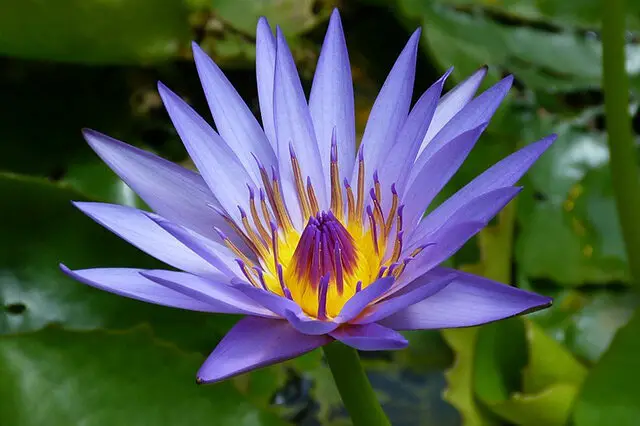
The Sleeping Fire Lotus blooms for only seven days each year. Encased by purple petals, it features golden tendrils in the middle, cradling a bud that only opens at the moment before wilting. Some say that the golden tendrils serve to protect the bud, allowing it to ‘sleep’ peacefully, hence its name “Sleeping Fire Lotus”. The plant thrives in abundant sunlight, well-ventilated locations, fertile sandy soil, clean water, and calm warm waters. Each spring, it sprouts and grows; in the summer, it blossoms. After flowering, the fruit submerges in the water, releasing seeds once mature.
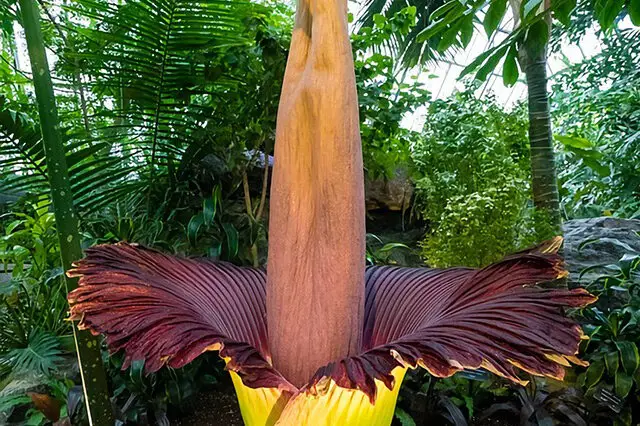
The Titan Arum, also known as the “Corpse Flower” or “Titan Arum”, belongs to the Araceae family and the Amorphophallus genus. When in bloom, it emits a scent similar to a decaying body, earning it the title of “the smelliest flower in the world.” The tuber of the Titan Arum can reach a diameter of 65 centimeters and weigh over 100 kilograms; its leaf stalks usually stand 3-4 meters tall, with leaf blades exceeding 5 meters in diameter and covering an area of more than 20 square meters. Wild Titan Arum grows exclusively in the tropical rainforests of Sumatra, Indonesia. It blooms only two or three times in its lifetime, with each flowering period being brief, lasting only a few days at most. After fruiting, it quickly withers.
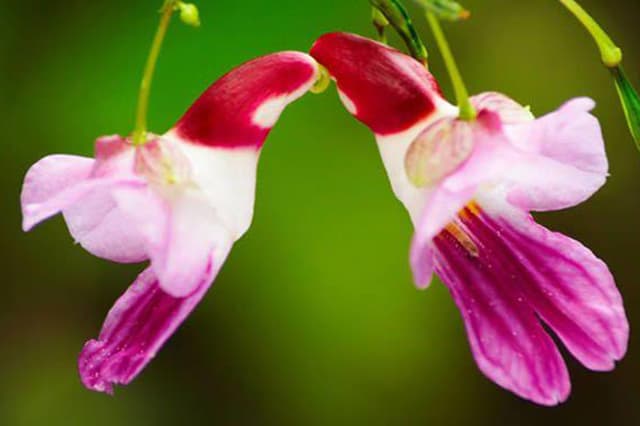
The Parrot Flower is a unique small herbaceous plant from the Impatiens genus. Its blooming form resembles a parrot. The flower displays an array of colors: purple, white, maroon, deep pink, red, and a blend of red and white. It comprises five unequal petals. The seeds are propelled by the force of the fruit splitting open. When a ripe pod is touched, it suddenly bursts open, scattering the seeds. The Parrot Flower can be found in local botanical gardens in Thailand. Its flowers exhibit a purplish-pink hue interspersed with green and dark red, mimicking the varied colors of a parrot suspended in the air or perched on the ground. It blooms in August and September, and fruits in October. Due to its rarity, there are no records of this species being cultivated around the world. To protect this plant, the Thai government has prohibited smuggling and private transportation out of the country, so to see the Parrot Flower, one must visit its native Thailand.
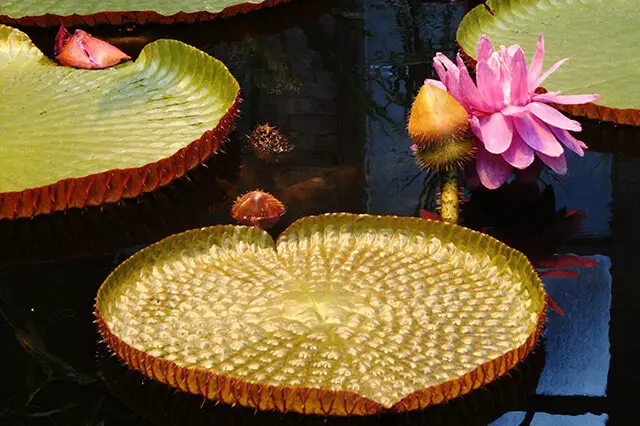
The Giant Water Lily, a term referring to species within the Nymphaeaceae and Victoria genus, originates from the tropical regions of South America, primarily found in Brazil and Bolivia. It requires high temperatures, high humidity, and ample sunlight to thrive. It grows best at temperatures between 25 and 35 degrees Celsius and will halt growth when temperatures fall below 20 degrees. These plants are famous tropical aquatic garden ornamentals and boast the largest leaves among aquatic plants worldwide, with diameters exceeding 3 meters. The leaf surfaces are smooth, the edges curl upwards, appearing like large emerald-green platters floating on the water’s surface.
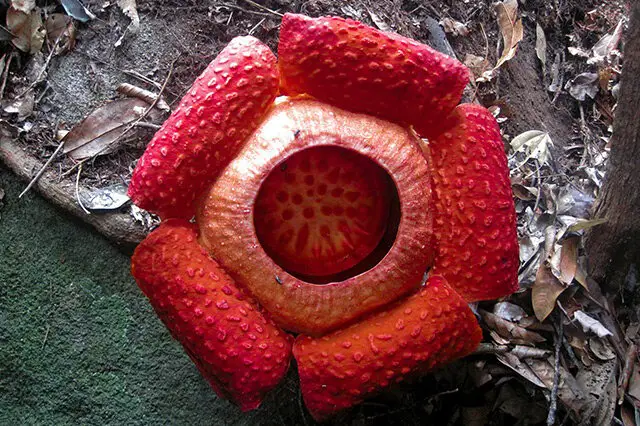
The Rafflesia, a term for the twenty species of fleshy parasitic herbs in the Rafflesiaceae family, is a saprophytic plant. It’s known as the plant with the largest flower in the world, with the biggest blooms reaching a diameter of 1.4 meters and weighing up to 25 pounds. It is renowned for its enormous, malodorous flowers. The features of the Rafflesia are evident in its flowers, form, odor, and habitat. Its large flowers lack leaves, making the plant difficult to spot when not in bloom. The Rafflesia’s flowers do not emit a floral fragrance; instead, they produce a pungent smell that attracts flies and mosquitoes. Moreover, the Rafflesia only grows in the tropical jungles of Southeast Asia and is seldom seen in everyday life.
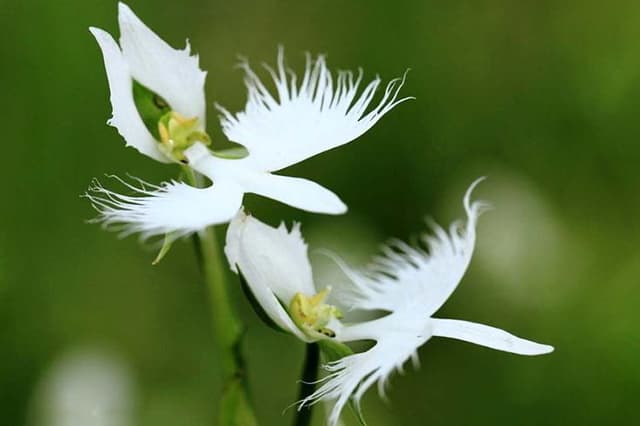
The Egret Flower, which is the bloom of the Habenaria plant, originally comes from Korea, Taiwan, and Japan. It belongs to the Orchidaceae family, and there are twelve known cultivated varieties. The Egret Flower blooms from July to September, featuring a white flower on a stalk standing 20-50 centimeters tall, with an underground stem. Due to its stunning beauty, over-picking has caused a severe decline in numbers, and it is now considered an endangered plant, ranking third among the top ten most extraordinary plants. This pristine white flower, resembling an egret about to take flight, possesses a unique beauty. Few plants possess such dynamism, as if ready at any moment to spread its “wings” and fly into the sky, carried away by the wind.
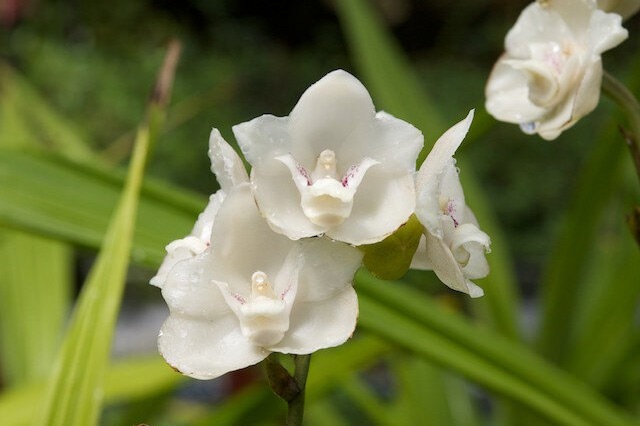
The Dove Orchid (scientific name: Peristeria elata), also known as Holy Ghost Orchid, is an orchid species found from Central America to Ecuador and Venezuela. Its populations grow well under the distinct dry and rainy seasons in Panama, blooming from November of each year to April of the following year. They are now protected under Appendix I of the Convention on International Trade in Endangered Species of Wild Fauna and Flora (CITES). On November 21, 1980, the Panamanian Congress passed a resolution designating the Dove Orchid as the national flower.
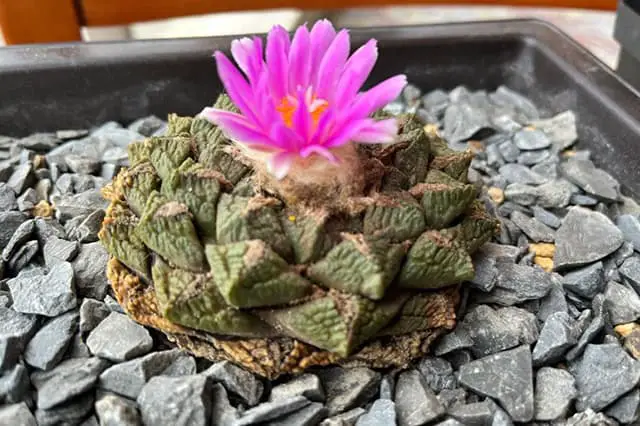
Named for its crisscrossed, turtle-shell-like crevices, the Turtle Peony is a perennial succulent plant from the Cactaceae and Ariocarpus family. Its unique shape resembles a piece of stone sculpture, hence its nickname “living stone”. The Turtle Peony is a small plant that grows alone or in clusters. Its globular body is grayish-green with broad, triangular, wart-like protrusions. Flowers bloom from the top center of the globe, producing beautiful pink blossoms. However, the Turtle Peony is a plant that is quite difficult to flower, requiring at least three years of cultivation. Then, if no unforeseen circumstances occur, it will bloom every May.
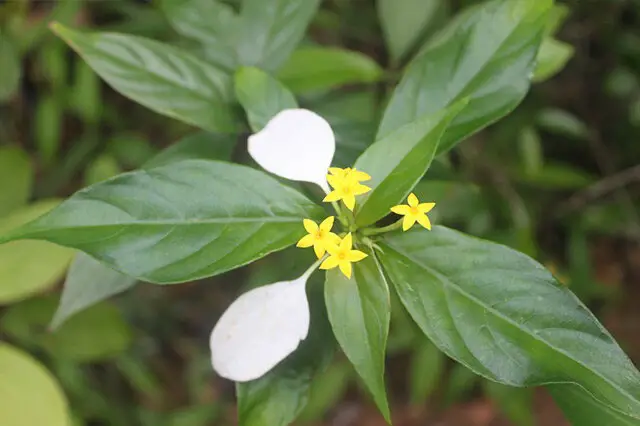
The Anomalous Mussaenda (Mussaenda anomala Li) is a climbing shrub belonging to the Rubiaceae and Mussaenda genus. It has grey-brown twigs, opposite, thin papery leaves that are ovate or elliptically ovate in shape, with a pointed tip and a short-pointed base. The upper side of the leaf is green, while the underside is pale white. The stipules fall off early. Its many flowers form in terminal, multi-branched umbel inflorescences, with small lanceolate bracts covered in short soft hairs. The calyx tube is long-cylindrical, with all segments enlarged into petal-like bracts. The bracts are ovate elliptical, with ovate corolla lobes and short apices attached to the corolla tube. The stamens are short, with the style hidden inside and a linear stigma about 4 mm long. It flowers in June. This plant is unique to China and listed as a national first-level protected plant. It’s an endangered species, distributed in Guangxi, China; it climbs on the canopies in forests.

Peggie was once a high school mathematics teacher, but she set aside her chalkboard and textbooks to follow her lifelong passion for flowers. After years of dedication and learning, she not only established a thriving flower shop but also founded this blog, “Flowers Library”. If you have any questions or wish to learn more about flowers, feel free to contact Peggie.
 English
  العربية
  Bahasa Indonesia
  Deutsch
  Français
  Italiano
  Nederlands
  Português
  Русский
  日本語
日本語