Many people enjoy growing flowers at home, but there’s a lot more to it than meets the eye. Many beliefs about this practice revolve around the adage, “better safe than sorry.”
For instance, it’s considered ill-advised to grow certain inauspicious flowers at home.
Today, I’ll be discussing ten types of flowers believed to attract spirits, including the Red Spider Lily, Datura, Epiphyllum, Poppy, Plum Blossom, Mandragora, and Flowering Crabapple, among others. Let’s explore this topic together.
The selection of these ten flowers associated with attracting spirits is primarily based on their symbolic meanings and folklore. This list, compiled by cross-referencing various online rankings, is intended for reference purposes only.
1. Red Spider Lily
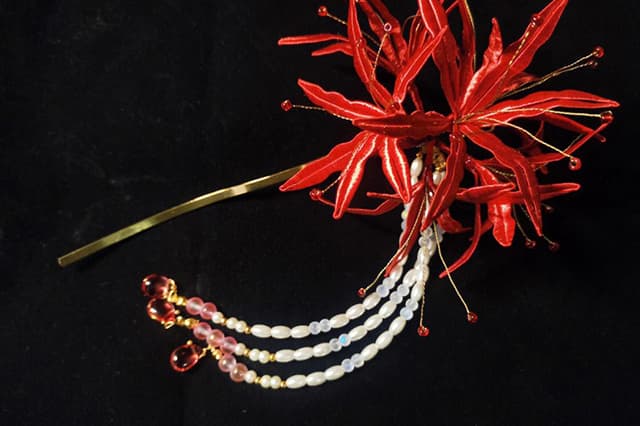
The Red Spider Lily has long been considered one of the most ominous flowers. Legend has it that this flower willingly chose to dwell in hell. Sent back by demons yet still lingering on the path to the underworld, the demons agreed to let it bloom along this path as a beacon and solace for souls departing the human realm.
This flower is said to be brilliantly red like blood, paving the way to hell. Leafless and the sole flower of the underworld, it blooms abundantly on this path. From afar, it appears like a carpet woven from blood and is referred to as the “path illuminated by fire.”
It provides the only scenery and color along this long, dreary path. Its fragrance supposedly possesses magical properties that can evoke the memories of the deceased, making it the foremost of the legendary four flowers of the underworld.
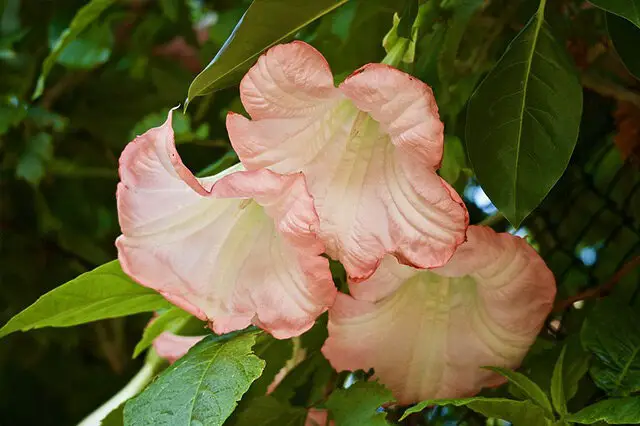
2. Datura
When it comes to Datura, the first thing that comes to mind is the saying, “Datura does not compete with spring, it blooms last when left alone.” True to its nature, Datura is the last flower to bloom in spring, symbolizing the end of the season.
The Datura flower, said to bloom in heaven, is white and soft. It is considered an auspicious flower, but for those of us living in the mundane world, it doesn’t carry the same good fortune. Seeing it in full bloom symbolizes the end of all that is good, leaving only desolate memories behind.
Despite its end-of-the-road beauty, it tends to attract less desirable elements, making it one of the ten flowers with a strong Yin energy.
3. Epiphyllum
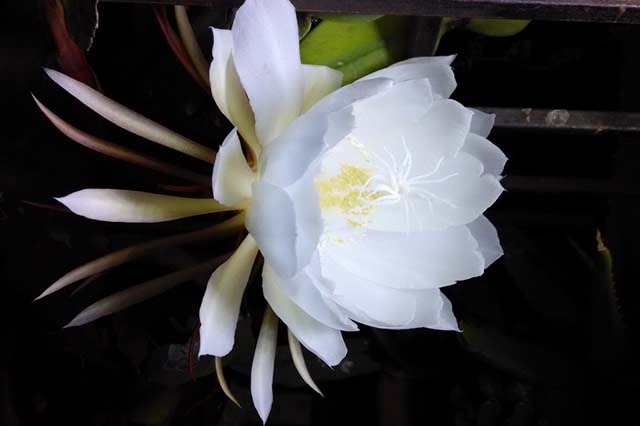
When asked which flowers and plants attract spirits, Epiphyllum is always one of the answers. But why does Epiphyllum attract spirits?
It’s because the Epiphyllum always blooms at night, and its blooming period is extremely brief, easy to miss if not careful. Hence, it represents the transience of beautiful things and, in Feng Shui, symbolizes the inability to retain good fortune, hence its ominous reputation.
Moreover, it’s rumored that the moment an Epiphyllum blooms, it may attract spirits. So, despite its great beauty, it’s rarely grown in households.
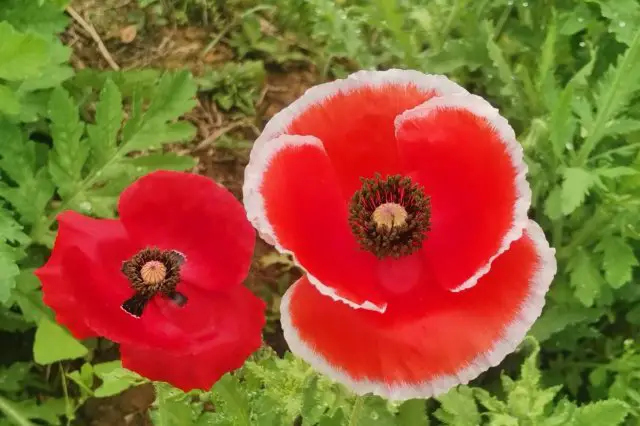
4. Poppy
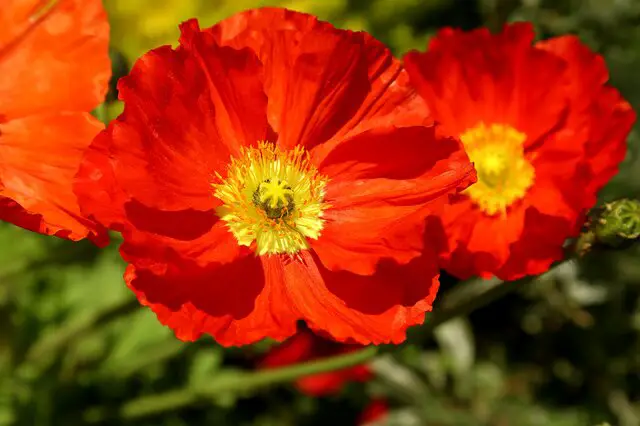
The Poppy is a regular on the list of the top ten ominous flowers. Despite its dazzling beauty and high value as an ornamental plant, its scent can be addictive, leading to its reputation as the “evil flower”.
Poppies can also be used to produce drugs like cannabis and opium, which can erode a person’s vitality and health. Thus, it’s associated with the symbolism of a “love for death.”
With thorns on its flower and a dark red color, it has a mesmerizing effect that can blur the line between reality and illusion, making it one of the flowers that can attract spirits.
5. Plum Blossom
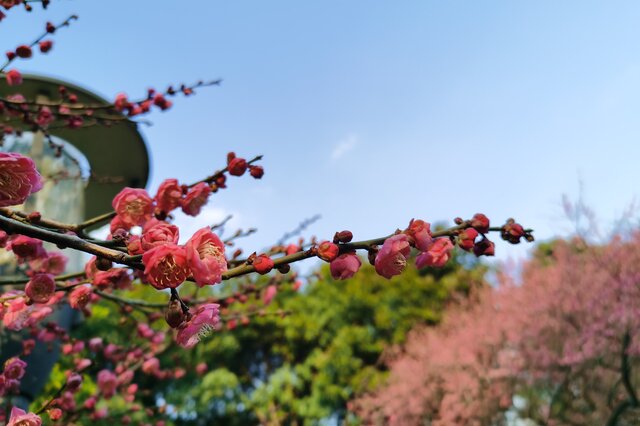
The Plum Blossom is one of China’s top ten famous flowers. In traditional Chinese culture, the plum blossom’s noble, resilient, and humble character inspires people to strive for their goals.
However, in Feng Shui, it’s considered inauspicious. The cool shade of the plum blossom could influence the women in the house, causing them to become sentimental and melancholic, while gradually weakening the Yang energy of the male members.
This could lead to unwanted romantic entanglements, and over time, not only cause a disruption in the balance of Yin and Yang, but also incite conflicts between the couple and even attract spirits into the house. Moreover, because its name sounds like “mold” in Chinese, it’s believed to accumulate bad luck.
6. Mandragora
The Mandragora has long been considered one of the four flowers of the underworld. Its reputation for carrying a terrifying magic power is primarily related to its symbolic meanings.
The Mandragora blooms in different colors, each bearing a unique symbolism. The purple Mandragora symbolizes terror, the blue one represents deception and unfaithfulness in love, while the black Mandragora is associated with unpredictable darkness, death, and endless love and revenge.
Not only is its symbolism terrifying, but the Mandragora is also highly poisonous. If accidentally ingested, symptoms of poisoning can appear in as little as 20 minutes.
Severe poisoning could lead to sleepiness, spasms, and even coma or death within 24 hours, hence caution is advised when considering planting it at home.
7. Begonia
The Begonia is a flower that has been admired for its free-spirited style and vibrant bloom since ancient times. It’s known as the “Fairy among flowers,” “Noble flower,” and “National beauty.”
The buds are red like rouge before they bloom, and they gradually turn pink after blossoming, resembling the dawn’s rosy glow. However, the Begonia is also known as the “Heartbreak Flower.”
The name comes from a legend about a lovesick woman who died waiting for her beloved and turned into a Begonia. Since she died of heartbreak, it’s also called the “Heartbreak Flower,” making the Begonia an inauspicious flower.
8. Poppy
Poppies are colorful and when in bloom, their thin petals are as smooth as silk. Legend has it that these flowers grew on the grave of Yu Ji, a woman known for her beauty and charm.
Folklore suggests that these flowers, called “Poppies,” are a manifestation of her sincere spirit. The brilliant red of the poppy is said to be dyed with Yu Ji’s splashed blood. It’s as if Yu Ji is still alive after her death, having transformed into the poppy plant.
The flowers bloom every year in late spring and early summer, so they’ve always been considered ill-omened.
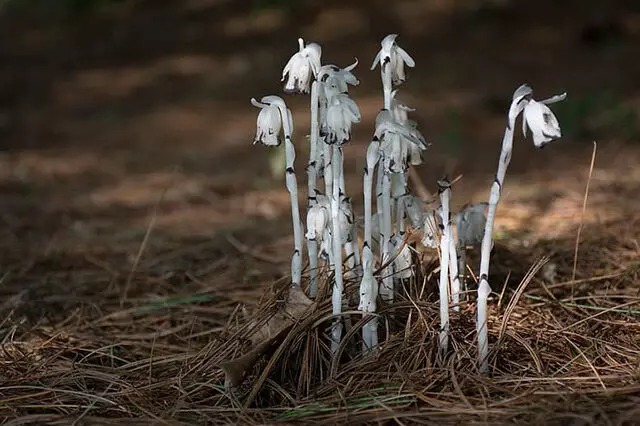
9. Ghost Orchid
The Ghost Orchid is transparent and crystal-like. It grows in clusters on decaying leaves, earning it the name “Flower of the Underworld,” “Dream Orchid,” or “Decomposer.”
In some novels, it’s depicted as a ghost flower or a poisonous substance that can cause death or a miraculous herb that can bring the dead back to life. As its name suggests, the Ghost Orchid is transparent like crystal, belonging to the Deerfoot Grass family.
It absorbs nutrients from decaying leaves to sustain life, which is why it’s also known as the “Flower of Death.” It reportedly emits a white light at night, appearing quite terrifying.
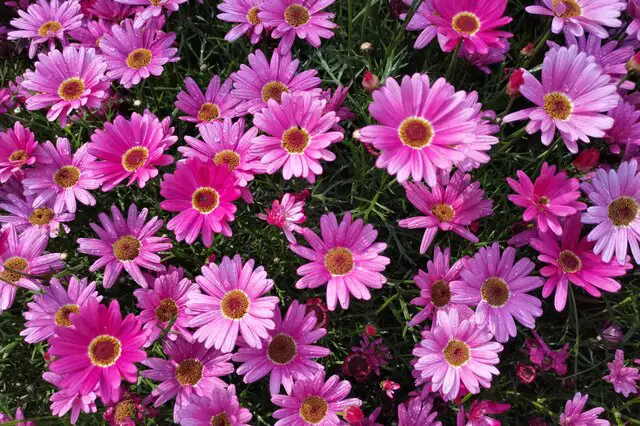
10. Daisy
Daisies come in white and pink, symbolizing a pure and shy girl. Its primary symbolism is also one of a girl’s wishes—to predict love.
In many novels and TV shows, there’s often a scene where a girl plucks a flower petal while saying, “He loves me, he loves me not.”
That flower is usually a daisy. It’s believed that if you have a wish you want to fulfill, you can prepare a bottle and whisper your wish or blessing to a dried daisy under the moonlight. Then, put the flower in the bottle.
When the bottle is full of dried flowers, your wish is said to come true, including the ability to summon spirits.




 English
  العربية
  Bahasa Indonesia
  Deutsch
  Français
  Italiano
  Nederlands
  Português
  Русский
  日本語
日本語