The Magnolia grandiflora, also known as the Bull Bay or Large-flowered Magnolia, is a member of the Magnoliaceae family and genus. This evergreen tree is well-known for its ornamental qualities.
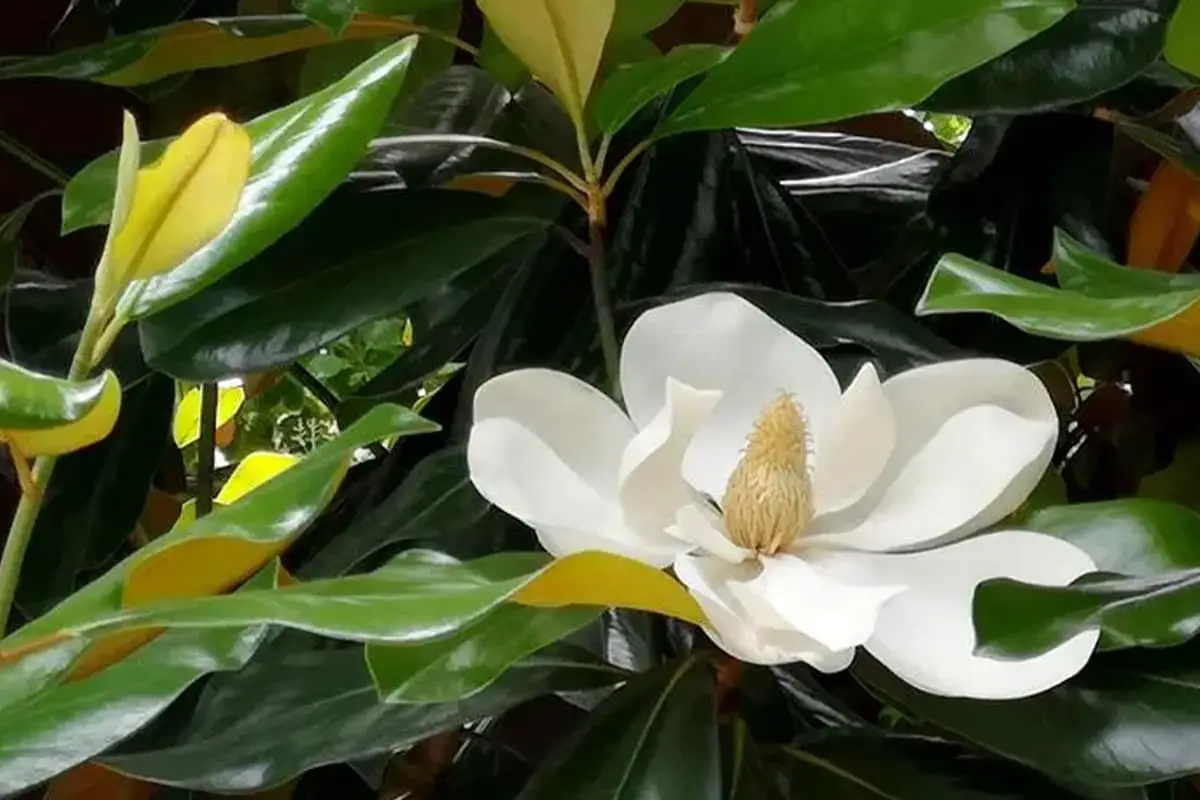
Its bark is a pale brown or gray, with robust twigs; the leaves are thick and leathery, ranging in shape from elliptical to oblong-elliptical or inversely ovate, exhibiting a deep green hue with a glossy finish.
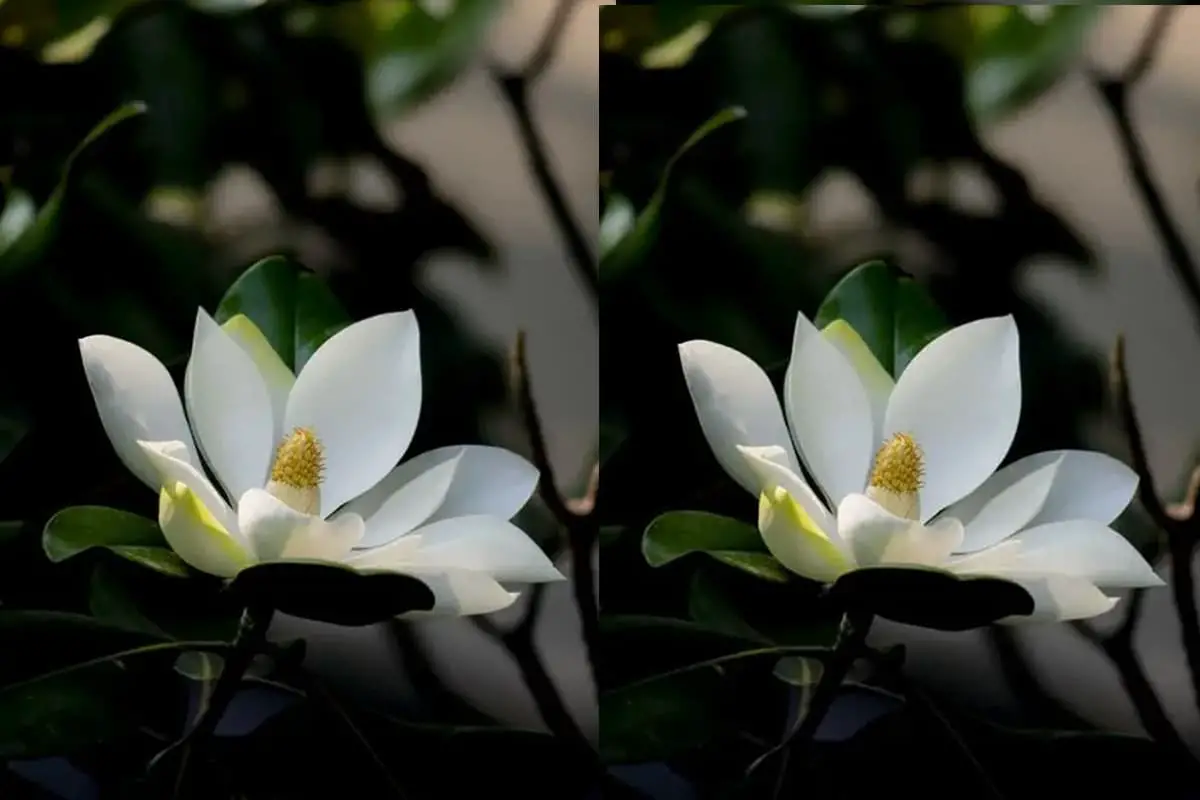
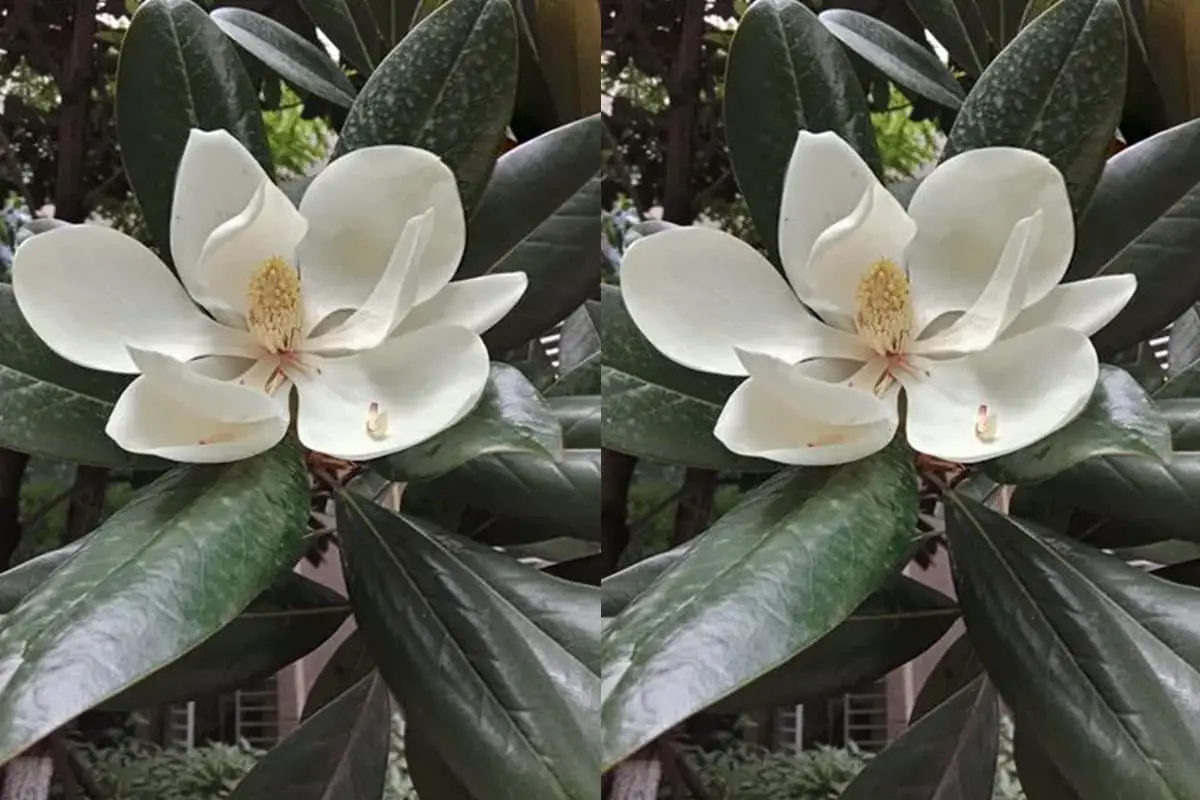
The large, lotus-like, fragrant white flowers are solitary at the branch tips, blooming from May to June, with the fruiting period occurring from September to October.
The blossoms of the Southern Magnolia closely resemble lotus flowers in shape, unfurling their petals outward in all directions when in full bloom.
This creates a stunning visual of green and white hues with a dazzling white brilliance in gardens, offering a high ornamental value.
I. Basic Information
Magnolia grandiflora: An evergreen tree that can reach heights of up to 30 meters in its native habitat. It has pale brown or gray bark that is thin and scaly. The tree’s branches are thick and robust.
Its leaves are thick, leathery, and come in shapes ranging from elliptical to oblong-elliptical or inverted egg-shaped, with a glossy, deep green surface.
The flowers are white, fragrant, and measure 15-20 centimeters in diameter; they have 9-12 petal-like tepals, which are fleshy and inverted egg-shaped, measuring 6-10 centimeters in length and 5-7 centimeters in width.
The fruit is a cylindrical aggregate of follicles that are round-backed and beaked at their tips; the seeds are nearly ovoid or egg-shaped, about 14 millimeters long and 6 millimeters in diameter, with a red outer coat.
Once this coat is removed, the seed extends into a short neck. The flowering season is from May to June, and the fruiting period is from September to October.
Native to the Southeastern United States, the Southern Magnolia has been cultivated in cities south of the Yangtze River basin in China.
There are over 150 cultivated varieties of this species. Known for its large, lotus-like white flowers and pleasant fragrance, it’s a popular ornamental tree for gardens and landscapes.
It thrives in moist, fertile soil and shows strong resistance to toxic gases such as sulfur dioxide, chlorine, and hydrogen fluoride; it is also tolerant of smog.
The wood is yellow-white, hard, and dense, making it suitable for decorative purposes. Essential oils can be extracted from the leaves, young branches, and flowers, and the flowers can be used to make ointments.
The leaves are used medicinally to treat high blood pressure. The seeds, which have an oil content of 42.5%, are also pressed for oil.
II. Growth and Distribution
Suitable Conditions
Climate Conditions
Magnolias thrive in a wide range of temperatures, from -20 to over 40°C. They are well-suited for growth in warm temperate to subtropical regions, with annual precipitation ranging from 500 to 1850mm.
Extreme temperatures can significantly impact magnolia trees, particularly the saplings. Harsh winter frosts, soil freezing, and cold, desiccating winds can damage roots, buds, and even cause branches to die.
High temperatures and direct sunlight can scorch the leaves, while prolonged exposure of the trunk to intense heat and sunlight can lead to sunburn and the formation of cankers.
Saplings may also experience stunted growth when exposed to prolonged high temperatures and strong sunlight.
Magnolias’ susceptibility to temperature-related issues is most evident in young plants, which can suffer from freeze damage leading to dieback if they have not fully lignified by autumn.
Water and Fertilizer Conditions
The Magnolia denudata tree species features fleshy roots and abundant flowers, with broad and lush leaves demanding a high amount of water. Its ideal natural habitat is along mountain streams.
When artificially planted in low-lying, waterlogged areas, the magnolia trees grow poorly, with short branches, small leaves, and yellowing plants. Prolonged waterlogging can lead to root rot, causing the roots to decay and the entire plant to wither and die.
The magnolia grows rapidly, producing a large number of flowers and fruit with dense foliage, and therefore requires fertile soil.
In nature, the soil in mountain streams is rich in organic matter with a thick humus layer, providing the necessary fertility for the magnolia’s robust growth.
Origin and Habitat
Originally native to the southeastern United States, this species is widely cultivated, with over 150 cultivated varieties.
III. Morphology and Characteristics
Southern Magnolia is an evergreen tree that can reach up to 30 meters in height in its native habitat. The bark is pale brown or grey, cracking in thin scales.
The twigs are robust with a pith interrupted by diaphragms; they, along with the buds, the undersides of the leaves, and the leafstalks, are densely covered with brown or grey-brown short tomentum (though the undersides of the leaves of young trees are hairless).
The leaves are thick and leathery with an elliptical, oblong-elliptical, or inversely ovate-elliptical shape, measuring 10-20 centimeters in length and 4-7 (10) centimeters in width, with blunt or shortly acuminate tips and cuneate bases.
The leaf surface is a glossy deep green, and there are 8-10 lateral veins on each side. The leafstalk is 1.5-4 centimeters long, with a deep groove but no stipule scars.
The flowers are white and fragrant, with a diameter of 15-20 centimeters; there are 9-12 fleshy, inverted ovate tepals, each 6-10 centimeters long and 5-7 centimeters wide.
The stamens are about 2 centimeters long with flat, purple filaments and anthers that face inward, extending into a short point. The gynoecium is an ellipsoid cluster, densely covered with long tomentum; the carpels are ovate, measuring 1-1.5 centimeters, and the style is curled.
The aggregate fruit is cylindrical, oblong, or ovate, 7-10 centimeters in length and 4-5 centimeters in diameter, densely covered with brown or light grey-yellow tomentum.
The follicles split on the backside, rounded with a long beak on the exterior top; the seeds are nearly ovate or oval, about 14 millimeters long and approximately 6 millimeters in diameter, with a red outer seed coat.
The seeds extend into a short neck when the outer seed coat is removed. The flowering period is from May to June, and the fruiting period is from September to October.
IV. Living Habits
Magnolia grandiflora is a shade-tolerant plant that thrives in warm, moist climates and is resistant to pollution but does not tolerate alkaline soils.
Saplings can withstand shade. It prefers a warm, humid climate and can survive short periods of temperatures as low as -19 degrees Celsius. The Magnolia grows best in fertile, deep, moist, well-drained acidic or neutral soils.
It has a deep and expansive root system that provides good wind resistance. It is relatively pest and disease-free. The growth rate is moderate—seedlings grow slowly, but after ten years, growth gradually accelerates.
V. Magnolia Cultivation Methods
Season
The best time for transplanting magnolia trees is early spring, although the rainy season can be ideal. About half a month after the Chinese New Year, magnolias are still dormant, with slow sap flow and metabolism, which is a suitable time for transplantation.
After transplantation, as the temperature rises in late spring, the roots begin to grow and heal. With careful management, this will not affect the magnolia’s growth that year.
Furthermore, with the high rainfall and humidity during the rainy season, the survival rate for transplanted magnolias is very high. However, it’s important to transplant on overcast or cloudy days, avoiding heavy rain or hot weather.
Root Ball
The size of the root ball is crucial for successful magnolia transplantation. In the East China region, the diameter of the root ball should be 8 to 10 times the diameter of the tree’s trunk to minimize root damage and facilitate recovery.
A root ball that is too small can severely damage the roots, leading to water absorption issues and affecting the tree’s survival. The root ball should be spade-shaped rather than disc- or cone-shaped and tightly bound with straw rope to prevent it from falling apart during transport.
Moisture
Magnolia roots are fleshy and prone to dehydration. Therefore, digging and planting must be done quickly and promptly to prevent excessive water loss, which can affect survival.
After transplanting magnolias, the initial watering must be timely and thorough to ensure good contact between the roots and soil, which is beneficial for the tree’s survival.
If there is too much rain after transplanting, it is necessary to create drainage to prevent water from accumulating around the roots, which could cause root rot and death.
Pruning
By pruning and defoliating, evaporation can be reduced, alleviating pressure on the damaged roots’ water supply.
Pruning should remove inner, overlapping, and diseased branches to maintain the overall shape of the tree; defoliation should remove about one-third of the leaves on each branch to avoid reducing transpiration pull, which can make water absorption difficult for the roots.
Maintenance
After transplanting, wrap the trunk with straw rope for about 2 meters to reduce water evaporation, and in dry conditions, moisten the straw rope to create a humid micro-environment.
Post-planting, support the trunk with stakes to prevent swaying and root damage. Standard staking may not provide enough stability; a tripod made from 3 to 4-meter-long bamboo or other materials is recommended for support.
If the weather is dry after transplanting, misting the canopy or using overhead sprinklers can help lower the temperature of the leaves.
VI. Propagation Methods for Magnolia denudata
Seeding
Mid-September is the time to harvest the fruit. Lay it out in a well-ventilated area until the fruit gradually splits open. Remove the seeds, soak them briefly in water, and rub off the red fleshy membrane attached to the seed coat.
Then scrub the seed coat with baking soda water to remove any grease, and rinse thoroughly with clean water. Spread the seeds out to dry in a ventilated spot and store them in sand within a wooden box.
In late February of the following year, sow the seeds in an open field. The seedbed should be in a new area free of pests and diseases, with deep loamy or sandy loam soil being most suitable.
High beds should be made for sowing in rows, and thoroughly decomposed human waste or cake fertilizer can be used as base fertilizer, which should be turned into the soil before the beds are prepared.
Do not use garbage as the base fertilizer to avoid disease and bacteria. The rows should be spaced 30 centimeters apart, and the seeds should be covered with a mixture of loam and chaff ash, with a thickness of three times the diameter of the seeds.
Mulch with straw to retain warmth and moisture. In late April, when the seedlings emerge, continue to apply a mixture containing crystal trichlorfon to control pests such as the young grass and earthworm grubs, repeating this process 4-5 times every 2-3 days.
In early May, shade frames can be set up, allowing for 40% light penetration. These can be dismantled in mid to late September. The shading material can be fir or bamboo mats, with the latter being ideal as it can be easily removed and replaced.
Choose a site with proper soil and good drainage, as the seedlings generally do not suffer from serious pests or diseases.
Apply a quick-acting nitrogen fertilizer 3-4 times during the seedling stage; one-year-old seedlings should reach a height of 30-40 centimeters. The seedlings can be transplanted in October of the same year.
Layering
In situations where there is a lack of seed sources or insufficient rootstock, layering is an important propagation method. It fully utilizes the potential of the parent plant, despite being labor-intensive.
It remains valuable for solving specific problems. The best parent plants are young trees or large seedlings from the nursery with robust side branches that have strong vitality and root easily.
Without affecting the shape of the tree, select side branches that are 2-3 years old, well-developed, and spreading upwards.
From mid-April to mid-May, girdle the branch 10-15 centimeters above the base with a cut that’s 3 centimeters long. After girdling, use rough materials such as coconut rope to bind the remaining cambium on the wood.
Then wrap the wound with plastic film filled with potting soil. The potting soil should retain water well, be loose and pest-free.
It can be made from 60% loam mixed with 40% husk ash or vermiculite, expanded perlite, fully decomposed cottonseed meal, textile scraps, or used mushroom bed soil.
The moisture content should be appropriate, squeezing out water when held tightly. To encourage healing and rooting, apply a 0.005% naphthaleneacetic acid solution above the wound and let it dry before wrapping with potting soil.
Layering in April should start rooting by June, and can be removed from the tree in late September. Inspections should be done in July and August, and water can be injected into the potting soil if it becomes dry.
Grafting
For a rootstock, use Magnolia liliiflora. Graft before the buds sprout in early spring. Scions should be 4-5 centimeters long without leaves.
The key to survival is to seal the tip of the scion and leave a bud hole when wrapping. Regular management includes promptly wiping off rootstock sprouts. After successful grafting, do not rush to remove the binding film from the wound.
With proper fertilization, the annual growth can exceed one meter. Besides spring grafting, bud grafting can also be used, which is done in September and the grafts are cut and pasted the following spring.
Magnolia denudata thrives in deep, well-drained, slightly acidic loamy or sandy loam soil and is typically cultivated outdoors in the central and southern regions.
Due to its well-developed root system, it’s easy to transplant and survive; however, to ensure the quality of the work, regardless of the size of the seedlings, they should be transplanted with an appropriate soil ball.
Because its branches and leaves are lush and the leaves are large, newly planted saplings transpire a lot of water and are prone to wind damage. Therefore, prune the leaves immediately after transplanting.
If the soil ball is loose or too small, or if the roots are severely damaged, also prune some of the small branches or unnecessary branches. This tree’s branches are easily sunburned, leading to cracked and decayed bark, causing serious damage.
Whether it’s a large tree or a small seedling, newly planted or established, branches exposed to direct sun in the summer should be protected early with straw rope or coated with a lime emulsion to prevent irreparable damage.
Magnolia denudata has symmetrical branching and a neat shape, often left to grow naturally without much pruning; if it’s grafted onto Magnolia liliiflora rootstock, watch for sprouts from the root collar and remove them promptly.
Magnolia denudata rarely suffers from pests or diseases. In April, it’s important to protect against leaf roller moths that can damage the tender buds, leaves, and flower buds by spraying 1000 times diluted 98% crystal trichlorfon 2-3 times.
VII. Value and Other Aspects
Primary Value
Economic
The Magnolia, with its large, white blossoms resembling lotus flowers and its fragrant scent, serves as a beautiful ornamental tree for garden landscaping, thriving in moist and fertile soil.
It shows strong resistance to toxic gases such as sulfur dioxide, chlorine gas, and hydrogen fluoride, as well as to smoke and dust. The timber is yellowish-white, hard, and dense, making it suitable for decorative materials.
The leaves, young branches, and flowers can be used to extract aromatic oils, and the flowers can be processed into ointments. The leaves are used medicinally to treat high blood pressure. The seeds contain an oil content of 42.5% and are used for oil extraction.
Gardening
The Lotus Magnolia can be used in garden landscapes, as street trees, or as shade trees in courtyards. Its majestic stature, large leaves providing dense shade, lotus-like flowers, and rich fragrance make it an attractive tree for greening and ornamental purposes. It is suitable to be planted alone, in clusters, or in rows.
The Lotus Magnolia is also resistant to smoke and wind and has a strong resistance to toxic gases such as sulfur dioxide, making it an excellent species for air purification and environmental protection.
Medicinal Uses
Flower: Pungent and warm. It dispels wind and cold, and relieves pain. It is used for common colds caused by wind-cold, nasal congestion, and headaches. Bark: Dries dampness and moves qi to alleviate pain. It is used for damp obstruction and qi stagnation causing stomach pain.
Prescriptions
【Efficacy】Dispels wind and cold; moves qi to alleviate pain.
【Indications】Common colds due to wind-cold; headaches and nasal congestion; epigastric and abdominal distension and pain; vomiting and diarrhea; high blood pressure; migraines.
【Classification of Effects】Heat-clearing and detoxifying medicine; astringent and tissue-regenerating medicine.
【Taste and Nature】Bitter, sour, and cool.
【Dosage and Administration】Oral: Decoction, 3-10 grams. Topical: Appropriate amount, mashed and applied or powdered and sprinkled on the affected area.
Plant Culture
The Significance of the White Magnolia
Magnolia’s flower language: Gratitude, sincerity, declaration of love, elegance, fragrance, purity, and pure love, suitable for giving to friends and lovers alike.
The magnolia symbolizes steadfast love, and on festive and auspicious days, it is often given as a gift, serving as a messenger of love and a token of romantic affection.
The magnolia also symbolizes sincere friendship. When presented to a friend, it carries the wish for an evergreen friendship that endures over time.


 English
  العربية
  Bahasa Indonesia
  Deutsch
  Français
  Italiano
  Nederlands
  Português
  Русский
  日本語
日本語