Yulania liliiflora, also known as purple magnolia or Xin Yi, belongs to the magnolia family and is a deciduous shrub endemic to China. It can grow up to 3 meters tall, often in clusters, with gray-brown bark and green-purple or light brown-purple branches.
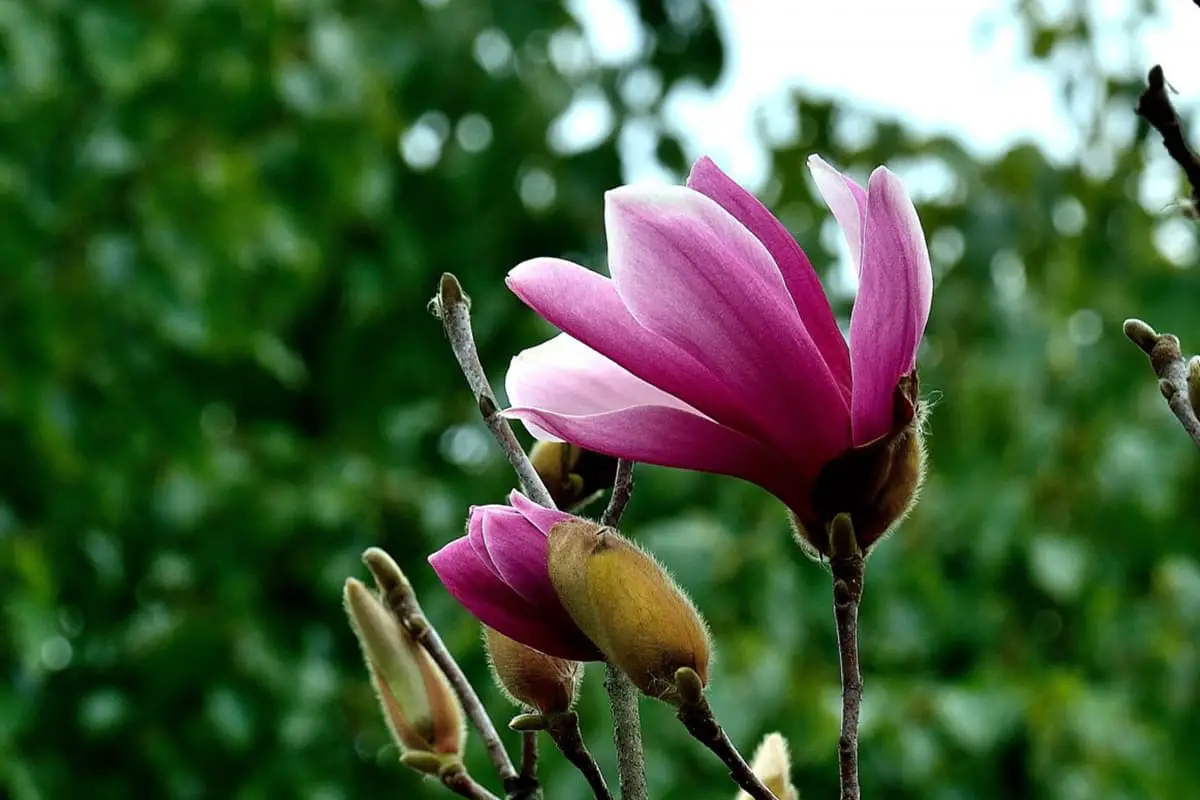
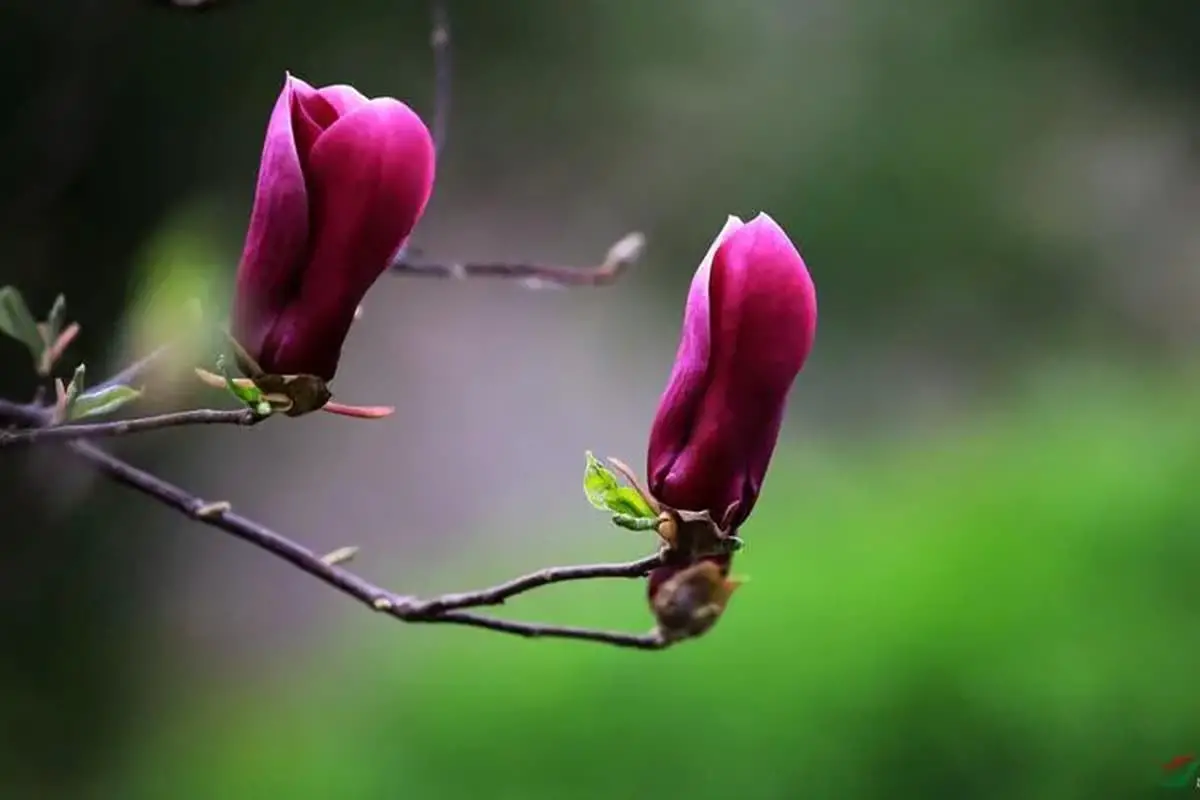
The flowers and leaves bloom simultaneously and are shaped like a bottle, standing upright on the robust and hairy peduncle, exuding a slight fragrance.
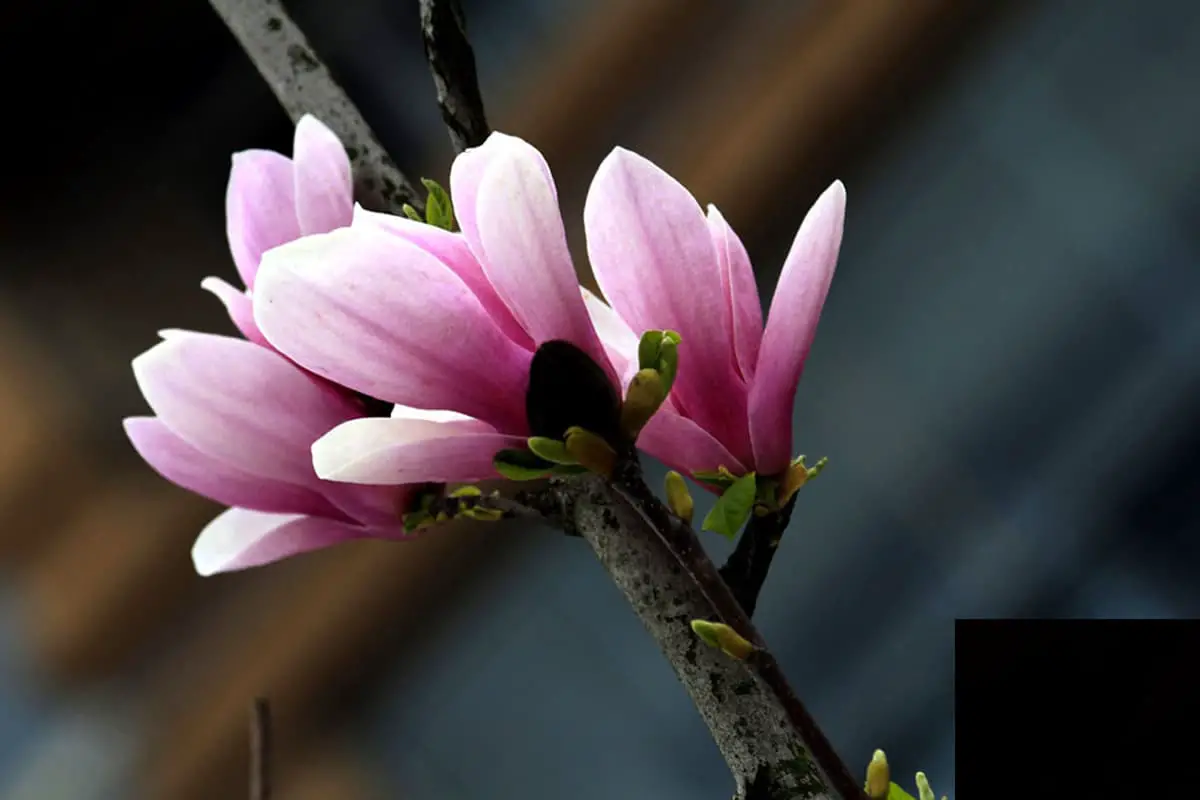
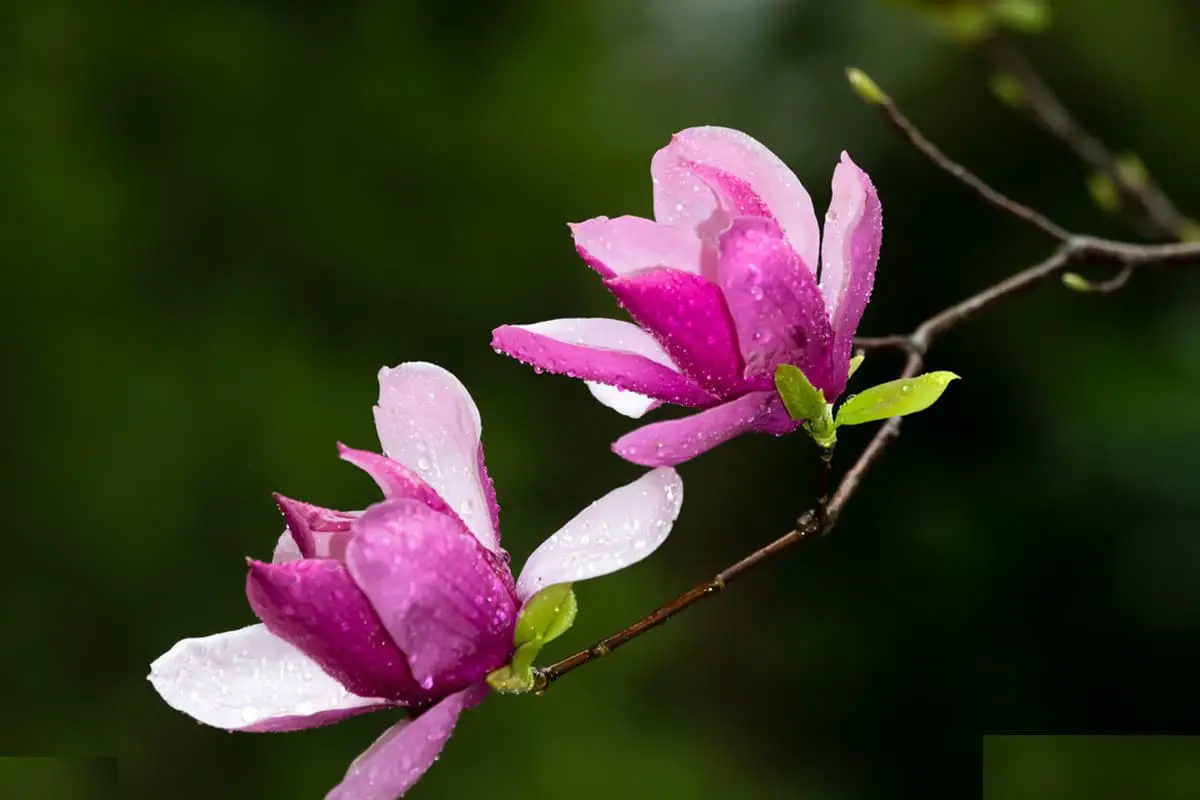
The flower has 9-12 tepals. The outer 3 tepals are sepal-like, purple-green, lanceolate, and 2-3.5 centimeters long, which usually fall off early. The inner two rounds are fleshy, purple or purplish-red on the outside, white on the inside, petal-like, ovate, 8-10 centimeters long, and 3-4.5 centimeters wide.
The stamens are purplish-red, 8-10 millimeters long, with anthers about 7 millimeters long, splitting laterally, with the septum protruding into a short tip. The pistil cluster is about 1.5 centimeters long, pale purple, and hairless.
It blooms from March to April and bears fruit from August to September. It is found in Fujian, Hubei, Sichuan, and the northwestern part of Yunnan in China. The bark, leaves, and flower buds of the purple magnolia can all be used for medicinal purposes.
After drying, the flower buds are called Xin Yi. They are fragrant and spicy, containing volatile oils mainly composed of citral, eugenol, and eucalyptol. They are used to treat rhinitis and headaches and act as analgesic and anti-inflammatory agents.
It has been a traditional Chinese medicine for over two thousand years and is also used as a rootstock for grafting other magnolia plants such as yulan magnolia and white magnolia. The purple magnolia is a famous early spring ornamental plant.
When it blooms in early spring, the tree is filled with purplish-red flowers, presenting an elegant and unique charm. It is suitable for planting in the front and back of classical gardens. It can also be planted alone or scattered in small courtyards.
I. Morphological characteristics
The purple magnolia is a deciduous shrub, up to 3 meters tall, often growing in clusters, with gray-brown bark and green-purple or light brown-purple branches.
The leaves are ovate or oval, 8-18 centimeters long, 3-10 centimeters wide, with an acute or tapering tip, and a base narrowing down to the petiole extending to the leaf scar. The upper surface is dark green, with sparse short soft hairs when young.
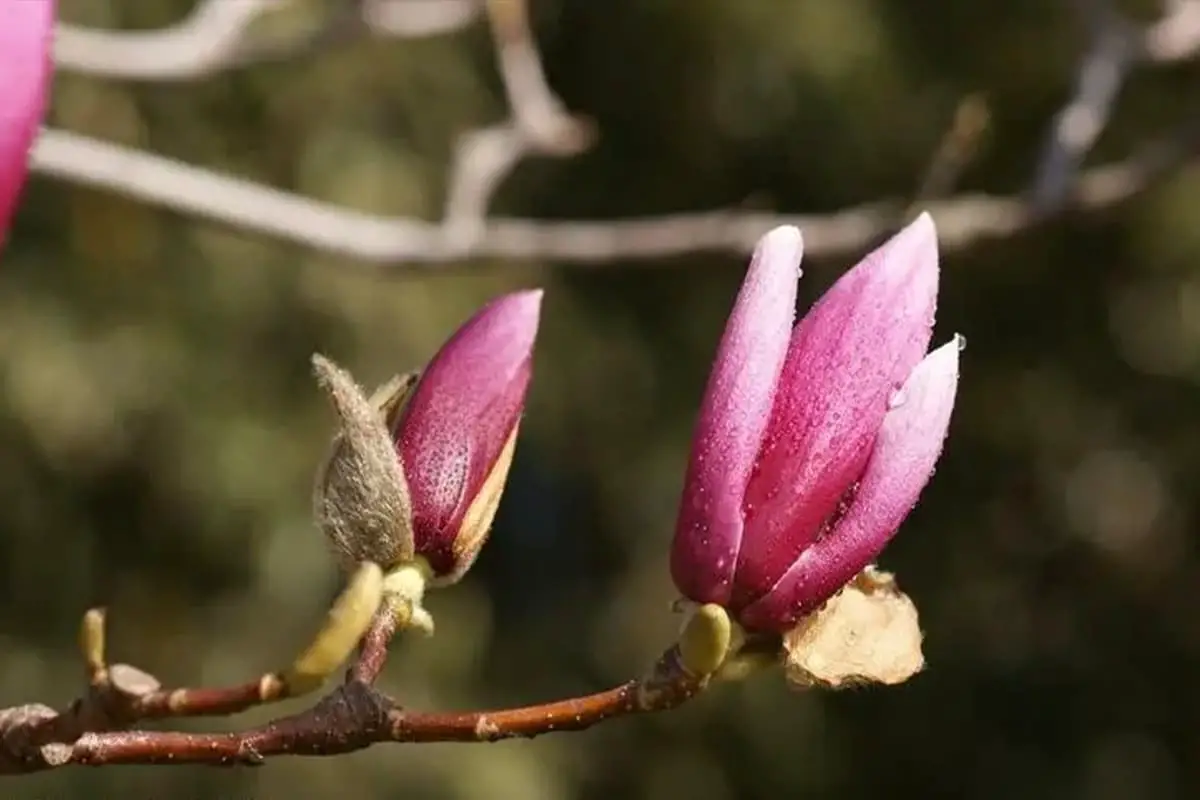
The underside is gray-green, with short soft hairs along the veins. There are 8-10 lateral veins on each side, and the petiole is 8-20 millimeters long, with the leaf scar about half the length of the petiole. The flower buds are ovate, covered with light yellow silk hairs.
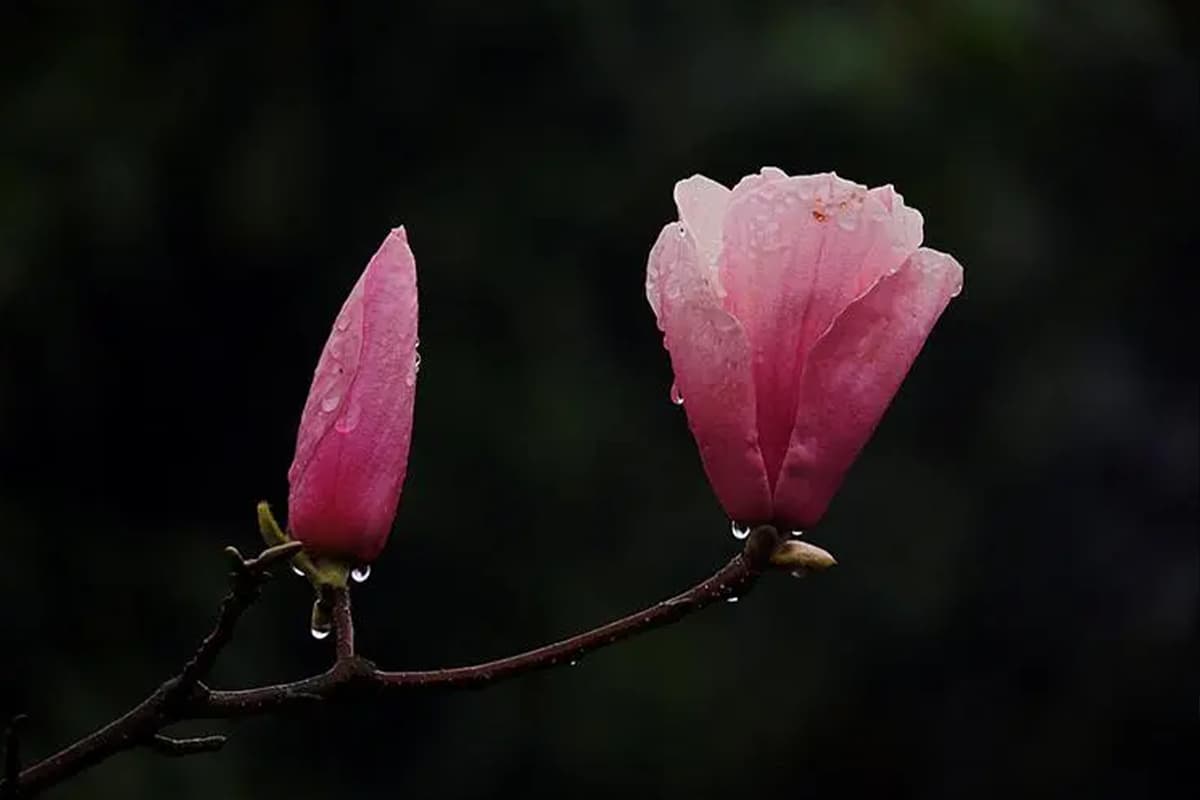
The flowers and leaves bloom simultaneously, are bottle-shaped, stand upright on the robust and hairy peduncle, and exude a slight fragrance. The flower has 9-12 tepals.
The outer 3 tepals are sepal-like, purple-green, lanceolate, and 2-3.5 centimeters long, which usually fall off early. The inner two rounds are fleshy, purple or purplish-red on the outside, white on the inside, petal-like, ovate, 8-10 centimeters long, and 3-4.5 centimeters wide.
The stamens are purplish-red, 8-10 millimeters long, with anthers about 7 millimeters long, splitting laterally, with the septum protruding into a short tip. The pistil cluster is about 1.5 centimeters long, pale purple, and hairless.
The aggregate fruit is dark purple-brown, turning brown, cylindrical, 7-10 centimeters long. The mature samara is nearly spherical, with a short beak at the top. It blooms from March to April and bears fruit from August to September.
II. Distribution range
It grows on mountain slopes at altitudes of 300-1,600 meters. This species has been a traditional flower in China for over two thousand years. It is cultivated in major cities across China and has been introduced to cities in Europe and America. Its bright colors are admired both domestically and internationally.
III. Growing Environment
Thrives in warm, humid, and sun-filled environment, with a good tolerance to cold, but not to drought and saline-alkali. It requires a fertile, well-drained loamy soil, and is intolerant to waterlogging.
IV. Propagatio
Common methods include division, layering, and seeding. After flowering, combine with repotting, tip plant upside down, and cut off the root sprouting offspring with a sharp shears or knife for separate planting.
Transplanting can be done in the fall or early spring before blooming. Seedlings should be coated with mud, and larger plants should be moved with a soil ball. Fertilize once before and after flowering, primarily with phosphorus and potassium fertilizers.
Maintain soil moisture during hot summers and dry autumn seasons. Prune dead, dense, and overly long branches before and after flowering. For seeding, collect seeds in September, store in sand during winter, and sow in the following spring. Germination occurs 20-30 days after sowing.
V. Main Value
Economic Value
The bark, leaves, and flower buds of Magnolia liliiflora can be used as medicine. The dried flower buds, known as Xin Yi, have a fragrant aroma and a spicy taste.
They contain volatile oils mainly composed of citral, eugenol, and eucalyptol, which are used to treat rhinitis and headaches, and as analgesic and anti-inflammatory agents.
It has been a traditional Chinese medicine for over two thousand years, and is also used as rootstock for grafting other magnolia plants.
Not only does Magnolia liliiflora have large and beautiful flowers, with graceful forms and a pleasant fragrance, making it highly ornamental and resistant to pests and diseases, but its flower buds, known as Xin Yi, have always been a major medicine in traditional Chinese medicine for treating nasal diseases.
The buds are picked before flowering and dried in a well-ventilated place. Modern research has shown that the volatile oils in Xin Yi can constrict nasal mucosal blood vessels and promote the absorption of secretions, thereby improving nasal ventilation.
For the treatment of acute and chronic rhinitis and sinusitis, take 10 grams each of Xin Yi and Cangerzi, decoct in a gauze bag, take the concentrated juice and drip into the nose 3 to 4 times a day for good results.
Horticultural Landscape
Magnolia liliiflora is a renowned early spring ornamental plant. When it blooms in early spring, the tree is covered with purple-red flowers, demonstrating its unique charm and elegance.
It is suitable for planting in front of halls and behind courtyards in classical gardens, and can also be planted alone or scattered in small courtyards.
Share
Facebook
Twitter
LinkedIn
Email
Share is Caring.
Peggie
Founder of FlowersLib
Peggie was once a high school mathematics teacher, but she set aside her chalkboard and textbooks to follow her lifelong passion for flowers. After years of dedication and learning, she not only established a thriving flower shop but also founded this blog, “Flowers Library”. If you have any questions or wish to learn more about flowers, feel free to contact Peggie.
Before you go
You May Also Like
We picked them just for you. Keep reading and learn more!
Yulania denudata, commonly known as the Yulan magnolia or lily tree, is a deciduous tree native to central and eastern China. It belongs to the Magnoliaceae family and was formerly…
The Magnolia grandiflora, also known as the Bull Bay or Large-flowered Magnolia, is a member of the Magnoliaceae family and genus. This evergreen tree is well-known for its ornamental qualities.…
The Magnolia soulangeana is a hybrid of the Magnolia denudata and Magnolia liliiflora. This deciduous small tree can reach up to 15 meters in height. Its leaves are broadly ovate…
Magnolia liliflora is a deciduous shrub or small tree in the Magnolia family. The bud is oval, and the flower is large and vase-shaped, with the outer petals being purple…
Types Of Flowers By Names (A-Z) Types Of Flowers By Color Types Of Flowers By Season Types Of Flowers By Blooming Time 600+ Types of Flowers No. Flower Name No.…
1. Uraria Crinita Uraria crinita, commonly known as Foxtail or Cat’s-tail, is a perennial sub-shrub belonging to the Fabaceae family (formerly Papilionaceae). This species is characterized by its erect stem…
China is home to a rich variety of plant and animal resources, boasting an exceptional botanical diversity that includes numerous rare and endemic species. However, a number of these rare…
1. Yucca Gloriosa Yucca gloriosa, commonly known as Spanish dagger or mound-lily yucca, is a striking evergreen shrub belonging to the Asparagaceae family and Yucca genus. This architecturally impressive plant…
1. Kerria Japonica Kerria japonica, commonly known as Japanese rose or Japanese kerria, is a graceful deciduous shrub belonging to the Rosaceae family. This ornamental plant is distinguished by its…


 English
  العربية
  Bahasa Indonesia
  Deutsch
  Français
  Italiano
  Nederlands
  Português
  Русский
  日本語
日本語