600+ Types of Flowers A To Z (With Names and Pictures)
Types Of Flowers By Names (A-Z) Types Of Flowers By Color Types Of Flowers By Season Types Of Flowers By Blooming Time 600+ Types of Flowers No. Flower Name No.…

The Magnolia soulangeana is a hybrid of the Magnolia denudata and Magnolia liliiflora. This deciduous small tree can reach up to 15 meters in height.
Its leaves are broadly ovate or ovate, with a wide-rounded tip and a soft, hairy underside. Blooming before the leaves in March, the flowers are bell-shaped, pale purple on the outside, and white on the inside.
It has three sepals resembling petals, half the length of the petals or nearly as long, sometimes green. The fruit ripens from September to October, resembling that of the Magnolia.
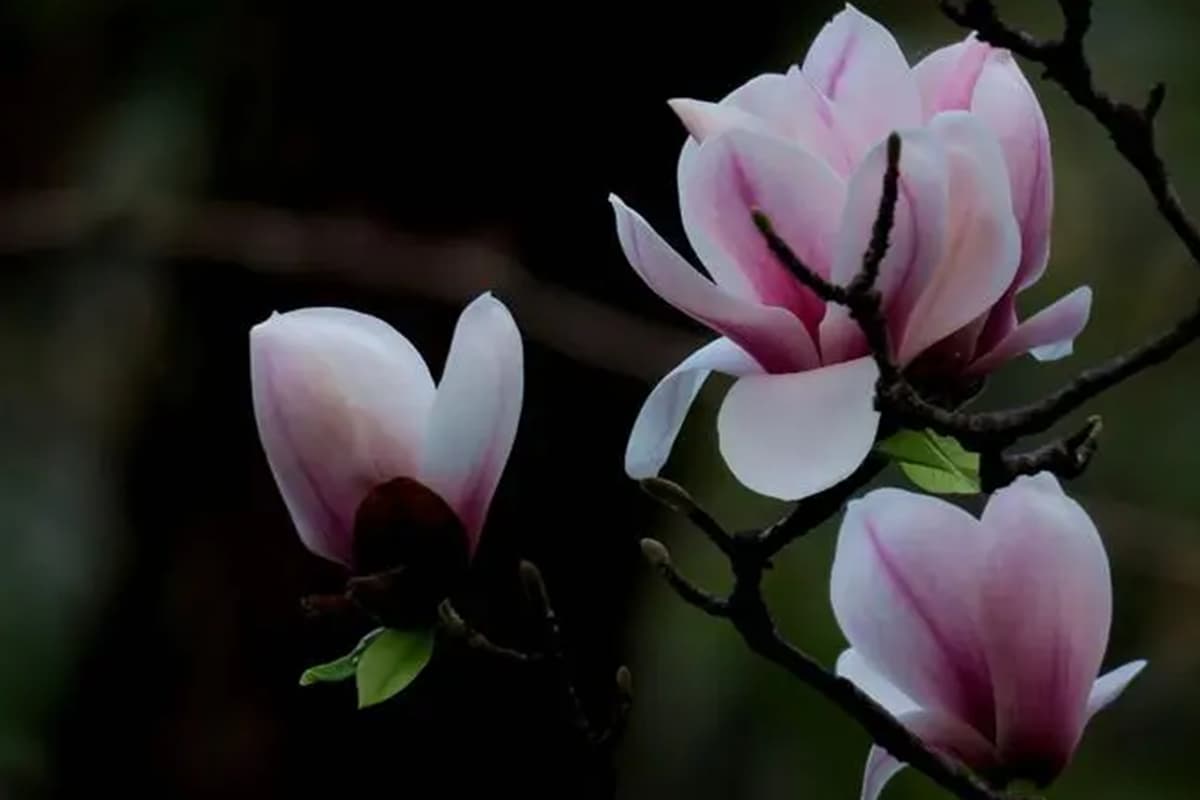
The small tree grows 6-10 meters tall, with glabrous twigs. The leaves are papery, ovate, 6-15 centimeters long and 4-7.5 centimeters wide, with a short acute tip. Below two-thirds, they taper into a wedge shape.
The upper surface often retains hairs along the central vein near the base, while the underside is more or less soft and hairy. There are 7-9 lateral veins on each side.
When dried, the veins on both sides protrude, making a netted pattern. The leaf stalks are 1-1.5 centimeters long and hairy, with stipule scars about one third the length of the leaf stalk.
Flower buds are ovate, blooming before the leaves, ranging from light to dark red. There are 6-9 tepals, with the outer three often being about two-thirds the length of the inner ones.
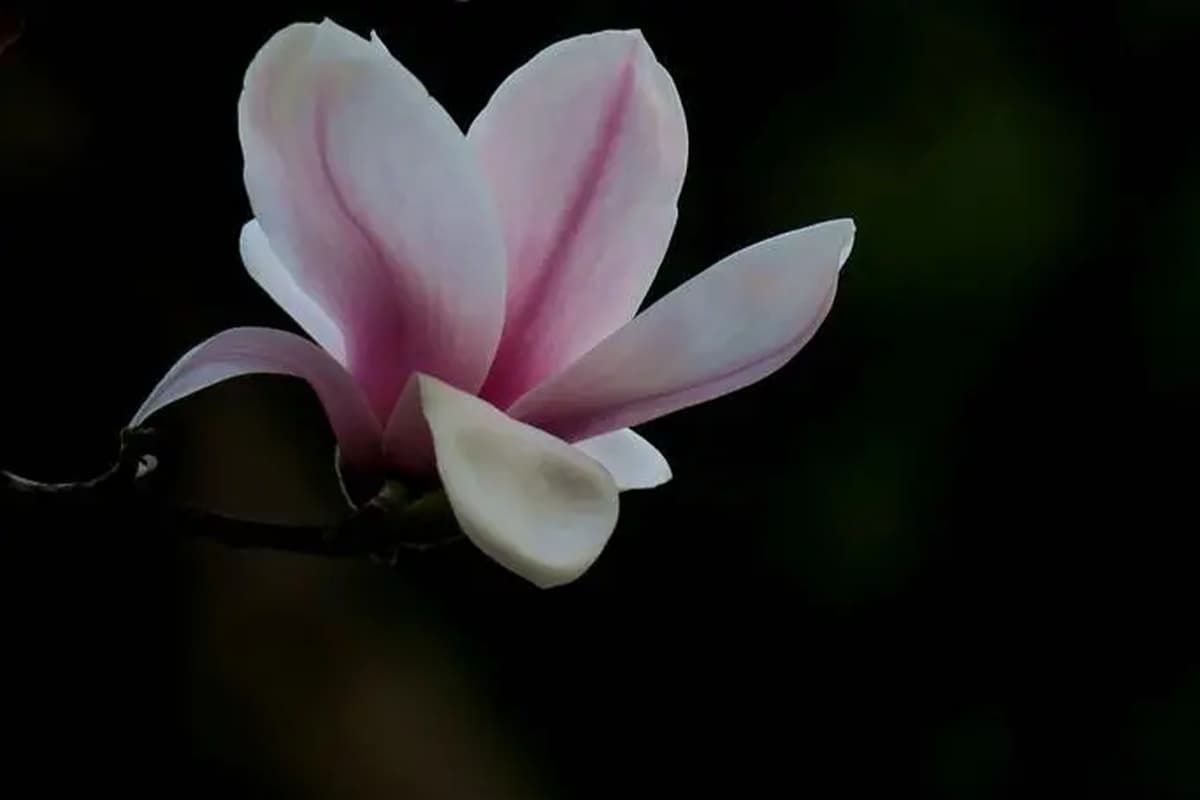
The stamens are 1-1.2 centimeters long, with anthers about 5 millimeters long that split laterally, extending into a short point. The pistil cluster is hairless and cylindrical, approximately 1.5 centimeters in length.
The aggregate fruit is about 8 centimeters long and 3 centimeters in diameter, with ovoid or broadly ovoid follicles, 1-1.5 centimeters long, turning black upon ripening and featuring white lenticels; the seeds are dark brown, broadly ovoid or ovoid, and laterally compressed.
The flowering period is February to March, and the fruiting period is September to October.
This species is a hybrid of Magnolia and Magnolia kobus, with tepals varying in size, shape, and color from purple to nearly white, and can be fragrant or not. In horticulture, there are about 20 cultivated varieties.
It prefers sunny and warm, humid climates. It is very sensitive to temperature changes, with a flowering period that can vary by 4-5 months between the north and south, and even within the same region, the bloom time can significantly differ each year.
It has a certain level of cold resistance, capable of overwintering safely at temperatures as low as -21°C.
The wood is of high quality, with straight grain and fine structure, used for furniture, veneers, and fine woodwork.
The flower buds serve medicinal purposes similar to those of Magnolia kobus and contain aromatic oils, which can be extracted for perfumes or tinctures.
The tepals are edible or used for scenting tea; the seeds can be pressed for oil for industrial use. In early spring, the tree blooms with a profusion of white flowers, vibrant and fragrant, making it a world-renowned ornamental tree for gardens.

Peggie was once a high school mathematics teacher, but she set aside her chalkboard and textbooks to follow her lifelong passion for flowers. After years of dedication and learning, she not only established a thriving flower shop but also founded this blog, “Flowers Library”. If you have any questions or wish to learn more about flowers, feel free to contact Peggie.
 English
  العربية
  Bahasa Indonesia
  Deutsch
  Français
  Italiano
  Nederlands
  Português
  Русский
  日本語
日本語