The Michelia figo, commonly known as the Banana Shrub, is an exquisite evergreen plant belonging to the Magnoliaceae family. This perennial shrub is renowned for its dense branching structure, grayish-brown bark, and the distinctive yellowish-brown velvet hairs that cover its buds, young branches, leaf stalks, and flower stems.
I. Botanical Characteristics
The Banana Shrub typically grows to a height of 2-3 meters (6.5-10 feet). Its leaves are leathery, narrowly elliptical or ovate-elliptical in shape, measuring 4-10 cm long and 1.8-4.5 cm wide. The upper surface of the leaves is glossy and glabrous, while the underside retains brown flat hairs along the veins.
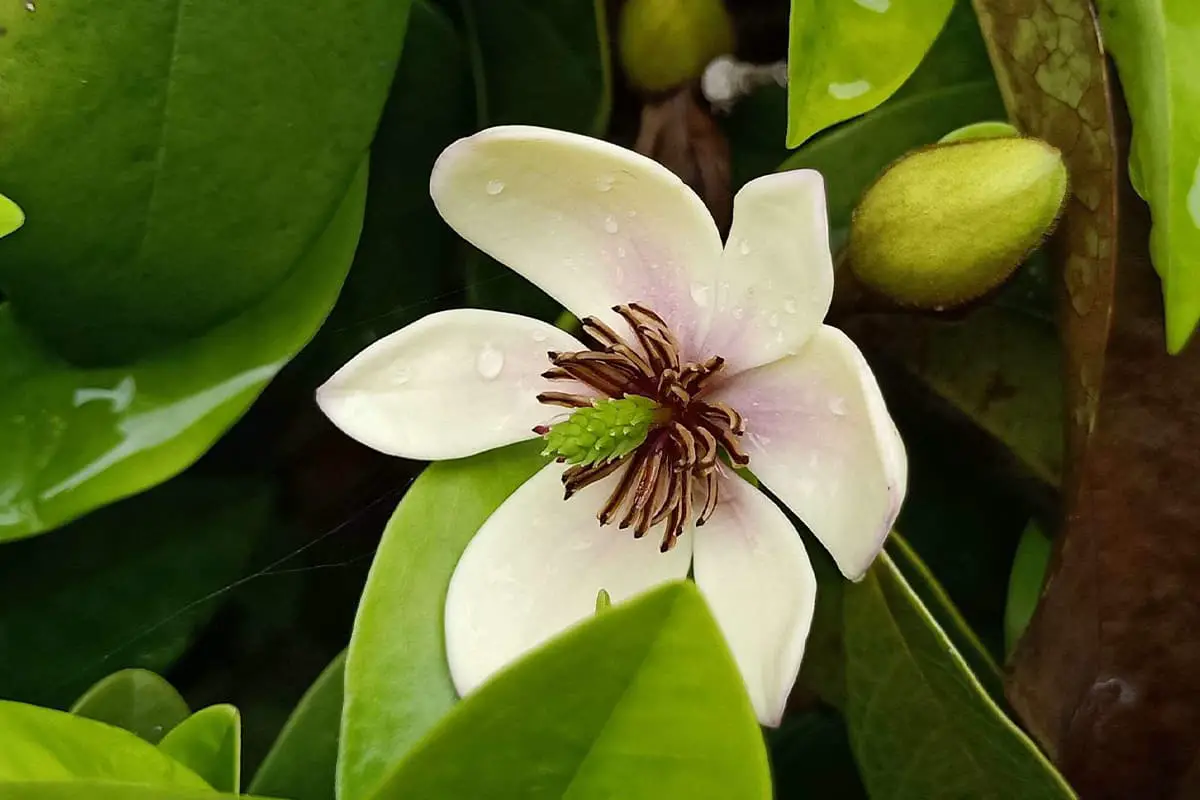
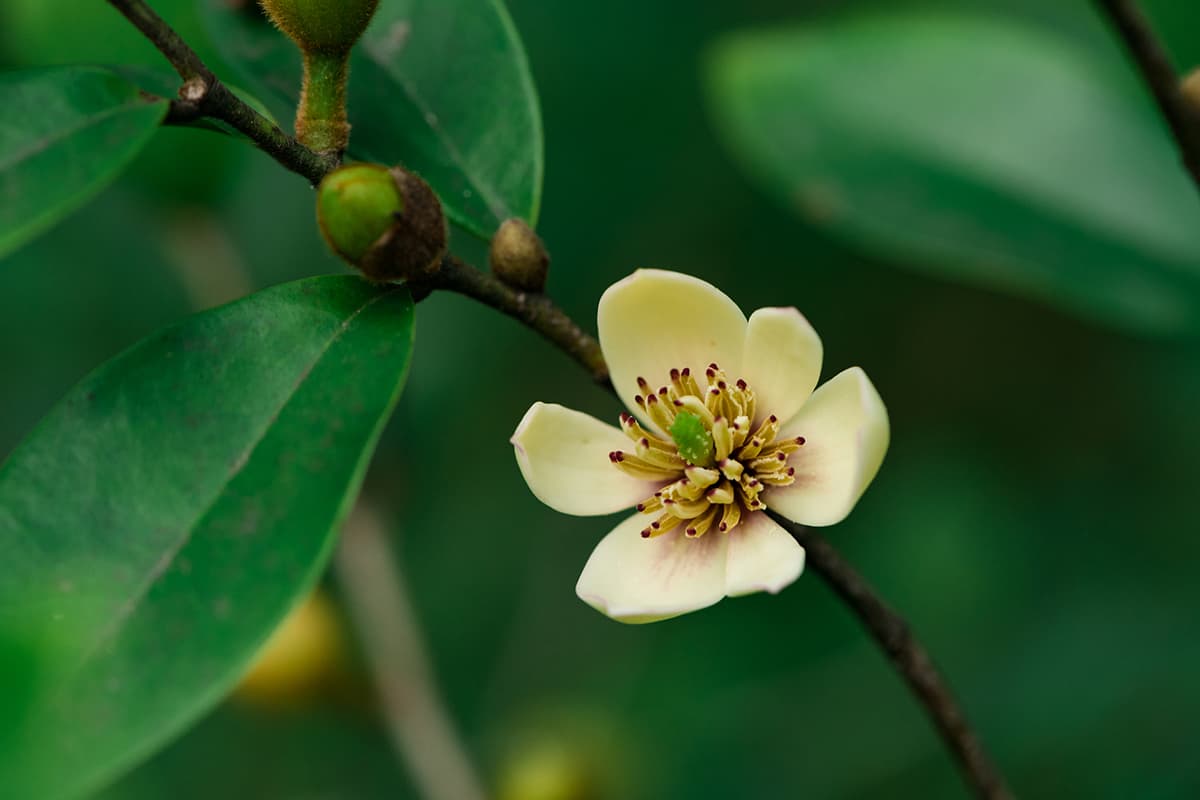
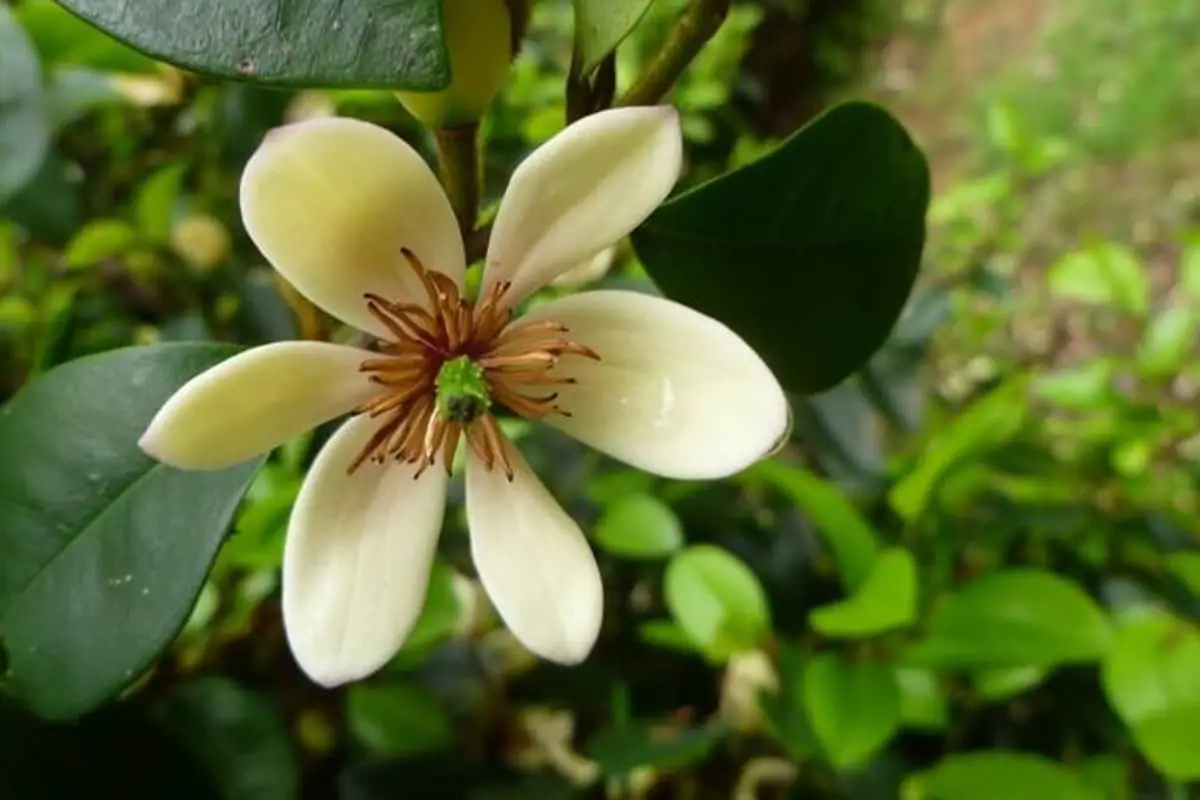
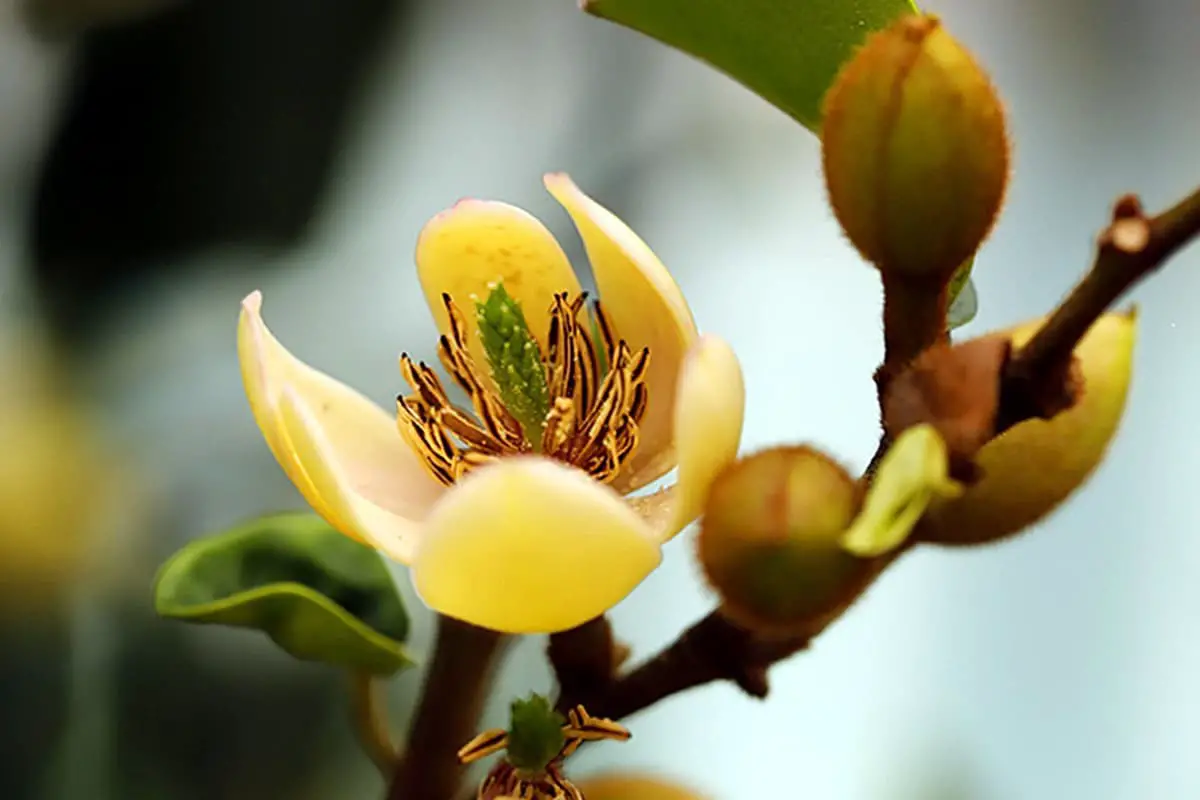
The flowers are its most distinctive feature. They stand upright and are pale yellow, occasionally adorned with red or purple edges. These blossoms emit a strong, sweet fragrance reminiscent of ripe bananas, hence the plant’s common name. The flowers measure 12-20 mm long and 6-11 mm wide, with six thick, fleshy perianth segments.
Interestingly, the Banana Shrub is often referred to as “the smiling flower” because its blossoms open but never fully, leaving the bud in a perpetual “smiling” state. The flowering period typically spans from March to May.
The fruit is an aggregate type, ovate or spherical in shape, measuring 2-3.5 cm long. The fruiting period occurs from July to August.
II. Growing Environment
The Banana Shrub thrives in specific environmental conditions:
Temperature: The ideal temperature range is between 10°C and 25°C (50°F-77°F). It can tolerate brief periods of cooler temperatures but should be protected when temperatures approach freezing.
Climate: It prefers a warm, humid climate and is not frost-resistant. In regions along and south of the Yangtze River basin, it can overwinter outdoors in protected locations. In colder areas, it requires greenhouse protection during winter.
Soil: The plant favors well-drained, fertile, slightly acidic loam (pH 6.0-6.5). While it can adapt to neutral soils, it does not tolerate poor or waterlogged conditions.
Light: It grows best in semi-shade conditions. While it requires some sunlight for optimal growth and flowering, it should be protected from intense, direct sunlight, especially during hot summer afternoons.
Water: The Banana Shrub prefers consistent moisture but is intolerant of waterlogging. Good drainage is crucial to prevent root rot.
III. Cultivation Techniques
1. Propagation Methods
The Banana Shrub can be propagated through several methods:
a) Stem Cuttings: Best done from late July to early September. Select 15 cm long woody branches or terminal buds with 3-8 leaves. Apply rooting hormone and plant in sandy soil.
b) Branch Layering: Performed in April on 2-year-old branches. Create a ring peel, apply moist moss, and wrap with plastic film. Roots typically develop in about two months.
c) Grafting: Less common but can be done in May-June, usually using Magnolia as the rootstock.
2. Watering
Maintain consistent soil moisture without overwatering. Water more frequently during the growth period and before blooming. In summer, mist the leaves to increase humidity. Reduce watering in autumn and winter.
3. Fertilizing
The Banana Shrub responds well to regular fertilization:
- Use a balanced mix of organic fertilizers (compost, bone meal, well-rotted manure).
- Apply fertilizer every 15 days during the growing season (April to September).
- Cease fertilization during blooming and after October.
- If leaves appear pale, apply a nitrogen-rich fertilizer.
4. Pruning
Prune lightly after flowering to maintain shape and encourage bushiness:
- Remove dead, diseased, or crossing branches.
- Thin out dense growth to improve air circulation.
- Remove spent flowers and developing fruit to conserve plant energy.
5. Repotting
Repot every 1-2 years, preferably in spring before new growth begins or after flowering:
- Use a well-draining potting mix rich in organic matter.
- Choose a pot slightly larger than the current one.
- Prune any dead or overly long roots during repotting.
6. Winter Care
In colder regions, winter protection is crucial:
- Move plants indoors or to a greenhouse when temperatures approach 5°C (41°F).
- Maintain temperatures between 5°C and 15°C (41°F-59°F).
- Reduce watering but maintain humidity above 65%.
- Provide adequate ventilation to prevent pest infestations.
- Apply a light organic mulch to protect roots.
IV. Pest and Disease Management
While generally robust, the Banana Shrub can be susceptible to:
- Scale insects and aphids: Treat with horticultural oils or insecticidal soaps.
- Root rot: Prevent by ensuring good drainage and avoiding overwatering.
- Leaf spot: Remove affected leaves and improve air circulation.
V. Uses and Benefits
The Banana Shrub offers multiple benefits:
- Ornamental: Its fragrant flowers and glossy foliage make it an excellent choice for gardens, patios, and indoor spaces.
- Medicinal: Traditionally used to promote blood circulation, relieve coughs, promote urination, and regulate menstruation.
- Culinary: The petals can be used to make aromatic floral teas.
- Air Purification: The plant has a strong ability to purify air, making it suitable for planting near houses or along fences.
In conclusion, the Banana Shrub (Michelia figo) is a versatile and rewarding plant to grow. With proper care and attention to its specific needs, it can provide years of fragrant blooms and lush foliage, enhancing any garden or indoor space with its unique charm and benefits.
VI. Cultivation Techniques
Watering
Michelia alba requires consistent moisture in the potting soil, but it’s crucial to avoid waterlogging. The fleshy nature of its roots makes them susceptible to root rot if exposed to excessive water or poor drainage, especially after heavy rainfall.
During the active growth period and before flowering, the plant demands more frequent watering, typically daily. However, in high summer temperatures, it’s beneficial to mist the foliage to maintain adequate humidity. As autumn and winter approach, with shorter daylight hours, reduce watering to once or twice a week.
Humidity management is particularly critical during rainy seasons. Ensure proper drainage and adjust watering frequency to prevent oversaturation.
Fertilizing
Michelia alba responds well to a balanced fertilizer regimen. An ideal fertilizer mix includes well-rotted organic matter, bone meal, poultry manure, and fish emulsion. Apply this mixture every 15 days during the growing season (April to September).
Cease fertilization during the blooming period and after October. If the foliage lacks vibrancy or deep green coloration, supplement with a nitrogen-rich fertilizer to promote leaf health and color.
Pruning
Michelia alba doesn’t require extensive pruning. After flowering, focus on removing excessive, weak, or densely overlapping branches that compromise the plant’s aesthetic shape. Fruit removal post-flowering helps conserve plant energy.
Before spring bud break, selectively thin out some older leaves to encourage new growth and maintain plant vigor.
Repotting
Repot Michelia alba every one to two years, ideally in early spring before new growth emerges or after flowering. Autumn repotting is also acceptable.
During the process, remove a portion of the old soil and replace it with a fertile, well-draining potting mix. Prune dead branches and excessively long old roots. Incorporate a slow-release fertilizer into the new potting soil to provide essential nutrients.
Winter Care
In colder regions, Michelia alba requires indoor overwintering. Consider the following care points:
Temperature: Maintain winter temperatures between 5°C (41°F) and 15°C (59°F). Below 5°C, the plant’s physiological processes slow, potentially causing wilting and reduced nutrient uptake. Conversely, temperatures above 15°C may lead to excessive nutrient consumption, affecting next year’s growth.
Humidity: Aim for a relative humidity above 65%. In dry conditions, use a mister to increase humidity around the plant and in its vicinity. Ensure the water temperature is close to room temperature to avoid thermal shock.
Watering: Reduce watering frequency to once a week in winter. Water temperature should match room and soil temperature. Water at midday when temperatures are higher, avoiding early morning or evening watering to prevent root damage from temperature fluctuations.
Ventilation: Ensure adequate air circulation to prevent pest infestations like aphids and scale insects. If using coal heating, be cautious of harmful gases. Ventilate on calm, sunny days to provide fresh air and light.
Fertilizing: In northern regions, Michelia alba enters dormancy or semi-dormancy in winter. Apply a moderate amount of organic base fertilizer to support next year’s blooming cycle.
VII. Disease Control
Michelia alba is susceptible to several foliar diseases, including leaf wilt, anthracnose, algal leaf spot, and sooty mold. These conditions can significantly impair plant health and aesthetics.
For leaf wilt prevention, apply a 0.3% lime sulfur solution every 15 days in early spring. If the disease is present, use a 65% Zineb wettable powder solution diluted 500-600 times.
To manage anthracnose and algal leaf spot, focus on proper fertilization and irrigation practices. Increase phosphorus and potassium levels to enhance plant resistance. During active infections, apply a 0.5% Bordeaux mixture or 5% Topcide wettable powder solution (diluted 600-750 times) every 10 days.
Sooty mold control begins with pest management, as insects often contribute to its development. For mild cases, washing leaves with clean water and improving air circulation can be effective. In severe instances, apply a 50% Topsin-M wettable powder solution (diluted 800-1000 times) every 10 days for 2-3 applications.
Black mold can be treated with a 0.5% Bordeaux mixture or by carefully wiping affected areas with 5% alcohol. For chlorosis, spray a 0.1%-0.2% ferrous sulfate solution.
The primary pests affecting Michelia alba are scale insects, aphids, and spider mites. Control these with an 80% methamidophos solution diluted 1000-1500 times. Ensure proper pruning for adequate air circulation and light penetration. For light infestations, manually remove pests. During larval hatching periods, apply a 40% Lebaycid emulsion diluted 2000 times.
VIII. Primary Value
Medicinal Value
Michelia alba, like many ornamental plants, offers more than aesthetic appeal. Its flowers contain various bioactive compounds and essential oils with potential therapeutic benefits.
Traditional uses of Michelia alba include promoting circulation, supporting respiratory health, and regulating menstruation. It’s been employed in treating conditions such as irregular menstruation, chronic bronchitis, prostatitis, and urinary frequency.
Recent scientific studies have begun to explore the potential antioxidant, anti-inflammatory, and antimicrobial properties of Michelia alba extracts, though more research is needed to fully understand and validate these effects.
Beauty and Health
The aromatic compounds in Michelia alba flowers may contribute to stress reduction and mood improvement when used in aromatherapy. The plant’s essential oils are sometimes incorporated into skincare products for their potential antioxidant and skin-soothing properties.
Regular exposure to plants like Michelia alba in living or working environments has been associated with various psychological benefits, including improved mood, reduced stress, and enhanced cognitive function.
Ornamental Value
Michelia alba is primarily valued for its ornamental qualities. Its elegant white flowers and glossy, evergreen foliage make it an excellent choice for both container gardening and landscape design.
In gardens, Michelia alba is often used as a focal point or as part of mixed shrub borders. Its compact growth habit (typically 2-3 meters in height) makes it suitable for smaller gardens or urban landscapes.
The flowers are most fragrant when the buds are swollen and the outer petals are just beginning to unfurl, making this an ideal time for cut flower arrangements.
Other Values
Beyond its ornamental and potential medicinal uses, Michelia alba serves several other functions:
Ecological Value: In its native habitat, Michelia alba plays a role in local ecosystems, providing food and shelter for various insects and birds.
Air Purification: Like many plants, Michelia alba can help improve air quality by absorbing carbon dioxide and releasing oxygen. It may also help filter certain air pollutants, though specific studies on Michelia alba’s air-purifying capabilities are limited.
Floral Tea: The petals can be used to create an aromatic floral tea, often blended with other tea leaves for added complexity.
Natural Fragrance: The strong, sweet scent of Michelia alba flowers makes it valuable in the perfume industry and for natural home fragrancing.
IX. Plant Culture
Flower Language
In the language of flowers, Michelia alba is often associated with concepts such as:
- Purity and innocence
- Dignity and nobility
- Subtle beauty and elegance
- Reserve and modesty
The characteristic of Michelia alba flowers to bloom gradually, seeming to “smile without speaking,” aligns with traditional Chinese values of subtlety and implied meaning. This quality has led to its association with reserve and understated beauty in Chinese culture.
In some contexts, Michelia alba may also symbolize:
- Secret love or hidden affection
- Sweetness and grace
- Femininity and delicateness
The cultural significance and symbolism of Michelia alba can vary between different regions and traditions, reflecting its wide distribution and long history of cultivation in various parts of Asia.


 English
  العربية
  Bahasa Indonesia
  Deutsch
  Français
  Italiano
  Nederlands
  Português
  Русский
  日本語
日本語