Habenaria radiata, also known as the Egret Flower
Habenaria radiata, commonly known as the egret flower, is native to Korea, Taiwan, and Japan. It belongs to the Orchid family, and there are 12 known cultivated species. The egret flower blooms from July to September, with white flowers and stalks ranging from 20 to 50 centimeters high.
It has an underground stem. Because the egret flower is extremely beautiful, overharvesting has led to a sharp decline in numbers, making it an endangered plant species. It is ranked third in the top ten unusual plants.
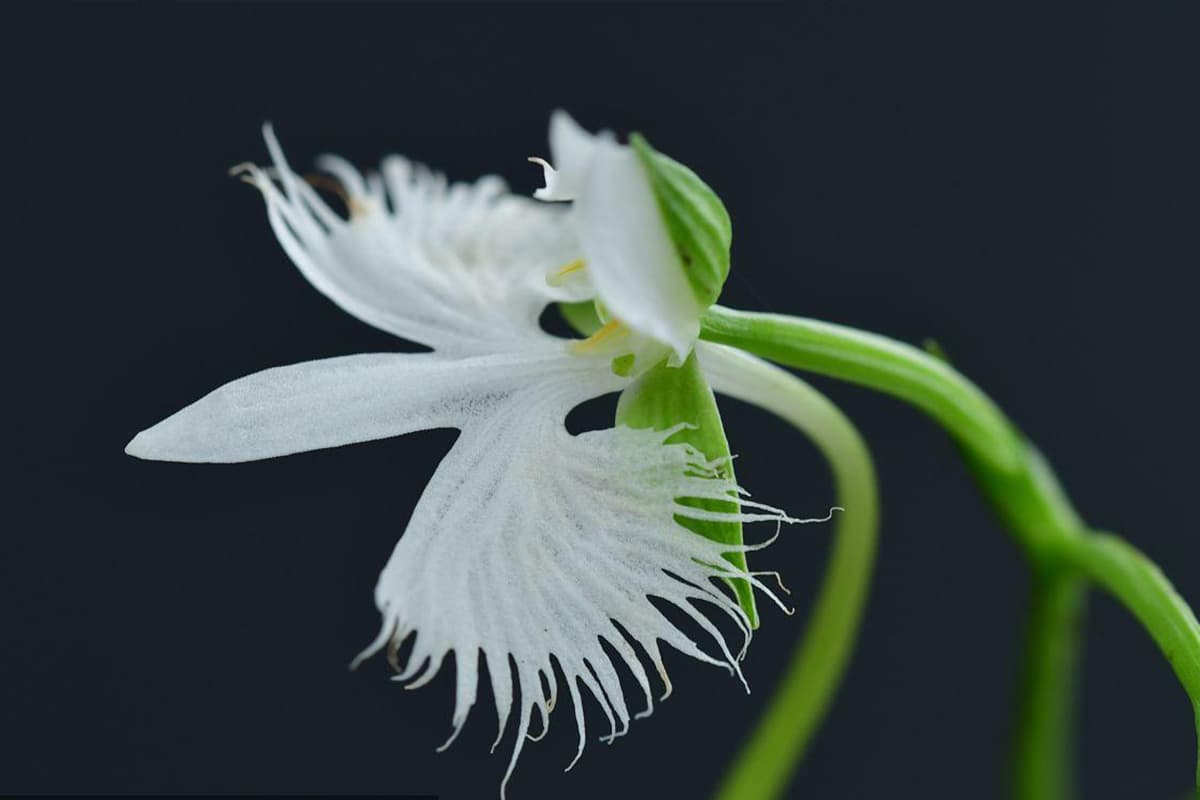
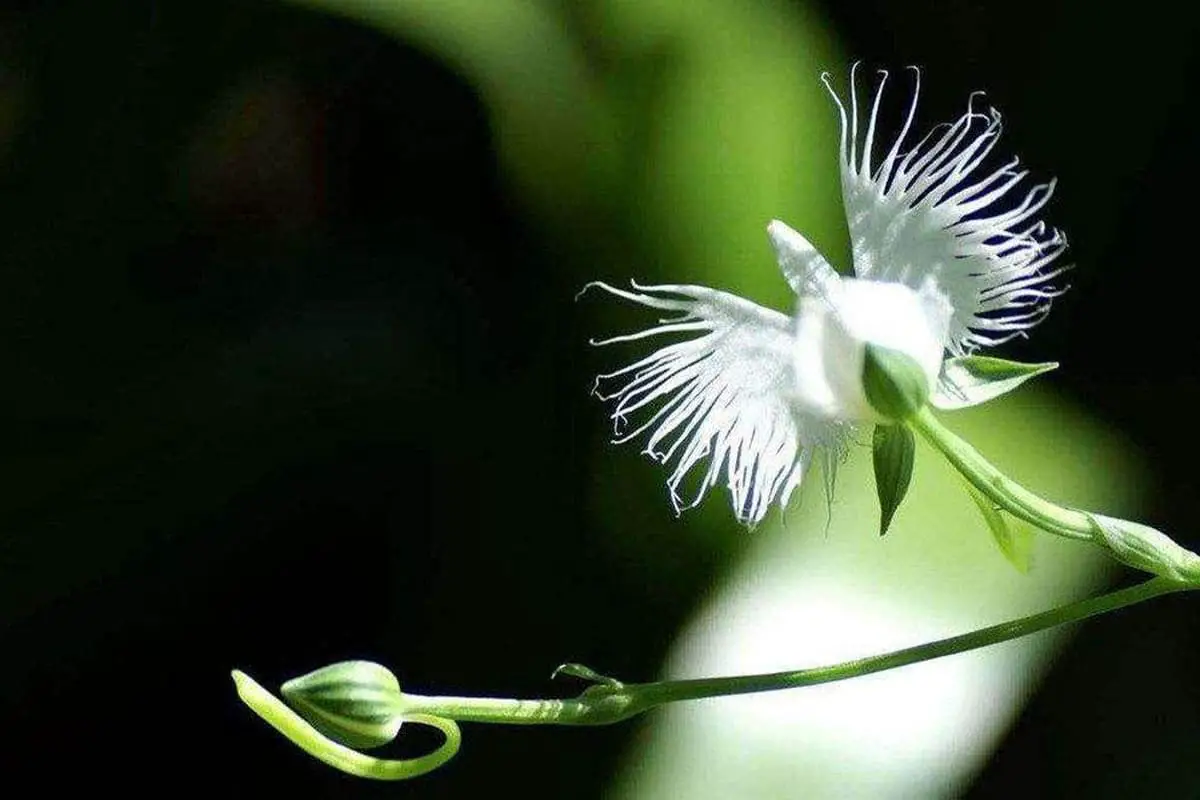
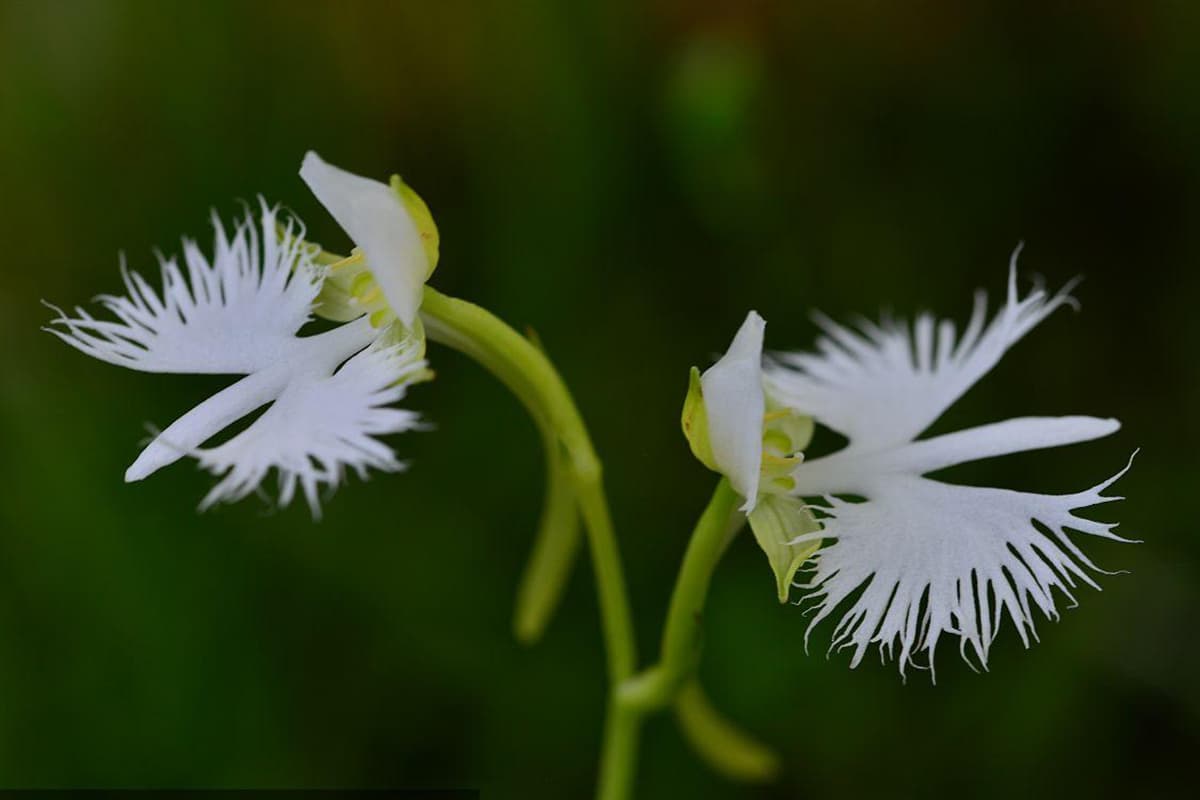
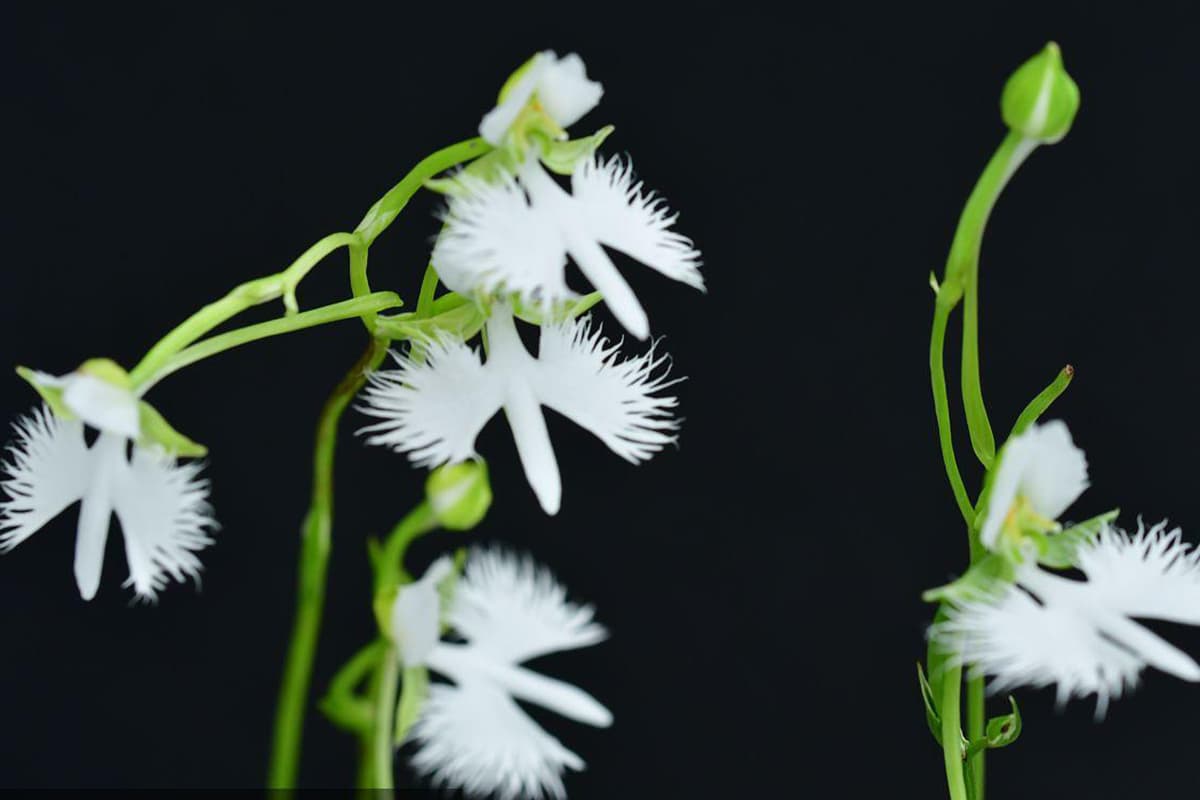
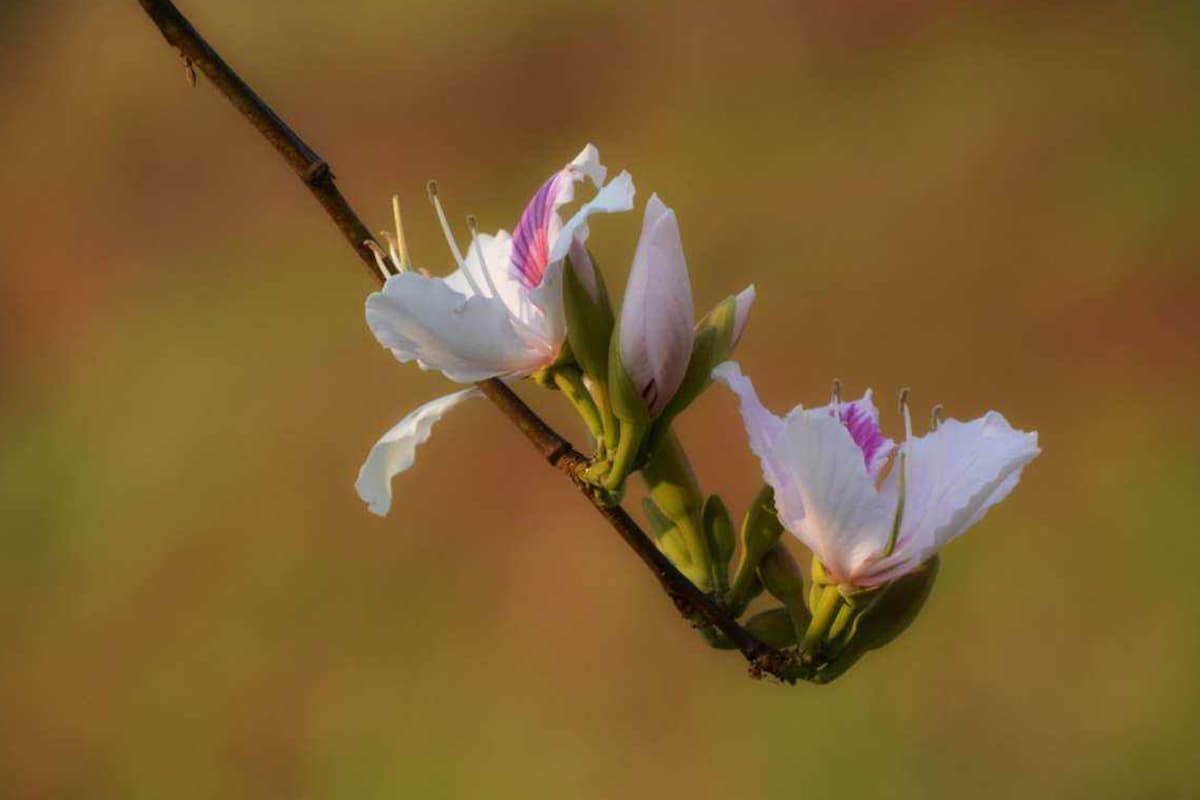
This all-white flower, which resembles a egret poised to fly, possesses its own unique beauty. Few plants have such dynamism, as if they could spread their “wings” and fly into the sky at any time, blown away by the wind.
Basic Introduction
The egret flower is named for its peculiar shape, which resembles a white bird ready to take flight. The edges of its petals are like loose necklaces or wings spread in the wind, hence the name egret flower. It is found in Southern Europe and Asia.
Growth and Distribution
The egret flower’s blossom is quite unique, surrounded by four tulip-shaped petals, but the middle is empty. Once greedy insects enter the hollow part of the egret flower, the flower automatically closes its “petals,” trapping them tightly until they suffocate and die.
The egret flower can then freely absorb their nutrients. Although the egret flower’s blossoms are brightly colored, they have a very unpleasant smell, reminiscent of rot. However, while we humans may not like it, insects are very attracted to it, making the smell of the egret flower an important trick in attracting insects.
Egret flowers are commonly found in sunny, moist places. They are generally distributed in the southwestern part of Namibia and the northern Cape of South Africa.
Habitat and Lifestyle
Sun exposure: Full or half-day sun is fine.
Management: When the aboveground parts wither, it should be moved to a shady place.
Water: They prefer moisture. From spring to autumn, water thoroughly when the surface of the potting soil is dry and white. During summer, high temperatures can make the potted plant stuffy and overly wet, so be careful when watering.
In winter, when the aboveground part wilts, water once every 2-3 weeks, keeping the potting soil slightly moist.
Morphological Features
Habenaria radiata, the African egret flower, belongs to the Euphorbiaceae family, which currently includes over 2,000 known species worldwide. This plant grows in the arid and barren desert regions of South Africa and is a silver-grey, succulent shrub that can grow up to two meters in height. Its rhizomes are hard like wood and have a honeycomb-like appearance. It is also a unique flesh-colored parasitic flower that latches onto the rhizomes of nearby shrubs. Its foul-smelling flower clusters attract swarms of carrion beetles.
The Hydnora (African egret flower) flower can grow about 8 to 10 centimeters out of the ground. The flower itself is 4 to 7 centimeters tall, bright red, hollow inside, and fleshy, with three to four thick tulip-shaped petals attached at the top. To attract pollen carriers like carrion beetles, it emits a foul smell of rotting meat. Because Hydnora flowers often hide in the bushes that act as their hosts, they are difficult to find. Their presence is only revealed by their distinctive odor.
The egret flower’s blossom is unique, surrounded by four tulip-shaped petals with an empty center. When insects enter the hollow part of the egret flower, the flower automatically closes its “petals,” tightly binding them until they suffocate.
The egret flower can then freely absorb their nutrients. Although the egret flower’s blossoms are bright, they have a strong and unpleasant smell, reminiscent of decay. However, insects are very attracted to this scent, making it an important tool for the egret flower to attract them.
How to Grow the Egret Flower
The egret flower is a perennial orchid. The seeds are spherical and usually potted in March (around 20 degrees Celsius) using fine Akadama soil as the medium. To increase the organic matter and fertility of the cultivation soil, the medium can be mixed at a ratio of 50% peat and 50% Akadama soil.
Peat contains various trace elements and has good cohesiveness, water retention, and breathability. It doesn’t compact, is bacteria-free, doesn’t cause root chaos, promotes sprouting, and doesn’t need to be fertilized for two years. A light fertilizer can be applied every 3-5 years.
Both media are used in their smallest sizes. When planting, the end with the bud points upwards. After covering the soil, tamp it gently to ensure full contact with the seed. Watering is done in the form of a spray, as egret flowers, like irises, prefer a moist environment. From April to May, the seeds start to germinate, the seedlings gradually grow larger, and flower arrows emerge.
The egret flower’s blooming period is in the summer. During this time, shade and moisture should be maintained. After the flowers fade, the flower arrows are cut off with a disinfected pair of scissors. In autumn, the leaves will gradually turn yellow. In winter, frost protection should be observed as the leaves will wither. However, the seeds are not dead and will grow new seed balls.
Plant Culture
Flower Language of the Egret Flower
The blossom of the egret flower is extremely unique and resembles a miniature egret, with even the feathers of the wings visibly detailed, hence the name “egret flower”. This most unique flower in the world symbolizes mystery and longing even in dreams. The spreading wings of the egret can represent unfathomable mystery and also convey endless yearning.
Legend of the Egret Flower
According to legend, during the turbulent period in Japanese history, regions were independently governed. Kira Yoshitaka was the castle lord of Setagaya at the time, ruling over the Tokyo area. As a ruler, Kira naturally had a harem, but his favorite was Tokiwa Gozen. Tokiwa was a stunning beauty with a face that could put a goose to shame and frequently enjoyed Kira’s exclusive affection. However, jealousy is a scary thing among women, and the neglected wives and concubines hated Tokiwa.
Eventually, Tokiwa became pregnant, and the neglected concubines began to spread rumors that she was having an affair. At first, Kira did not take it seriously, but over time, the rumors grew larger and larger in his heart. Eventually, Kira began to neglect Tokiwa and even sent her into exile.
Going from a life of favor to a fall from grace, Tokiwa’s misfortune gradually led her to become sullen, and she chose death to prove her innocence. Before committing suicide, she wrote a letter stating her innocence and tied the letter to the leg of an egret, hoping that the egret could bring the letter to her father to prove her innocence.
As it turned out, this egret encountered Kira while he was hunting, and he shot down the egret with a single arrow. Upon seeing the letter on the egret’s foot and reading it, he realized it was the suicide note of Tokiwa, whom he had exiled. Kira hurried back to rescue her, but only found the lifeless Tokiwa and a baby. Kira then realized what he had lost – his most beloved concubine and his own son – and was overcome with grief.
The following year, white flowers that people had never seen before bloomed where the egret had died. Because the shape of the blossoming flowers resembled a flying egret, people named it the egret grass, in memory of the egret that died to prove Tokiwa’s innocence.


 English
  العربية
  Bahasa Indonesia
  Deutsch
  Français
  Italiano
  Nederlands
  Português
  Русский
  日本語
日本語