600+ Types of Flowers A To Z (With Names and Pictures)
Types Of Flowers By Names (A-Z) Types Of Flowers By Color Types Of Flowers By Season Types Of Flowers By Blooming Time 600+ Types of Flowers No. Flower Name No.…

Lonicera japonica, commonly known as Honeysuckle, is a traditional Chinese medicine. It is the dried bud or unopened flower of the honeysuckle plant. It has the effect of clearing heat and detoxifying.
It’s mainly used to treat fever caused by external wind-heat or warm diseases, heat stroke, dysentery due to heat toxins, abscesses, throat inflammation, and various infectious diseases.
Honeysuckle, Egret flower, Silver flower, Twin flower, Two flowers, Golden vine flower, Double bract flower, Gold flower, Twin treasure flower.
The dried buds or unopened flowers of Lonicera japonica.
Sweet and cold.
Lung and stomach meridians.
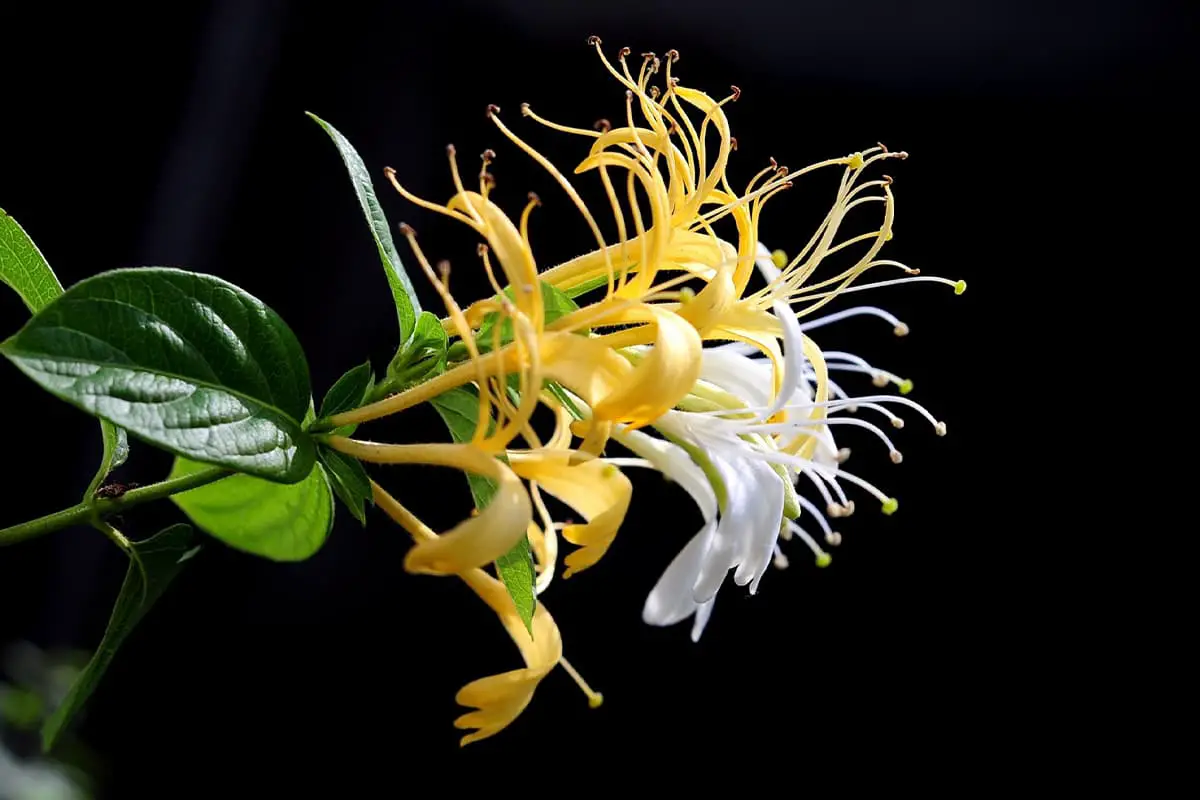
Clearing heat, detoxifying, reducing inflammation and swelling.
It’s mainly used to treat fever caused by external wind-heat or warm diseases, heat stroke, dysentery due to heat toxins, abscesses, throat inflammation, and various infectious diseases.
Oral administration: decoction, 10-20g; or made into pills or powders;
External use: appropriate amount, crushed and applied.
Use with caution in cases of spleen and stomach deficiency-cold and ulcer of yin nature.
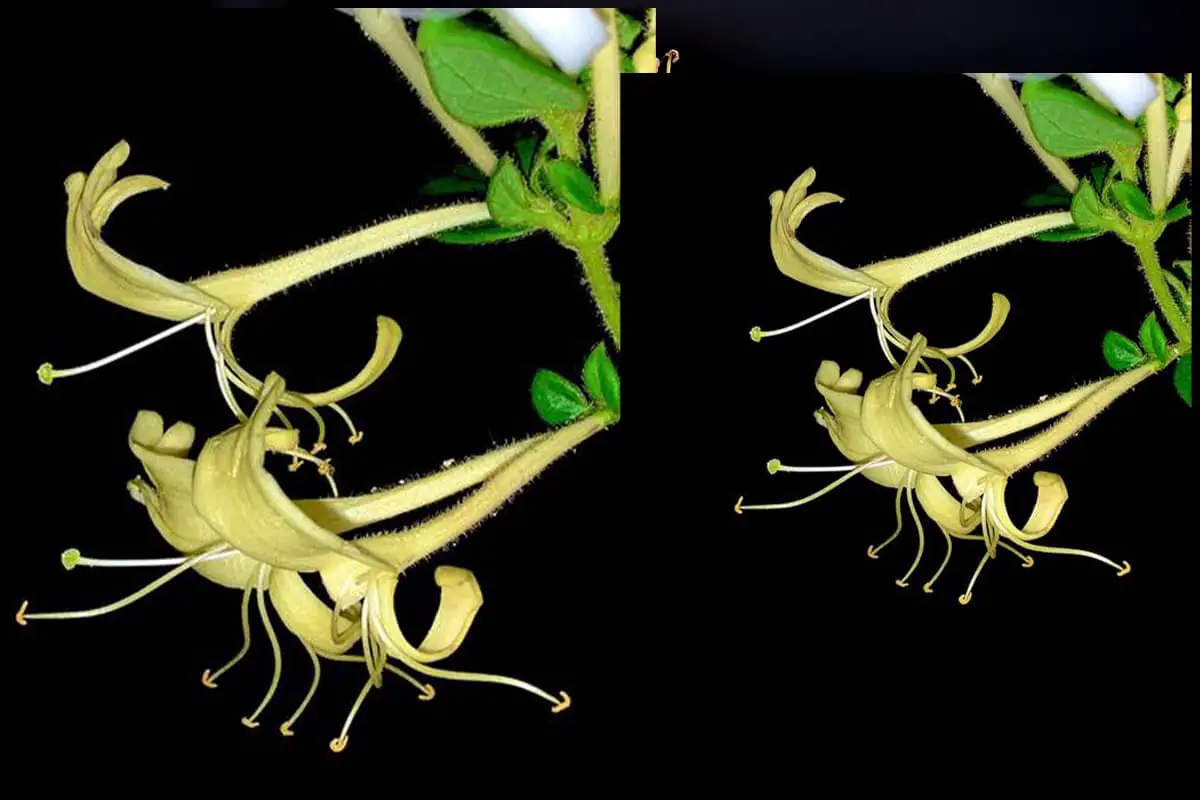
After 3-4 years of transplanting, the honeysuckle blooms in a concentrated period. Harvest in batches, generally the first flowering in mid to late May, and the second flowering in mid to late June.
It is best to harvest when the upper part of the bud is swollen, turns from green to white, and is not yet open. After harvesting, honeysuckle should be dried or baked immediately to prevent mold and deterioration.
When air-drying, do not turn it over at will to prevent the flowers from turning black. The baking temperature should be controlled.
Initially, bake at 30-35°C, raise to 40°C after 2 hours, bake for 5-10 hours, then keep the room temperature at 45-50°C for another 10 hours, and finally raise the temperature to 55-60°C to dry the flowers quickly.
Do not turn it over or stop baking when it is not dry. The yield and quality of baked honeysuckle are higher than those of air-dried ones.
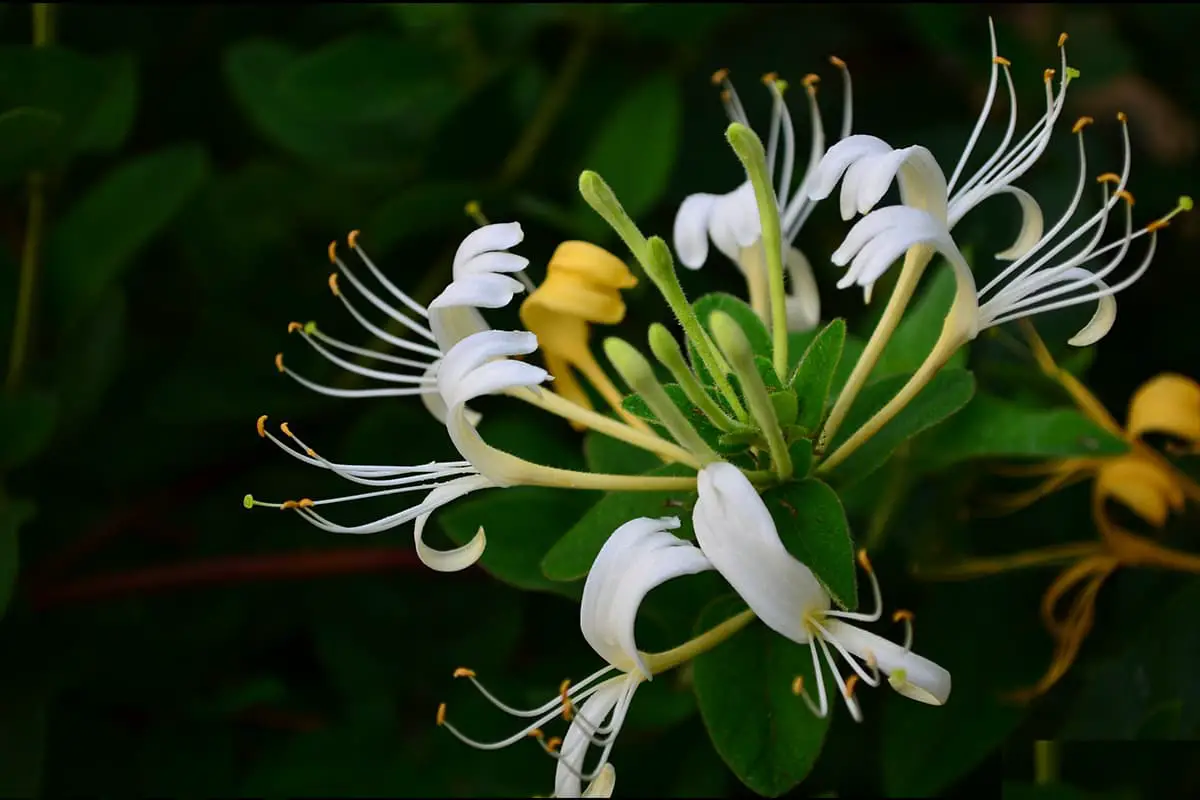
Store in a dry container, keep in a cool and dry place, moisture and moth proof. Honeysuckle charcoal should be cooled and prevented from re-ignition.
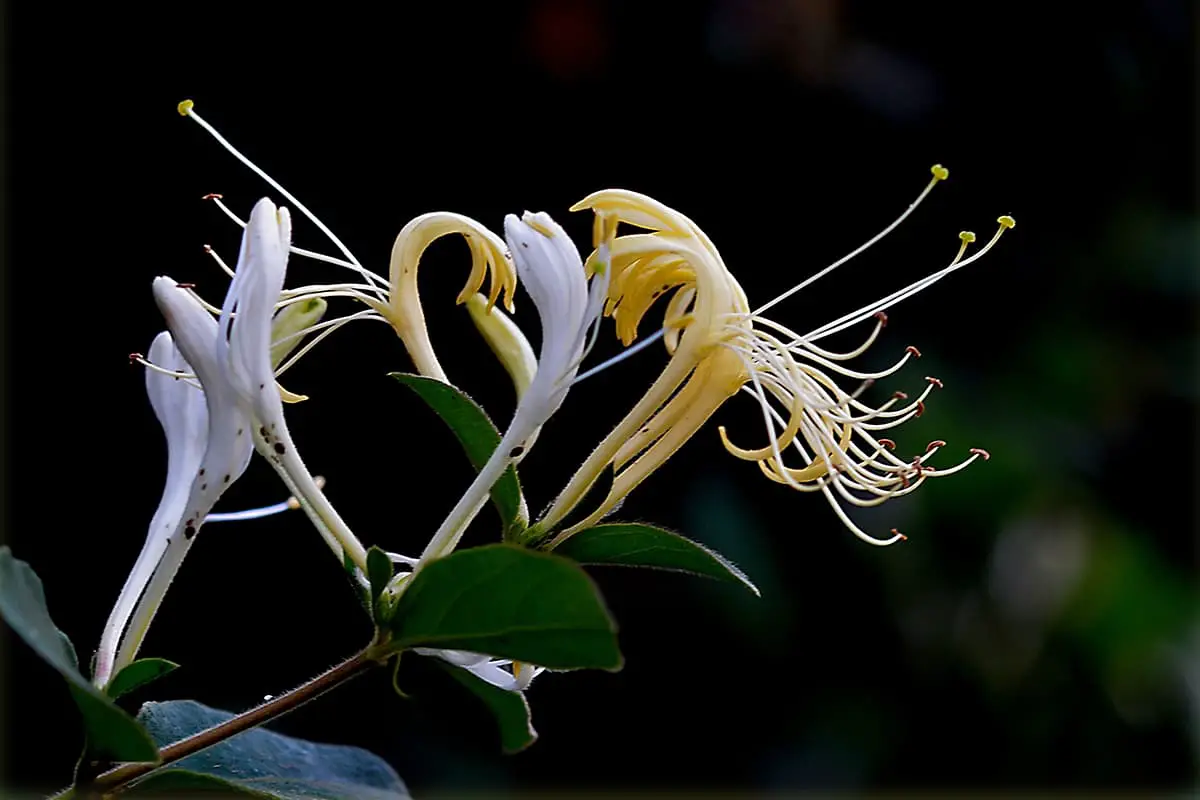
This semi-evergreen vine has dark reddish-brown young branches densely covered with yellow-brown, stiff, rough hairs, glandular hairs, and short soft hairs, often hairless at the bottom.
The leaves are papery, ovate to rectangular ovate, sometimes ovate lanceolate, rarely round ovate or inverted ovate, very rarely with one to several blunt notches, 3~5 (up to 9.5) cm long.
The top is pointed or gradually pointed, rarely blunt, round or slightly concave, the base is round or near-heart-shaped, with rough-edged hairs. The upper surface is dark green, the lower surface is light green.
The leaves on the upper part of the twig are usually densely covered with short rough hairs on both sides, while the lower leaves are often smooth, hairless, and the underside is somewhat gray-green. The petiole is 4~8 mm long, densely covered with short soft hairs.
The inflorescence usually grows singly in the upper leaf axils of the twig, equal in length or slightly shorter than the petiole, those lower down can be up to 2~4 cm long, densely covered with short soft hairs and interspersed with glandular hairs.
The bracts are large, leaf-like, ovate to elliptical, up to 2~3 cm long, both sides have short soft hairs or sometimes nearly hairless. The small bracts are round or truncate at the top, about 1 mm long, 1/2~4/5 of the calyx tube, with short rough hairs and glandular hairs.
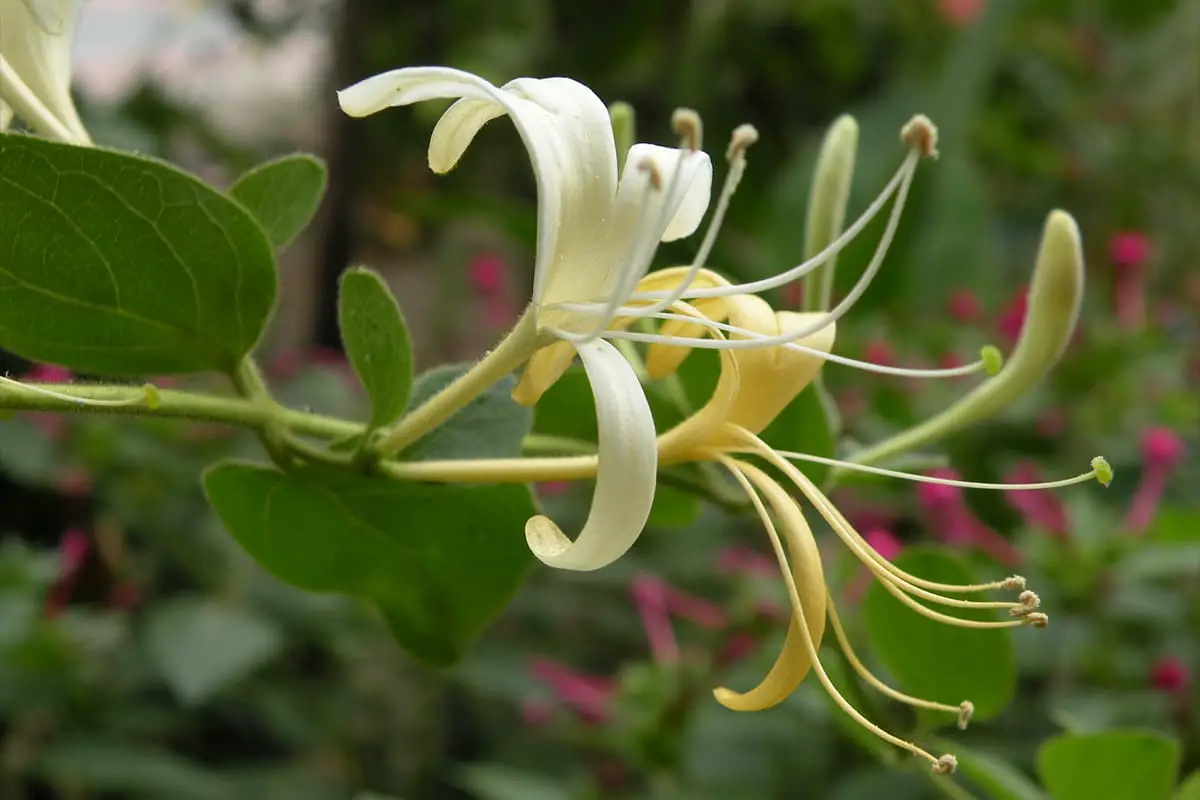
The calyx tube is about 2 mm long, hairless, the calyx teeth are ovate-triangular or long-triangular, pointed at the top with long hairs, the outside and edges are densely hairy.
The corolla is white, sometimes the base is slightly red toward the sun, later turning yellow, long (2~) 3~4.5 (~6) cm, labiate, the tube slightly longer than the lip petals, rarely almost equal in length, outside covered with somewhat inverted, spreading or semi-spreading rough hairs and long glandular hairs.
The upper lip lobe is blunt, the lower lip is band-shaped and recurved. The stamens and pistil both protrude from the corolla. The fruit is round, 6~7 mm in diameter, glossy blue-black when ripe.
The seeds are ovate or elliptical, brown, about 3 mm long, with a protruding ridge in the middle and shallow horizontal grooves on both sides. The flowering period is 4~6 months (often also in autumn), and the fruit ripens from October to November.
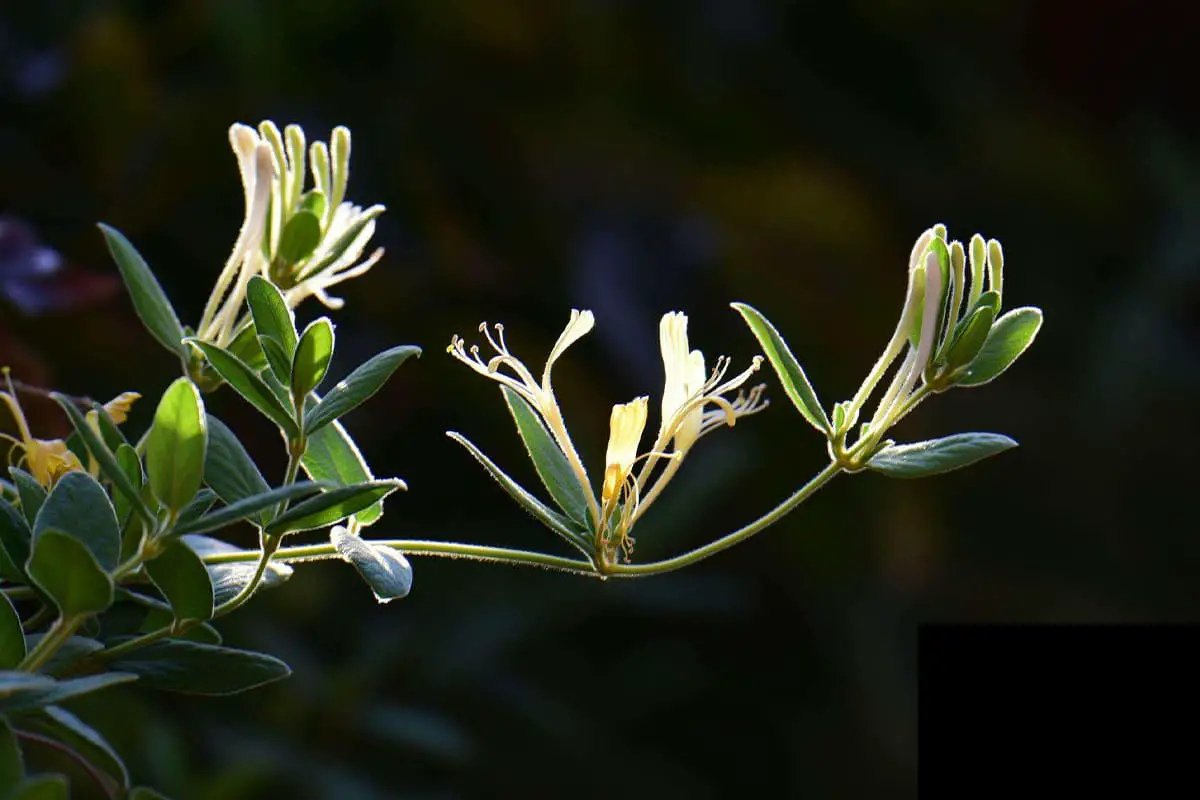
Japanese honeysuckle grows in shrubs or sparse woods on slopes, piles of loose stones, roadsides at the foot of mountains, and by village fences, up to an altitude of 1500 meters. It is also often cultivated.
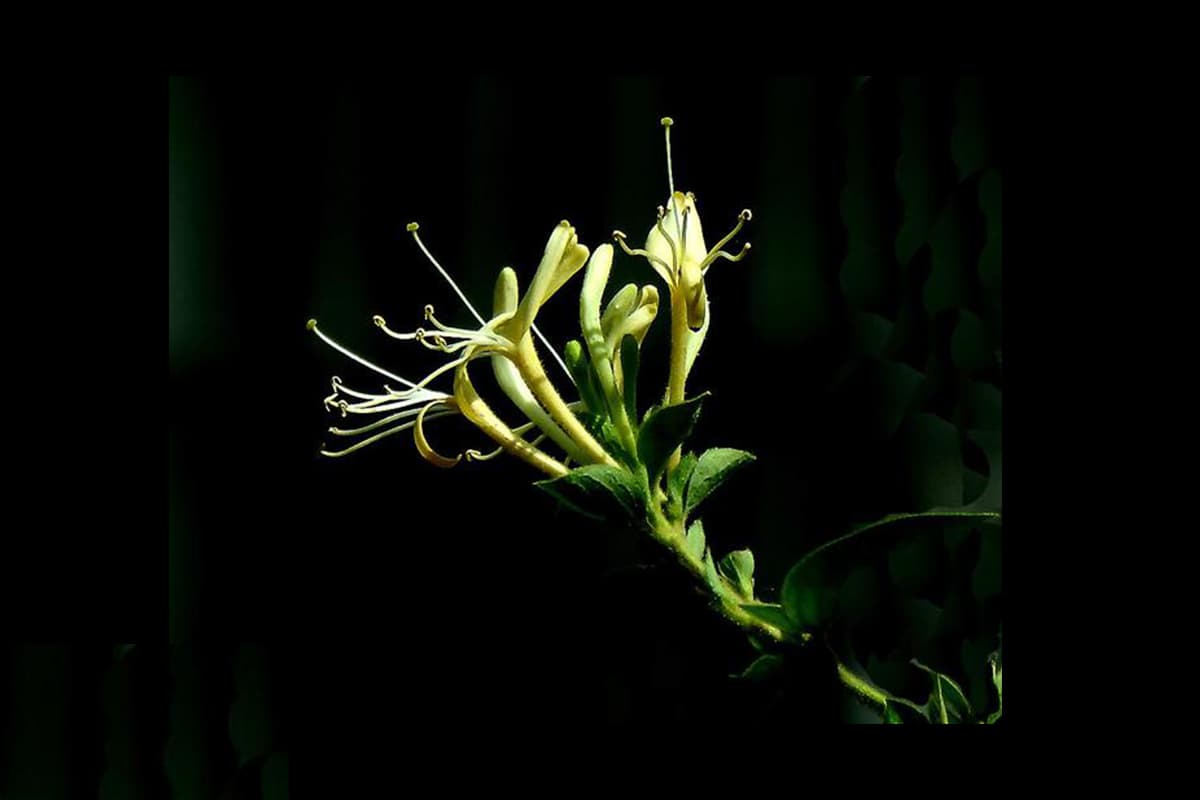
Japanese honeysuckle, the flower buds are slender club-shaped, thicker at the top and thinner at the bottom, slightly curved, 2~3 cm long, with the upper part about 3 mm in diameter, the lower part about 1.5 mm.
The surface is yellowish-white or greenish-white (the color deepens with storage), densely covered with short soft hairs. Occasionally leaf-shaped bracts are seen.
The calyx is green, with 5-parted tips, hairy, about 2 mm long. The open flower has a tubular corolla, two-lipped at the top, with 5 stamens attached to the tube wall, yellow; one pistil, the ovary is hairless. The aroma is fresh, the taste is light and slightly bitter.
The honeysuckle is rod-shaped and curved, 20~30 mm long, thicker at the top and thinner at the bottom, yellowish-white, greenish-white or pale yellow, with short soft hairs. The calyx is green.
The aroma is fresh, the taste is light and slightly bitter. Fried honeysuckle is similar to honeysuckle, appears yellow. Honeysuckle charcoal is similar to honeysuckle, charred brown, slightly scorched.
Peggie was once a high school mathematics teacher, but she set aside her chalkboard and textbooks to follow her lifelong passion for flowers. After years of dedication and learning, she not only established a thriving flower shop but also founded this blog, “Flowers Library”. If you have any questions or wish to learn more about flowers, feel free to contact Peggie.
 English
  العربية
  Bahasa Indonesia
  Deutsch
  Français
  Italiano
  Nederlands
  Português
  Русский
  日本語
日本語