600+ Types of Flowers A To Z (With Names and Pictures)
Types Of Flowers By Names (A-Z) Types Of Flowers By Color Types Of Flowers By Season Types Of Flowers By Blooming Time 600+ Types of Flowers No. Flower Name No.…

Chinese cherry blossoms are predominantly white, while Japanese ones are often pink. However, this distinction is not definitive and only serves as a simple reference.
Wild cherry blossoms in China, which mostly grow on mountains, have a relatively short blooming period before they wither. In contrast, Japanese cherry blossoms, cultivated over time, have a longer bloom period, offering an extended viewing period.
Traditionally, Chinese people did not place much importance on cherry blossoms. Although there are poems describing the cherry blossom, it still falls short when compared to esteemed flowers like plum, orchid, chrysanthemum, and peony.
In Japan, cherry blossom trees were once considered sacred. Some scholars suggest that cherry blossoms are associated with the grain deity, thus linking them to rice ceremonies.
Over time, the cherry blossom evolved from a folk tradition to a court tradition and gradually became a part of everyday life.
Japanese philosopher Watsuji Tetsuro believes that the cherry blossom’s “sudden, hurried, brilliant bloom” aligns perfectly with the Japanese temperament.
Chinese and Japanese cherry blossoms share a common origin, originally native to the temperate regions of the northern hemisphere around the Himalayas and growing worldwide, primarily in Japan.
It’s challenging to determine which cherry blossom is superior as cultivation methods vary by country. They are all worth admiring.
Cherry blossoms typically have 3 to 5 flowers per branch, forming umbrella-shaped inflorescences. The petals are often white or pink with a notch at the front.
The flowers usually bloom in March, simultaneously or after the leaves, and vary with the season. The cherry blossom’s color and faint fragrance make it a popular choice for ornamental gardening.
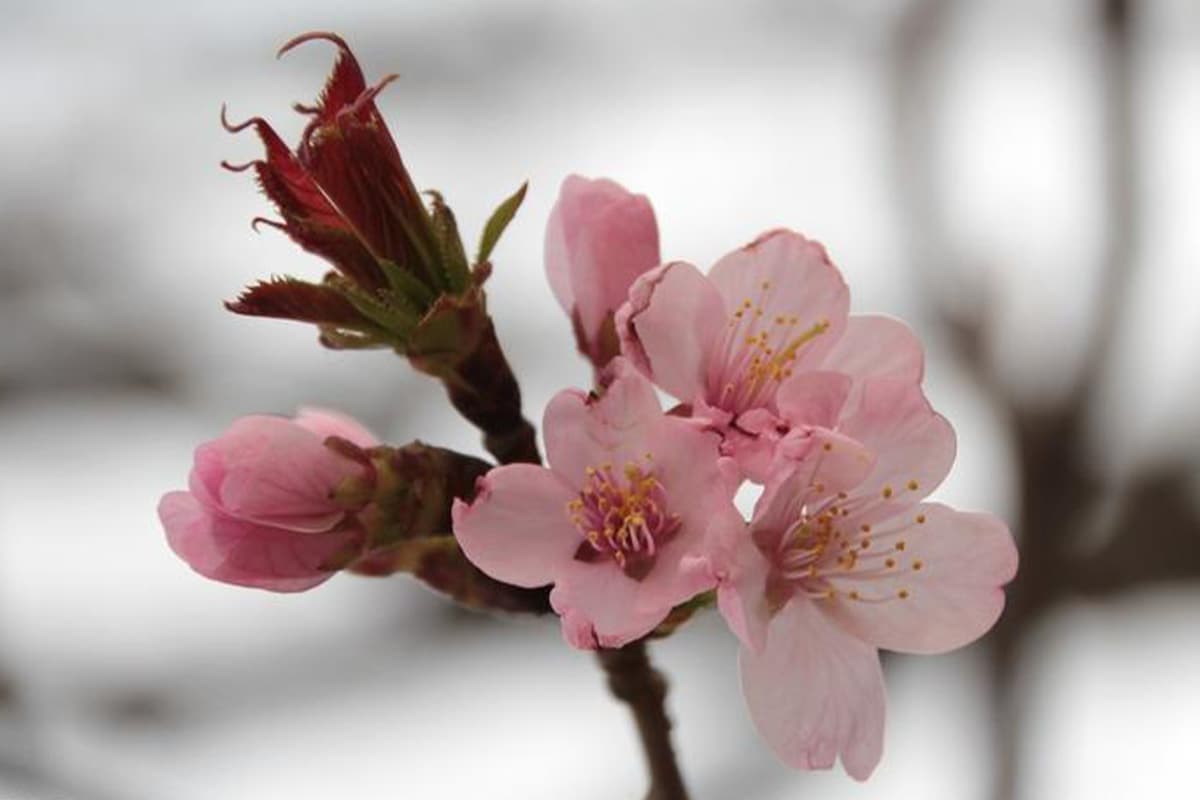
Cherry blossoms can be categorized into single-petal and double-petal types. While the single-petal type can flower and bear fruit, most double-petal types do not produce fruit.
Peggie was once a high school mathematics teacher, but she set aside her chalkboard and textbooks to follow her lifelong passion for flowers. After years of dedication and learning, she not only established a thriving flower shop but also founded this blog, “Flowers Library”. If you have any questions or wish to learn more about flowers, feel free to contact Peggie.
 English
  العربية
  Bahasa Indonesia
  Deutsch
  Français
  Italiano
  Nederlands
  Português
  Русский
  日本語
日本語