Cherry Blossom, known as Sakura in Japan, encompasses several species within the Prunus genus of the Rosaceae family. With over 300 cultivars, Cherry Blossoms typically bloom in spring, often concurrently with or shortly after leaf emergence.
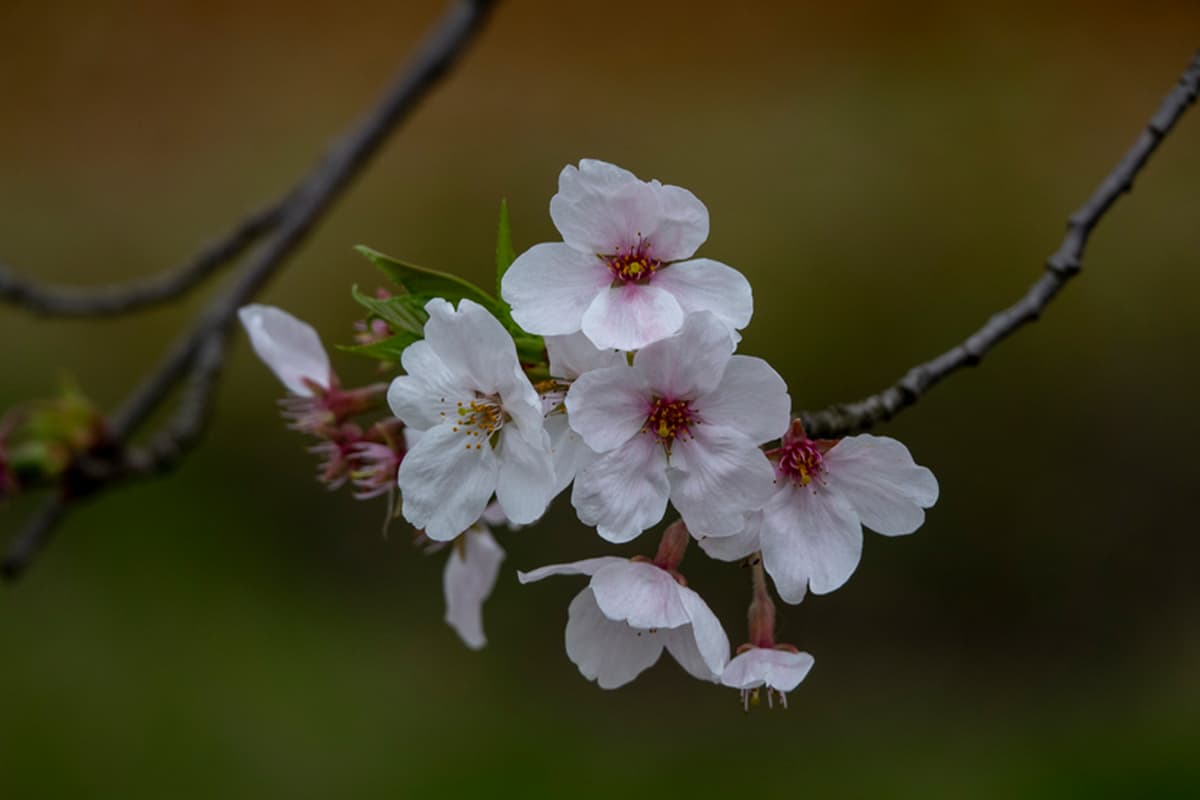
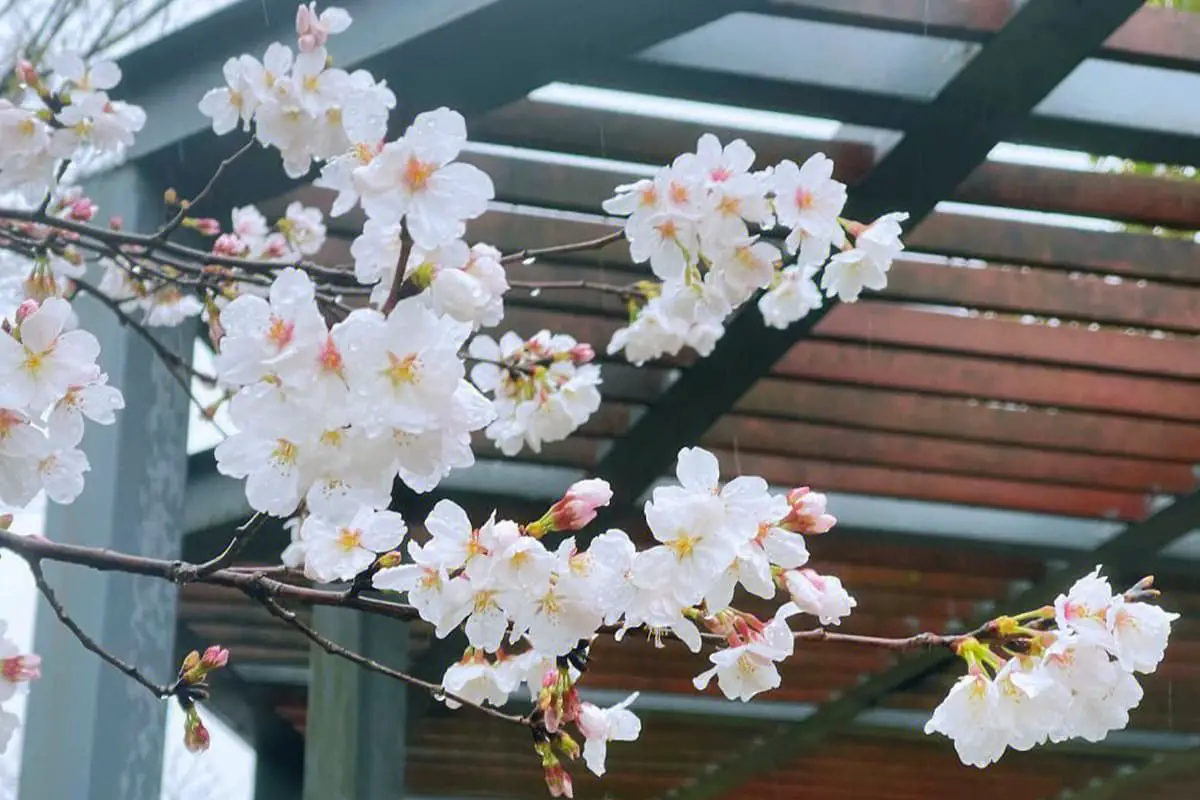
Each branch bears umbels of three to five flowers, characterized by notched petal tips. The most common colors are white and various shades of pink, with some cultivars featuring yellow or green hues. Prized for their delicate fragrance and vibrant appearance, Cherry Blossoms are highly valued ornamental plants and a cherished symbol of spring worldwide.
Basic Information
Cherry Blossoms represent numerous species and cultivars within the Prunus genus. Of the approximately 150 wild Cherry Blossom species globally, about 40 are considered ancestral, with the remainder being horticultural hybrids or selections.
Native to temperate zones of the Northern Hemisphere, particularly around the Himalayan region, Cherry Blossoms are now cultivated worldwide, with Japan being especially renowned for its extensive plantings. The flowers typically form umbels of 3 to 5 blossoms, featuring notched petals predominantly in white and pink shades.
Blooming in spring, often in March or April depending on the region and species, Cherry Blossoms are categorized into single-petal and multi-petal types. Single-petal varieties usually produce fruit, while multi-petal types are generally sterile and grown primarily for ornamental purposes.
Varieties of Cherry Blossoms
Tokyo Cherry Blossom (Prunus × yedoensis)
Also known as Yoshino Cherry, this widely cultivated hybrid features a glossy, striated bark and alternately arranged oval leaves with serrated edges. The flowers, grouped in umbels, have horizontally spreading calyxes and notched petals in white to pink hues. It typically blooms in mid-March, with flowers appearing before or with the leaves.
Kanhizakura (Prunus campanulata)
Known as Bellflower Cherry or Taiwan Cherry, this species is notable for its early-blooming, deep pink to red flowers that appear in late winter or early spring, often before the leaves emerge.
Mountain Cherry Blossom (Prunus serrulata)
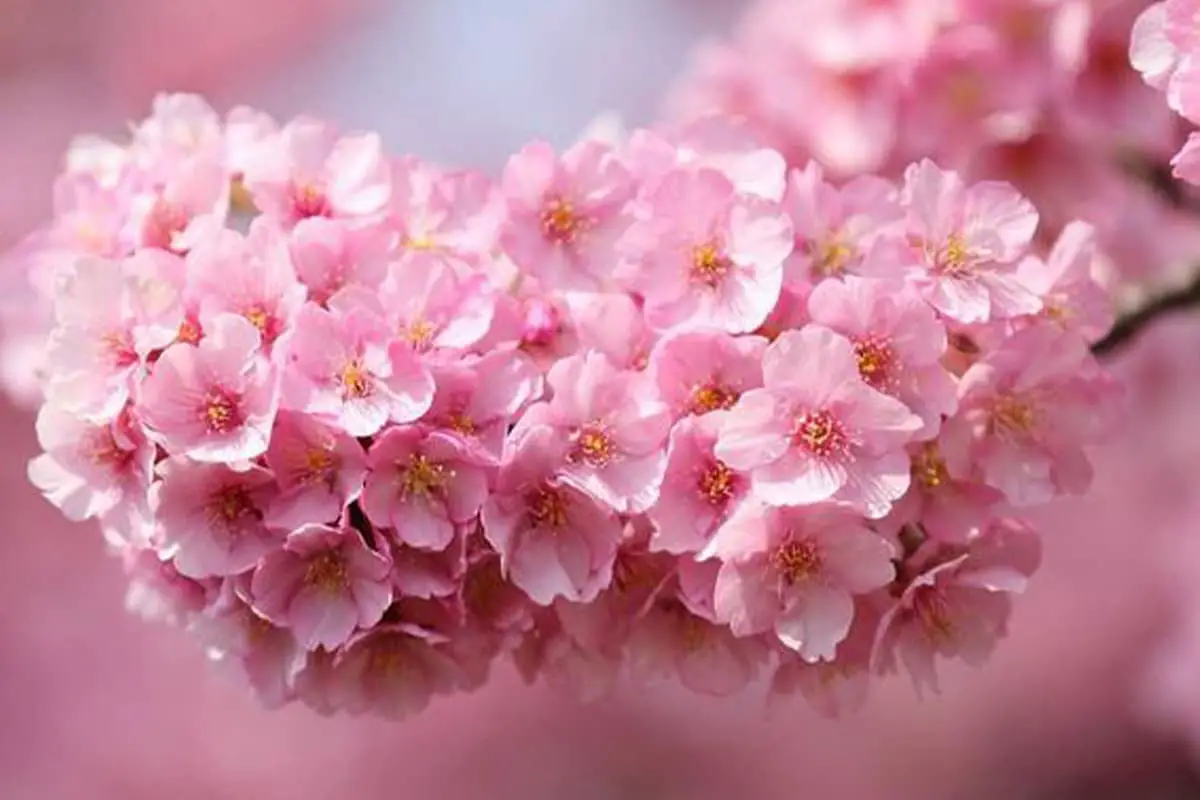
This species encompasses many popular ornamental cultivars, including the Japanese Flowering Cherry. It offers a wide range of flower colors and extended blooming periods. Cultivars can have single, semi-double, or double flowers in colors ranging from white to deep pink, with some rare yellow or green varieties.
Weeping Cherry Blossom (Prunus subhirtella var. pendula)
Distinguished by its graceful, drooping branches, this variety features pale pink to white flowers. Its weeping habit creates a distinctive silhouette, making it a prized ornamental tree.
Edo Higan Cherry (Prunus × subhirtella)
This species blooms in late March to early April, depending on the region. It produces flowers in shades ranging from pure white to light pink and purple-red.
Oshima Cherry (Prunus speciosa)
A wild cherry species that can grow up to 15 meters tall. It blooms in mid-March with white, single flowers appearing simultaneously with the leaves. Many cultivated cherry varieties trace their lineage to this species.
Guan Mountain Cherry (Prunus serrulata ‘Guan’)
Known for its deep red, double flowers with approximately 30 petals, this cultivar blooms in late March or early April. It’s widely planted in China and valued for its ornamental qualities and striking fall foliage.
Chrysanthemum Cherry (Prunus serrulata ‘Chrysanthemum’)
This late-blooming variety features pink flowers with numerous petals (130-137) and a distinctive central “tower” of additional petals. It blooms profusely in early April, with flowers lasting about 10 days.
Winter Cherry (Prunus subhirtella var. autumnalis)
Unique for its biannual blooming habit, this variety flowers in both spring and autumn. It produces medium-sized, single white flowers.
Gyoiko Cherry (Prunus serrulata ‘Gyoiko’)
A double-flowered variety with light green flowers that gradually develop red tints as they mature. The flowers measure 3.5 to 4.5 centimeters in diameter and have 12 to 14 petals.
Cherry Blossom Culture
Cherry Blossoms hold significant cultural importance, particularly in Japan where they are considered a national symbol. They represent the transient nature of life, embodying both its beauty and impermanence. The annual bloom is celebrated with hanami (flower viewing) festivals throughout Japan.
In Japanese folklore, Cherry Blossoms are associated with Konohana Sakuya Hime, a deity of Mount Fuji and symbol of delicate earthly life. This connection has contributed to Japan’s reputation as the “Land of Cherry Blossoms.”
The flower language of Cherry Blossoms includes themes of love, hope, renewal, and the ephemeral nature of life. Their brief, vibrant blooming period is often seen as a metaphor for the beauty and fleeting nature of human existence.
Cherry Blossoms have also gained cultural significance in many other countries, often symbolizing friendship, renewal, and the arrival of spring. Their widespread cultivation has made them a beloved ornamental plant globally, enhancing landscapes and gardens with their brief but spectacular display each spring.
Growth and Distribution
Growing Habits
Cherry Blossoms (Prunus spp.) are deciduous trees native to temperate and subtropical regions. They thrive in full sun and prefer warm, humid climatic conditions while exhibiting moderate cold tolerance. These trees are adaptable to various soil types but flourish in loose, fertile, well-drained sandy loam. However, they are intolerant of saline-alkaline soils.
The root system of Cherry Blossoms is relatively shallow, necessitating careful site selection to avoid areas prone to water accumulation. While they possess some resistance to cold and drought, their susceptibility to strong winds and air pollution makes them unsuitable for coastal areas frequently affected by typhoons or heavily industrialized urban environments.
Distribution Range
The genus Prunus, which encompasses Cherry Blossoms, comprises over 400 species distributed throughout the temperate zones of the Northern Hemisphere. They are primarily found in East Asia (particularly Japan, Korea, and China), as well as in parts of Europe and North America. In China, the main species are concentrated in the western and southwestern regions, where diverse microclimates support various cherry species.
Form and Features
Cherry Blossoms are small to medium-sized trees, typically reaching heights of 4-16 meters (13-52 feet). Their bark is predominantly gray, with young twigs exhibiting a light purple-brown coloration and being glabrous (hairless). New growth is characterized by green shoots covered with sparse, soft pubescence.
Leaves are alternately arranged, elliptical-ovate to obovate in shape, measuring 5-12 cm (2-4.7 inches) in length and 2.5-7 cm (1-2.8 inches) in width. The leaf apex is acuminate or abruptly caudate, while the base is typically rounded, occasionally cuneate. Leaf margins are sharply double-serrated, a distinctive feature of many Prunus species.
Inflorescences are umbellate, featuring very short peduncles bearing 3-4 flowers that typically emerge before or simultaneously with the leaves. Individual flowers measure 3-3.5 cm (1.2-1.4 inches) in diameter. The involucral bracts are brown, elliptical-ovate, 6-7 mm long and 4-5 mm wide, with sparse pubescence.
Floral bracts are brown, spatulate-oblong, approximately 5 mm long and 2-3 mm wide, with glandular margins. Pedicels measure 2-2.5 cm in length and are covered with short, soft hairs. The calyx tube is tubular, 7-8 mm long and about 3 mm wide, with sparse pubescence.
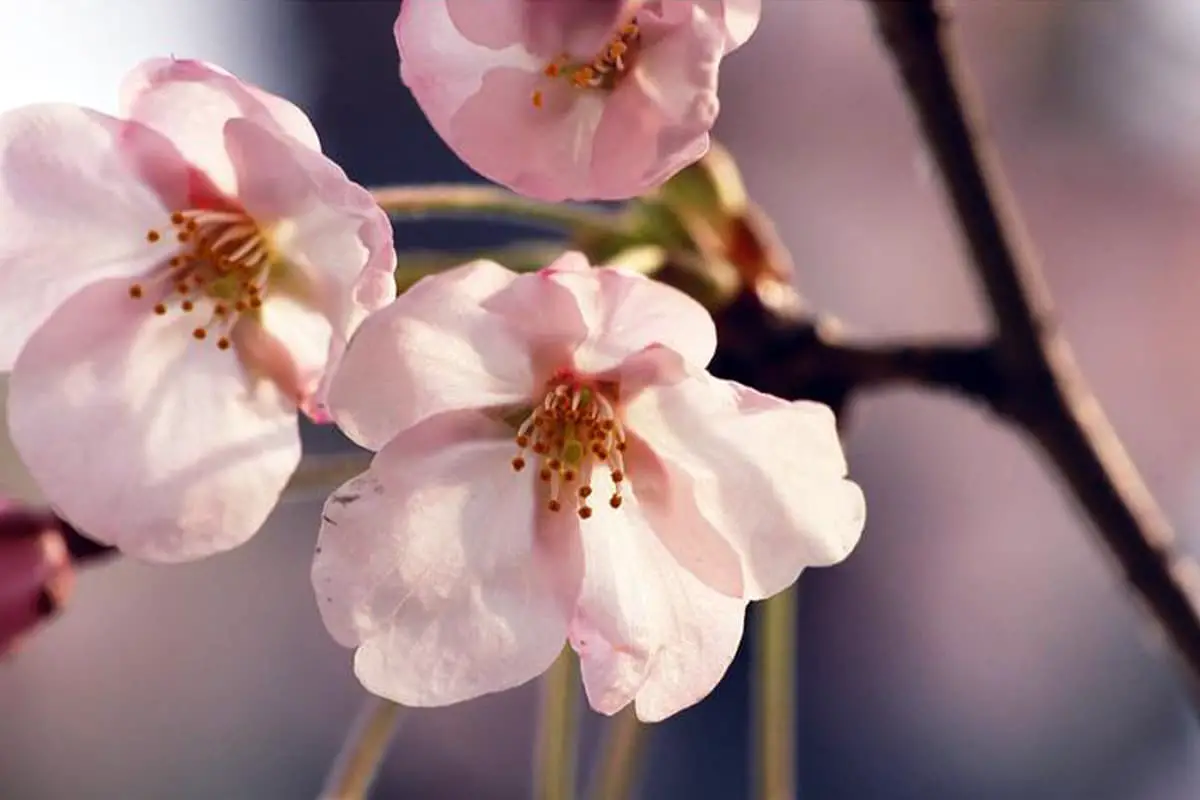
Calyx lobes are triangular-ovate, approximately 5 mm long, with an acute apex and glandular margins. Petals are white or pink, elliptical-ovate in shape, with a concave apex and entire margins at the bifurcation point. The flowers typically contain about 32 stamens, which are shorter than the petals. The style exhibits sparse soft hairs at its base.
The fruit is a drupe, nearly spherical in shape, measuring 0.7-1 cm in diameter. At maturity, it turns black, and the surface of the kernel (endocarp) is slightly ribbed.
Flowering typically occurs in April, followed by fruit development and ripening in May. However, exact timing can vary depending on the specific species, cultivar, and local climate conditions.
Cherry Blossom Cultivation Methods
Planting
Before planting, prepare the site by leveling the ground. Excavate a hole 0.8 meters in diameter and 0.6 meters deep. Begin by adding a 10 cm layer of organic fertilizer to the bottom of the hole. Place the cherry blossom seedling in the center, ensuring the roots are spread out in all directions.
Fill the hole with soil, gently lifting the seedling upward to encourage deep root spread, then firm the soil. The planting depth should position the root collar approximately 5 cm below the soil surface. After planting, water thoroughly and support the seedling with a stake to prevent wind damage.
During planting, incorporate 15-25 kg of well-decomposed compost per pit. In July, apply 1-2 kg of ammonium sulfate per tree. In early spring, after flowering but before bud break, prune dead, weak, and crowded branches. Avoid heavy pruning of thick branches to maintain a rounded crown shape.
Watering
Newly planted cherry blossom seedlings are susceptible to drought stress. After the initial thorough watering at planting time, continue to water every 8-10 days to maintain consistent soil moisture without waterlogging. Following each watering, gently cultivate the soil surface to improve aeration and reduce water evaporation. A thin layer of mulch, such as straw or grass clippings, can further help retain soil moisture.
For the first 2-3 years after planting, consider wrapping the trunk with straw to prevent desiccation. As the sapling matures and develops a more extensive root system, usually after 2-3 years, this practice can be discontinued as the tree becomes more adaptable to its environment.
Fertilization
Cherry blossoms benefit from biannual fertilization, preferably with slightly acidic fertilizers. The first application, known as winter fertilization, should occur in late winter or early spring using organic fertilizers such as soybean meal, well-composted chicken manure, or other composted manures.
The second fertilization takes place after the blossoms have fallen, using fast-acting fertilizers such as ammonium sulfate, ferrous sulfate, and superphosphate. For mature cherry trees, employ the trench method: dig a circular trench about 10 cm deep around the tree’s drip line and apply the fertilizer. This method facilitates efficient root uptake.
As the tree grows, increase the diameter and depth of the fertilizer trench accordingly. Cherry blossoms have shallow root systems that require good drainage and aeration. Avoid soil compaction around the tree, especially within the root zone, as this can weaken the tree, shorten its lifespan, and potentially lead to root rot and tree mortality.
Pruning
Pruning cherry blossoms primarily involves removing wilted, excessive, crossing, diseased, or insect-infested branches. For larger trees with multiple branches growing from the trunk, select and retain several vigorous, well-spaced branches and remove the rest at their base to improve air circulation and light penetration.
After pruning, promptly disinfect the cut surfaces to prevent bacterial invasion, especially during rainy periods. Cherry blossom bark is prone to aging and sun damage, which can lead to decay. Remove any damaged or decaying bark, disinfect the area, and apply a protective dressing of leaf mold and charcoal powder to promote healing and restore normal physiological functions.
Propagating Methods
Cherry blossoms are primarily propagated through seeds, cuttings, and grafting.
Seeding: To propagate from seeds, it’s crucial to prevent the embryo from drying out. Sow seeds immediately after harvesting or stratify them in moist sand for planting the following spring. Seeds are often used to produce rootstock for grafting rather than for direct production of flowering trees.
Cutting: Take hardwood cuttings from one-year-old branches in spring, or softwood cuttings from current year’s growth in summer. Treat cuttings with a rooting hormone such as NAA (1-Naphthaleneacetic acid). Plant in a well-draining, moist medium and provide shade and high humidity to ensure a good survival rate.
Grafting: As most ornamental cherry blossom varieties are sterile, grafting is the preferred method for propagation. Use cherry or mountain cherry seedlings as rootstocks. Grafting can be performed in late March or late August. After successful grafting, cultivate for 3 to 4 years before transplanting to the final location.
For mature trees, high branch replacement grafting can be effective. This method involves inserting a prepared scion into a cleft made in the rootstock. Secure the graft union with grafting tape and cover with a plastic bag to maintain humidity. This technique has a high success rate and is useful for introducing new varieties or rejuvenating older trees.
Each propagation method has its advantages, but grafting remains the most reliable way to reproduce specific ornamental cherry blossom varieties, ensuring the desired flower characteristics and growth habits are preserved.
Pest and Disease Control
Cherry blossoms require protection against several diseases and pests, with gummosis, root-knot disease, aphids, spider mites, and scale insects being primary concerns.
Gummosis, caused by fungal pathogens or environmental stress, manifests as amber-colored sap oozing from the bark. While traditionally attributed to moth egg-laying, this is rarely the case. Treatment involves improving tree health through proper cultural practices, including:
- Ensuring adequate drainage
- Avoiding trunk injuries
- Proper pruning techniques
- Balanced fertilization
Root-knot disease, caused by nematodes, impairs the tree’s ability to absorb water and nutrients effectively. Management strategies include:
- Removal of affected roots
- Soil solarization for nematode control
- Incorporation of organic matter like leaf mold and biochar to improve soil structure
- Application of beneficial microorganisms to enhance soil health
Common pests and diseases affecting cherry blossoms include:
Leaf Spot Diseases: Various fungal pathogens cause leaf spots, including Blumeriella jaapii (cherry leaf spot) and Mycosphaerella cerasella (shot hole disease).
- Symptoms: Circular spots on leaves, often with purple margins, which may coalesce or drop out, creating a “shot hole” appearance.
- Control: Improve air circulation through pruning, remove fallen leaves, and apply fungicides such as copper-based products or myclobutanil as per local recommendations.
Aphids: Small, soft-bodied insects that feed on new growth, causing leaf distortion and honeydew secretion.
- Control: Encourage natural predators, use insecticidal soaps, or apply systemic insecticides for severe infestations.
Spider Mites: Tiny arachnids that cause stippling on leaves, leading to bronzing and premature leaf drop.
- Control: Increase humidity, use predatory mites, or apply horticultural oils or miticides when necessary.
Scale Insects: Small, immobile insects that attach to branches and leaves, sucking sap and weakening the tree.
- Control: Prune heavily infested branches, apply horticultural oils during dormancy, or use systemic insecticides for severe cases.
Preventive measures should be the primary focus in pest and disease management:
- Maintain tree vigor through proper cultural practices
- Regular monitoring for early detection of issues
- Sanitation: Remove fallen leaves and pruning debris
- Apply dormant sprays before bud break
- Use targeted treatments during the growing season as needed
Integrated Pest Management (IPM) approaches should be employed, combining cultural, biological, and chemical control methods as appropriate for the specific situation and local regulations.
Primary Value
Landscaping
Cherry blossoms (Prunus species) are highly prized ornamental trees, celebrated for their spectacular floral displays in early spring. Their landscaping value stems from several key attributes:
- Aesthetic appeal: The profuse, delicate blossoms create a stunning visual impact, often described as a cloud-like or misty effect.
- Versatility: Cherry blossoms can be used in various landscape designs:
- Mass plantings for dramatic “sea of flowers” effect
- Accent trees in mixed plantings
- Specimen trees for focal points
- Street trees or allées
- Slope stabilization
- Courtyard or patio trees
- Bonsai subjects
- Seasonal interest: Beyond spring flowers, many cultivars offer attractive bark, summer foliage, and autumn color.
- Adaptability: Various species and cultivars are suitable for different climates and growing conditions.
- Cultural significance: Cherry blossoms hold deep symbolic meaning in many cultures, adding a layer of interest to landscapes.
When incorporating cherry blossoms in landscape design, consider:
- Mature size and form of the chosen cultivar
- Site conditions (soil type, sunlight, water availability)
- Potential for fruit drop (in fruiting varieties)
- Companion plantings to extend seasonal interest
Medicinal Use
Cherry blossoms and related plant parts have been used in traditional medicine systems, particularly in East Asia. While scientific research is ongoing, some potentially beneficial compounds have been identified:
Bark and wood:
- Geniposide: A iridoid glycoside with potential anti-inflammatory and neuroprotective properties
- Prunasin: A cyanogenic glycoside that may have analgesic effects (but can be toxic in large amounts)
- Catechins: Antioxidant compounds with potential cardiovascular benefits
Leaves:
- Quercetin glycosides: Flavonoids with antioxidant and anti-inflammatory properties
- Coumarin derivatives: Compounds with potential anticoagulant and anti-inflammatory effects
- Cyanogenic glycosides: May have mild sedative properties but can be toxic in large amounts
Flowers:
- Anthocyanins: Pigments with antioxidant properties
- Essential oils: May have mild aromatherapy benefits
Traditional uses have included:
- Cough suppressant
- Mild fever reducer
- Digestive aid
It’s crucial to note that medicinal use of cherry blossom derivatives should only be under professional guidance, as some compounds can be toxic if misused.
Skincare
Cherry blossoms have gained popularity in skincare formulations due to their potential benefits:
- Antioxidant properties: Flavonoids and anthocyanins in cherry blossoms may help protect skin from oxidative stress and environmental damage.
- Astringent effects: Natural tannins can help temporarily tighten pores and balance oil production.
- Hydration: Cherry blossom extracts may help improve skin moisture retention.
- Anti-inflammatory potential: Some compounds in cherry blossoms might help soothe irritated skin.
- Brightening effects: Certain extracts may help improve skin tone and reduce the appearance of dark spots.
Cherry blossom derivatives in skincare include:
- Extracts: Water or glycerin-based extracts of flowers or leaves
- Essential oils: Steam-distilled oils from flowers (used in very small amounts)
- Ferments: Bioactive compounds produced through fermentation of cherry blossom extracts
Common applications in skincare:
- Facial toners and mists
- Serums and essences
- Moisturizers and creams
- Sheet masks
- Body lotions
While cherry blossom-based skincare products are generally considered safe for most skin types, it’s important to patch test new products and be aware of potential allergic reactions, especially for those with sensitive skin or known plant allergies.


 English
  العربية
  Bahasa Indonesia
  Deutsch
  Français
  Italiano
  Nederlands
  Português
  Русский
  日本語
日本語