600+ Types of Flowers A To Z (With Names and Pictures)
Types Of Flowers By Names (A-Z) Types Of Flowers By Color Types Of Flowers By Season Types Of Flowers By Blooming Time 600+ Types of Flowers No. Flower Name No.…

The Cerasus subhirtella, commonly known as the Winter-flowering Cherry or Higan Cherry, is a magnificent sight when in bloom. This deciduous tree, belonging to the Rosaceae family, creates a breathtaking display with its profusion of delicate flowers, forming a cloud-like spectacle of color.
This ornamental cherry can be planted in various landscape designs. When used en masse, it creates a stunning “sea of flowers” effect, while smaller groupings produce elegant “brocade clusters” within green spaces. Even after the petals have fallen, the persistent filaments can remain for several days, creating a unique reddish haze when viewed from a distance.
The leaves of Cerasus subhirtella contribute to its charm with their slightly pubescent texture, adding a soft, wild character to the tree’s overall appearance.
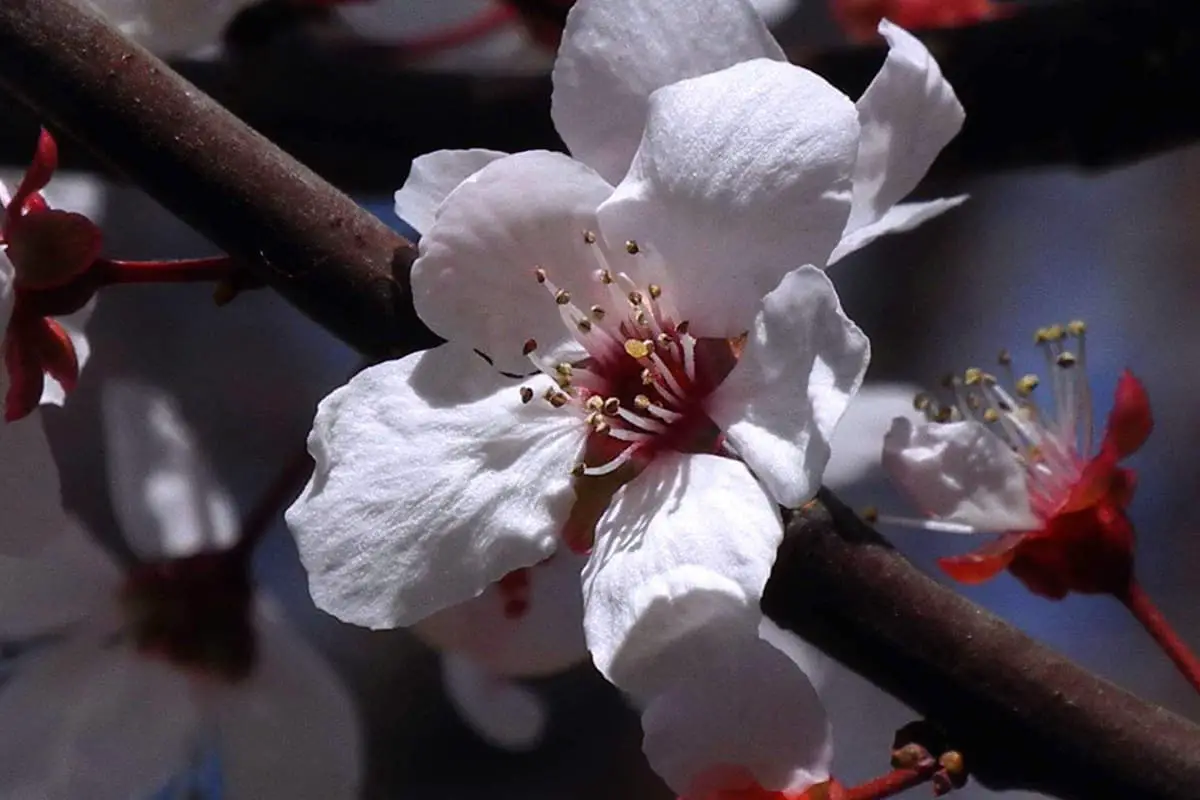
Cerasus subhirtella (Miq.) S.Y. Sokolov (synonym: Prunus subhirtella Miq.) is a deciduous tree in the Rosaceae family. It typically grows 4-8 meters tall, occasionally reaching up to 10 meters, with a spreading crown and grey-brown bark that becomes fissured with age. Young branches are slender, green, and densely covered with fine, white pubescence.
The leaves are ovate to oblong-ovate, 3-8 cm long and 1.5-4 cm wide. Flowers appear in umbel-like clusters, usually with 2-5 blooms per inflorescence. Flowering occurs from late winter to early spring (February to April, depending on the climate), often before or with the emergence of new leaves. The flowers are pale pink to white, with five petals, and measure 2-3 cm in diameter. Fruits are small, oval drupes, ripening to black in early summer.
Native to Japan, Cerasus subhirtella is now widely cultivated in temperate regions across the Northern Hemisphere for its ornamental value.
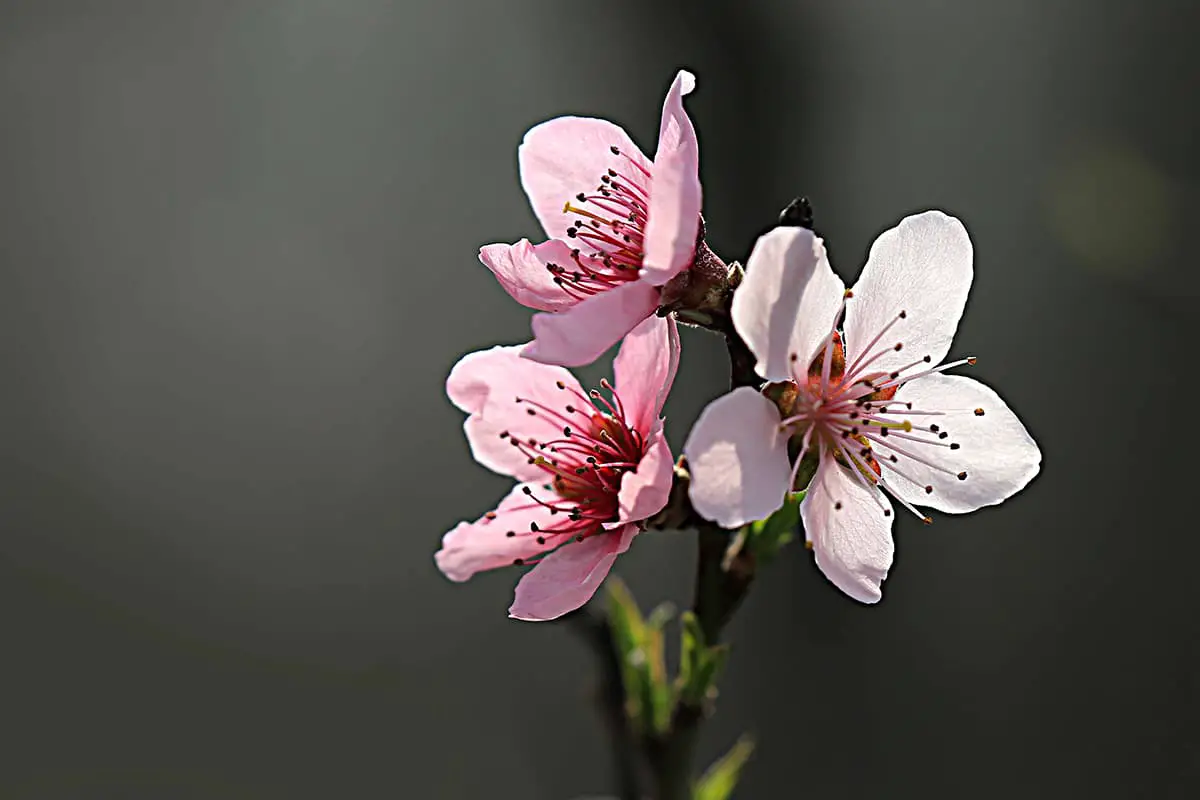
Cerasus subhirtella is native to central and southern Japan, particularly in mountainous regions. It has been widely introduced and cultivated across temperate zones in North America, Europe, and Asia for its ornamental value. In cultivation, it can be found in parks, gardens, and urban landscapes throughout these regions.
Cerasus subhirtella is a small deciduous tree with a broad, spreading crown. The bark is smooth and grey-brown, developing shallow fissures with age. Young branches are slender, green, and densely covered with fine, white pubescence.
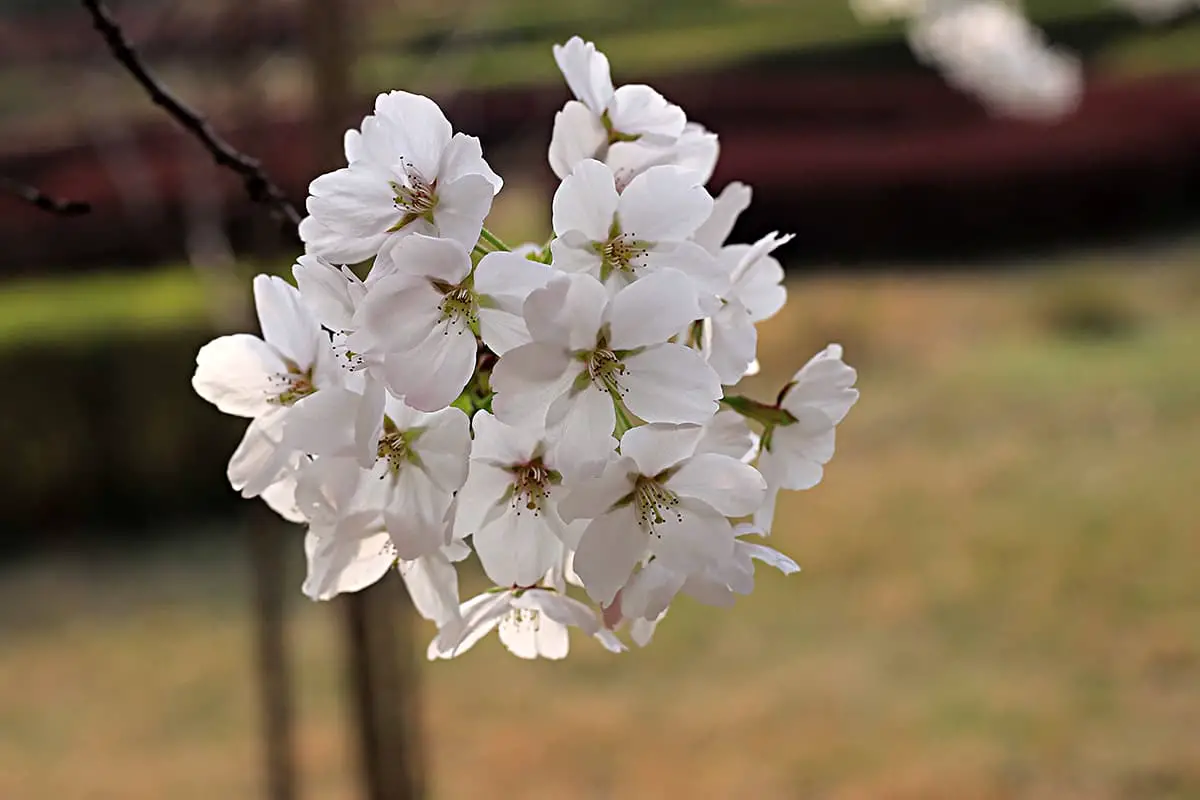
Leaves are alternate, ovate to oblong-ovate, 3-8 cm long and 1.5-4 cm wide. The leaf apex is acuminate, while the base is broadly cuneate to rounded. Leaf margins are sharply serrate. The upper surface is dark green and mostly glabrous, sometimes with sparse hairs along the midrib. The lower surface is lighter green with soft, white hairs, more densely distributed along the veins. Petioles are 5-10 mm long, pubescent.
Flowers appear in umbel-like clusters of 2-5 blooms. The calyx is tubular-campanulate, 4-5 mm long, 2-3 mm wide, with a slightly expanded base and constricted neck, sparsely covered with soft, white hairs. Petals are pale pink to white, oblong-ovate, and slightly notched at the apex. There are typically 20-30 stamens. The pistil has sparse hairs at the base.
Fruits are ovoid drupes, 6-8 mm long, ripening to black. The stone (endocarp) is slightly rugose. Fruit stems are 1.5-2.5 cm long, sparsely pubescent, and slightly swollen at the apex.
Flowering occurs from late winter to early spring (February to April), and fruits mature in June to July.
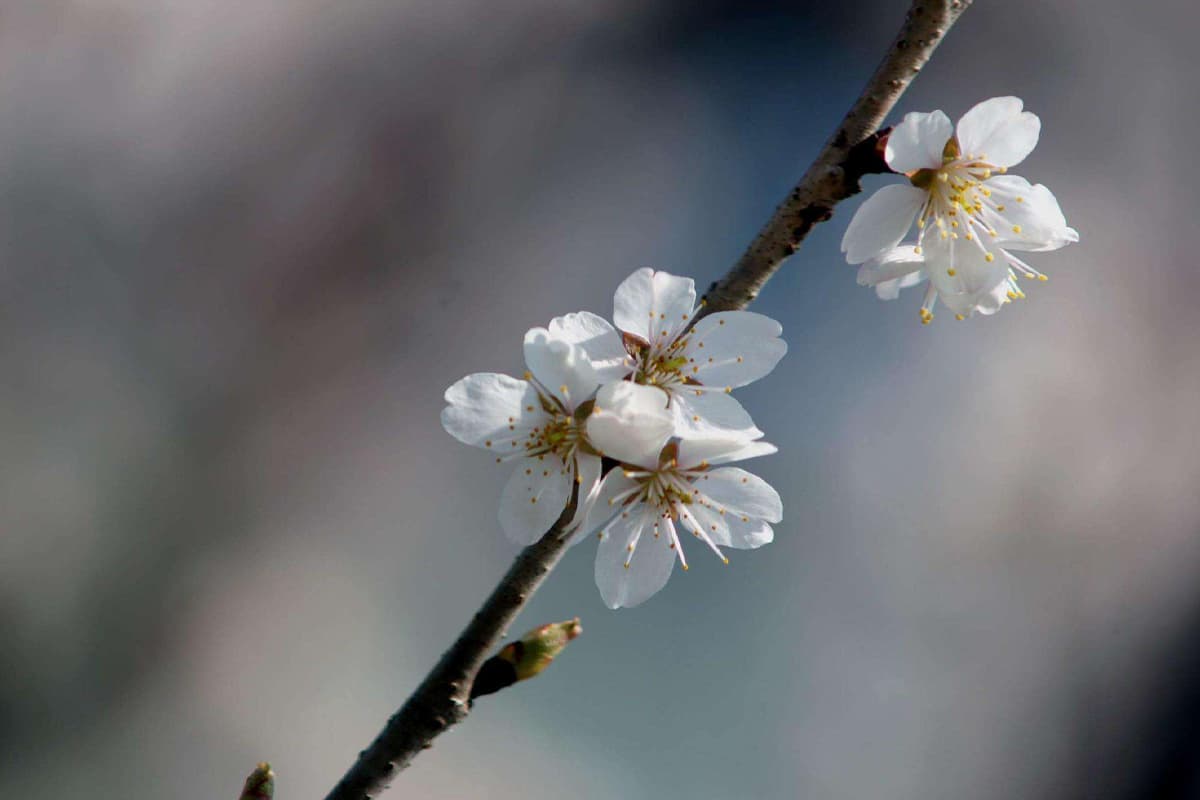
Cerasus subhirtella prefers full sun to partial shade and thrives in warm, humid climates. It is adaptable to various soil types but performs best in well-drained, loamy soils with good fertility and slightly acidic to neutral pH (6.0-7.5).
This species has a shallow root system and does not tolerate waterlogged conditions or poorly drained soils. It exhibits moderate cold hardiness (USDA zones 5-8) and some drought tolerance once established. However, it is sensitive to air pollution and strong winds, making it less suitable for exposed urban environments.
In its native range, Cerasus subhirtella is typically found at elevations between 500 and 1,500 meters above sea level. When cultivated, it can be grown successfully at various altitudes within its suitable climate zone, provided proper care and environmental conditions are met.
Planting of the large-leaf early cherry tree (Prunus subhirtella var. autumnalis) can be conducted in early spring or late autumn after leaf fall. Autumn planting generally yields higher survival rates and earlier budding, potentially leading to earlier blooming.
Spring planting should occur before bud break in early spring. After planting, remove buds to reduce nutrient consumption and ensure survival. When planting in spring, include a root ball with a diameter 8 to 10 times the trunk diameter.
For autumn planting, while a root ball can be omitted, minimize planting time. Incorporate well-decomposed, fermented organic matter as a base fertilizer, thoroughly mixing it with the bottom soil to prevent fertilizer burn.
Planting depth is crucial: in autumn, plant 3 to 5 cm deeper than the root ball or root collar; in spring, plant level with the root ball or soil marks. Overly deep planting can inhibit bud development.
Post-planting irrigation is essential: water immediately after planting, again two days later, and a third time three days after that.
For established trees, apply approximately 100 grams of ammonium sulfate and some sesame cake residue after flowering annually to replenish nutrients. In autumn, after leaf fall, apply well-rotted manure or compost to promote vigorous growth, larger and more vibrant flowers, and extended blooming periods in the following year.
For trees showing weak growth, consider foliar feeding in conjunction with root fertilization. Adjust fertilizer types according to growth stages: 0.5% urea solution in spring, 0.2% dipotassium phosphate in summer, and generally no fertilizer in autumn to prevent excessive vegetative growth.
Prunus subhirtella var. autumnalis prefers consistent moisture. In early March, before bud break, provide a thorough watering to rejuvenate the tree. This practice can lower soil temperature, delay budding, mitigate late spring frost damage, and supply necessary moisture for bud development.
In regions with strong, prolonged spring winds causing high transpiration rates, such as North China, additional watering in April and May is advisable. Trees planted in lawns can benefit from lawn irrigation without supplemental watering.
During rainy summers, ensure proper drainage to prevent root rot, but maintain irrigation during drought periods. For newly planted trees in arid climates, foliar misting can be beneficial, ideally before 9 am or after 5 pm.
Autumn watering is generally unnecessary unless conditions are exceptionally dry, as excess moisture can promote unwanted vegetative growth and compromise winter hardiness.
Before winter, combine watering with fertilization to apply an anti-freeze irrigation. This practice is typically suitable from late November to early December, with precise timing dependent on local temperature conditions. Watering too early or too late diminishes frost-prevention efficacy.
The primary propagation method for Prunus subhirtella var. autumnalis is grafting. Suitable rootstocks include peach (Prunus persica), hairy peach (Prunus mira), apricot (Prunus armeniaca), cherry (Prunus avium), hairy cherry (Prunus tomentosa), or yulan magnolia (Magnolia denudata). Both bud grafting and scion grafting techniques are effective.
A unique grafting approach involves using peach as rootstock for yulan magnolia, then grafting cherry onto the magnolia. This method yields high success rates, vigorous growth, and enhanced disease resistance.
Bud grafting is typically performed in July and August, using robust, healthy buds free from pests and diseases. Scion grafting, generally employing the bark grafting method, is best carried out from mid to late March to early April.
Prune after flowering and before bud break in early spring, removing dead, weak, and crowded branches. Avoid heavy pruning and maintain a rounded canopy shape.
While grafting is the preferred propagation method, seed propagation and cutting are also viable. For seed propagation, prevent embryo desiccation by sowing immediately after collection or storing in moist sand until spring sowing. When using graft propagation, seedlings of cherry (Prunus avium) or mountain cherry (Prunus serrulata) serve as suitable rootstocks.
Cherry blossoms are susceptible to several diseases and pests, primarily gummosis, root-knot diseases, and infestations by aphids, spider mites, and scale insects.
Gummosis is a condition caused by various factors, including fungal infections and environmental stress, resulting in the exudation of gum from the bark. While insect damage can contribute to gummosis, it’s not the primary cause. Management includes:
Root-knot disease, caused by nematodes, impairs root function and overall tree health. Control measures include:
Pest management for aphids, spider mites, and scale insects should focus on integrated pest management (IPM) strategies:
Common diseases of cherry blossoms include:
Ornamental
Large-leaf early cherry (Prunus subhirtella var. autumnalis) possesses exceptional ornamental value. Its profuse, vibrant blooms create a stunning visual display reminiscent of clouds or mist. Landscape applications include:
Medicinal
Cherry bark and wood contain various bioactive compounds, including:
Leaves contain:
These compounds contribute to potential medicinal uses, including:
Note: Medicinal use should only be under professional guidance due to the presence of potentially toxic compounds.
Cosmetic
Cherry blossoms are valued in skincare for their:
Cherry blossom extracts are used in various cosmetic formulations:
The “cherry blossom enzyme” referred to in some products is likely a marketing term rather than a specific enzyme. It may refer to a blend of extracts or biofermented ingredients derived from cherry blossoms.

Peggie was once a high school mathematics teacher, but she set aside her chalkboard and textbooks to follow her lifelong passion for flowers. After years of dedication and learning, she not only established a thriving flower shop but also founded this blog, “Flowers Library”. If you have any questions or wish to learn more about flowers, feel free to contact Peggie.
 English
  العربية
  Bahasa Indonesia
  Deutsch
  Français
  Italiano
  Nederlands
  Português
  Русский
  日本語
日本語