600+ Types of Flowers A To Z (With Names and Pictures)
Types Of Flowers By Names (A-Z) Types Of Flowers By Color Types Of Flowers By Season Types Of Flowers By Blooming Time 600+ Types of Flowers No. Flower Name No.…

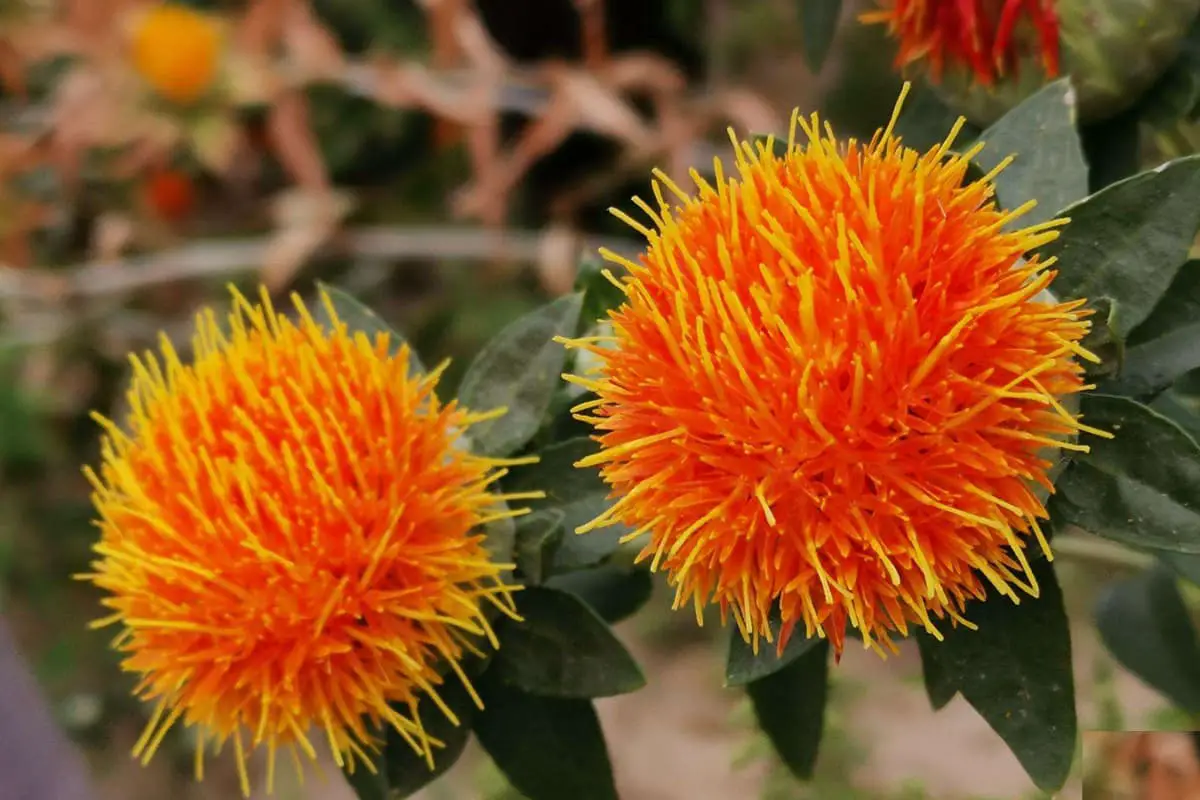
The Carthamus tinctorius, commonly known as Safflower or False Saffron, is a versatile plant belonging to the Asteraceae family. This annual thistle-like plant is valued for its vibrant orange-red flowers and multiple uses in medicine, dye production, and as an oilseed crop.
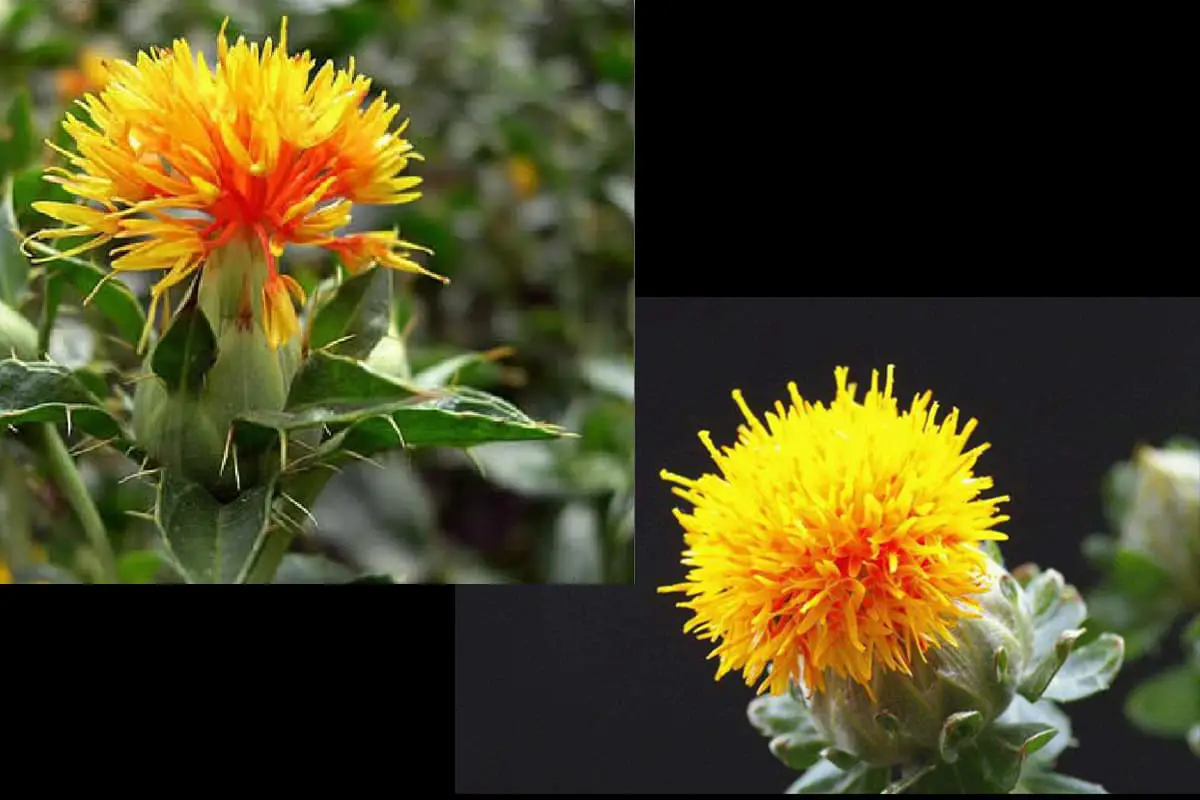
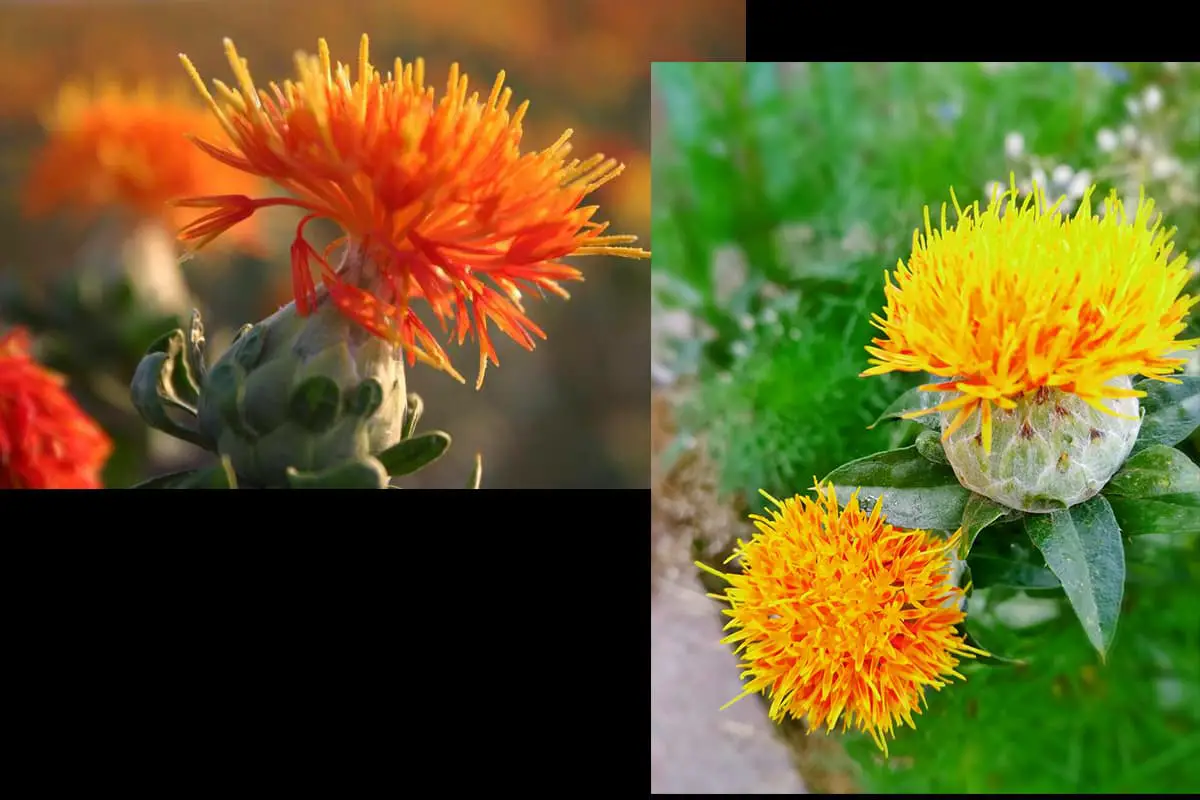
Safflower’s distinctive flowers feature tubular florets with a narrow base expanding into five linear segments. The flower head, or capitulum, contains numerous florets surrounded by spiny bracts. As the flowers mature, they transition from a yellow hue to their characteristic orange-red color. The anthers are fused into a tube that extends beyond the corolla segments, with a bifid stigma protruding from the center.
High-quality safflower is characterized by long, bright red petals with a soft texture and a mild, slightly bitter taste. The flowers also possess a subtle, distinctive aroma. Major production regions in China include Henan, Hunan, Sichuan, Xinjiang, and Tibet.
In traditional Chinese medicine, safflower is renowned for its ability to invigorate blood circulation, alleviate pain, and reduce inflammation. It is commonly used to treat menstrual disorders, chest and abdominal pain, traumatic injuries, and various inflammatory conditions. However, due to its potent blood-moving properties, it is contraindicated during pregnancy.
Several cultivars of safflower are recognized in China, each with unique characteristics:
All these varieties are considered superior when their flowers exhibit a bright red-yellow color, are thoroughly dried, and maintain a soft texture.
Safflower Cake, also known as Pie Safflower, is a processed form of the herb. Fresh safflower petals are mashed into a paste, formed into thin sheets, and dried for medicinal use, offering a convenient alternative to loose dried flowers.
Safflower is a hardy plant that thrives in warm, arid climates. It demonstrates remarkable adaptability to various environmental conditions:
Soil: While safflower can grow in different soil types, it prefers well-drained, moderately fertile sandy loam or sandy soil. It performs particularly well in soils with some oil content or purple mixed sand. The plant’s ideal pH range is slightly acidic to neutral (6.0-7.5).
Water: Safflower is drought-tolerant due to its deep root system, which can access moisture from lower soil layers. However, it is sensitive to waterlogging, especially during warmer temperatures. Excessive humidity or soil moisture can lead to disease susceptibility. While drought-resistant, strategic irrigation in dry climates can significantly enhance yield.
Temperature: Safflower exhibits a wide temperature tolerance, growing in ranges from 4°C to 35°C. Optimal seed germination occurs at 15-25°C, with a germination rate of about 80%. The plant’s growth is most vigorous at 20-25°C. Cold temperatures (around 10°C) during flowering can impair flower development and seed set.
Light: As a long-day plant, safflower’s development is influenced by day length. Adequate light exposure promotes robust plant growth and results in fuller, more plump seeds. The transition from vegetative to reproductive growth is accelerated under long-day conditions.
Nutrition: While safflower can adapt to various soil fertility levels, balanced fertilization is crucial for optimal yield. The plant benefits from a comprehensive nutrient profile, with particular emphasis on nitrogen, phosphorus, and potassium.
Safflower is believed to have originated in the region spanning from the Mediterranean to Central Asia. It is found both wild and cultivated across a wide geographic range:
The plant’s adaptability to diverse climates and its multiple uses have contributed to its widespread cultivation across various continents.
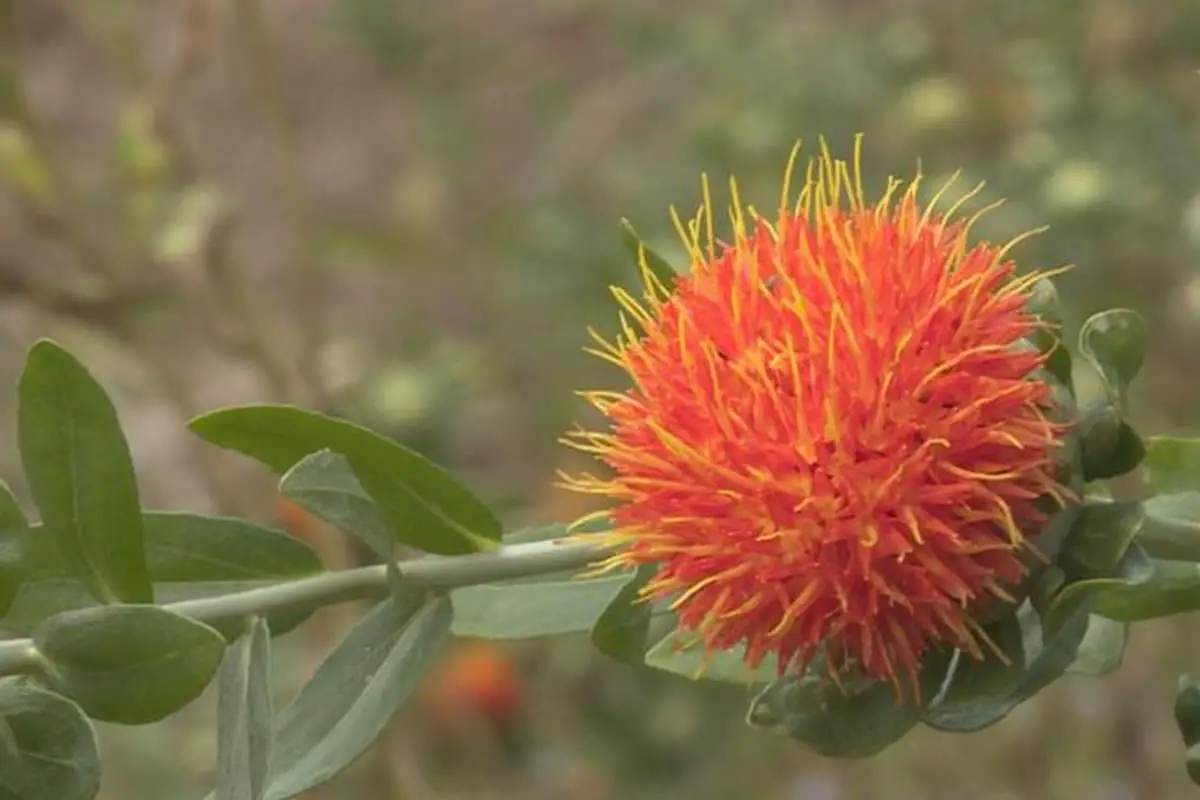
The Red Flower (Carthamus tinctorius), commonly known as safflower, is an annual herbaceous plant, typically reaching heights of 50-100 cm, with some specimens growing up to 150 cm. The stem is erect and branches at the upper portion. All stems and branches are white or pale white, smooth, and glabrous.
The lower and middle stem leaves are lanceolate, lanceolate-oblong, or oblong, measuring 7-15 cm in length and 2.5-6 cm in width. Leaf margins vary from large double serrations to small serrations, or occasionally entire. Some leaves may be pinnately deeply lobed, with a mucronate apex 1-1.5 mm long.
Upper leaves gradually decrease in size, becoming lanceolate with serrated edges and longer mucronate tips up to 3 mm. All leaves are coriaceous, glabrous, eglandular, glossy, sessile, and semi-amplexicaul.
The inflorescence consists of numerous capitula arranged in terminal corymbiform clusters, subtended by bracts. These bracts are ovate or ovate-lanceolate, including the spinose tip, 2.5-3 cm long. Bract margins may have spines 1-3 mm long or be spineless, tapering to an apical spine 2 mm in length.
The involucre is ovoid, approximately 2.5 cm in diameter, comprising four series of bracts. Outer bracts are lyrate with a constricted middle or lower portion; above the constriction, they are rigid and green, with margins either spineless or bearing comb-like spines up to 3 mm long, tapering to a 1-2 mm apical spine. Below the constriction, they are yellowish-white. Middle and inner bracts are chartaceous, obovate-lanceolate to elongate-obovate, up to 2.3 cm long, tapering at the apex. All bracts are glabrous and eglandular.
Florets are red or orange-red, all bisexual. The corolla is 2.8 cm long, with a slender tube 2 cm in length. Corolla lobes extend almost to the base of the limb.
The achene is obovoid, 5.5 mm long and 5 mm wide, ivory-white, quadrangular with ridges extending from the apex laterally to the areola. Pappus is absent. Flowering and fruiting occur from May to August.
Site selection: Safflower is adaptable to various soil types, but for optimal yield, choose deep, evenly fertile soil with good drainage in the medium to upper soil layers. The terrain should be level with efficient drainage and irrigation systems. Soybeans or corn are preferable as preceding crops.
Seed preparation: Select safflower varieties suited to local conditions, such as ‘Safflower No.2’ and ‘New Safflower No.1’.
Soil preparation and fertilization: After harvesting the previous crop, promptly plow, fertilize, and irrigate. Apply per acre: 1-1.5 tons of well-decomposed manure, 8-10 kg urea, 8-10 kg phosphorus fertilizer, 1 kg zinc fertilizer, and 3-5 kg potassium fertilizer (for soils with available potassium below 350 mg/kg).
Distribute base fertilizers evenly before plowing, then incorporate into the soil. Ensure consistent, thorough plowing without furrow ridges. Consider fall irrigation, winter plowing, and spring harrowing for soil preparation.
Aim for soil conditions meeting the “six-character standard”: uniform, smooth, loose, finely broken, clean, and moist.
Weed control: Prior to harrowing, apply 80-100 g of fluoroglycofen mixed with 30 L of water per acre using a power sprayer. Ensure even coverage without over-spraying or missing areas. Immediately after application, use a light disc harrow to incorporate the herbicide uniformly into the top 4-5 cm of soil.
Seeding:
Timing: Sow when soil temperature stabilizes above 5°C, typically from late March to early April in most regions. Earlier seeding often results in higher yields.
Method and rate: Use a grain seeder for row planting. Set rows 45 cm apart with a sowing depth of 4-5 cm. Aim for 50 seeds per meter, ensuring even distribution. Maintain straight rows and consistent depth. Avoid over-seeding or gaps, cover seeds firmly, and press soil. Seed rate is typically 2-2.5 kg per acre.
Seedling Stage Management
Thinning: Once safflower seedlings emerge uniformly, thin to maintain 1-2 cm spacing between plants, promoting even growth.
Fixing Seedlings: When plants develop 5-6 true leaves, adjust spacing to 5-7 cm, retaining the most vigorous seedlings.
Plant Density: Adjust based on soil fertility and plant branching potential:
Cultivation and Weeding: After sowing, break any soil crusts and remove weeds around seedlings, especially after rain. Initial cultivation should be shallow (3-4 cm), gradually increasing to 10 cm in subsequent passes. Avoid damaging seedlings during cultivation. Perform 2-3 cultivations before the first irrigation.
Branching to Flowering Stage Management
Fertilization: Although safflower tolerates poor soils, for high yields, apply urea during the initial branching stage to increase flower head numbers and seed weight. Combine with the final cultivation, creating 15 cm deep trenches, applying 8-10 kg urea per acre, and immediately mound soil over the fertilizer.
Irrigation: Delay the first irrigation until plants show temporary wilting at noon after branching begins. Use a slow, low-volume method, ensuring even distribution without waterlogging. Generally, irrigate about 60 days after emergence, applying 60-70 cubic meters per acre. Subsequent irrigations should occur during branching, flowering, and peak bloom stages.
Adjust irrigation based on soil conditions and plant needs, particularly in high-fertility or low-lying areas to prevent excessive branching and disease. Typically, 3-4 irrigations are sufficient throughout the growing season. Use furrow irrigation methods; avoid flood irrigation.
Flower Harvest: Begin harvesting when petals open fully, stamens start yellowing, and flowers are bright red and glossy. Harvest in the morning when petals are less fragile and sepals less prickly. Avoid harvesting too early (before pollination) or too late (when flowers turn purple-black), as both affect medicinal quality.
Seed Harvest: Harvest when plants turn yellow, with only a few green sepals remaining on flower heads. Seeds should be hardened and show their characteristic color. Use a standard grain combine harvester for efficient collection.
Damage and Symptoms: Rust disease in saffron is primarily caused by fungal pathogens, often exacerbated by soil conditions, continuous cropping, and high humidity.
The disease manifests when rust spores infiltrate the roots, rhizomes, and young stems of seedlings. These spores form pustules that cause seedling dehydration or structural weakness, leading to severe plant loss.
Wind-dispersed spores can infect cotyledons, leaves, and bracts, forming characteristic chestnut-brown pustules. When these pustules rupture, they release copious amounts of rust-brown spores, significantly reducing saffron yield in severe cases.
Prevention:
Root rot, caused by various soil-borne fungi, can affect saffron at any growth stage, with particular vulnerability during seedling and flowering periods. Infected plants exhibit wilting, chlorosis (yellowing), and eventual death.
Prevention:
Black spot disease, caused by a semi-saprophytic fungus, typically occurs in April and May. Infected leaves develop oval lesions with distinctive concentric rings.
Prevention:
Anthracnose primarily affects branches, flower buds, and bracts in the later stages of saffron production.
Prevention:
Borers can cause significant damage to saffron inflorescences, leading to flower death and yield reduction.
Prevention:
Sudden death disease is a major threat to saffron cultivation, affecting various growing regions and significantly impacting yield and quality. It primarily affects seedling stems and bases, initially causing water-soaked lesions that progress to tissue rot or constriction, leading to rapid plant death.
The pathogen invades and spreads through the cortical cells, forming overwintering oospores in infected tissues. The disease is prevalent in areas with poorly drained soils and prolonged rainfall, often occurring in conjunction with other root rot diseases.
Saffron flowers are valued in traditional medicine for their ability to promote blood circulation and treat various gynecological conditions.
Properties:
Traditional functions:
Traditional uses:
Usage and dosage:
Precautions: Contraindicated during pregnancy.
Potential toxic reactions:
These reactions are primarily due to saffron’s stimulatory effects on the intestines, uterus, and nervous system, as well as potential allergic responses. Toxicity is mainly associated with misuse or overdose.
Contraindications and cautions:
Historically, saffron held a prestigious position as a dye, providing a true red color that could be directly applied to fibers. This vibrant red was particularly popular during the Sui and Tang dynasties in China.
Modern scientific analysis reveals that saffron contains both yellow and red pigments:
In addition to textile dyeing, saffron was historically used to create cosmetic rouge by infusing it in starch.
The unique dyeing properties of saffron contributed significantly to its value in ancient times, as exemplified by the Tang Dynasty poet Li Zhong’s verse: “The color of saffron outshines a thousand flowers, even orangutan blood cannot compare.”

Peggie was once a high school mathematics teacher, but she set aside her chalkboard and textbooks to follow her lifelong passion for flowers. After years of dedication and learning, she not only established a thriving flower shop but also founded this blog, “Flowers Library”. If you have any questions or wish to learn more about flowers, feel free to contact Peggie.
 English
  العربية
  Bahasa Indonesia
  Deutsch
  Français
  Italiano
  Nederlands
  Português
  Русский
  日本語
日本語