600+ Types of Flowers A To Z (With Names and Pictures)
Types Of Flowers By Names (A-Z) Types Of Flowers By Color Types Of Flowers By Season Types Of Flowers By Blooming Time 600+ Types of Flowers No. Flower Name No.…

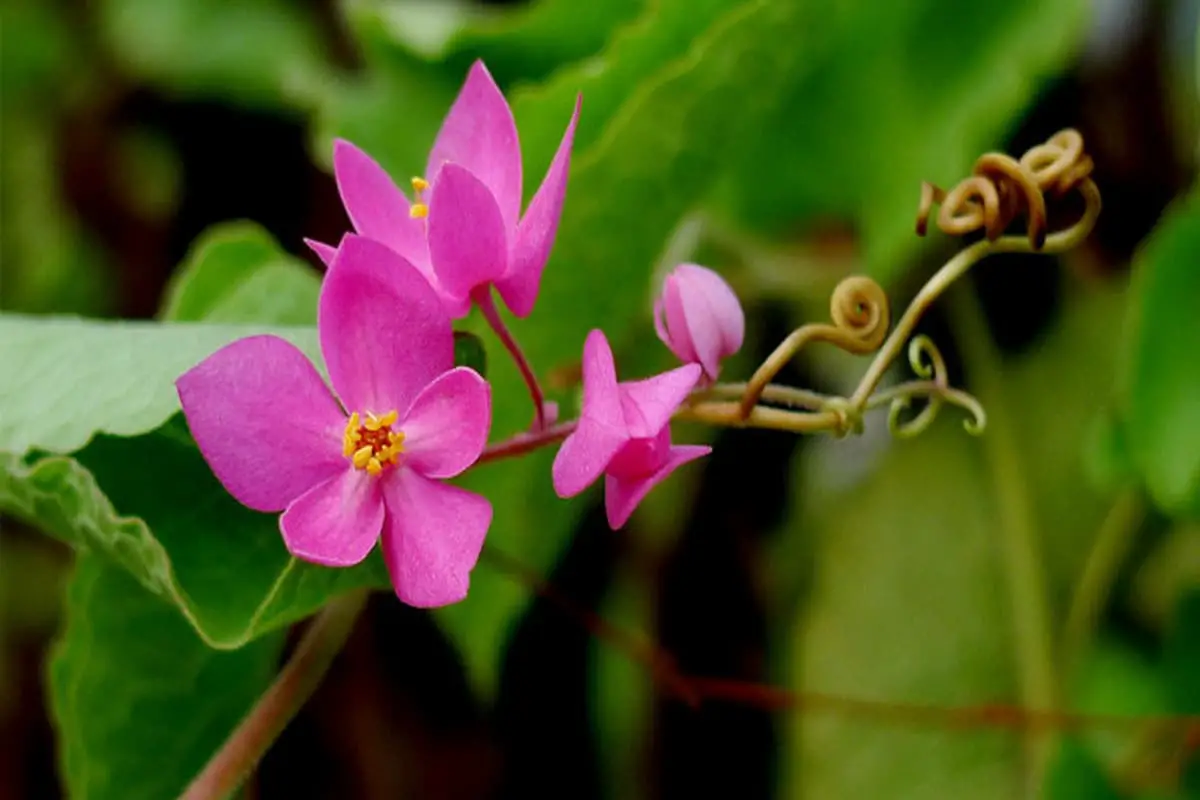
The Coral Vine, also known as Antigonon leptopus, carries other names like Crown of Thorns and Phoenix Gem. Belonging to the Polygonaceae family and the genus Antigonon, it is an evergreen woody vine.
Propagation can be done through seeding or cutting, with its roots being thick and stems strong enough to climb over 10 meters. The plant produces numerous dense clusters of flowers, in a corymbose form, from March through December.
The fruit is cone-shaped, and the plant is native to Central America. The Coral Vine is a spectacular sight, making it a good choice for ornamental gardening and vertical greening. It is one of the most valuable ornamental flowers and is often referred to as the “Queen of Vines.”
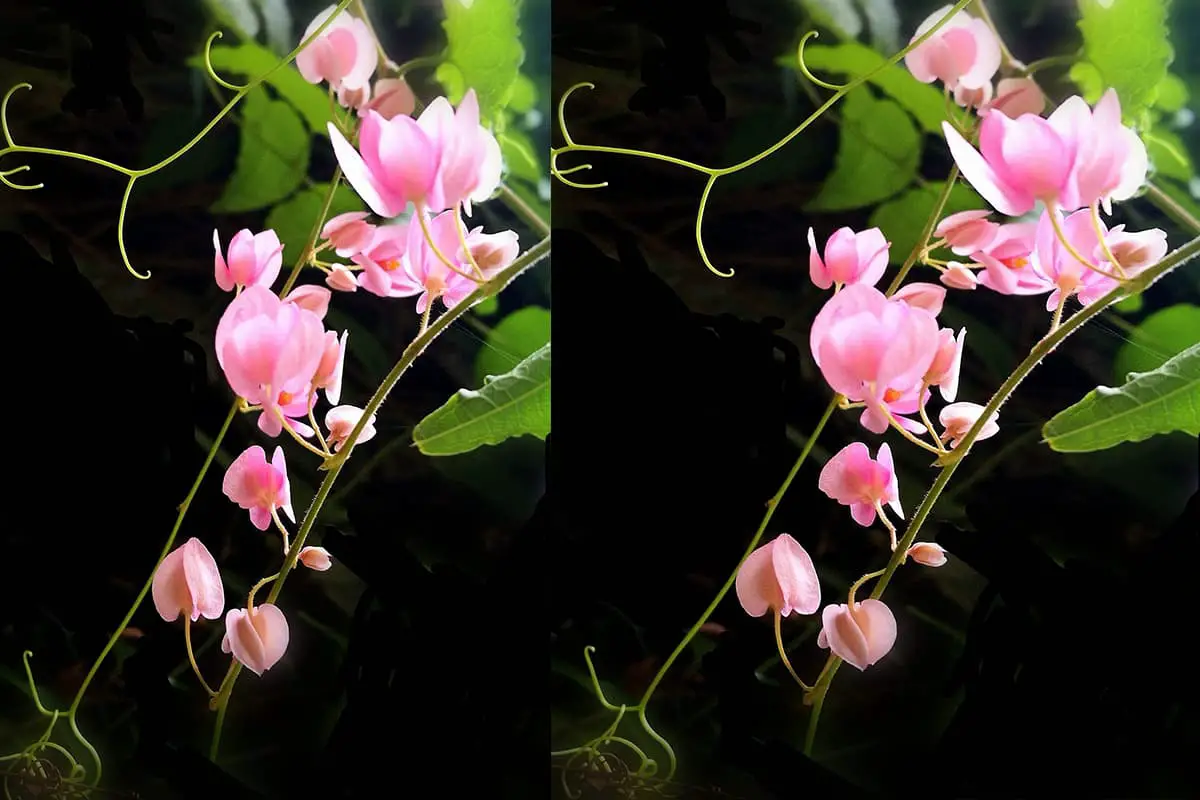
Characteristics of Polygonaceae: Dicotyledon.
It consists of annual or perennial herbs, rarely shrubs or small trees, with stems usually having enlarged nodes. The leaves are single, alternate with stipular sheaths.
The flowers are bisexual, rarely unisexual, radially symmetrical; the inflorescence is made up of several small umbels arranged in corymbs, spikes, or cones, with flowers sometimes solitary; the tepals are 3-6; the stamens are 6-9, rarely 16, with a disc; the pistil is 1, the ovary is superior, with one chamber.
The achene is ovate, with three edges or flat, usually enclosed in the persistent perianth; the embryo is curved or erect, with abundant endosperm. There are about 40 genera and 800 species, mainly distributed in the Northern Hemisphere, with a few in the tropics.
The Coral Vine is a semi-deciduous vine. The underground root is tuberous, and the stem tip is tendril-like. The leaves are alternate, ovate-heart-shaped, with sharp tips, heart-shaped bases, and slightly wavy margins.
The leaves are papery, with stipules. The racemes are alternate with the leaves, and the flowers are composed of five petal-like bracts. The fruit is brown and triangular, hiding within the persistent calyx.
The inflorescence is corymbose, terminal or axillary, the axis of the inflorescence extends into tendrils, the flowers are light red or white, 7-10mm long, the outer three tepals are larger. The flowering period is from April to August. The fruit is brown, triangular, and hidden within the persistent calyx.
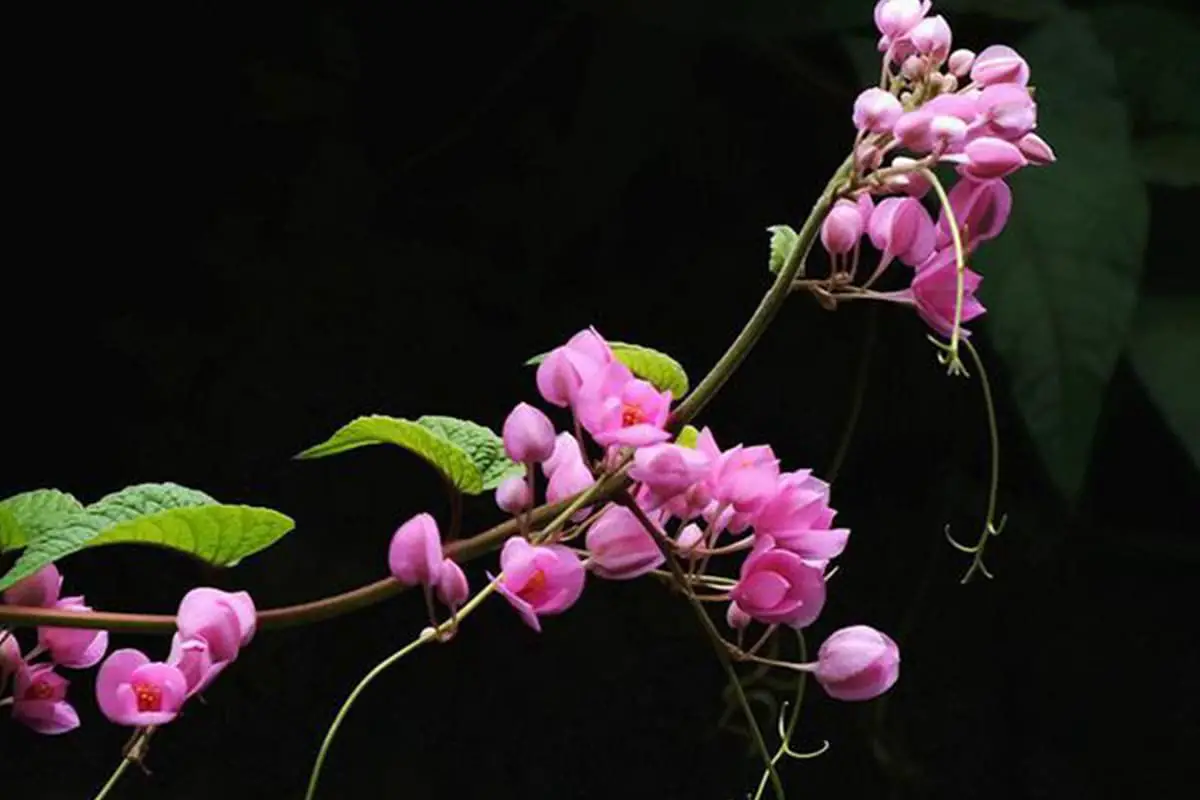
The plant is a climbing, slightly woody, perennial vine that grows from a thick tuberous root, reaching up to 10 meters, with tendrils.
The leaves are opposite, ovate to rectangular-ovate, 6-14 cm long, gradually pointed at the top, deeply heart-shaped at the base, with obvious veins, nearly glabrous on both surfaces.
The corymbose inflorescences are terminal or borne in the upper leaf axils, the flowers are numerous, light red, sometimes white, 8-10mm long, clustered, with persistent tepals.
The achene is cone-shaped, triangular at the top, about 10mm long, and flowers from March to December. There are double-flowered horticultural varieties.
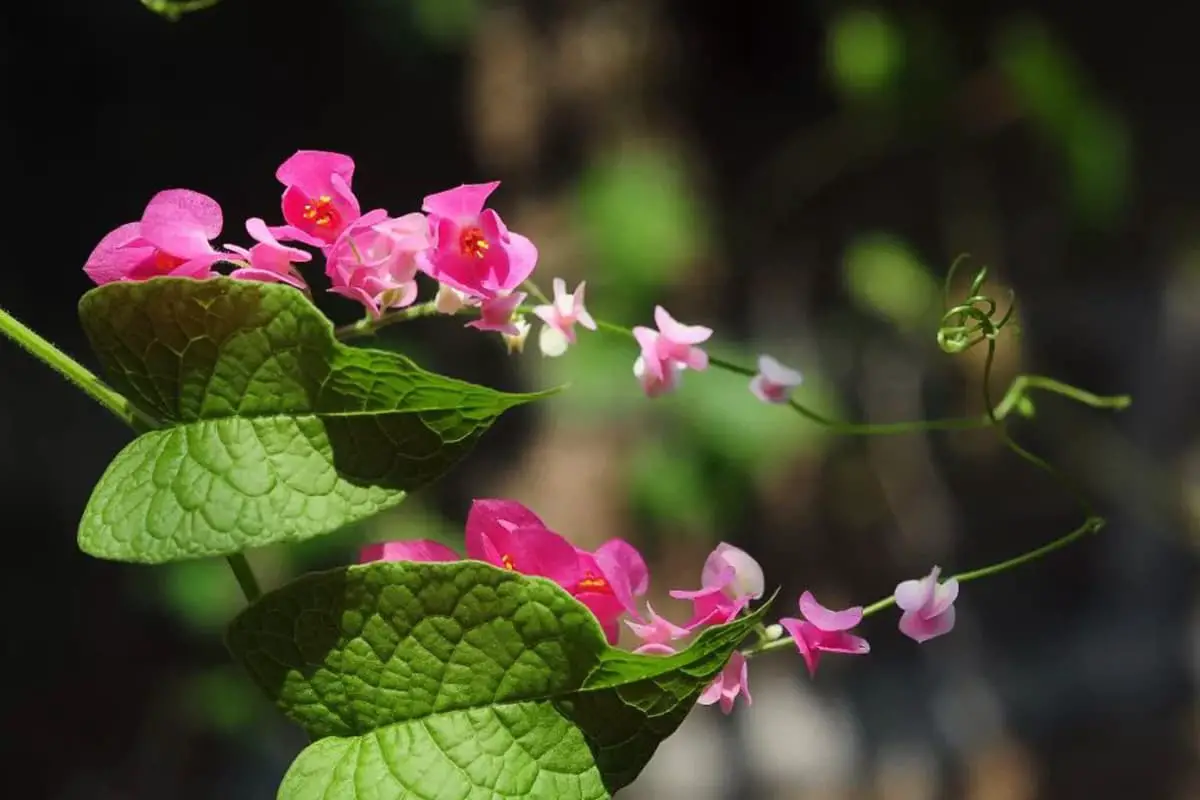
This plant thrives in sunny, moist, and fertile acidic soil. After the warmth of spring, it sprouts and grows leaves. When the winter temperature drops below 10℃, the leaves turn dark green and sometimes slightly wither.
In the cool seasons of the tropical or subtropical south, it grows lushly. Coral vine is mainly cultivated in open fields in South China, where the soil should be fertile. Since the vines are long, they should not be planted too densely, and are generally used for vertical greening of fences, with a plant spacing of about 4 meters.
In other areas, it is often grown in pots and requires high-temperature greenhouses to overwinter. It is rarely affected by pests and diseases.
In tropical or subtropical southern regions, it flourishes in the cool seasons. After the warmth of spring, it sprouts and grows leaves. When winter temperatures drop below 10℃, the leaves turn dark green, sometimes slightly withering.
It suffers from few pests and diseases. Preferring high temperatures, the optimal growth temperature is around 22-30 degrees. It enjoys moisture and grows best in brightly lit environments.
It is fond of fertile conditions, is somewhat cold-resistant, and can generally safely overwinter at temperatures above 5℃. It likes to grow in well-drained soil rich in humus.
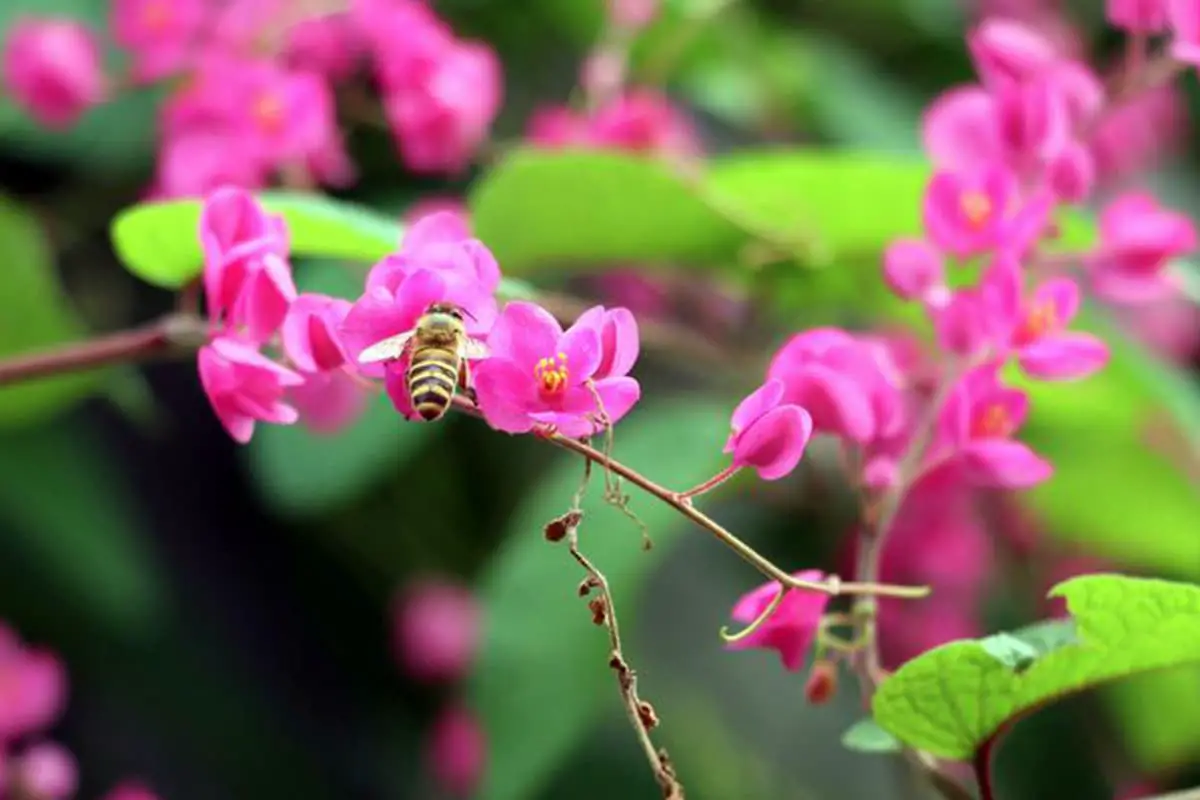
Originally from Mexico, it is also found in tropical and subtropical southern regions.
The coral vine has delicate flowers, a very long blooming period, and vibrant colors. Its branches are full of beautiful and abundant flowers that carry a slight fragrance, making it a rare summer bloom.
Known as a vine plant, the coral vine can be planted in flower beds, and it is also a great option for pot planting to decorate hotels and conference halls.
It is suitable for trellises and green shade pergolas, and can be used as a pergola plant, an excellent material for vertical greening, and a double-flowered horticultural variety. It can also be used as a cut flower for floral arrangements and baskets. The tuber is edible.
According to a Western myth, there was a beautiful goddess who attracted the pursuit of all the gods, but none could win her heart.
The Mountain God’s mother, eager to win the beauty for her son, one day went to the mountain to gather many vines and grasses. She wove them into a vine dress and necklace and had the Mountain God wear them to the goddess’s dwelling.
When the goddess opened the door, the sunlight happened to shine on the vine dress and necklace. In an instant, thousands of small flowers blossomed in a coral-like shape, along with heart-shaped leaves representing countless sincere hearts.
The goddess couldn’t help but exclaim, “What a beautiful coral vine!” The Mountain God then put the vine necklace around the goddess’s neck and won her heart ever since.

Peggie was once a high school mathematics teacher, but she set aside her chalkboard and textbooks to follow her lifelong passion for flowers. After years of dedication and learning, she not only established a thriving flower shop but also founded this blog, “Flowers Library”. If you have any questions or wish to learn more about flowers, feel free to contact Peggie.
 English
  العربية
  Bahasa Indonesia
  Deutsch
  Français
  Italiano
  Nederlands
  Português
  Русский
  日本語
日本語