600+ Types of Flowers A To Z (With Names and Pictures)
Types Of Flowers By Names (A-Z) Types Of Flowers By Color Types Of Flowers By Season Types Of Flowers By Blooming Time 600+ Types of Flowers No. Flower Name No.…

Xerochrysum bracteatum, a perennial herb, stands erect with a height of 20-120 centimeters.
Its branches are upright or ascending; the leaves are lanceolate to linear, up to 12 centimeters long, either smooth or rough, with entire margins, tapering at the base, and pointed at the tip.
The capitulum flower heads have a diameter of 2-5 centimeters and are borne singly at the branch tips.
The outer bracts are short and arranged in an overlapping pattern, while the inner ones are longer, broad-lanceolate, thick at the base, tapering to a pointed, glossy tip available in yellow, white, red, or purple.
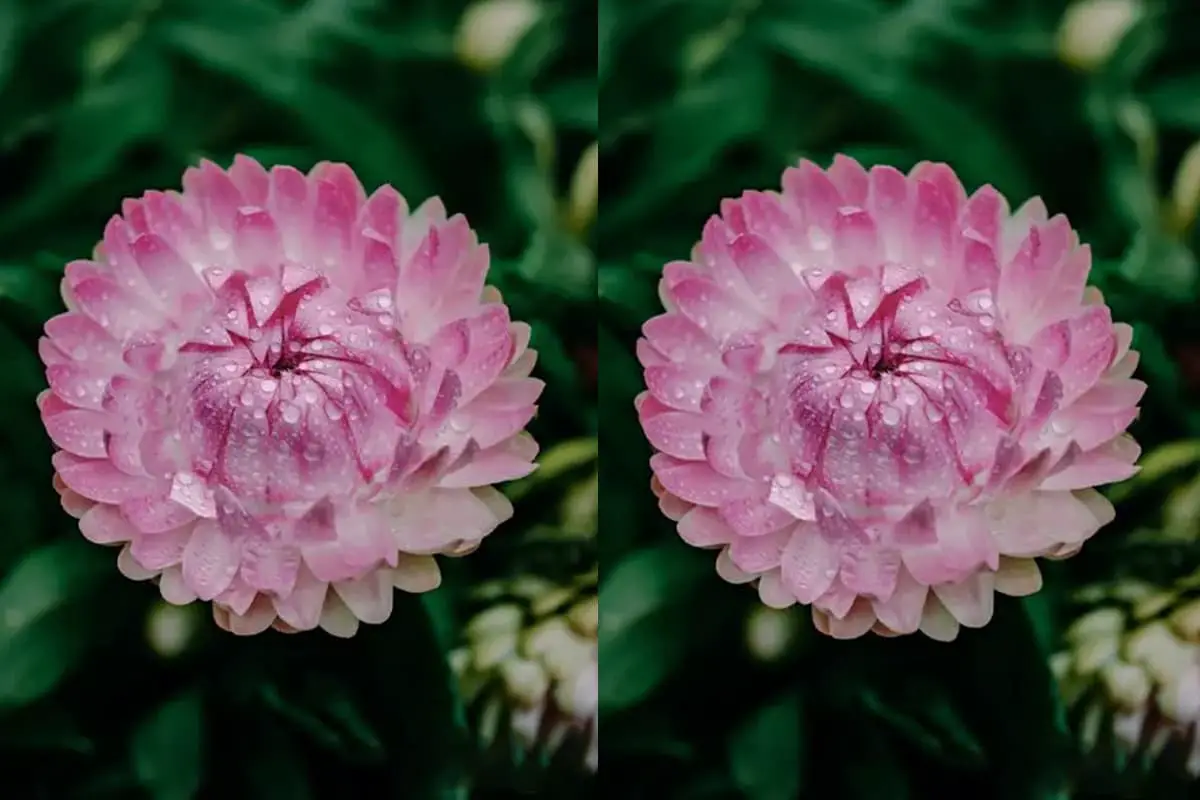
Numerous small flowers are present; the pappus has nearly feather-like coarse hairs. It is native to Australia and widely cultivated in Southeast Asia, Europe, and America.
The plant boasts abundant flowers and a sizable form, making it an excellent choice for gardens. It can be used in flower beds, along garden paths, or as naturalistic edge planting on lawns. It is also suitable for container gardening.
Once dried, the flowers of the strawflower retain their color for an extended period, making them excellent materials for dried flower arrangements.
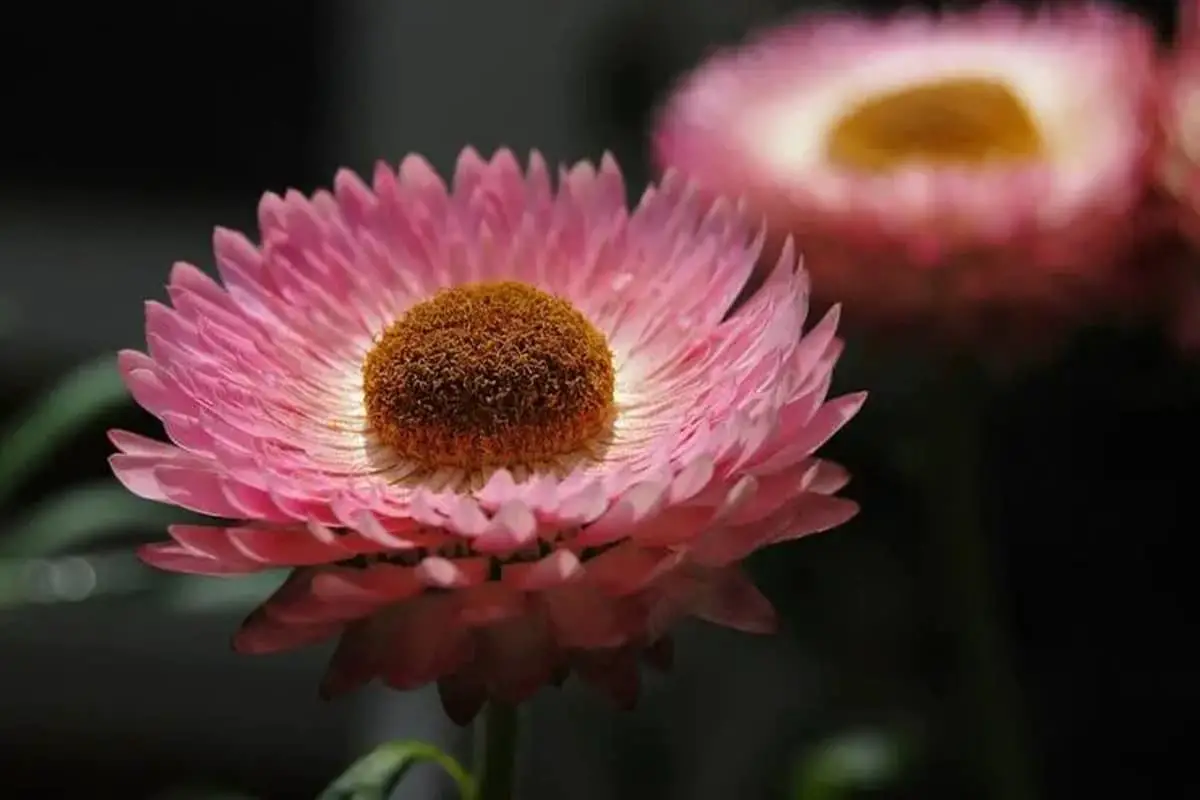
It is an annual or biennial herb with an erect stem, 20-120 centimeters tall, and upright or ascending branches.
The leaves are lanceolate to linear, up to 12 centimeters long, either smooth or rough, with entire margins, a gradually narrowing base, a pointed tip, and a distinct midrib.
The capitulum flower heads are 2-5 centimeters in diameter and borne singly at the branch tips. The outer bracts are short and arranged in a tile-like formation, while the inner ones are longer, broad-lanceolate, thick at the base, tapering to a glossy point, available in yellow, white, red, or purple.
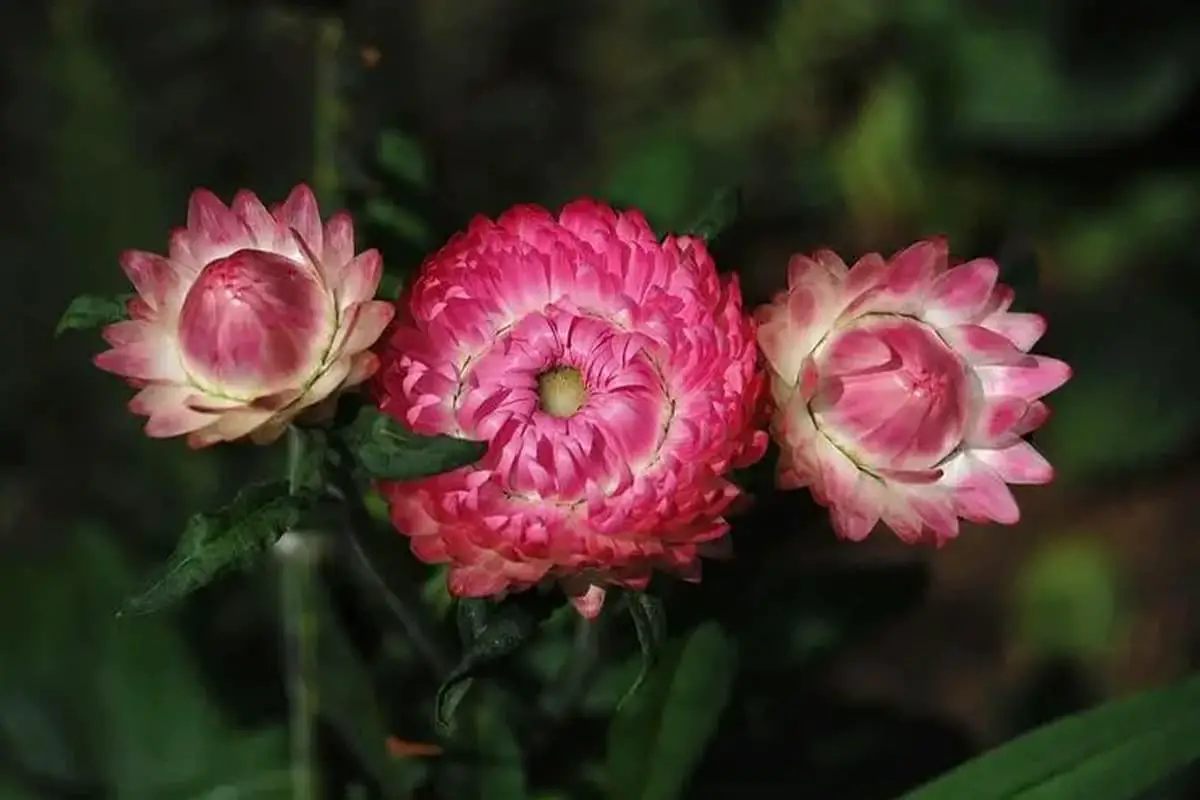
There are numerous small flowers; the pappus features nearly feather-like coarse hairs. The achene is hairless.
It thrives in general soil types but performs best in poor sandy loam and sunny positions. Adequate sunlight is necessary, and it does not grow well in overly wet conditions.
Shallow planting is not recommended, as it is intolerant of cold and dislikes heat; growth often ceases in summer, preventing flowering.
It prefers fertile, moist, well-drained soil and thrives in sunny locations. Fertilization should be moderate to maintain vibrant flower colors.
It is native to Australia and is widely cultivated in Southeast Asia, Europe, America, and China.
With its profusion of flowers and substantial size, it makes for an excellent garden plant, suitable for flower beds, garden paths, or as naturalistic border plantings. It also makes for an attractive container plant.
The flowers of the strawflower, when dried, do not fade and are prime materials for creating dried flower arrangements.
Immortelle (Helichrysum italicum), commonly known as the “Everlasting,” originates from the eastern Mediterranean region.
It is a fragrant herb that can grow up to 60 centimeters (24 inches) tall. Its sun-like flowers are bright and colorful and can be used for essential oil extraction.
With its vibrant and bright colors, the flowers maintain their shape and color even when dried, making them ideal for “dry flowers” used for indoor decoration during winter.
To prepare dried flowers: cut the flower stems before they are fully open, remove the leaves, tie them in bunches, and hang them upside down in a dry, cool, and ventilated place. Dwarf varieties of strawflowers are perfect for flower beds or container gardening.
Chrysanthemums are susceptible to various rust diseases, such as black, white, and brown rust, all caused by fungal spores and prevalent in moist climates.
The earliest symptoms typically appear in early July, with the most severe outbreaks occurring in September. Rust predominantly affects the leaves and stems, with leaves being the most damaged.
Black rust is a common affliction where pale spots appear on the leaf surface, eventually enlarging into slightly rounded protrusions.
The leaf’s underside soon ruptures, releasing clusters of orange-yellow powder that scatter with the wind, leading to widespread infection.
Dark, oval spots later appear on the leaves, followed by black powder after the skin breaks, and in severe cases, the disease works its way up from the bottom, causing leaves to dry up.
White rust causes grey-white circular spots on the leaf surface that dry out and turn reddish-brown, then dark brown, potentially leading to the death of the chrysanthemum, making it more harmful than black rust.
Brown rust is characterized by numerous light brown or orange-yellow spots, causing the leaves to wither and yellow.
Rust is a common disease in chrysanthemums, caused by basidiomycete fungi, with white rust originating from the genus Puccinia and black rust from the genus Chrysomyxa.
These pathogens overwinter in new shoots and spread through propagation, dispersed by wind, rain, and insects. The fungi prefer cool conditions and don’t tolerate high temperatures.
The disease is most prevalent from June to December, with difficulty infecting below 6°C or above 31°C.
Optimal conditions for infection are during warm, humid seasons, with poor ventilation, significant day-night temperature variations, and temperatures ranging from 10-24°C.
The disease is aggravated by poor cultivation management, inadequate ventilation and light penetration, low-lying areas with poor drainage, soil infertility or excessive nitrogen, and high humidity.
This disease mainly affects leaves and stems, with infected leaves displaying white powdery spots that merge into patches resembling frost. Severe infestations can cause leaf distortion, stunted growth, and plant wilting.
Powdery mildew is caused by a type of fungus known as an obligate parasite and spreads from August to the onset of winter.
Initially, white spots appear, expanding into irregular patches with a white powdery substance, causing leaves to curl and stems to deform, resulting in fewer and smaller flowers and, in extreme cases, plant death.
When severe, grey-white mycelium can be found on leaves and buds, resembling a layer of frost that severely distorts and deforms the tender branches and foliage, significantly affecting the plant’s aesthetic.
The disease spreads rapidly, especially in greenhouses. Powdery mildew is most infectious in conditions of high temperature, high humidity, low light, poor ventilation, and when day to night temperature variations are around 10°C.

Peggie was once a high school mathematics teacher, but she set aside her chalkboard and textbooks to follow her lifelong passion for flowers. After years of dedication and learning, she not only established a thriving flower shop but also founded this blog, “Flowers Library”. If you have any questions or wish to learn more about flowers, feel free to contact Peggie.
 English
  العربية
  Bahasa Indonesia
  Deutsch
  Français
  Italiano
  Nederlands
  Português
  Русский
  日本語
日本語