The Pansy, also known as the Cat Face, Butterfly Flower, or Ghost Face, is a biennial or perennial herbaceous plant of the Violaceae and Viola family.
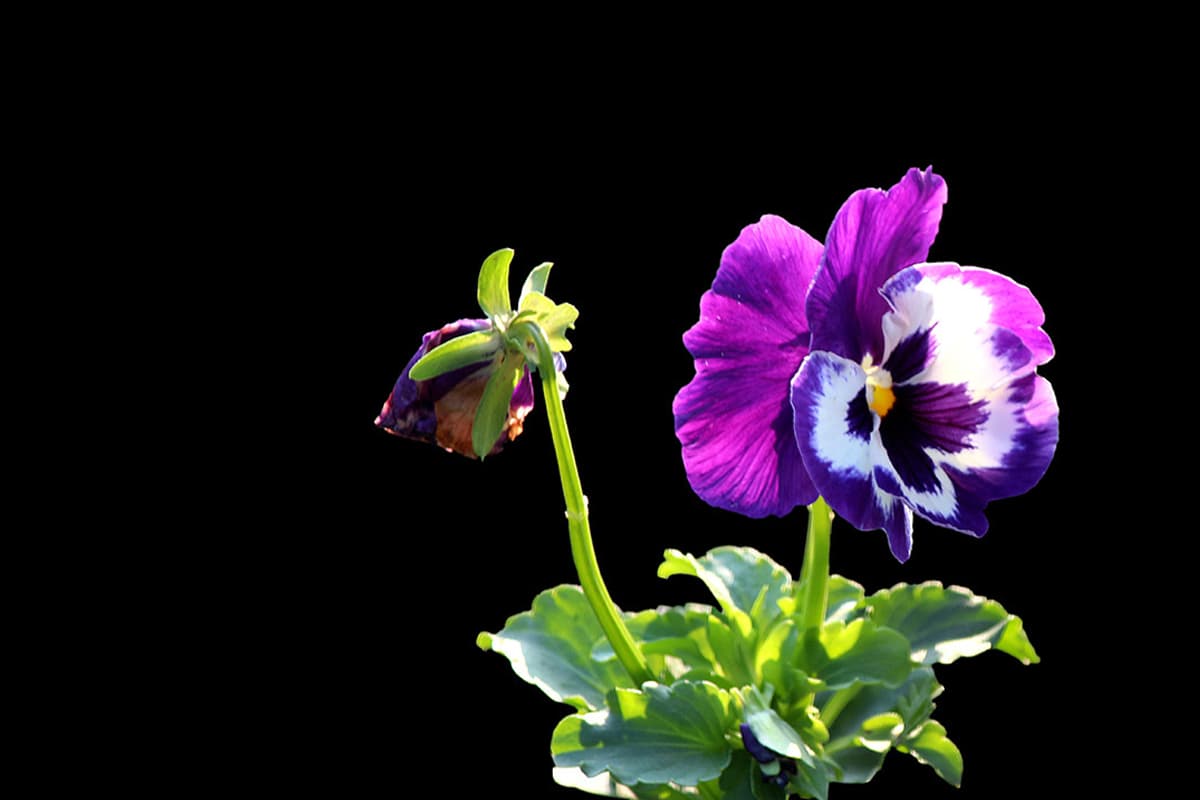
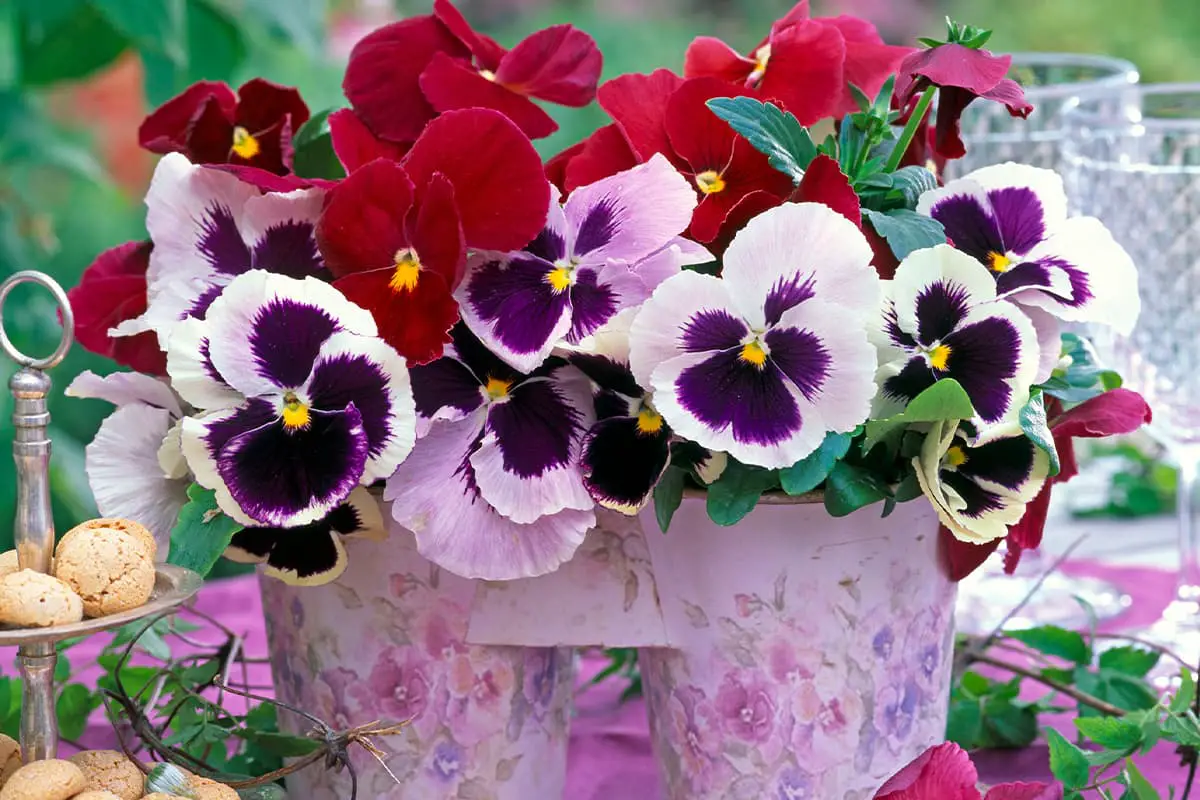
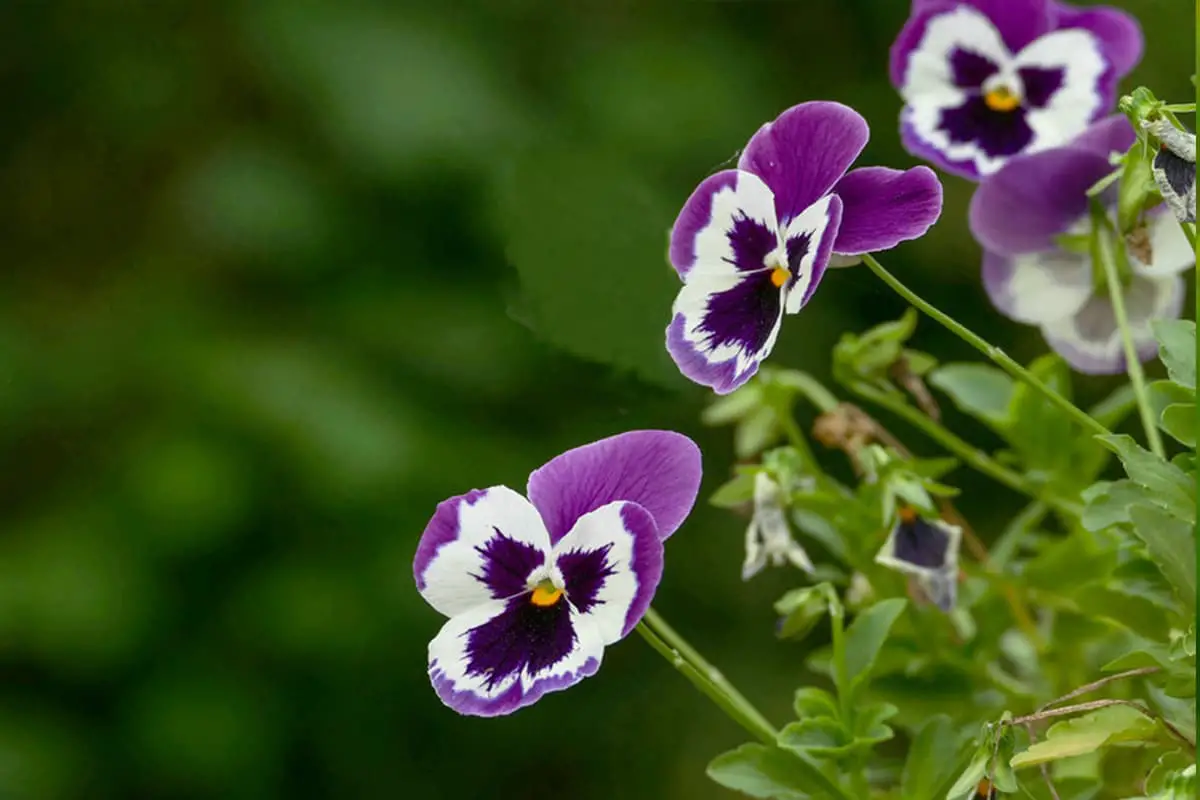
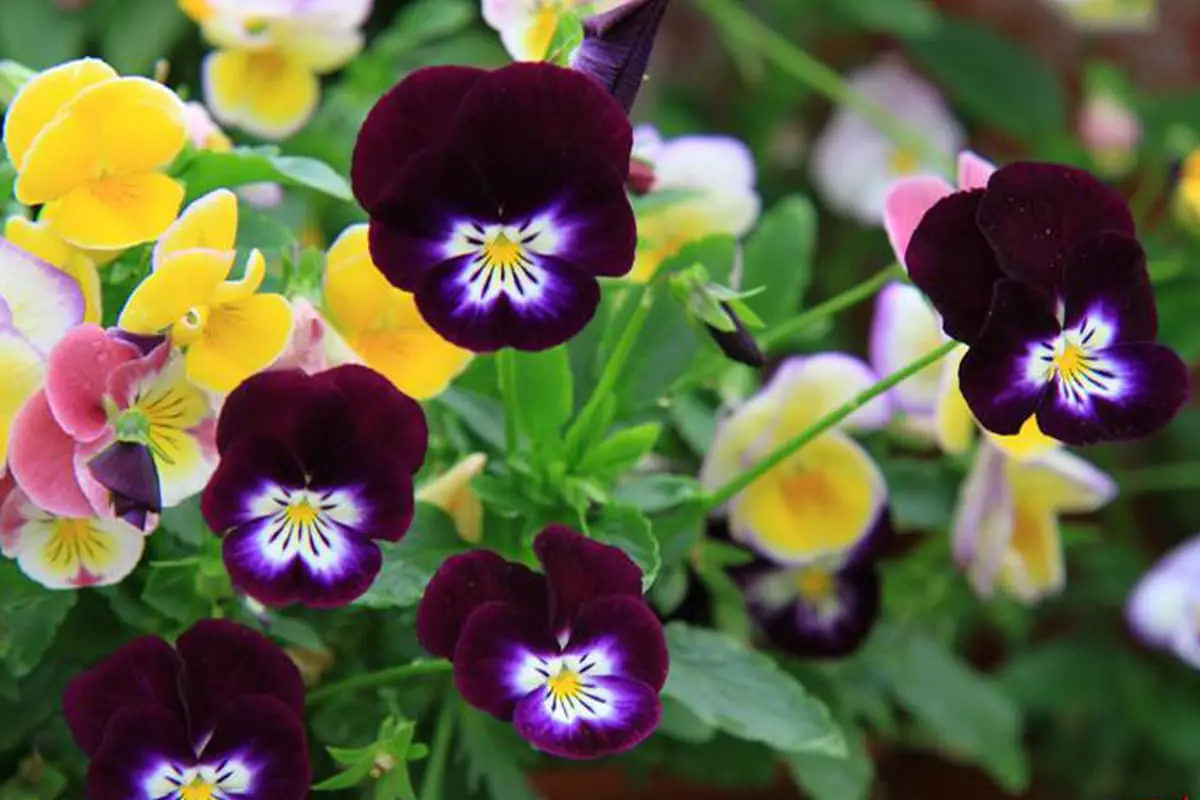
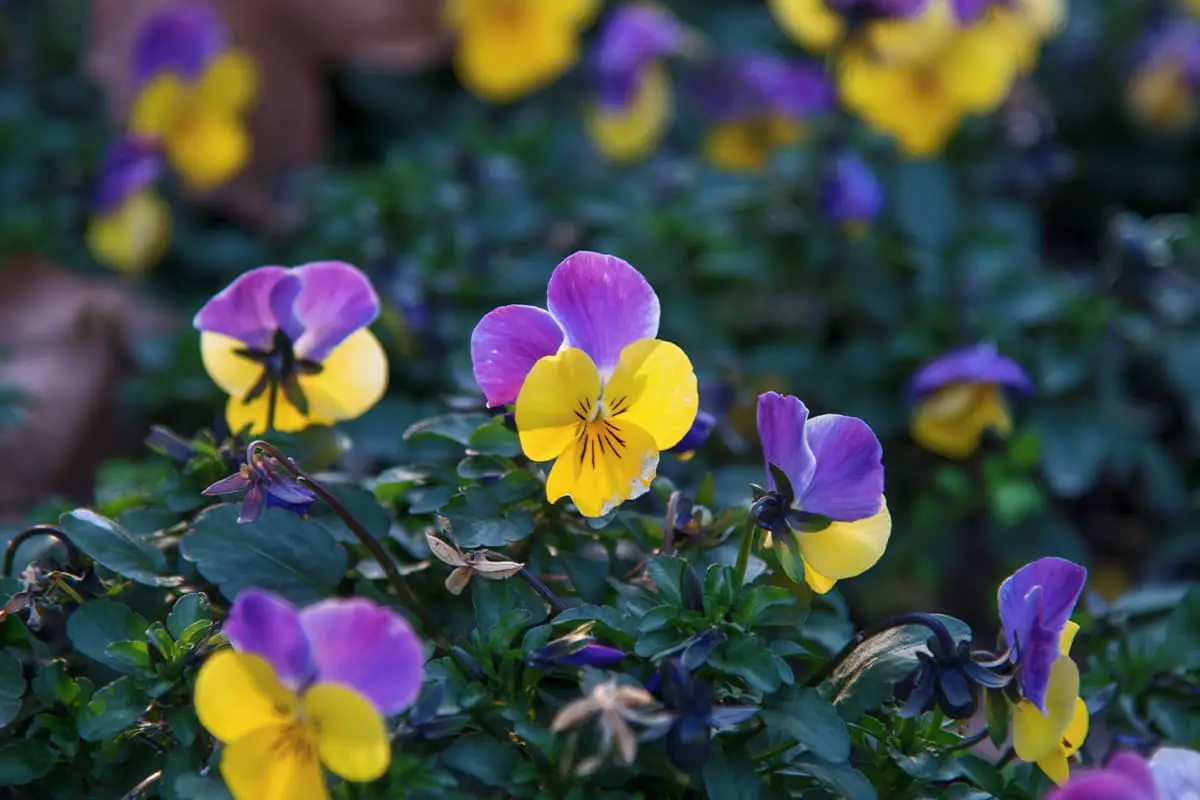
It is a common flower in courtyards and parks because its colors are often a mix of white, purple, and yellow, hence its name. The Pansy grows to a height of 10-40cm, with the entire plant being smooth.
The above-ground stem is relatively thick, upright or slightly inclined, with edges, and is either single or multi-branched. The flowers are large, about 3.5-6cm in diameter, with 3-10 per stem, and the flowering period is from April to July.
I. Basic Introduction
The Pansy (scientific name: Viola tricolor L.) is a biennial or perennial herbaceous plant of the Violaceae and Viola family. The basal leaves are long ovate or lanceolate with long petioles, and the stem leaves are ovate, oblong or oblong-lanceolate, with round or blunt tips, and the edges have sparse round teeth or blunt saw teeth.
The Pansy is a common wild flower species in Europe, often cultivated in parks, and is the national flower of Iceland and Poland. The flowers usually have purple, white, and yellow in each bloom, hence the name Pansy. The species is cold-resistant, likes coolness, and the blooming is greatly affected by light.
The Pansy is suitable for open-air planting, whether in flower beds, gardens, or potted, but not suitable for indoor cultivation.
The Chinese medicinal material Pansy can also kill bacteria and treat acne, blackheads, and allergies on the skin. A bath with Pansy also has a good breast-enhancing effect.
II. Types of Pansies
Large flower series
The diameter of the flower can reach 10cm. Such as the Majestic Giant (CV.Majestic Giant), Oregon Giant (CV.Oregon Giant), and Rogglis Elite Mixture (CV.Rogglis Elite Mixture).
Medium flower series
The flower diameter is 4~6cm. Such as Tfi-mardeau (CV.Tfi-mardeau), Hiemalis (CV.Hiemalis), suitable for decorating flower beds.
Cut flower series
The plant grows tall, the flower stem is 15~25cm long, suitable for protective cultivation.
III. Growth and Distribution
The Pansy is cultivated in parks all over China for ornamental purposes. It originates from northern Europe and is cultivated widely in the north and south of China. As a medicinal plant, it is planted in small quantities in Hebei Province.
IV. Morphology and Characteristics
The Pansy grows to a height of 10-40cm, with the entire plant being smooth. The above-ground stem is relatively thick, upright or slightly inclined, with edges, and is either single or multi-branched.
The basal leaves are long ovate or lanceolate with long petioles; the stem leaves are ovate, oblong or oblong-lanceolate, with round or blunt tips, and the edges have sparse round teeth or blunt saw teeth. The upper leaves have longer petioles, while the ones lower down are shorter. The stipules are large, leaf-like, and deeply serrated, 1-4cm long.
The flowers are large, about 3.5-6cm in diameter, with 3-10 per stem, each usually having purple, white, and yellow; the flower stem is slightly thick, single leaf axil, with two opposite small bracts at the upper part; the small bracts are very small, ovate-triangular; the sepals are green, oblong-lanceolate, 1.2-2.2cm long, 3-5mm wide, with pointed tips, narrow membranous edges, and well-developed appendages at the base, 3-6mm long, with irregular edges; the upper petals are deep purple, the side and lower petals are tricolored, with purple stripes, the inside base of the side petals are densely bearded, the lower petals have thin spurs, 5-8mm long; the ovary is hairless, the pistil is short, the base is clearly kneed, the column head is swollen, ball-shaped, with a large column head hole in front.
The capsules are elliptical, 8-12mm long. Hairless. The number of chromosomes varies, 2n=20, 26, 42, 46.
V. Habits
The Pansy is cold-resistant, likes coolness, sunlight, and develops well under conditions of 15-25°C daytime temperature and 3-5°C nighttime temperature.
It dislikes high temperature and waterlogging, is frost-resistant, and if the daytime temperature remains above 30°C, the flower buds disappear or the petals do not form; if the daytime temperature persists at 25°C, it only blooms but does not bear fruit, and even if it bears fruit, the seeds do not develop well.
The root system can tolerate -15°C low temperature, but below -5°C the leaf edges turn yellow due to frost.
The length of daylight has a greater impact on blooming than the intensity of light. Poor sunlight results in poor flowering. The Pansy prefers fertile, well-drained, organic-rich neutral loam or clay soil, with a pH of 5.4~7.4. It is a perennial flower, often cultivated as a biennial.
VI. Cultivation Methods for Pansies
1. Temperature
Pansies prefer cool conditions, are intolerant of high heat and fearful of severe cold. They thrive in a temperature range of 12-18°C and can withstand temperatures as low as 0°C. Temperature is a limiting factor for the flowering of pansies; they develop well under conditions of 15-25°C during the day and 3-5°C at night.
Seedlings must experience a low temperature environment of 28-56 days to successfully bloom. If they are planted directly into a warm environment, it will delay the flowering period. If the daytime temperature remains above 30°C, the flower buds will disappear or not form petals.
In cases of sudden heat and temperatures above 28°C, it’s important to ensure good ventilation to lower the temperature and prevent wilting and death.
2. Light
Pansies appreciate plenty of sunlight, which is a crucial factor for flowering. The length of daylight has a more significant impact on flowering than the intensity of the sunlight. Poor sunlight leads to poor flowering. During the cultivation process, it is necessary to ensure the plants receive at least 4 hours of direct sunlight each day.
However, since their root system is sensitive to light, young roots cannot grow smoothly into the soil under light conditions.
Therefore, light is not required before the embryonic roots grow small. As the seedlings grow 2-3 true leaves, the amount of sunlight should be gradually increased to promote more vigorous growth.
3. Watering
Pansies prefer a slightly moist soil environment and can’t tolerate drought. During the growing period, the soil should be kept moist, and it should be drier in winter. Watering until the soil is visibly wet is necessary.
When the plant is flowering, maintaining sufficient water is essential for increasing the size and quantity of the flowers. Watering should be timely during seasons of high temperatures and strong sunlight.
4. Fertilizing
Pansies prefer frequent applications of light fertilizer. After two true leaves have grown, nitrogen fertilizer can be applied. Early spraying of 0.1% urea is recommended, and phosphorus fertilizer can be increased as flowering approaches.
Before flowering, apply three doses of diluted compound liquid fertilizer, and during the budding period, apply two doses of 0.2% potassium dihydrogen phosphate solution. After flowering, fertilizer can be reduced.
During the growth period, apply one dose of mature liquid fertilizer every 10-15 days, and one dose every 20-30 days during the growing period. Deformities and wrinkles in pansy leaves are often caused by calcium deficiency and can be improved by applying calcium nitrate.
It’s important to note that ammoniacal nitrogen fertilizer can cause pansy root rot in low temperatures.
VII. Propagation Methods
1. Seed Propagation
Seeds should be sown in loose artificial media using bed sowing or box sowing. If conditions allow, seedling trays can be used. The media should have a pH value of 5.5-5.8 and be sterilized. After sowing, maintain a media temperature of 18-22°C, avoid light and cover for 5-7 days until seedlings appear.
5-7 days after sowing, the embryonic roots will grow out, and the media must be kept moist at all times. Coarse vermiculite or medium sand should be used to cover the seeds until they are no longer visible.
Pansy seeds often germinate unevenly, with seedlings appearing up to a week apart. During this time, it’s essential to keep the soil media moist.
2. Cutting Propagation
This is usually done in May-June. Cut sprouting branches from the base of the plant and insert them into peat, keeping the air moist. Roots will grow 15-20 days after cutting, with a high survival rate.
3. Division Propagation
This is usually done after flowering. Cut the side branches with adventitious roots or the new branches sprouting from the rhizome, and pot them. Place the pot in a semi-shaded area to recover.
VIII. Disease Prevention and Control
Grey Mold
Increase ventilation, control planting density, avoid overhead watering, and ventilate after watering. Promptly clean up wilted and aging tissues to avoid wounds. Use fumigants and alternate with other medications. Ventilate promptly after spraying to disperse moisture.
At the onset of the disease, spray with a 1000-times solution of 50% Carbendazim, or a 500-1000 times solution of Polyoxin, or a 700-800 times solution of Prochloraz, or a 500-600 times solution of Methyl Tobujin. You can also use sulphur fumigation.
Anthracnose
At the end of autumn and beginning of winter, burn the remnants of diseased plants in the nursery; remove and treat diseased leaves and flowers found during the growing period promptly. At the onset of disease, spray with a 500-800 times solution of 80% Mancozeb, or a 600-800 times solution of 75% Prochloraz, or a 800-1000 times solution of 60% Fungime, or a 500-600 times solution of Polyoxin.
Mosaic Disease (Viral Disease, Variegated Leaf Disease)
Mainly transmitted by aphids. To control aphids, spray a 3000-times solution of 50% Pirimicarb, and a 800-1000 times solution of 2.5% Rotenone, alternating between the two for 3-4 times, spraying once every 7-10 days.
For plants at the onset of the disease, use a 700-times solution of 1.5% Validamycin, or a 200-times solution of 5% Bactericidal, spraying once every 7-10 days, for 3-4 times, closely at first and then more spread out.
Leaf Spot
Remove and burn diseased remnants. Spray with a 1000-times solution of 53.8% Validamycin, or a 700-times solution of 47% Carboxin, or a 600-times solution of 30% Copper Oxychloride, or a 600-times solution of 27% Copper Hydroxide, or a 800-times solution of 50% Methyl Thiophanate and Sulfur.
Ring Spot
Remove and burn fallen leaves. During the rainy season, spray with a 600-times solution of 27% Copper Hydroxide, or a 1000-times solution of 47% Carboxin, or a 800-1000 times solution of Antistress, or a 800-times solution of 50% Methyl Tobujin.
In severe cases, spray with a 1000-times solution of 50% Captafol, or a 600-times solution of 75% Prochloraz, or a 70% Mancozeb and Manganese, or a 500-times solution of 80% Penconazole, spraying once every 10 days, for 2-3 times.
Brown Spot
When new leaves unfold, use a 0.5% Bordeaux mixture with an adhesive, once every 10-15 days, or spray with a 1000-times solution of 50% Polymyxin, or a 500-times solution of 40% Prochloraz, or a 800-times solution of 50% Methyl Thiophanate and Sulfur, or a 2000-times solution of 50% Fungicide King (Chlorbromuron).
IX. Value and Other Aspects
Primary Value
Aesthetics
Pansies are often planted in garden arrangements, suitable for carpet bedding, cluster planting, and can be planted in large patches, in rows, or in circular edging. They are also suitable for setting up flower beds and lawn edges; different varieties can form unique early spring landscapes when planted with other flowers.
Additionally, they can be potted or arranged on balconies, windowsills, steps, or used as decorations in living rooms, studies, and parlors, which are quite innovative and elegant.
Medicinal
Whole plant: It has heat-clearing and detoxifying effects, disperses stasis, stops coughing, and promotes urination. It is used for cough, scrofula in children, and anonymous swellings and poison.
Industrial
The flower is deep purple and has a fragrant scent that can be extracted for essence.
X. Plant Culture
Floral language of Pansies
- Red Pansies: Beautiful red flowers, the floral language is “thinking, missing”, fire attribute.
- Yellow Pansies: Pansies with yellow petals, the floral language is “mixed feelings”, earth attribute.
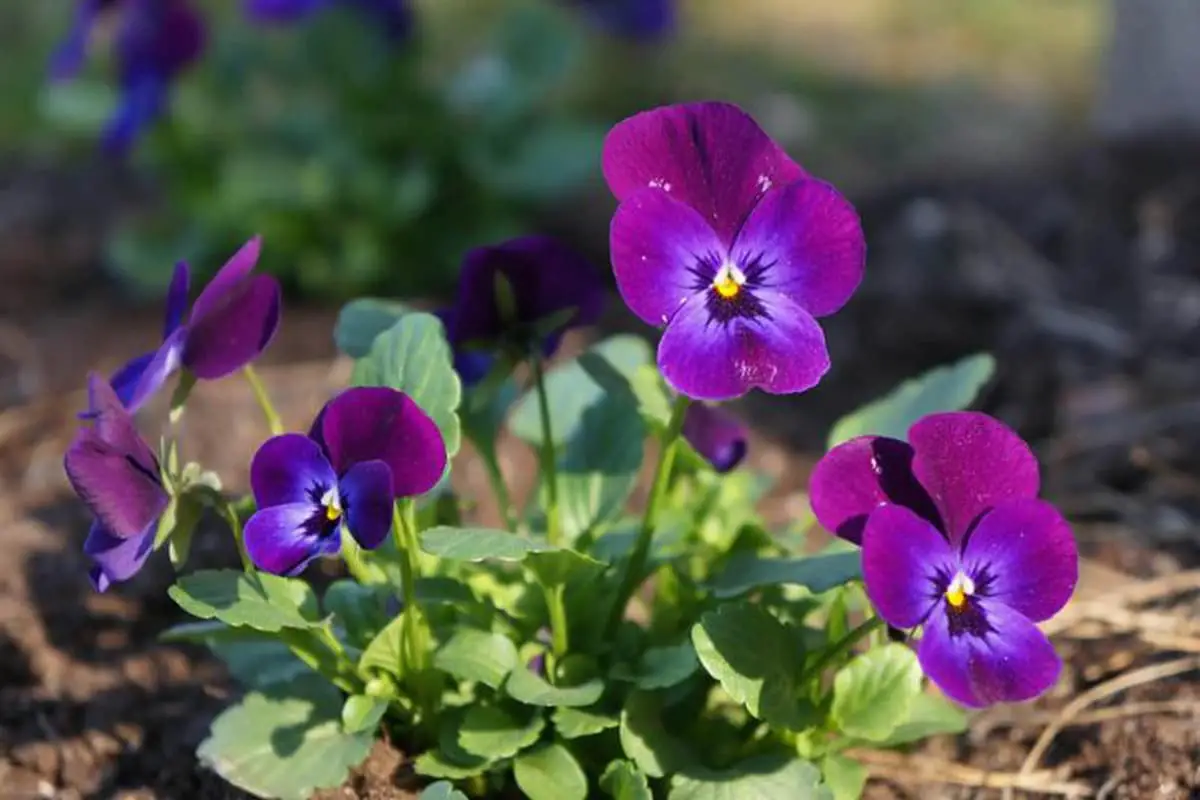
- Purple Pansies: Pansies with purple petals, the floral language is “silence, unconditional love”, dark attribute.
- Large Pansies: Restriction.
- Common floral language of Pansies: Contemplation, happiness, please think of me.
National Flower
Pansies are native to Iceland and designated as the national flower. Pansies are also the national flower of Poland.
Historical Origin
As a famous early spring flower, Pansies have a wide variety of bright colors and a long flowering period. Therefore, they are very popular in developed countries such as Europe and America. Since the introduction of wild species into garden cultivation in 1629, variety improvement began in the 19th century, and round, large-flowered varieties were selected.
At the beginning of the 20th century, German breeders selected some cold-resistant varieties. In the mid-20th century, the Swiss Giant series was bred by Swedes and the Oregon series was selected by Americans, with a flower diameter of up to 10 cm.
Since the 1970s, the United States, France, Germany, Britain, and other countries have made rapid progress in Pansy breeding, with a large flower diameter of up to 12 cm, and a mini Pansy with a flower diameter of only 3 cm, and a black variety has been bred.
In addition to cold-resistant varieties, there are also heat-resistant and disease-resistant Pansies. There is a saying “English shape, American diameter, German color, French characteristics”. Pansies are particularly revered in Europe, Italy uses Pansies as a symbol of “longing” and “missing”, especially loved by young girls.


 English
 العربية
 Bahasa Indonesia
 Deutsch
 Français
 Italiano
 Nederlands
 Português
 Русский
 日本語