9 Flowers That Start With V
1. Vanda Vanda, also known as Wanda, is a distinctive epiphytic orchid genus renowned for its striking beauty and unique growth habits. Unlike Cattleya and Dendrobium, Vanda orchids are monopodial,…

We often associate flowers with their beauty and fragrance. However, some flowers carry odors that are quite unpleasant, even repulsive.
Allow me to introduce you to the top ten smelliest flowers in the world: Starfish Flower, Corpse Flower, African Stink Lily, Western Skunk Cabbage, Leopard Flower, Eastern Skunk Cabbage, Dragon Arum, Giant Rafflesia, Voodoo Lily, and Fritillaria imperialis.
Join me as we explore what makes these flowers the smelliest of all.
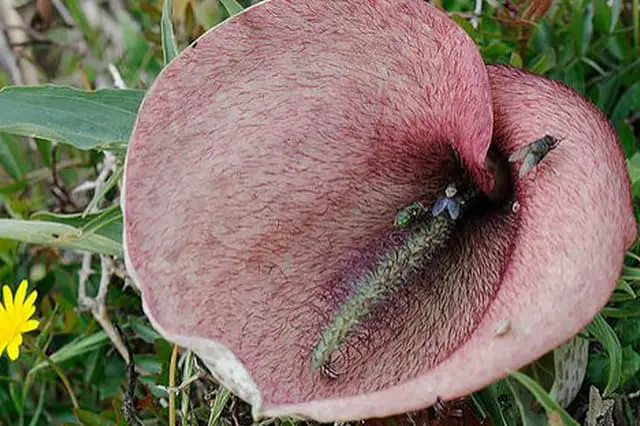
The Starfish Flower is a perennial herbaceous plant, generally characterized by long, narrow leaves and tubers, native to Europe and Western Asia. Its flowers are enormous and beautiful, boasting high ornamental value.
However, they bloom for a very brief period, making it a rare sight to behold a Starfish Flower in full bloom. Unfortunately, these flowers emit an odor reminiscent of a rotting corpse or smelly socks. Among all the flowers in the world, the Starfish Flower is arguably the smelliest.
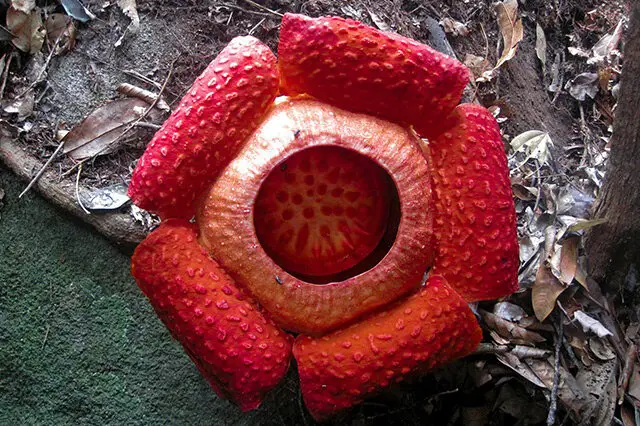
The Corpse Flower, often known as the “Titan Arum”, is a fleshly parasitic herbaceous plant, not the mythical “man-eating plant. It originates from the tropical rainforests of Malaysia, Java, and Sumatra in Indonesia.
The Corpse Flower is renowned for its enormous size and foul smell, earning it the nickname “King of Flowers”. It is a carrion plant. The Corpse Flower only blooms once in its lifetime, with a blooming period of just four days. Initially, the flower bud emits a pleasant fragrance, which soon turns into a repulsive, rotten stench, thus earning it the name “corpse flower”.
The horrid smell attracts carrion-eating animals like flies for pollination.
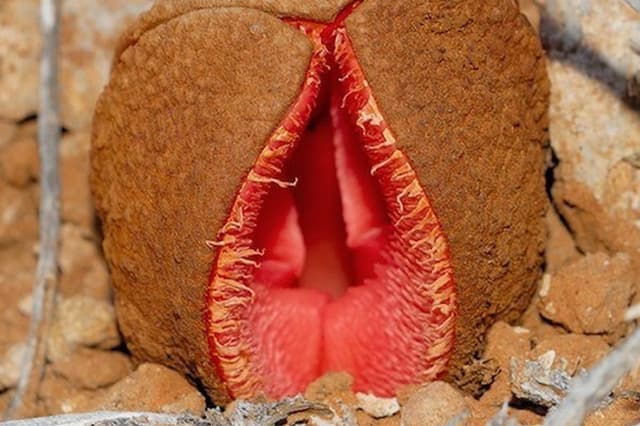
The African Stink Lily is one of the sixteen globally recognized odorous plants, a native Euphorbia species from Southern Africa. Typically, it thrives in arid and barren desert areas.
It can grow up to two meters tall, with roots as hard as wood and a honeycomb-like appearance. The peculiarity of the African Stink Lily is not only its form but also its odor. It releases a repugnant smell, akin to a decaying corpse, attracting dung beetles and carrion beetles.
The stunning red flowers serve as a trap, attracting beetles with their foul smell to assist in pollination. The plant then traps the beetles until they die, absorbing nutrients from their decaying bodies.
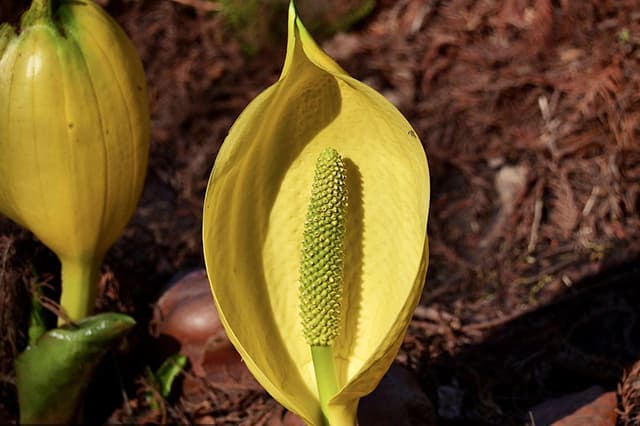
The Western Skunk Cabbage, also known as Yellow Skunk Cabbage or Swamp Lantern, features a large, brightly colored yellow or yellow-green spadix. The plant grows in swamps and damp forests and can be found in the rivers and wet areas of the Pacific Northwest in the United States.
A notable characteristic of this plant is its pervasive foul smell that can be sensed throughout its habitat. The odor remains even when the plant is dried and preserved as a specimen. This stench attracts pollinators like flies or bees in search of food.
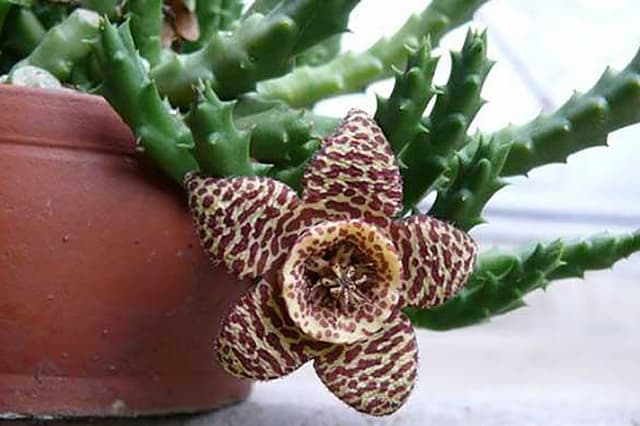
The Giant Leopard Flower, also known as the “Stinking Corpse Lily”, is a plant from the Araceae family, native to tropical Africa. It prefers fertile soil and is cultivated in Southern China, predominantly in the Shanghai region.
The plant has a thick stem and large flowers that open in a five-point star shape, in a light yellow color with dark purple horizontal stripes. The edges grow fine hairs and emit a foul smell. Its magnificent autumn bloom resembles a starfish.
To propagate, it emits a foul smell to attract flies for pollination, hence its other name, the “Stinking Corpse Lily”.

The Eastern Skunk Cabbage is a plant from the Araceae family, with its inflorescence enclosed in a 10-15cm tall, purple spotted spathe. It is found in North America, central to northern Japan, Siberia, Ussuri River basin, and in the provinces of Jilin and Heilongjiang in mainland China.
Tearing a leaf of the Eastern Skunk Cabbage releases a pungent odor reminiscent of a roadkill skunk, though unpleasant, it is harmless and touching its leaves won’t result in poisoning.
This odor attracts its pollinators such as flies, stoneflies, and bees. The smell emitted by the leaves also deters larger animals from disturbance and damage.
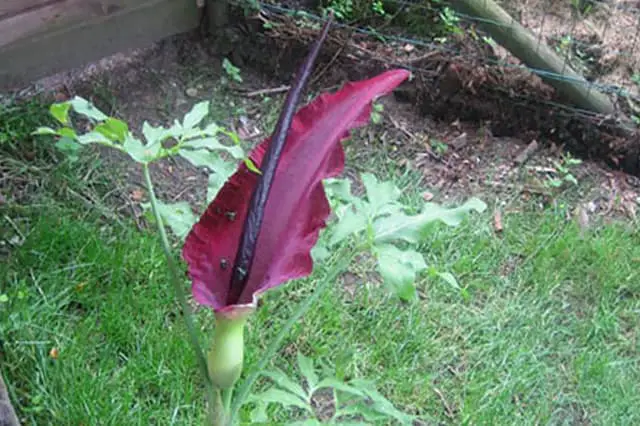
Dracunculus Vulgaris, also known as the Dragon Arum, primarily grows in Greece and has a history older than humanity. Deep purple flowers grow on its central main stem, emanating a rotten smell. The erect flower stalk is surrounded by larger green leaves.
Its spadix is leaf-like, colored like Burgundy wine, surrounded by many fine black branches, appearing like a dragon or venomous snake nestled within a spadix. It is a shade-loving plant and is listed among the sixteen most notorious smelling beautiful plants worldwide.
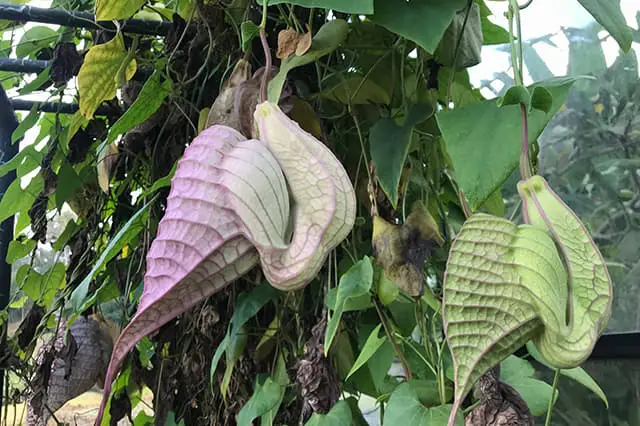
The Giant Corpse Flower is a species of the Araceae family. The main part of the flower consists only of one petal, looking like a large, textured pouch, unlike ordinary flowers that have symmetrical petals.
The Giant Corpse Flower emits a dead rat smell, but unlike the Giant Pitcher Plant, it does not consume rats. The odor is merely to attract pollinating insects. The peculiarity of this plant lies in its beautiful yet bizarre flowers.

The Konjac, or Devil’s Tongue, features a tall and sturdy petiole, large and unique flowers that are prominent on the ground, shaped like an inverted ancient bell, enveloped by a spadix. The upper exterior is purple and the lower part is green, with a deep purple interior. The name “Konjac” comes from its bumpy inflorescence stalk and leaf stalk.
It also goes by the unappealing name of “Corpse Flower” due to the putrid smell it emits when blooming. This odor makes it unsuitable as a beloved household plant. However, calling it a “Corpse Flower” seems unfair, as it only emits the unbearable stench for a few hours after the flower opens.
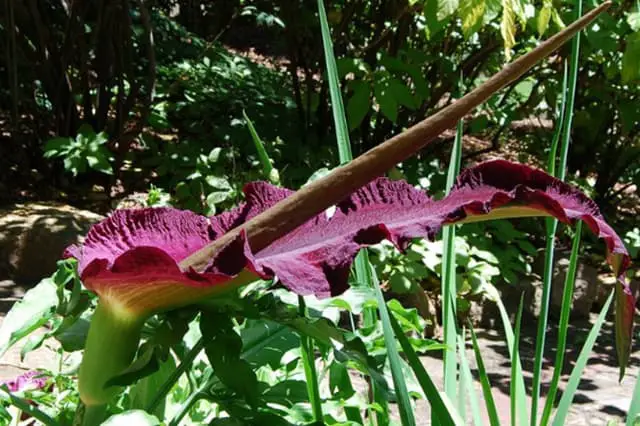
The Voodoo Lily, a species of the Araceae family, is recognized by its large purple spathe and inflorescence and emits a scent reminiscent of a corpse to attract its pollinators, such as green flies.
It is distributed in the Balkan Peninsula, Mediterranean region, Crete, the Aegean Islands, and southwestern Turkey.

Peggie was once a high school mathematics teacher, but she set aside her chalkboard and textbooks to follow her lifelong passion for flowers. After years of dedication and learning, she not only established a thriving flower shop but also founded this blog, “Flowers Library”. If you have any questions or wish to learn more about flowers, feel free to contact Peggie.
 English
  العربية
  Bahasa Indonesia
  Deutsch
  Français
  Italiano
  Nederlands
  Português
  Русский
  日本語
日本語